

By Stephen Leahy
“We’re going to see huge changes in the Arctic ecosystem“
QUEBEC CITY, Canada, Dec 13 2008 (IPS)
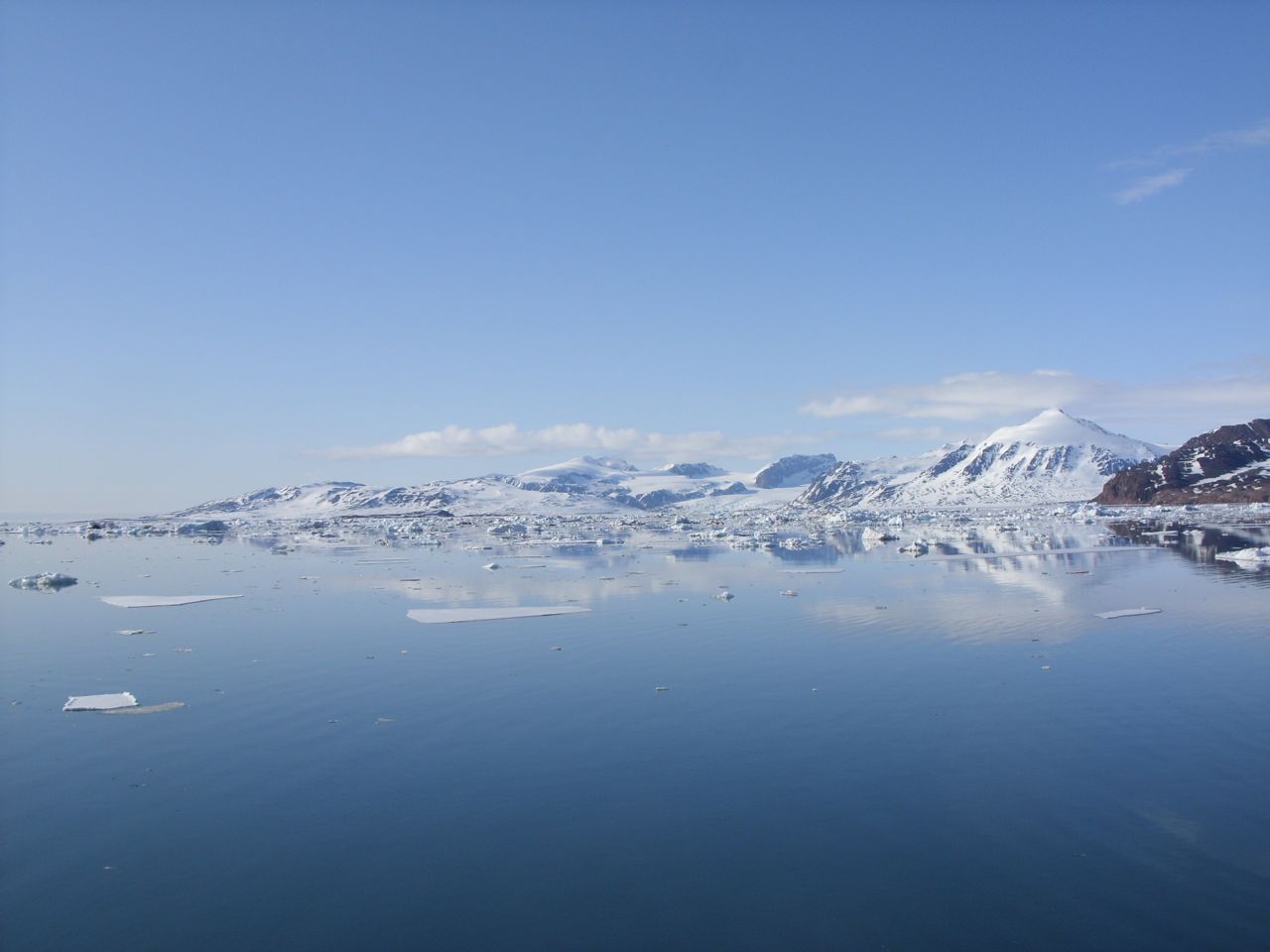
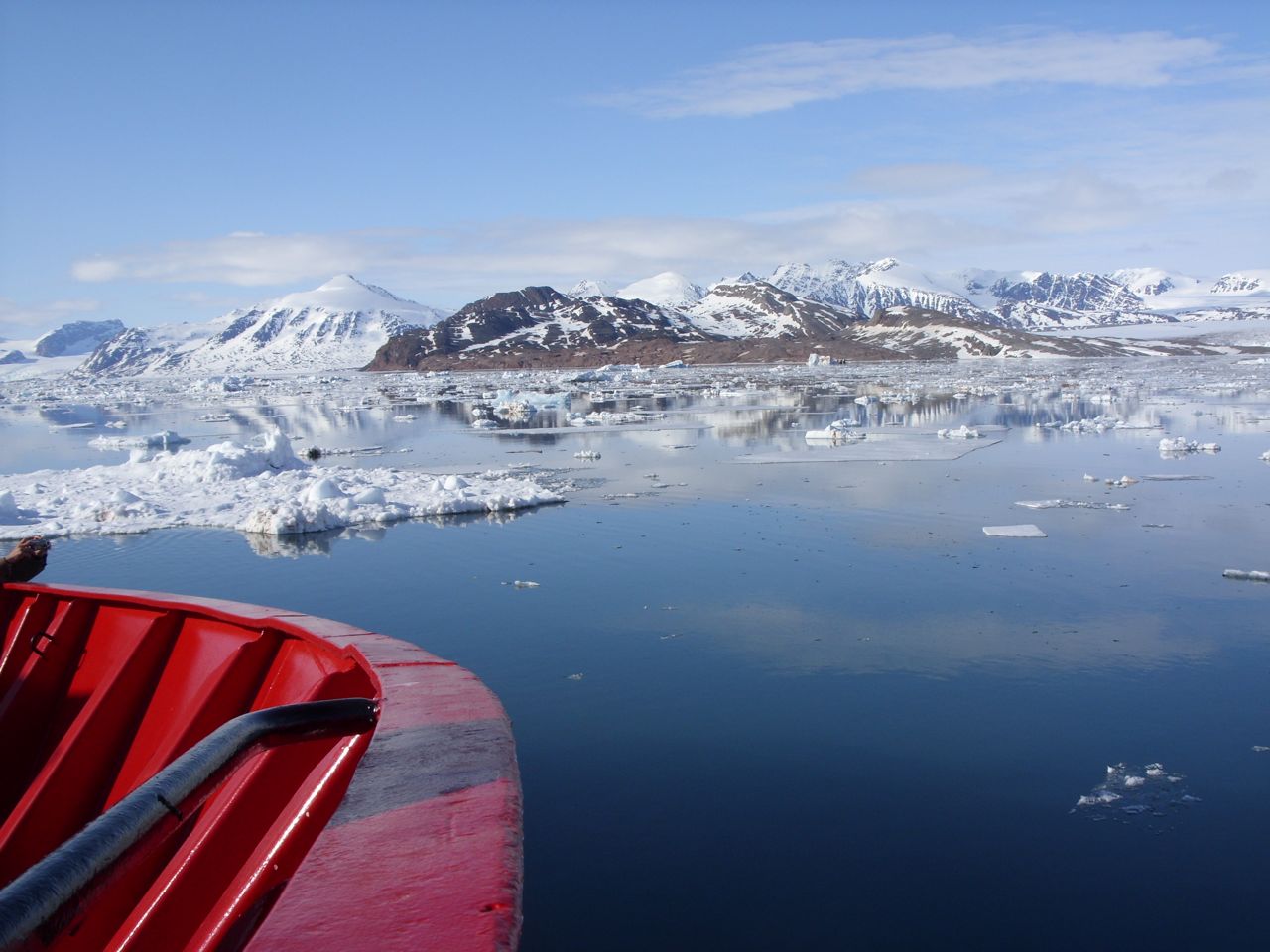
In just a few summers from now, the Arctic Ocean will lose its protective cover of ice for the first time in a million years, according to some experts attending the International Arctic Change conference here.
A summer ice-free Arctic wasn’t due for another 50 to 70 years under the worst-case climate change scenarios examined by the Intergovernmental Panel on Climate Change (IPCC).
“Things are happening much faster in the Arctic. I think it will be summer ice-free by 2015,” said David Barber, an Arctic climatologist at the University of Manitoba.
Such a “dramatic and serious loss of sea ice will affect everyone on the planet,” Barber told IPS.
Barber spent much of last winter on a Canadian research icebreaker, the Amundsen, in the Arctic Ocean as leader of a 40-million-dollar ice research project. Scientists expected the Amundsen to be frozen in place for many months during the harsh Arctic winter, when there is no sunlight and temperatures plunge to -50 degrees C. Instead the ship stayed mobile as the normally impenetrable ice was thin and weak.
“The ocean held a lot heat from the summer of 2007 when ice reached its record-breaking minimum,” Barber said.
That additional heat delayed the formation of winter ice by two months in some places. It also resulted in more storms, windier conditions and much more snow, he said. These are entirely new conditions for the region, noting that the additional snow acts as an insulator, keeping the sea ice warmer which prevents it from becoming thicker.
And if the winter ice cover is thin, then it will melt faster and over a larger area in summer, opening up more water to the heat of the sun in what is called a positive feedback loop.
By May of this year there was open water many weeks ahead of normal, exposing the cold water to heat of the sun earlier than ever, Barber said.
During summer 2007, the polar ice cap lost 30 percent to 40 percent of its ice, a record 2.6 million square kilometres less ice than the summer average minimum. The 2008 summer ice loss did not challenge 2007 for the record but was still much less than the average. Scientists believe the remaining ice was thinner than normal, setting the stage for another major melt in 2009.
Ice ruled the Arctic for a long time, but that is changing with the opening up of areas of the ocean that have never been exposed to sunlight, said Kevin Arrigo, a marine biologist at Stanford University.
Sunlight means life and Arrigo and colleagues have measured an astonishing 300 percent increase in growth of phytoplankton in parts of the Arctic Ocean. “There has been a big change in the carbon cycle even though most thought the Arctic system was too nutrient limited,” Arrigo told conference attendees.
Phytoplankton are microscopic green plants which operate in the top 100 to 200 metres of the ocean and they need nutrients such as phosphorus, nitrogen, iron and silicon at the surface. It turns out that all the Arctic needed is more sunlight to switch to a more productive ocean.
Phytoplankton also remove large amounts of carbon from the upper ocean. Arrigo estimates that the increased amounts of phytoplankton may take 14 gigatonnes of additional carbon out of the Arctic system every year.
“If this continues we’re going to see huge changes in the Arctic ecosystem,” he said.
It will be of little benefit in reducing atmospheric carbon levels since that is less than 1 percent of the annual emissions from burning fossil fuels.
The effects of the summer warming large parts of the once-permanent frozen Arctic ocean ice is felt as far as 1,500 km inland, according to a study led by David Lawrence at the National Centre for Atmospheric Research in Boulder, Colorado.
Using computer models, they found that the rapid ice loss in summer showed a 3.5-fold acceleration in land surface temperatures in the Western Arctic likely triggering a rapid degradation in permafrost. And that the warming extends up to 1,500 km inland from the ocean itself.
Permafrost is largely permanently frozen peatlands that cover much of the northern areas of Canada, Alaska and Russia. They contain more than twice the amount of carbon currently in the atmosphere, based on a new study published in September by Ted Schuur, an ecologist at the University of Florida.
Burning of fossil fuels contributes about 8.5 billion tonnes of carbon (not CO2 as previously stated) each year, but the permafrost holds more than 1,670 billion tonnes. “It’s bigger than we thought,” Schuur said in a release.
He estimates that thawing permafrost could add 0.8 to 1.1 billion tonnes per year in the future – almost as much as deforestation currently adds. Ominously, carbon from melting permafrost is not included in climate models.
There is now an Arctic network of specialists who are carefully monitoring permafrost temperatures thanks to funding from the International Polar Year global research effort, Nikolay Shiklomanov, a permafrost researcher at the University of Delaware, told participants. Hundreds of holes are being drilled in the permafrost regions and new low-cost temperature measuring equipment will be in place in some, providing an avalanche of data.
Unfortunately, in countries such as Canada, there is little historical data nor were there many measurement stations. Data from Alaska and Siberia goes back more than 20 years, and both have found large temperature increases at the southern parts of their respective permafrost regions. And the warming has been measured 30 or 40 meters deep, said Shiklomanov.
The Arctic ecosystem is likely shifting into a new regime, said Paul Wassmann, an oceanographer at University of Tromso, Norway
“Data and information from the past are unreliable indicators for what will happen in the future,” Wassmann said.
The Arctic ecosystem will never return to what it once was. And is true for all of the Earth’s ecosystems, he said.
“The human thumb is pressing the globe, and pressing hardest on the North,” Wassmann said.
First published as “Things Happen Much Faster in the Arctic”.
Other recent stories on the Arctic:
Arctic Is the Canary in the Coalmine
 Stephen Leahy, International Environmental Journalist
[…] [see also previous story: Arctic Ice Gone in 5 Years – First Time in One Million Years] […]
[…] monumental climatic event is unfolding before our eyes this year. The ramifications will affect entire human race, nay, the entire community of Gaia dwelling […]
Reblogged this on Stephen Leahy, International Environmental Journalist and commented:
This is what Arctic ice experts were saying in 2008 when I covered a special meeting in Quebec City. The ice had reached shocking record lows in September of 2007 + 2008. Turns out the Arctic ice is more resilient and will still be there in September of this year. However it will likely be the lowest amount of ice in the past million years. – SL]
Yes, 2015 is now come and gone and the ice is still there. Barber also predicted it would be gone in 2008. So now they have rewarded these failed predictions by naming him to the Order of Canada. See:
http://www.winnipegsun.com/2016/12/30/four-winnipeggers-named-to-order-of-canada
Barber said the Arctic ice could be gone as soon as the summer of 2015. It was not a prediction. Most of the ice did melt this summer. And the warming is accelerating in the Arctic. On December 22, 2016, the Arctic was on average 3.33°C or 5.99°F warmer than it was in 1979-2000.
Could be gone soon.;.might be…75% chance… and so if it doesn’t come true you say “we did not tell it would happen, but it might happen”. You seriously want to us to believe in any future forecast while you have been off the target EACH TIME. You are not scientists but statistical engineers who should no longer get funds if you are not able to predict anything by 100% . Is this what you call settled science ? Seriously..