Using DNA “Barcodes” to Protect Biodiversity and Endangered Species

DNA Bar-Coding Could Rewrite Book of LifeCassowary, Queensland, Australia - Copyright 2004 Renate Leahy
By Stephen Leahy

Feb 19 (IPS) – Fifteen new species of birds have been discovered in North America following the first ever genetic analysis of nearly all 690 known species. A similar DNA profiling or “bar-coding” of Guyana’s 87 bat species revealed an additional six genetically distinct bats.

These new species are nearly indistinguishable to human eyes and ears from known species but the analysis shows their DNA evolved along different paths millions of years previously, according research published Sunday in British journal Molecular Ecology Notes.

Continue reading

Iraq’s Birds and Marshes Return Amid Bullets, Bombs and Violence

mesopotamian_marshes-nature_-iraq-sml Amid Sectarian Chaos, Bird Lovers Persevere


By Stephen Leahy

Jan 25 (IPS) – Can Iraqi dreams for a better future be glimpsed in the publication Thursday of the first-ever field guide to the country’s 387 bird species?

“For Iraq, a nation that has lost so much of its wildlife in the last 20 years, this book opens the door for the growing conservation movement in this country,” said Ali Douabul of Nature Iraq, an Iraqi NGO focused on the protection and restoration of the environment.

Published in Arabic, the “Field Guide to the Birds of Iraq” is a fully illustrated guide based on three years of surveys by mainly Iraqi and Jordanian birders and biologists.

Why a bird book for Iraq?
Continue reading

Birds of Iraq Book Sparks Hope for Wildlife Conservation

birds_of_iraq_front_cover_resize.jpgParaphrase of the Day:

Iraq has lost much of its wildlife over the past 20 years but the newly published Field Guide to the Birds of Iraq opens the door for the growing conservation movement in this country. — Ali Douabul of Nature Iraq, an Iraqi NGO.

Story is now available:

Iraq’s Birds and Marshes Return Amid Bullets, Bombs and Violence

Amid Sectarian Chaos, Bird Lovers Persevere

Canada’s Transformation to Conservation Agriculture

Catching the Green Wave

greenwave-title.png

By Stephen Leahy

“Conservation is getting nowhere,” Aldo Leopold lamented in his foreword to A Sand County Almanac in 1948. It’s taken too long but conservation is getting somewhere in Canada and will take a major leap forward as agriculture undergoes a major transformation from low-price commodity agriculture toward conservation agriculture.

Tens of thousands of Canadian farmers and ranchers are taking action right now to improve the environmental health of their lands in spite of the enormous pressures of the global marketplace and often poor crop prices.

— First published in Conservator magazine, Jan 2006. See Catching the Green Wave for full story.

Contact: writersteve AT gmail . com (no spaces)

Sushi or Tourism: What Are Whales For?

Blue whale, courtesy IFAW

By Stephen Leahy

[Update Jan 15 2008. Japanese whalers are on the hunt right now with activists in hot pursuit just like last year. Little has changed from the situation documented in this 2006 story. SL]

TORONTO, Dec 28 (Tierramérica) – Japan’s controversial whaling fleet has arrived in the Southern Ocean, around Antarctica, and anti-whaling activists are promising to ram and sink any vessels attempting to kill whales.

“What the Japanese whalers are doing is illegal under the United Nations World Charter for Nature,” said Paul Watson founder of the Sea Shepherd Conservation Society.

“It’s also murder in my personal opinion,” Watson told Tierramérica from Melbourne, Australia, where his ship, the Farley Mowat, was docked. Continue reading

Whales Worth More Alive Than Dead

Quote of the Day:

“There is no market for whale meat,” said Beatriz Bugeda, the International Fund for Animal Welfare’s Director
for Latin America regarding the Japanese whaling expedition underway in the Antarctic ocean.


“Whales are worth far more alive than dead,” Bugeda said in reference to the enormous whale-watching industry.


— see Sushi or Tourism: What are Whales For?

Blue whale, courtesy IFAW

Plumbing the Secrets of the Ocean Depths

By Stephen Leahy

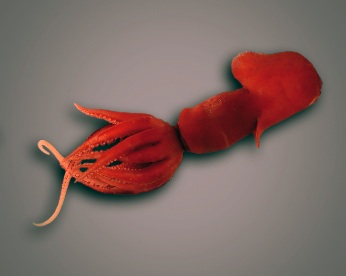
Dec 10 (IPS) – Incredible new forms of life have been discovered around super-hot 400new-species-of-squid-coml.jpg degree C seafloor vents, as well as under 700 metres of Antarctic ice, by the 20th scientific expedition of the Census of Marine Life of 2006 now underway.

For the next few weeks, scientists aboard the German research icebreaker Polarstern will explore the Antarctic seafloor, which has been hidden by thick layer of ice for more than 5,000 years. It is an unprecedented opportunity brought about the unexpected collapse of the Larsen B ice shelf along the Antarctic Peninsula four years ago. Now 3,250 sq kms of sea floor is accessible.

“Preliminary research shows there is a huge amount of diversity of life there,” said Ron O’Dor, a senior scientist with the Census of Marine Life (CoML).

“This is our first chance to take a good look at a region no one has explored before,” O’Dor told IPS.

The CoML is a global partnership of 2,000 scientists from 80 countries with a 10-year mandate to investigate life in the seas until 2010. Earlier CoML expeditions to the Antarctic have uncovered an astonishing community of marine life shrouded beneath 700 metres of ice — 200 kms from open water.

“We’re finding more new species than known species,” O’Dor said.

The great Southern Ocean is the least explored but perhaps the most important, as it is the link between all the other oceans of the world.

Climate change is warming the Southern Ocean and ice is melting in many parts of the Antarctic. Census scientists are trying to determine how the warming will affect marine species in the region, O’Dor says.

The Polarstern, the research flagship of the Alfred Wegener Institute for Polar and Marine Research in Bremerhaven, Germany, is the 20th Census expedition of 2006. It is also the first of 14 Antarctic expeditions being launched as part of the International Polar Year 2007-2008.

Complete “Plumbing the Secrets of the Ocean Depths” story here

Overfishing and Global Warming Imperil Penguins – Happy Feet was right

emperor penguinsBy Stephen Leahy

Nov 30, 2006 (IPS) – Ice-loving penguins have never been more popular, but few people realise they are threatened with extinction from climate change and industrial fishing.

The loveable stars of the Hollywood movie “Happy Feet” and the stoic and courageous creatures featured in the popular documentary “March of the Penguins” are in trouble.

Of the world’s 19 penguin species, 12 are now so threatened they need special protection, according to the Centre for Biological Diversity (CBD), a California environmental group focused on species extinction.

Popularity doesn’t guarantee survival. But it might increase protection and prompt action on climate change, says Brendan Cummings, director of the CBD’s Oceans Programme.

Cummings’ organisation filed a formal petition this week requesting that 12 species of penguins worldwide, including the well-known Emperor Penguin, be added to the list of threatened and endangered species under the United States Endangered Species Act. Continue reading

Internet and Lust for Rarity Driving Species Into Extinction

The Insatiable in Pursuit of the Inedible
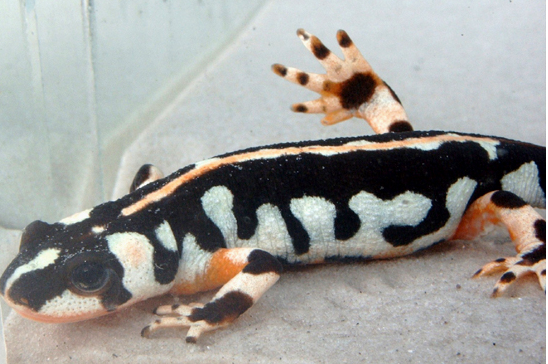
By Stephen Leahykaiser’s spotted newt
Nov 28 (IPS) – In an ironic twist, officially listing a species as endangered drives up its value to collectors and consumers, putting it on an even faster track to extinction, researchers in Paris reported Tuesday.

A perverse human penchant for possessing the last remaining giant parrot, tegu lizard or lady’s slipper orchid increases the value of the species so that collectors will spend thousands of dollars and go to any length, legal or illegal, to obtain them.

This triggers a positive feedback loop between exploitation and rarity that drives a species into an extinction vortex, Franck Courchamp and colleagues write in the scientific journal PloS Biology.

“It can be dangerous for a species to announce that it has become rare if it cannot be protected from exploitation,” Courchamp told IPS from his office at the University of Paris-South in Orsay, France.

“Even inconspicuous species can suddenly become valuable just because they are rare,” he said.

Hobby collectors, the exotic pet trade, trophy hunters, traditional medicine and luxury goods made from rare species are among the forces pushing rare species into extinction.

And the scientific literature is often used to identify the next hot species, Courchamp found.

Immediately after an article recognised the small Indonesian turtle (Chelodina mccordi) and Chinese gecko (Goniurosaurus luii) as rarities, their prices soared on the exotic pet market. The turtle is now nearly extinct and the gecko can no longer be found in its southeastern China niche.

Exotic pet traders covet a wide range of creatures, including orangutans, monkeys, reptiles, birds and wild cats, as well as arachnids, insects and fish.

The Internet is a major factor in driving species into extinction faster than ever, says Ernie Cooper, director of wildlife trade at the World Wildlife Fund-Canada.

Full story here

Canada Trying to Scuttle Temporary Halt to Destructive, Unregulated Bottom Trawling on High Seas

Quote of the Day:


“Canada’s attitude towards the oceans are embarrassing and archaic,” says Elliott Norse, President of the Marine Conservation Biology Institute, a scientific environmental NGO in Washington State.

“Canada treats the oceans as if nothing could harm them,” Norse told IPS.

Full story here