Energy Use On Suicidal Path

niger-delta-air-pollution-george-osodi.jpg

“If we get that kind of increase it will be societal suicide”

By Stephen Leahy

Nov 9 (IPS) – Today’s skyrocketing fossil fuel use will accelerate far faster in the coming decades, driving oil prices higher and virtually guaranteeing catastrophic climate change in the decades to come, energy experts say.

Emissions of greenhouse gases could increase a staggering 57 percent by 2030 if current trends continue, and with the strong growth of coal and oil energy use in India and China, the International Energy Agency (IEA) reported this week.

“If we get that kind of increase it will be societal suicide,” says Gavin Schmidt, a climate researcher at NASA Goddard Institute for Space Studies at Columbia University.

“It really is a huge increase,” Schmidt told IPS. Continue reading
Canada’s Shocking Environmental Decline


fall-colours-lakeridge-06.jpg

By Stephen Leahy* – IPS/IFEJ

In the past 15 years, all of Canada’s environmental indicators have suffered, say experts who distribute the blame among local and national governments, businesses and the public.

TORONTO, Nov 5 2007 (Tierramérica).

In the 1980s, Canada was a bright green engine of change, pushing the global community forward on sustainable development and global warming. But now it is falling behind in almost every environmental aspect.

The lead author of the landmark 1987 Bruntland Report, “Our Common Future“, was Canadian Jim MacNeill. The very first international climate change meeting involving scientists and political leaders was held in Toronto in 1988.

Canadian Maurice Strong organized the first World Conference on the Environment in Stockholm in 1972, was the first executive director of the United Nations Environment Program (UNEP), and was secretary-general of the 1992 Earth Summit in Rio de Janeiro.

But after this flourish on the world stage, Canada sat back and did virtually nothing domestically. The country ranks 28th out of 30 high-income countries in terms of environmental sustainability, according to an independent Canadian study. The Organization for Economic Cooperation and Development ranked Canada 27th in terms of environmental performance. Continue reading

The Coming Oxygen Crisis?

“I have no idea how this will affect oxygen levels but it is something we should be thinking about.”Bradley Cardinale, biologist, University of California,

By Stephen Leahy


Credit:NASA

The Amazon River and rainforest viewed from space.

Nov 6 (IPS) – Plants are the only source of oxygen on Earth — the only source. Studies around the world show that as plant species become extinct, natural habitats can lose up to half of their living plant biomass.

Half of the oxygen they produced is lost. Half of the water, food and other ecological services they provide are lost.

If a forest loses too many unique species, it can reduce the total number of plants in that forest by half, says Bradley Cardinale, lead author of the meta-analysis published this week in the Proceedings of the National Academy of Sciences (PNAS).

“Those unique species are not replaceable. Nothing takes their place. It was a really shocking finding for me,” Cardinale, a biologist at the University of California, Santa Barbara, told IPS. “That’s how much biodiversity matters.”

Continue reading

Three Names the World Should Know

picture-1.jpg

By Stephen Leahy

Nov 5 (IPS) – “I am staying in Afghanistan to prove that women are brave and strong,” says Afghan journalist Farida Nekzad.

Nekzad has been threatened with death even as she attended the funeral of Zakia Zaki, a female radio broadcaster murdered by gunmen as she slept with her eight-month-old son at her home near Kabul in June.

“I was given asylum by some countries but I am not going to hide,” declared Nekzad, the current editor in chief of the Pajhwok News Agency, the sole independent news agency in Afghanistan.

“If I leave, the next woman journalist will become a target,” she told IPS.

Nekzad was in Toronto last Thursday to receive one of this year’s three International Press Freedom Awards from the Canadian Journalists for Free Expression (CJFE). CJFE promotes and defends free expression and press freedom and grants thousands of dollars to aid persecuted journalists in Latin America, Africa, Asia and Eastern Europe.

Iraqi journalist Sahar Al-Haideri, shot and killed on Jun. 7 this year by four unidentified gunmen in Mosul, and Canadian journalist Ali Iman Sharmarke, who was killed by a remote-controlled landmine in Somalia Aug. 11, were the other award recipients. Continue reading

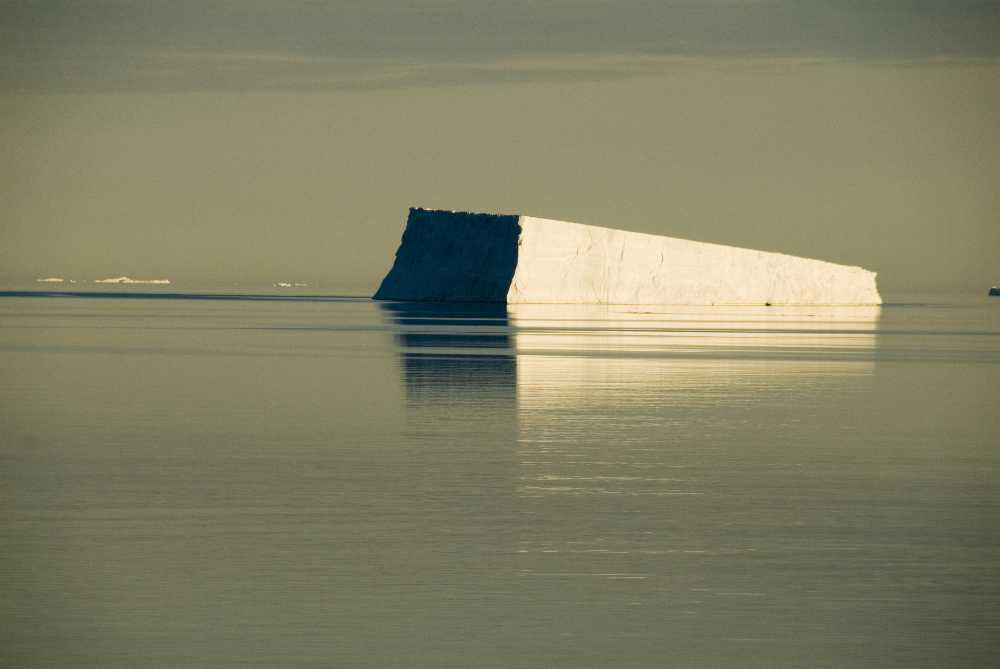
Climate Change Shifts Into Fast Forward

larsen-ice-shelf-remnant.jpg

By Stephen Leahy

Oct 26 (IPS) – Global warming has been compared to a slow-moving train wreck, in which the passengers are blissfully unaware of the coming catastrophe.

With the shocking loss of the Arctic sea ice this summer and several new reports this week that oceans and tropical forests are now absorbing less of the world’s steadily rising carbon emissions, our collective train wreck appears to have already tipped into fast forward.

“Global warming is a big feature of our lives now. It is no longer something that only future generations will have to cope with,” said Ted Scambos, senior research scientist at the National Snow and Ice Data Centre in the U.S. city of Boulder, Colorado.

The major ecosystems that absorb carbon emissions from the atmosphere are failing, and it is happening faster than anticipated, Scambos told IPS.

Continue reading

The GW Science Geek of YouTube

shodou-calligraphy.gifNewspaper columnist and blogger Susan Elston recommends the slightly cheesy but excellent science geek videos by wonderingmind42.

“Unlike Gore, who couples star quality with the style and grace of American royalty, (to say nothing of some very expensive PowerPoint presentations); wonderingmind42’s anonymity actually makes it much easier to ignore the messenger and focus on the message.”

With 61 video posts, he’s the science teacher you wish you had in high school. Although Al Gore and his Nobel prize captured all the media attention, Elston says what we need is a non-celebrity.

“Someone, or something, that can crawl inside our consciousness in the privacy of our own homes, and gnaw away at it until we truly understand that what we are facing is unprecedented in human history.”

Venezuelan Smuggling Opens Door to Blood Diamond Trade

blooddiamond-movie-poster-sml.jpg“Crooks are taking Venezuelan diamonds out of the country and selling them to other crooks.

In November, the Venezuelan government will report to an intergovernmental entity about the controls used to regulate diamond mining.

By Stephen Leahy

Oct 22 (Tierramérica).- Venezuela will have to explain its policies on mining and exporting diamonds at the next annual session of the Kimberley Process, an intergovernmental initiative to halt the use of the diamond industry to finance conflicts and civil wars.

The Venezuelan government has recognized that it is not easy to monitor its vast border, but assures that it intends to comply with the Kimberley Process, of which it is one of the three South American members, along with Brazil and Guyana.

Venezuela is not involved in the smuggling of the so-called conflict diamonds, or “blood diamonds”, uncut stones that in the past two decades were mined and trafficked to finance civil wars and illegal armed groups in countries like Angola, Cote d’Ivoire, Democratic Republic of Congo and Sierra Leone. Continue reading

Ethanol: The Great Big Green Fraud

gsi-biofuel.jpg

Subsidising biofuels is just about the dumbest way to go.” – Todd Litman, director of the Victoria Transport Policy Institute — Subsidies for 2007 est $13-$15 billion

…increasing biofuel production is a “total disaster” for starving people Jean Ziegler, the United Nations Special Rapporteur on the Right to Food

By Stephen Leahy

Oct 20 2007 (IPS)

A raft of new studies reveal European and American multibillion dollar support for biofuels is unsustainable, environmentally destructive and much more about subsidising agri-business corporations than combating global warming.

Not only do most forms of biofuel production do little to reduce greenhouse gas emissions, growing biofuel crops uses up precious water resources, increasing the size and extent of dead zones in the oceans, boosting use of toxic pesticides and deforestation in tropical countries, such studies say.

And biofuel, powered by billions of dollars in government subsidies, will drive food prices 20-40 percent higher between now and 2020, predicts the Washington-based International Food Policy Research Institute.

“Fuel made from food is a dumb idea to put it succinctly,” says Ronald Steenblik, research director at the International Institute for Sustainable Development’s Global Subsidies Initiative (GSI) in Geneva, Switzerland.

Biofuel production in the U.S. and Europe is just another way of subsidising big agri-business corporations, Steenblik told IPS.

“It’s (biofuel) also a distraction from dealing with the real problem of reducing greenhouse gas emissions,” he asserts. Continue reading

Make Climate Change Art, Not War

franke-suzuki-sml.jpg“Unlike the scientist, we artists have the freedom to weave facts, opinions, thoughts, emotion and color all together. We can instill passion and motivate change. That is our palette.” — Visual artist Franke James

Toronto artist Franke James is doing great work both in expressing her concern and understanding in her colourful and insightful visual essays about climate change but also as a teacher of others in workshops for young artists — Six Tools to Make Climate Change Art.

Artists are desperately needed to help us understand the impacts of climate change at an emotional level and to inspire action. Information and knowledge are not nearly enough. As Franke wisely notes:

“Think of this: If any one of us stands up and tells a group an idea we have, it may spread — or it may disappear into the ether. A far more effective way to make an idea spread is to give it ‘tangible form’.” Continue reading

GW May Bankrupt US Without Urgent Action

“The true economic impact of climate change is fraught with ‘hidden’ costs.”

flood-rooftops-new-orleans.jpg

CLIMATE CHANGE-US: Delay Now, Pay Dearly Later
By Stephen Leahy

Oct 16 (IPS) – The United States is facing hundreds of billions of dollars in weather-related damages in coming years if it does not act urgently on climate change, the first-ever comprehensive economic assessment of the problem has found.

The costs of inaction on climate change on U.S. infrastructure, and its agricultural, manufacturing and public service sectors, will far outweigh the costs involved in making the needed reductions in greenhouse gas emissions, according to the report, “The U.S. Economic Impacts of Climate Change and the Costs of Inaction“, released Tuesday. Continue reading