The GW Science Geek of YouTube

shodou-calligraphy.gifNewspaper columnist and blogger Susan Elston recommends the slightly cheesy but excellent science geek videos by wonderingmind42.

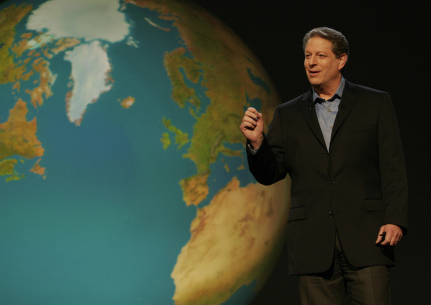
“Unlike Gore, who couples star quality with the style and grace of American royalty, (to say nothing of some very expensive PowerPoint presentations); wonderingmind42’s anonymity actually makes it much easier to ignore the messenger and focus on the message.”

With 61 video posts, he’s the science teacher you wish you had in high school. Although Al Gore and his Nobel prize captured all the media attention, Elston says what we need is a non-celebrity.

“Someone, or something, that can crawl inside our consciousness in the privacy of our own homes, and gnaw away at it until we truly understand that what we are facing is unprecedented in human history.”

Ethanol: The Great Big Green Fraud

gsi-biofuel.jpg

Subsidising biofuels is just about the dumbest way to go.” – Todd Litman, director of the Victoria Transport Policy Institute — Subsidies for 2007 est $13-$15 billion

…increasing biofuel production is a “total disaster” for starving people Jean Ziegler, the United Nations Special Rapporteur on the Right to Food

By Stephen Leahy

Oct 20 2007 (IPS)

A raft of new studies reveal European and American multibillion dollar support for biofuels is unsustainable, environmentally destructive and much more about subsidising agri-business corporations than combating global warming.

Not only do most forms of biofuel production do little to reduce greenhouse gas emissions, growing biofuel crops uses up precious water resources, increasing the size and extent of dead zones in the oceans, boosting use of toxic pesticides and deforestation in tropical countries, such studies say.

And biofuel, powered by billions of dollars in government subsidies, will drive food prices 20-40 percent higher between now and 2020, predicts the Washington-based International Food Policy Research Institute.

“Fuel made from food is a dumb idea to put it succinctly,” says Ronald Steenblik, research director at the International Institute for Sustainable Development’s Global Subsidies Initiative (GSI) in Geneva, Switzerland.

Biofuel production in the U.S. and Europe is just another way of subsidising big agri-business corporations, Steenblik told IPS.

“It’s (biofuel) also a distraction from dealing with the real problem of reducing greenhouse gas emissions,” he asserts. Continue reading

Make Climate Change Art, Not War

franke-suzuki-sml.jpg“Unlike the scientist, we artists have the freedom to weave facts, opinions, thoughts, emotion and color all together. We can instill passion and motivate change. That is our palette.” — Visual artist Franke James

Toronto artist Franke James is doing great work both in expressing her concern and understanding in her colourful and insightful visual essays about climate change but also as a teacher of others in workshops for young artists — Six Tools to Make Climate Change Art.

Artists are desperately needed to help us understand the impacts of climate change at an emotional level and to inspire action. Information and knowledge are not nearly enough. As Franke wisely notes:

“Think of this: If any one of us stands up and tells a group an idea we have, it may spread — or it may disappear into the ether. A far more effective way to make an idea spread is to give it ‘tangible form’.” Continue reading

GW May Bankrupt US Without Urgent Action

“The true economic impact of climate change is fraught with ‘hidden’ costs.”

flood-rooftops-new-orleans.jpg

CLIMATE CHANGE-US: Delay Now, Pay Dearly Later
By Stephen Leahy

Oct 16 (IPS) – The United States is facing hundreds of billions of dollars in weather-related damages in coming years if it does not act urgently on climate change, the first-ever comprehensive economic assessment of the problem has found.

The costs of inaction on climate change on U.S. infrastructure, and its agricultural, manufacturing and public service sectors, will far outweigh the costs involved in making the needed reductions in greenhouse gas emissions, according to the report, “The U.S. Economic Impacts of Climate Change and the Costs of Inaction“, released Tuesday. Continue reading

3 Reasons Why Gore Should Not Have Won Nobel Prize

al-gore.pngThis year’s Nobel Prize for Peace went to Al Gore and the UN’s Intergovernmental Panel on Climate Change (IPCC) for their efforts to awaken the world about the risks of climate change. That’s great news but I’d have preferred to see the other candidate for the prize, Canadian Inuit Sheila Watt-Cloutier share the award with the IPCC not Gore.

Three Reasons Why Gore Should Not Have Won:

1. Watt-Cloutier has been a passionate and eloquent communicator about the fact that indigenous people of the Arctic, and indigenous peoples elsewhere, have taken the first and hardest climate change hits so far. It would be been fairer and more representative of the reality to award the prize to an indigenous person.watt-cloutier.png

2. For eight long years Al Gore was second in command of the largest greenhouse gas emitting country in the world. And yet emissions climbed and climbed even though Gore knew climate change was a real and pressing emergency. When running for President Gore barely mentioned GW and then the world had to suffer thru the other GW — George W Bush and his blind and selfish intransigence.

3. Al Gore’s GW solutions are mostly wrong. Biofuels are a bad idea and only make rich agri-corporations richer. Carbon trading markets are an equally bad idea — enshrines the rich countries’ right to pollute our common atmosphere. A moratorium on coal and a carbon tax are some of his better ideas. However, Gore fails to address the root of the problem which is an economic system based on endless growth on a tiny planet with an awful lot of people.

“People do want to do the right thing, but they just don’t realise that the Arctic is melting and they are responsible,” Watt-Cloutier told me in 2004. From Global Warming Will Decimate Arctic Peoples and also see Inuit Sue America Over Climate Change

Inuit Sue America over Climate Change

By Stephen Leahy

The Inuit people of the Arctic regions are preparing to charge the United States with human rights violations, saying that country is the leading culprit behind climate change, which threatens their way of life — and their very survival.

Originally published in Latin America Feb 15 2005 by Tierramérica

The sharp increase in temperatures in the Arctic has led to dramatic losses of sea ice and melting permafrost (the layer of ground that normally remains frozen year round), which have destroyed buildings and roads and forced relocations of entire native Inuit villages. Continue reading

Global Warming Will Decimate Arctic Peoples

By Stephen Leahy10000660_jpg.jpg

Climate change will soon make the Arctic regions of the world nearly unrecognisable, dramatically disrupting traditional Inuit and other northern native peoples’ way of life, according to a new report that has yet to be publicly released.

Originally published in September 11 2004 by the Inter Press Service

The dire predictions are just some of the findings by the Arctic Climate Impact Assessment (ACIA), an unprecedented four-year scientific investigation into the current and future impact of climate change in the region. “This assessment projects the end of the Inuit as a hunting culture,” said Sheila Watt-Cloutier, chairwoman of the group that represents about 155,000 Inuit in the Arctic regions of Canada, Russia, Greenland, and the United States.

The report predicts the depletion of summer sea ice, which will push marine mammals like polar bears, walrus and some seal species into extinction by the middle of this century, Watt-Cloutier told IPS. Continue reading

GW Dramatically Rearranging Arctic Landscape

By Stephen Leahy


Credit:micropolisnews

A lone glacier drifts in the Canadian Arctic, Aug. 14, 2007.

Oct 4 (IPS) – The hot breath of global warming has now touched some of the coldest northern regions of world, turning the frozen landscape into mush as temperatures soar 15 degrees C. above normal.

Entire hillsides, sometimes more than a kilometre long, simply let go and slid like a vast green carpet into valleys and rivers on Melville Island in Canada’s northwest Arctic region of Nunavut this summer, says Scott Lamoureux of Queens University in Canada and leader of one the of International Polar Year projects.

“The entire landscape is on the move, it was very difficult to find any slopes that were unaltered,” said Lamoureux, who led a scientific expedition to the remote and uninhabited island. Continue reading

Arctic Melts As Banks Invest Billions in Coal

By Stephen Leahy


Credit:Ed Brown

Coal-fired power plant in central Virginia, U.S.

Oct 2 (IPS) – As global warming melts the Arctic, the United States’s biggest banks are investing billions of dollars in as many as 150 new coal-fired power plants around the country.

The obvious climatic and fiscal stupidity of such investments is staggering, say environmentalists.

“What are they (the banks) thinking?” asked Leslie Lowe, energy and environment programme director at the Interfaith Centre on Corporate Responsibility.

Carbon regulations are coming, and profiting from the destruction of nature and communities is immoral in any case, Lowe told IPS at a press conference. Carbon regulations are coming, and profiting from the destruction of nature and communities is immoral in any case, Lowe told IPS at a press conference.

“It is folly to build new coal-fired plants,” she said. Continue reading

Pres. Bush: The Skunk at His Own Garden Party

By Stephen Leahy


Credit:White House Photo/Chris Greenberg

President George W. Bush addresses the Major Economies Meeting on Energy Security and Climate Change on Sep. 28, 2007.

Sep 29 (IPS) – After years of denial, the U.S. White House-sponsored summit on climate change ended Friday with President George W. Bush admitting that global warming was real and humans were responsible and asking for heads of state to join him at yet another summit next year (when his presidency ends).

It’s doubtful if anyone of consequence will attend that future gab-fest since President Bush continues to push voluntary cuts to greenhouse gas emissions when the rest of the world, including much of the business sector, has already said that approach simply doesn’t work.

“President Bush has so little credibility on climate change,” said Chris Flavin, president of the Worldwatch Institute, a U.S.-based environmental group. Continue reading