Quote of the Day:
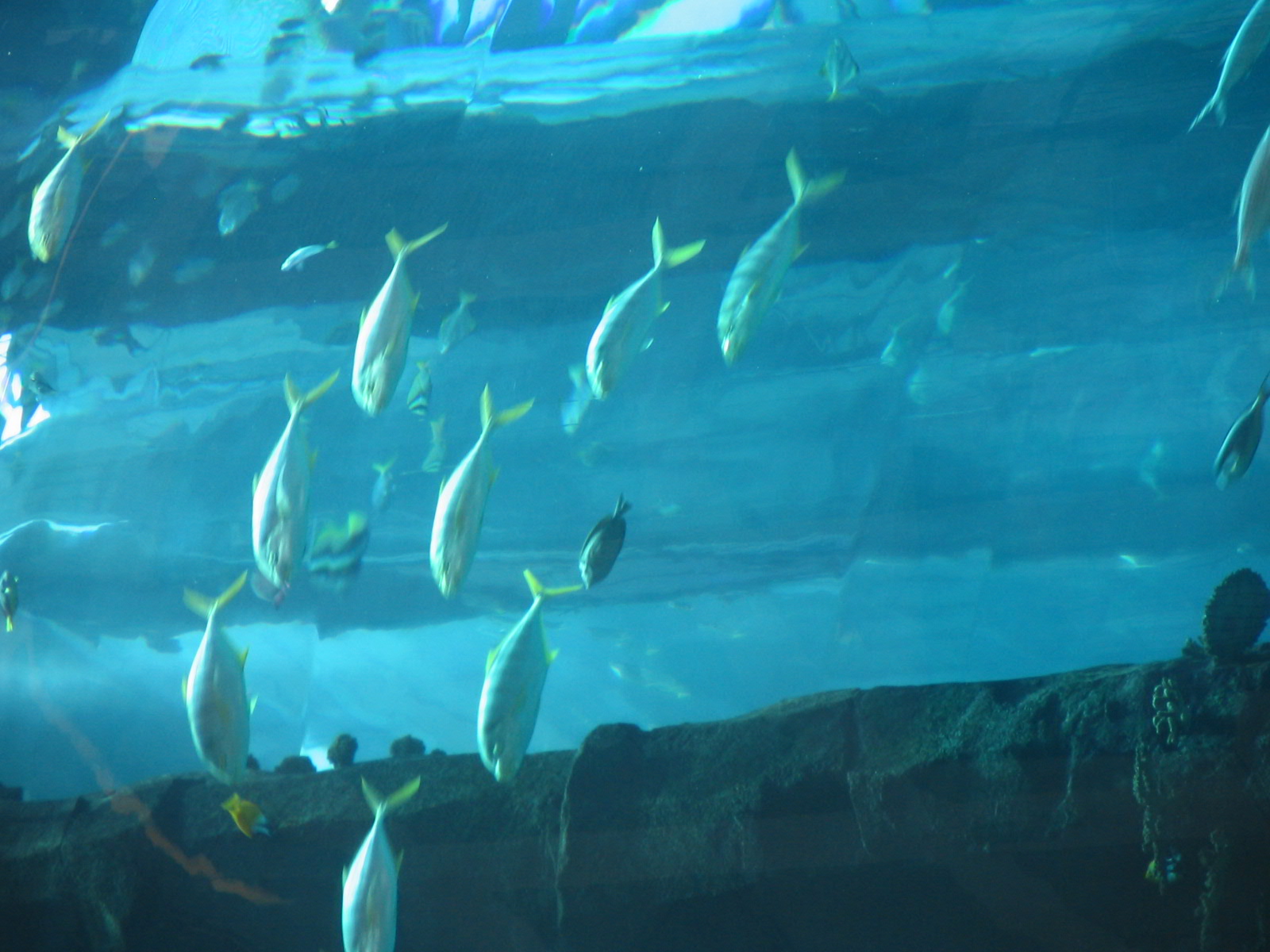
“We’re finding more new species than known species,” says Ron O’Dor of the Census of Marine Life expeditions to Antarctica including the current exploration of region under the former Larsen B ice shelf.
Quote of the Day:
“We’re finding more new species than known species,” says Ron O’Dor of the Census of Marine Life expeditions to Antarctica including the current exploration of region under the former Larsen B ice shelf.

Hear the latest speeches and interviews with leading environmental thinkers such as Amory Lovins, David Suzuki, George Monbiot along with environmental news and features at Radio Ecoshock. Vancouver’s Alex Smith trolls the media world to find the best enviro talk and puts it together in a slick, professional format. And Smith’s enviro newscasts serves up latest enviro news with a light touch and silly sound affects.
Quote of the Day:
“I am extremely frustrated by the double standards of industrialized nations. Canada criticizes other countries about their human rights policies or about the death penalty while they are playing with the lives of island people and the Inuit,” says Enele Sopoaga, Ambassador and Permanent Representative of Tuvalu to the United Nations and vice-chair of the Alliance of Small Island States.
Tuvalu is a small island country in the South Pacific ocean that is experiencing flooding due to rising sea levels.
The Insatiable in Pursuit of the Inedible
By Stephen Leahy
Nov 28 (IPS) – In an ironic twist, officially listing a species as endangered drives up its value to collectors and consumers, putting it on an even faster track to extinction, researchers in Paris reported Tuesday.
A perverse human penchant for possessing the last remaining giant parrot, tegu lizard or lady’s slipper orchid increases the value of the species so that collectors will spend thousands of dollars and go to any length, legal or illegal, to obtain them.
This triggers a positive feedback loop between exploitation and rarity that drives a species into an extinction vortex, Franck Courchamp and colleagues write in the scientific journal PloS Biology.
“It can be dangerous for a species to announce that it has become rare if it cannot be protected from exploitation,” Courchamp told IPS from his office at the University of Paris-South in Orsay, France.
“Even inconspicuous species can suddenly become valuable just because they are rare,” he said.
Hobby collectors, the exotic pet trade, trophy hunters, traditional medicine and luxury goods made from rare species are among the forces pushing rare species into extinction.
And the scientific literature is often used to identify the next hot species, Courchamp found.
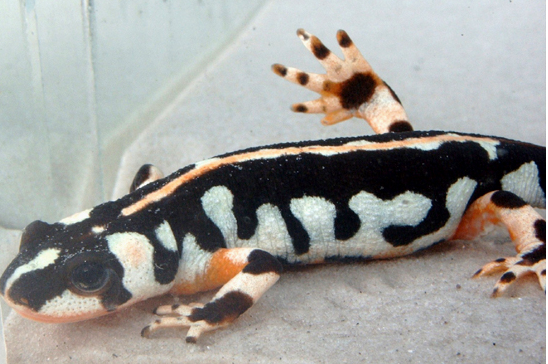
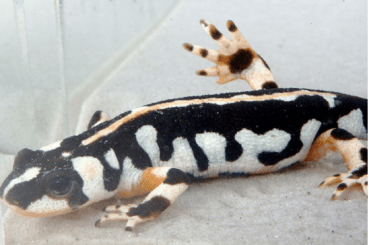
Immediately after an article recognised the small Indonesian turtle (Chelodina mccordi) and Chinese gecko (Goniurosaurus luii) as rarities, their prices soared on the exotic pet market. The turtle is now nearly extinct and the gecko can no longer be found in its southeastern China niche.
Exotic pet traders covet a wide range of creatures, including orangutans, monkeys, reptiles, birds and wild cats, as well as arachnids, insects and fish.
The Internet is a major factor in driving species into extinction faster than ever, says Ernie Cooper, director of wildlife trade at the World Wildlife Fund-Canada.
By Stephen Leahy

Nov 25 (IPS) – A prolonged drought in East Africa in the 1890s not only killed tens of thousands of the native Maasai people, it also reshaped the ecological and political landscape — this according to new research published in the current issue of the ‘African Journal of Ecology’.
Droughts and also disease outbreaks took place from 1883 to 1902, a series of events which the Maasai dubbed the “Emutai” (“to wipe out”). Rinderpest killed Maasai cattle in 1883-1884, then small pox devastated the people; this was followed by a drought, including two years with no rain. Not surprisingly a severe famine persisted for much of the 1890s.
“There were skeleton-like women with the madness of starvation in their sunken eyes, children looking more like frogs than human beings, ‘warriors’ who could hardly crawl on all fours, and apathetic, languishing elders…They were refugees from the Serengeti…” wrote Austrian geographer Oscar Baumann in 1894.
A period of severe erosion resulted from the combination of drought, fire and overgrazing, reports researcher Lindsey Gillson of the University of Cape Town in South Africa. Gillson’s study was done in Tsavo National Park in south-eastern Kenya.
This is a surprising result because the region is semi-arid and plants are drought tolerant. However when the cattle died, the Maasai were forced to rely on goats and sheep which probably led to temporary overgrazing, Gillson writes.
By the time the rains finally came, erosion had changed the region’s capacity to support livestock and other grazing animals.
Kenya’s world-famous national parks — Serengeti, Tsavo, Amboseli and Mkomazi — were traditionally central to the Maasai tradition and economy, but were nearly depopulated when European colonists arrived, says Jon Lovett of the Center for Ecology, Law and Policy at the University of York in England.
Quote of the day:
“Predictions of future climate change only give a small part of the story. What history tells us is how ecological shocks are related and the catastrophic results this can have on social systems.“ — Jon Lovett, of the Center for Ecology, Law and Policy at the University of York in England.
By Stephen Leahy
Nov 23 (IPS) – Iceland and a few other fishing nations have successfully undermined a three-year international effort to place a moratorium on destructive deep-sea trawling.
Environmentalists say that the agreement reached at a U.N. meeting early Thursday morning puts the commercial interests of a few hundred trawlers from a handful of nations ahead of the international community and ignores the advice of the scientific community.
“The final agreement has more loopholes in it than a fisherman’s sweater,” said Karen Sack, an oceans policy advisor with Greenpeace International, who has been monitoring the negotiations at the U.N.
“The oceans are in crisis. It (the agreement) does nothing to significantly change the way our oceans are managed,” Sack told IPS.
Scientists and conservationists had hoped for a moratorium on bottom trawling in the open ocean.
“Iceland refused to endorse any measures on the unregulated high seas,” said Susanna Fuller, a marine biologist with Canada’s Ecology Action Centre.
Australia, Chile and other nations were extremely angry at Iceland’s willingness to sacrifice vital fish habitat in the high seas for its short-term fishing interests, said Fuller, who attended the meetings in New York as an observer.
While New Zealand, the Pacific Island States, the United States, Brazil, India, South Africa, Germany and even previously reluctant Spain and Canada supported stronger action, the desire to achieve a consensus meant Iceland’s interests won out over common sense and the science, Fuller told IPS.
Scientific evidence of the need to halt unregulated deep-sea or bottom trawling is overwhelming.
Quote of the Day:
“Canada’s attitude towards the oceans are embarrassing and archaic,” says Elliott Norse, President of the Marine Conservation Biology Institute, a scientific environmental NGO in Washington State.
“Canada treats the oceans as if nothing could harm them,” Norse told IPS.
How is climate change affecting the world’s forests today and in the future
TORONTO, Nov 20 (IPS/IFEJ) – Deforestation remains the greatest current threat to the world’s forests, claiming 10 to 15 million hectares of tree-covered areas every year, but climate change may represent a bigger challenge in the long term, scientists say.
“We’re like a two-year-old playing with fire… We’re messing around with something dangerous and don’t really understand what will happen,” says William Laurance, of the Smithsonian Tropical Research Institute in Balboa, Panama, in reference to climate change and the Amazon rainforest.
Forests and other forms of life are now living on an “alien” planet where the levels of carbon dioxide and other greenhouse gases in the atmosphere are higher than they have been for a million years.
These unprecedented levels of greenhouse gases are creating a new, hotter planet with weather that is much more extreme than in the past.
What does this mean for the 20 percent of the Earth’s original forests that are still standing? Some scientists believe forests will grow faster in a warmer world. Others say they are more likely to burn, or suffer from disease or die from drought.
Part of a series on sustainable development for IPS and IFEJ (International Federation of Environmental Journalists)
Paraphrase of the Day: We’re like a two year old playing with fire when it comes to deforestation of the Amazon and global climate change.
We’re messing around with something dangerous and don’t really understand what will happen. — William Laurence, Smithsonian Tropical Research Institute, Balboa, Panama.