Dust Bowl Returns Permanently to US Southwest

Southwestern U.S. Becoming a Dust Bowl
Stephen Leahy

Apr 5 (IPS) – The severe seven-year drought in the Southwestern United States is just the beginning of a new and even drier climate for the region due to climate change, scientists say.

The infamous “dust bowl” conditions of the 1930s will be the norm, with the possibility that the aridity will be unlike anything in the past, according to research published Thursday in Science — one day before the release of another key report by the Inter-Governmental Panel on Climate Change, which also warns that drought-prone areas are likely to become even drier due to global warming.

According to Ming Fang Ting, a senior research scientist at Columbia University’s Lamont-Doherty Earth Observatory and co-author of the Science study, the current drought in the U.S. Southwest is not part of the natural variability in climactic conditions.
Continue reading

New eBook on Enviromental Impacts of Canada’s Oil Sands

copyright Pembina Institutecopyright Pembina Institute

Now Available:

Oil Stains in the Boreal Forest:
The Environmental Cost of Canada’s Oil Sands


A new eBook by Stephen Leahy

Canada’s oil sands are the world’s largest industrial project easily visible from space. Some of the environmental impacts can also be seen from space but many more are invisible and unacknowledged in their entirety until now.

Oil Stains in the Boreal Forest offers a fast, factual overview of the environmental impacts of pumping more than 1.1 million barrels of oil — 175 million litres/50 million gallons — each day to thirsty US markets. Leading scientific and environmental experts along with industry officials are interviewed to provide the full story.

Oil Stains in the Boreal Forest includes pictures of the environmental destruction, hyperlinks for additional information, a bonus chart on The Real Cost of Tank of Oil Sands Gas and a new economic study that shows Oil Company profits are based on no-cost pollution. (special publication price $6.00)

Biofuels and Carbon Credits Behind Global Deforestation

Biofuels Boom Spurring Deforestation
By Stephen Leahy

Mar 21 (IPS/IFEJ) – Nearly 40,000 hectares of forest vanish every day, driven by the world’s growing hunger for timber, pulp and paper, and ironically, new biofuels and carbon credits designed to protect the environment.

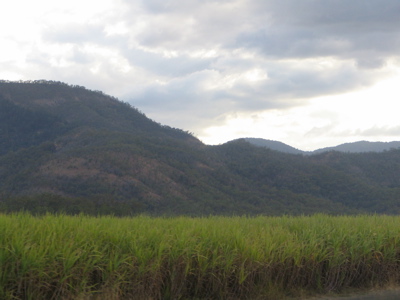
Sugarcane field Queensland Australia Copyright Renate Leahy 2004The irony here is that the growing eagerness to slow climate change by using biofuels and planting millions of trees for carbon credits has resulted in new major causes of deforestation, say activists. And that is making climate change worse because deforestation puts far more greenhouse gases into the atmosphere than the entire world’s fleet of cars, trucks, planes, trains and ships combined.

“Biofuels are rapidly becoming the main cause of deforestation in countries like Indonesia, Malaysia and Brazil,” said Simone Lovera, managing coordinator of the Global Forest Coalition, an environmental NGO based in Asunción, Paraguay. Continue reading

Iraq’s Environmental Nightmare

Bee Eaters in Iraq Copyright 2006 Laurie Haak IRAQ: Environmental Nightmare Drags On

“We inherited a terrible situation when it comes to the environment,” Narmin Othman, Iraq’s environment minister.

By Stephen Leahy

Mar 21 (Tierramérica) – Four years after the U.S.-led invasion of Iraq and despite 22 billion dollars spent on recovery and reconstruction, Iraq’s environment remains in disastrous shape.

“The Tigris and Euphrates rivers are essentially open sewers,” Azzam Alwash, head of Nature Iraq, a conservation group based in Baghdad, told Tierramérica.
Continue reading

Pacific Islanders Preyed on by Bio-Pirates

By Stephen LeahyCopyright 2004 Renate Leahy

Mar 20 (IPS) – The Pacific region has long been a favourite target of gene hunters, unethical bio-researchers and “patent bottom trawlers” looking to profit from its unique flora, fauna — and human beings.

Pacific Islanders have had their genes patented against their will. T-cells from the Hagahai tribe in Papua New Guinea can be purchased today on the internet for 216 dollars.
Continue reading

Abrupt Environmental Change Sparks Violent Conflicts

Thirstier World Likely to See More Violence
By Stephen Leahy

Mar 16 (IPS) – A strong link between droughts and violent civil conflicts in the developing world bodes ill for an increasingly thirsty world, say scientists, who warn that drought-related conflicts are expected to multiply with advancing climate change.

“Severe, prolonged droughts are the strongest indicator of high-intensity conflicts,” said Marc Levy of the Centre for International Earth Science Information Network at Columbia University’s Earth Institute in New York.

Continue reading

40 Million Tonnes of Electronic Waste Each Year

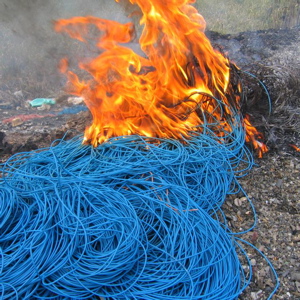
Copyright EMPA, Switzerland E-Waste Dumping Needs International Solution

By Stephen Leahy

Mar 9 (IPS) – A global public-private partnership was launched this week to reduce the toxic mountains of electronic waste and recycle increasingly valuable metals and components.

Much of the nearly 40 million tonnes of “e-waste” — discarded electronics and electrical appliances — produced globally each year ends up in China, India and other developing countries.
Continue reading

Environmental Changes Wiped Out 170 Amphibian Species Over Past 20 years

Frogs Fading Into Silence

By Stephen Leahy

The extinction of amphibians in Latin America has reached alarming proportions: 209 species in Colombia and 198 in Mexico alone are in danger of disappearing forever

Mar 5 (Tierramérica) – Frogs and other amphibians are rapidly becoming extinct around the world and in Latin American countries in particular. In the Caribbean as many as 80 percent of these species are endangered, while in Colombia there are 209 and in Mexico 198 amphibians may soon disappear.

Environmental degradation along with habitat loss, ultraviolet radiation, disease and climate change are all factors involved in these unprecedented losses.

Continue reading

Tackling the E-waste Pollution Monster

Copyright EMPA, SwitzerlandParaphrase for the day:

One tonne of discarded mobile phones has about 7000 euros worth of precious metals.

— Ruediger Kuehr of the United Nations University

Story about a global public-private initiative is now available see 40 Million Tonnes of Electronic Waste. Describes global effort to reduce the toxic mountains of electronic waste and recycle increasingly valuable metals and components.

My related articles:

Is Your Old TV Poisoning a Child in China? Where Your e-waste Goes

Greener Cell Phones Thanks to European Laws

30 Million Lead-laden TVs Dumped on Poor Countries

Top Ten Worst Pollution Problems That Kill Millions – Including Ones You’ve Never Heard Of