Peak Fish: The Beginning of the End of Ocean Seafood

Ocean Fisheries Maxed OutCopyright 2004 Renate Leahy

By Stephen Leahy

Mar 5 (IPS) – Two-thirds of fish stocks in the world’s high seas are overfished, while most of those closer to shore are failing or fished to the maximum, a new U.N. report said Monday.

More and stronger regional fisheries management organisations are needed to rebuild depleted stocks and prevent the collapse of other stocks, warned the FAO’s latest “State of World Fisheries and Aquaculture” (SOFIA) report.
Continue reading

Response To Global Change Too Slow


Paraphrase of the Day:

Institutions are not responding fast enough to the industrial might and scale of change that is happening be it climate change or rapid loss of species or decline in the global fisheries. The rate are which our institutions take action is simply too slow. — Daniel Pauly, director of the Fisheries Centre at the University of British Columbia.

See complete story

Melting Ice Offers Window on Polar Ecosystem

Copyright Alfred Wegener Institute for Polar and Marine Research

By Stephen Leahy

Feb 27 (IPS) – The collapse of Antarctic ice shelves due to climate change is providing the first views of marine life hidden deep under the polar ice for more than 5,000 years.

A 10-week Antarctic international expedition to probe the region’s secrets is also the first major scientific effort of the International Polar Year that was officially launched Monday in Paris and London.

Continue reading

Fish with Chips — Underwater Electronics to Revolutionize Fisheries Management

Scientists Put an Ear to the Ocean Floor

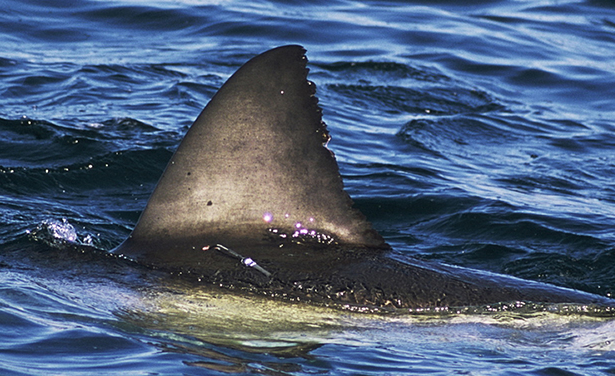
Photo courtesy of TOPP

By Stephen Leahy

Feb 14 (IPS) – Canada will spend 38 million dollars to install thousands of undersea listening posts along the continental shelves of North America, the Mediterranean, Gulf of Mexico and Australia.

Akin to military hydrophones used to detect the underwater passage of submarines, the receivers of the new Ocean Tracking Network will track movements of fish and marine mammals tagged with tiny acoustic transmitters.

And this too is a security issue — fish stock security.

Continue reading

Fish Stocks and Science to Benefit from Undersea Listening Devices

Paraphrase for the day:


“This will change the way marine science does business.” — Ron O’Dor, a researcher at Dalhousie University in Nova Scotia who leads the Ocean Tracking Network.


Movements of thousands of ocean-going fish and marine mammals are being followed by scientists using the new Ocean Tracking Network that could ramp up to track a million animals around the globe.

Story here:

Fish with Chips — Underwater Electronics to Revolutionize Fisheries Management


Top 10 Hottest Stories of 2006

Selected as one of IPS News Hot Stories of 2006:

From Mosques to Mollusks, No Haven From Rising CO2

By Stephen Leahy
drought-manaquiri-amazon-brazil-2005-greenpeacealberto-cesar-araujo.png
Three hundred and eighty parts per million.

That’s the current concentration of carbon dioxide going into your lungs with each breath. Our parents or grandparents’ first breaths at birth contained about 290 parts per million (ppm), as it was for everyone born before them.

What does it really mean when in the not so distant future our children or grandchildren will inhale 450, perhaps 500 ppm or more of carbon dioxide?

Evidently, breathing in a bit more carbon dioxide (CO2) isn’t bad for human health — oxygen at sea level is 200,000 ppm, after all — but the changing atmosphere is having profound impacts on the climate of the planet.

The changing climate has many consequences, among them the potential loss of ancient ruins in Thailand, coral reefs in Belize, 13th century mosques in the Sahara, the Cape Floral Kingdom in South Africa and other irreplaceable natural and historic sites around the world, experts reported this week.

— More at Mosques to Mollusks story published Nov 10 2006.

— See also IPS News Top Stories of 2006

Questions, story ideas, potential assignments, speaking engagements contact: writersteve AT gmail . com (no spaces)

Sushi or Tourism: What Are Whales For?

Blue whale, courtesy IFAW

By Stephen Leahy

[Update Jan 15 2008. Japanese whalers are on the hunt right now with activists in hot pursuit just like last year. Little has changed from the situation documented in this 2006 story. SL]

TORONTO, Dec 28 (Tierramérica) – Japan’s controversial whaling fleet has arrived in the Southern Ocean, around Antarctica, and anti-whaling activists are promising to ram and sink any vessels attempting to kill whales.

“What the Japanese whalers are doing is illegal under the United Nations World Charter for Nature,” said Paul Watson founder of the Sea Shepherd Conservation Society.

“It’s also murder in my personal opinion,” Watson told Tierramérica from Melbourne, Australia, where his ship, the Farley Mowat, was docked. Continue reading

Whales Worth More Alive Than Dead

Quote of the Day:

“There is no market for whale meat,” said Beatriz Bugeda, the International Fund for Animal Welfare’s Director
for Latin America regarding the Japanese whaling expedition underway in the Antarctic ocean.


“Whales are worth far more alive than dead,” Bugeda said in reference to the enormous whale-watching industry.


— see Sushi or Tourism: What are Whales For?

Blue whale, courtesy IFAW

Plumbing the Secrets of the Ocean Depths

By Stephen Leahy

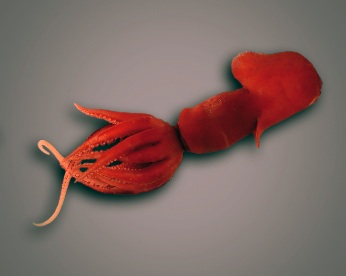
Dec 10 (IPS) – Incredible new forms of life have been discovered around super-hot 400new-species-of-squid-coml.jpg degree C seafloor vents, as well as under 700 metres of Antarctic ice, by the 20th scientific expedition of the Census of Marine Life of 2006 now underway.

For the next few weeks, scientists aboard the German research icebreaker Polarstern will explore the Antarctic seafloor, which has been hidden by thick layer of ice for more than 5,000 years. It is an unprecedented opportunity brought about the unexpected collapse of the Larsen B ice shelf along the Antarctic Peninsula four years ago. Now 3,250 sq kms of sea floor is accessible.

“Preliminary research shows there is a huge amount of diversity of life there,” said Ron O’Dor, a senior scientist with the Census of Marine Life (CoML).

“This is our first chance to take a good look at a region no one has explored before,” O’Dor told IPS.

The CoML is a global partnership of 2,000 scientists from 80 countries with a 10-year mandate to investigate life in the seas until 2010. Earlier CoML expeditions to the Antarctic have uncovered an astonishing community of marine life shrouded beneath 700 metres of ice — 200 kms from open water.

“We’re finding more new species than known species,” O’Dor said.

The great Southern Ocean is the least explored but perhaps the most important, as it is the link between all the other oceans of the world.

Climate change is warming the Southern Ocean and ice is melting in many parts of the Antarctic. Census scientists are trying to determine how the warming will affect marine species in the region, O’Dor says.

The Polarstern, the research flagship of the Alfred Wegener Institute for Polar and Marine Research in Bremerhaven, Germany, is the 20th Census expedition of 2006. It is also the first of 14 Antarctic expeditions being launched as part of the International Polar Year 2007-2008.

Complete “Plumbing the Secrets of the Ocean Depths” story here