Overfishing and Global Warming Imperil Penguins – Happy Feet was right

emperor penguinsBy Stephen Leahy

Nov 30, 2006 (IPS) – Ice-loving penguins have never been more popular, but few people realise they are threatened with extinction from climate change and industrial fishing.

The loveable stars of the Hollywood movie “Happy Feet” and the stoic and courageous creatures featured in the popular documentary “March of the Penguins” are in trouble.

Of the world’s 19 penguin species, 12 are now so threatened they need special protection, according to the Centre for Biological Diversity (CBD), a California environmental group focused on species extinction.

Popularity doesn’t guarantee survival. But it might increase protection and prompt action on climate change, says Brendan Cummings, director of the CBD’s Oceans Programme.

Cummings’ organisation filed a formal petition this week requesting that 12 species of penguins worldwide, including the well-known Emperor Penguin, be added to the list of threatened and endangered species under the United States Endangered Species Act. Continue reading

Internet and Lust for Rarity Driving Species Into Extinction

The Insatiable in Pursuit of the Inedible
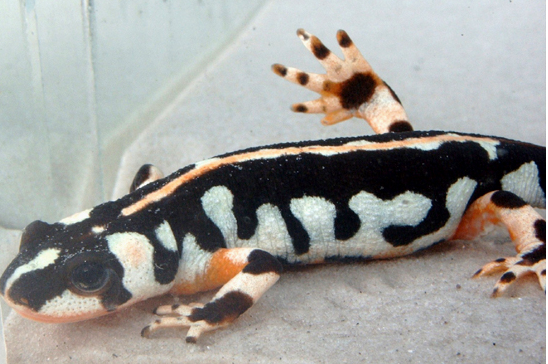
By Stephen Leahykaiser’s spotted newt

Nov 28 (IPS) – In an ironic twist, officially listing a species as endangered drives up its value to collectors and consumers, putting it on an even faster track to extinction, researchers in Paris reported Tuesday.

A perverse human penchant for possessing the last remaining giant parrot, tegu lizard or lady’s slipper orchid increases the value of the species so that collectors will spend thousands of dollars and go to any length, legal or illegal, to obtain them.

This triggers a positive feedback loop between exploitation and rarity that drives a species into an extinction vortex, Franck Courchamp and colleagues write in the scientific journal PloS Biology.

“It can be dangerous for a species to announce that it has become rare if it cannot be protected from exploitation,” Courchamp told IPS from his office at the University of Paris-South in Orsay, France.

“Even inconspicuous species can suddenly become valuable just because they are rare,” he said.

Hobby collectors, the exotic pet trade, trophy hunters, traditional medicine and luxury goods made from rare species are among the forces pushing rare species into extinction.

And the scientific literature is often used to identify the next hot species, Courchamp found.

Immediately after an article recognised the small Indonesian turtle (Chelodina mccordi) and Chinese gecko (Goniurosaurus luii) as rarities, their prices soared on the exotic pet market. The turtle is now nearly extinct and the gecko can no longer be found in its southeastern China niche.

Exotic pet traders covet a wide range of creatures, including orangutans, monkeys, reptiles, birds and wild cats, as well as arachnids, insects and fish.

The Internet is a major factor in driving species into extinction faster than ever, says Ernie Cooper, director of wildlife trade at the World Wildlife Fund-Canada.

Full story here

Trawling Moratorium Dead in the Water


By Stephen Leahy

img_0165.JPGNov 23 (IPS) – Iceland and a few other fishing nations have successfully undermined a three-year international effort to place a moratorium on destructive deep-sea trawling.

Environmentalists say that the agreement reached at a U.N. meeting early Thursday morning puts the commercial interests of a few hundred trawlers from a handful of nations ahead of the international community and ignores the advice of the scientific community.

“The final agreement has more loopholes in it than a fisherman’s sweater,” said Karen Sack, an oceans policy advisor with Greenpeace International, who has been monitoring the negotiations at the U.N.

“The oceans are in crisis. It (the agreement) does nothing to significantly change the way our oceans are managed,” Sack told IPS.

Scientists and conservationists had hoped for a moratorium on bottom trawling in the open ocean.

“Iceland refused to endorse any measures on the unregulated high seas,” said Susanna Fuller, a marine biologist with Canada’s Ecology Action Centre.

Australia, Chile and other nations were extremely angry at Iceland’s willingness to sacrifice vital fish habitat in the high seas for its short-term fishing interests, said Fuller, who attended the meetings in New York as an observer.

While New Zealand, the Pacific Island States, the United States, Brazil, India, South Africa, Germany and even previously reluctant Spain and Canada supported stronger action, the desire to achieve a consensus meant Iceland’s interests won out over common sense and the science, Fuller told IPS.

Scientific evidence of the need to halt unregulated deep-sea or bottom trawling is overwhelming.

Full Story here

Canada Trying to Scuttle Temporary Halt to Destructive, Unregulated Bottom Trawling on High Seas

Quote of the Day:


“Canada’s attitude towards the oceans are embarrassing and archaic,” says Elliott Norse, President of the Marine Conservation Biology Institute, a scientific environmental NGO in Washington State.

“Canada treats the oceans as if nothing could harm them,” Norse told IPS.

Full story here

From Mosques to Mollusks, No Haven From Rising CO2

By Stephen Leahy

BROOKLIN, Canada, Nov 10 (IPS) – Three hundred and eighty parts per million. That’s the current concentration of carbon dioxide going into your lungs with each breath. Our parents or grandparents’ first breaths at birth contained about 290 parts per million (ppm), as it was for everyone born before them.

What does it really mean when in the not so distant future our children or grandchildren will inhale 450, perhaps 500 ppm or more of carbon dioxide?

Evidently, breathing in a bit more carbon dioxide (CO2) isn’t bad for human health — oxygen at sea level is 200,000 ppm, after all — but the changing atmosphere is having profound impacts on the climate of the planet.

The changing climate has many consequences, among them the potential loss of ancient ruins in Thailand, coral reefs in Belize, 13th century mosques in the Sahara, the Cape Floral Kingdom in South Africa and other irreplaceable natural and historic sites around the world, experts reported this week.

“Climate changes are impacting on all aspects of human and natural systems, including both cultural and natural World Heritage properties, “said Koichiro Matsuura, director-general of the U.N. Educational, Scientific and Cultural Organisation, which hosts the World Heritage Centre.

— Full Story here

Oceans on the Brink of No Return

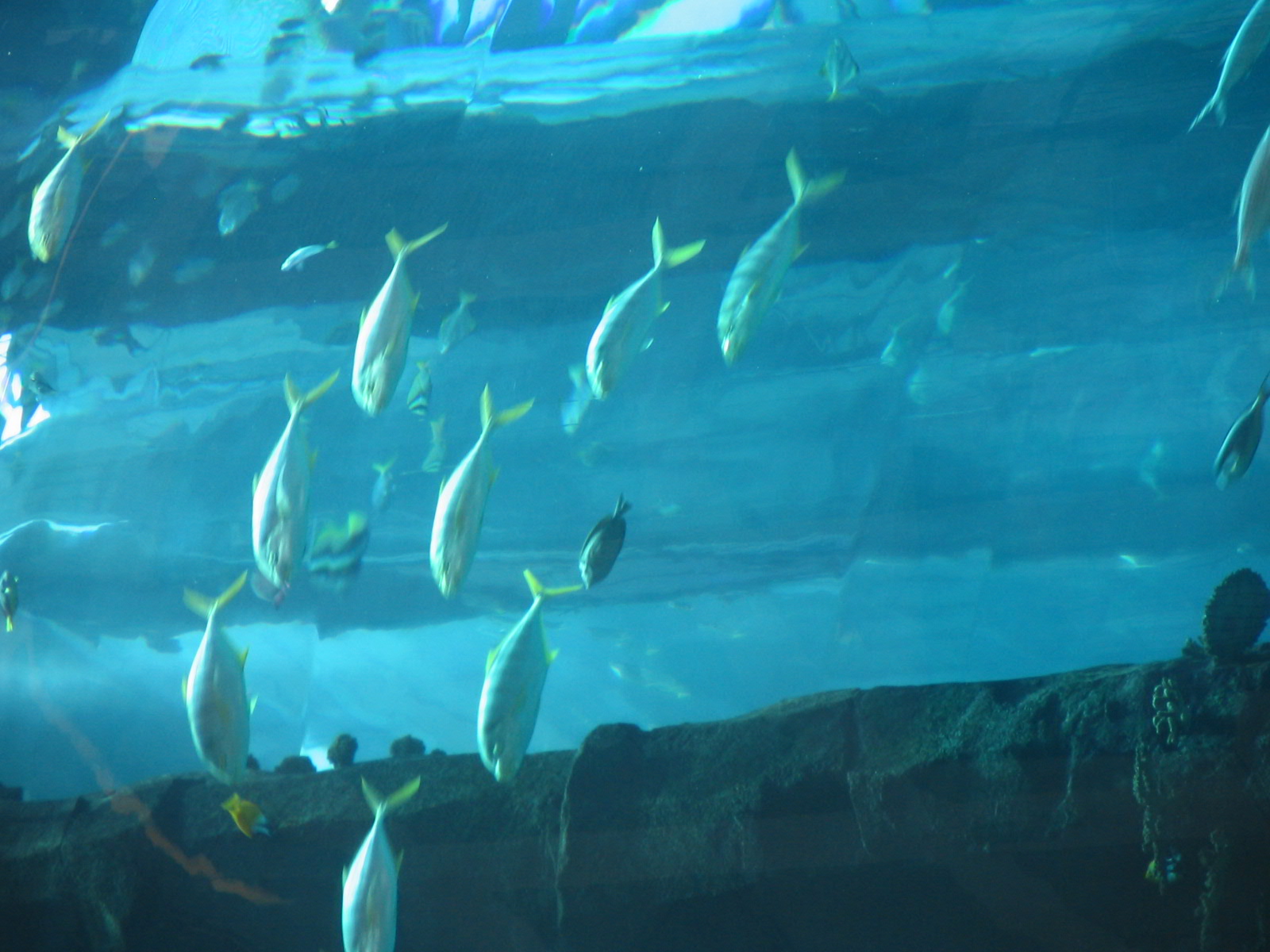
yellow-fin-tua-galapagos.jpg

By Stephen Leahy Nov 2 ’06 (IPS) – Every single commercial fishery in the world will be wiped before 2050 and the oceans may never recover if over-fishing continues at its current rate, a four-year scientific investigation has found.

“By the time my nine-year-old son is my age, there would be no wild seafood left,” said Emmett Duffy, a scientist at the Virginia Institute of Marine Sciences in the United States.

In this grim, not-to-far-off future, not only will there be no fish to eat, humans will also lose the vital services oceans provide, including processing wastes, cleaning beaches, controlling flooding and absorbing carbon dioxide from the atmosphere. Continue reading

Canada Fights Ban on “Bulldozers of the Sea”

By Stephen Leahy

Oct 12 (IPS) – Canada is trying to scuttle a proposed United Nations moratorium on destructive bottom trawling of the open ocean that has received surprisingly strong support from the United States, as well as other countries.

“Canada’s attitude towards the oceans is embarrassing and archaic,” said Elliott Norse, president of the Marine Conservation Biology Institute, a scientific environmental group in Washington State.

“Canada treats the oceans as if nothing could harm them,” Norse told IPS.

The U.N. General Assembly started debate this week on an Australian-led plan for a temporary moratorium on deep-sea bottom trawling in unmanaged high seas and to impose tougher regulation of other destructive fishing practices.

Because of Canada’s good international reputation, other nations are listening and that greatly increases the risks the U.N. will not act on the proposed moratorium, Norse said.

Canada’s opposition, especially from a recently elected government, comes as a surprise.

“Canada doesn’t have any open ocean trawlers and has everything to gain from a ban,” Norse pointed out.

–FULL STORY

Related stories by Stephen Leahy

Trawling seamounts threatens ocean’s biodiversity
Hundreds of deep-sea species new to science are disappearing before they can be identified or studied, oceanographers are warning. The organisms are being pushed to extinction by trawlers targeting undersea volcanic mountains called seamounts. — New Scientist Magazine

A Plan to Torpedo the Trawlers
Environmentalist groups will soon be dragging deep-sea trawl nets the size of Boeing 747s across cities, rolling out ad campaigns featuring photos of unique creatures from the ocean’s depths, and sending out ships to dog the movements of ocean-going trawlers. — Wired News

Farmed Salmon Killing Off Wild Cousins

Stephen Leahy

BROOKLIN, Canada, Oct 2 (IPS) – Canada’s open-ocean salmon farms are killing enormous numbers of wild salmon, threatening the species, a new study shows.

Research published Monday found that sea lice — a fish parasite — from salmon farms along the British Columbia coast kill up to 95 percent of the wild juvenile salmon as they head out to sea.

“It is a startling conclusion,” said Alexandra Morton, a biologist with the Raincoast Research Society and co-author of the study published in the Proceedings of the National Academy of Sciences.

“We are not going to have any wild salmon at this rate,” Morton told IPS.

—Inter Press News Service

Marine Scientists Report Massive “Dead Zones”

by Stephen Leahy

BROOKLIN, Canada, Oct 5 (IPS) – Rising tides of untreated sewage and plastic debris are seriously threatening marine life and habitat around the globe, the United Nations Environment Programme (UNEP) warned in a report Wednesday.

The number of ocean “dead zones” has grown from 150 in 2004 to about 200 today, said Nick Nuttall, a UNEP spokesperson.

“These are becoming more common in developing countries,” Nuttall told IPS from Nairobi, Kenya.

Dead zones can encompass areas of ocean 100,000 square kms in size where little can live because there is no oxygen left in the water. Nitrogen pollution, mainly from farm fertilisers and sewage, produces blooms of algae that absorb all of the oxygen in the water.

Growing global populations, mainly concentrated along coastlines, and the resulting increase in untreated sewage are endangering human health and wildlife, as well as livelihoods from fisheries to tourism, according to the “State of the Marine Environment” report.

“An estimated 80 percent of marine pollution originates from the land,” said Achim Steiner, United Nations undersecretary-general and UNEP’s executive director.

“And this could rise significantly by 2050 if, as expected, coastal populations double in just over 40 years time and action to combat pollution is not accelerated,” Steiner said in a statement.

The report is compiled from a wide variety of government, academic and other sources by UNEP’s Global Programme of Action for the Protection of the Marine Environment from Land-Based Sources.

In many developing countries, between 80 percent and nearly 90 percent of sewage entering the coastal zones is estimated to be raw and untreated. These wastes contain bacteria and viruses that can contaminate marine species such as shellfish that are consumed by people, Nuttall said.

Studies in the Caribbean Sea have also shown that sewage encourages the spread of disease in corals, ultimately destroying them. Around 80 percent of Caribbean coral has been lost to disease in the past 20 years, report researchers at the University of North Carolina in the United States.

Some cities in the developed world also dump their sewage directly into waterways.

More than one half of wastewater entering the Mediterranean Sea is untreated, as is 60 percent of the wastewater discharged into the Caspian Sea, the UNEP report found.

Unlike the United States and countries in the European Union, Canada has no national standards for sewage treatment for cities. Montreal dumps billions of litres of untreated sewage into the St. Lawrence River, while the postcard-perfect tourist city of Victoria, British Columbia dumps all of its waste directly into the Pacific Ocean.

Such waste can contain high levels of toxic chemicals, heavy metals and excreted pharmaceuticals. The latter pose risks that are only beginning to be understood. Emerging research shows negative impacts on marine life from residues of birth control and antidepressant drugs like Prozac even at extremely low concentrations of less than one part per billion.

“The big unknown” is what effect these pharmaceutical residues might have on chronically exposed plants, animals and people, Christian Daughton, chief of the environmental chemistry branch at the U.S. Environmental Protection Agency, has been reported as saying.

Expensive treatment plants are not the only solution to untreated sewages wastes — coastal wetlands, salt marshes and mangroves can also do the job, Nuttall explained.

“It’s important for governments to conserve and rehabilitate these natural features and take their value into consideration in their urban planning,” he said.

Plastic is an even more visible environmental concern, killing more than a million seabirds and 100,000 mammals and sea turtles each year, according to previous U.N. reports.

Plastic bags, bottle tops and polystyrene foam coffee cups are often found in the stomachs of dead sea lions, dolphins, sea turtles and birds. Seagulls in the North Sea had an average of 30 pieces of plastic in their stomachs, according to a Dutch study in 2004.

The volume of plastic debris was estimated at eight million pieces a day in 1982 and is unquestionably much higher today, perhaps double or triple that number. About 20 percent of the plastic in the oceans comes from ships or offshore platforms; the rest is blown or washed off the land, according to the U.S. Commission on Ocean Policy.

Plastic debris is now found everywhere, even the remotest regions of Antarctica.

Truly pristine locales no longer exist, writes David K.A. Barnes of the British Antarctic Survey in a recent paper.

“Some surveys have involved the first known visit by man to very ‘remote’ shores, but our miracle material had long since beaten us there,” he wrote.

In parts of the Southern Ocean, marine debris has tripled in volume in the past decade. Barnes has also shown that marine debris is transporting exotic species to locales they could never have reached normally, changing the ecology of some regions.

Most plastics do not biodegrade, they just break up into ever-smaller particles. British scientists have discovered that microscopic pieces of plastic can be found everywhere in the oceans, even inside plankton, the foundation of the marine food chain.

“The problem of marine litter has steadily grown worse, despite national and international efforts to control it,” acknowledges the UNEP report.

The report’s findings will be officially presented to governments attending a review of the decade-old Global Programme of Action initiative taking place in Beijing, China, from Oct. 16-20.

There have been some improvements, the report notes. Levels of oily waste discharged from industry and cities has, since the mid 1980s, been cut by close to 90 percent. Marine contamination from toxic persistent organic pollutants like DDT and discharges of radioactive waste has also been sharply reduced.

However, larger challenges lie ahead, such as global warming and sea level rise.

“So we have a long way to go politically, technically and financially if we are to hand over healthy and productive seas and oceans to the next generation,” Steiner said.

…Inter Press News Service