Burning Down Our House

chilee28094the-fury-of-chaiten-volcano-nat-geoAnalysis by Stephen Leahy

QUEBEC CITY, Canada, Dec 15 (IPS)

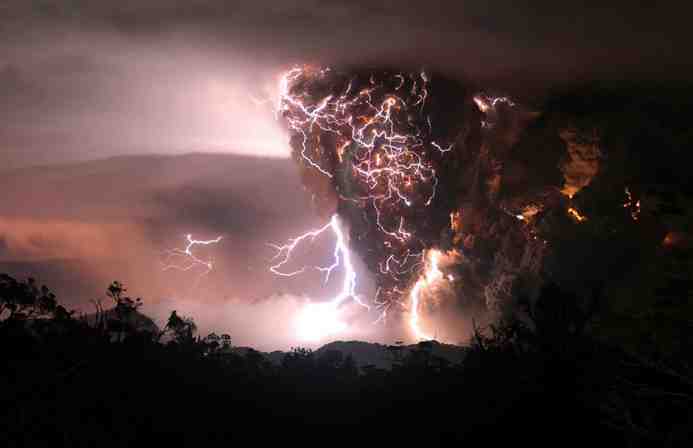
The roof of our house is on fire while the leaders of our family sit comfortably in the living room below preoccupied with “political realities”.

That was essentially the message from 1,000 scientists from around the world along with northern indigenous leaders gathered in Quebec City for the International Arctic Change conference that concluded last weekend.

“Climate change and its impacts are accelerating at unexpected rates with global consequences,” delegates warned in a statement.

Presenting data from hundreds of studies and research projects detailing the Arctic region’s rapid meltdown and cascading ecological impacts, participants urged governments to take “immediate measures to reduce greenhouse gas emissions”.

By happy coincidence, 190 governments were meeting at the same time in Poznan, Poland to do just that: reach an agreement on how much to reduce emissions from the burning of fossil fuels. Except that they decided to do nothing. Continue reading

Arctic Oil and Gas Rush Alarms Scientists

By Stephen Leahy

[See also more recent story: Arctic Ice Gone in 5 Years – First Time in One Million Years; see also other Arctic and oil stories below. US and Canada to start offshore drilling in the Arctic summer 2010 – your support is needed to investigate and report on this. ]

UXBRIDGE, Canada, Sep 8 2008 (IPS)

As greenhouse gas pollution destroys Arctic ecosystems, countries like Canada are spending millions not to halt the destruction but to exploit it.

Late last August, Canada announced a 93.7-million-dollar prospecting programme to map the energy and mineral resources of the region. There are “countless other precious resources buried under the sea ice and tundra,” Prime Minister Stephen Harper said during the announcement. The government’s mapping effort is expected to trigger 469 million dollars in private sector resource exploration and development.

“It is estimated that a quarter of the world’s undiscovered oil and gas lies under the Arctic,” Harper said.

This scramble to exploit some of the most environmentally delicate regions of Earth has alarmed international experts who are meeting this week in Iceland to make recommendations to the United Nations and world governments on how to protect the polar regions.

“Many experts believe this new rush to the polar regions is not manageable within existing international law,” says A.H. Zakri, director of the United Nations University’s Yokohama-based Institute of Advanced Studies (UNU-IAS), co-organisers of the conference with Iceland’s University of Akureyri. Continue reading

Arctic Meltdown Signals Long-Term Trend

By Stephen Leahy

UXBRIDGE, Canada , Sep 5 (IPS) – Soaring temperatures have led to the collapse of several huge ice shelves in the Canadian Arctic over the past few weeks.

One 50 sq km ice shelf on the northern coast of Canada’s Ellesmere Island simply “vanished” over three days, exposing a coast that lay buried under ice for at least 4,000 years.

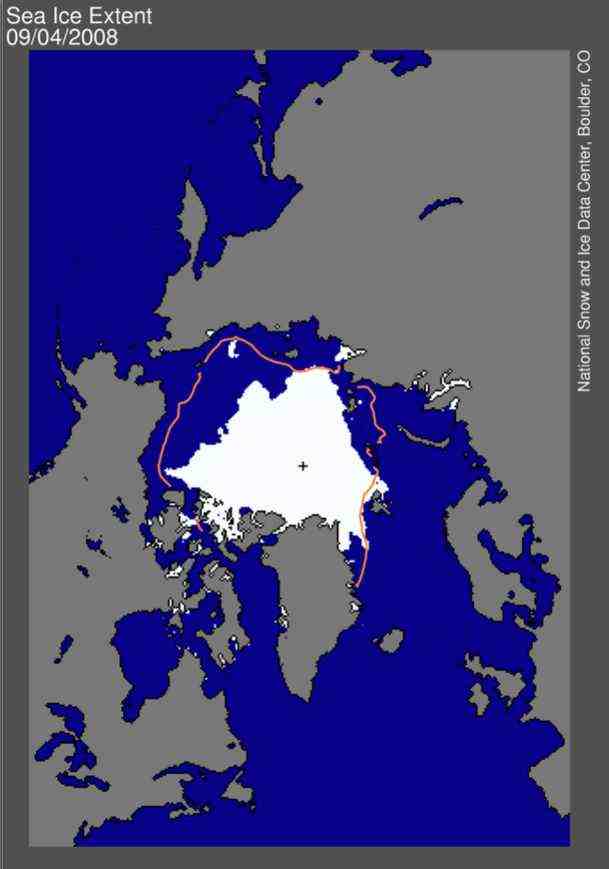
At the same time, the Arctic’s thick, year-round sea ice cover has declined to near the 2007 record of 2.6 million square kilometres less ice than the summer average minimum. This year’s ice loss is still huge — an area that’s far larger than the states of Alaska and Texas combined.

“My gut feeling is that the sea ice decline won’t beat last year’s record,” said Walter Meier of the National Snow and Ice Data Center at the University of Colorado in Boulder.

This year’s sea ice decline is expected to reach its peak in the next few days. “The (2008) decline is already the second largest loss of summer ice on record even though the weather was not as warm as last year,” Meier told IPS. Continue reading

Oil vs Polar Bears in Alaska: Big Oil Sues Govt for Protecting Polar Bear Habitat

[Update Mar 3 2011: An Alaska oil industry trade group representing 15 oil & gas companies sued the US federal government because it banned drilling in 187,157 square miles as polar bear critical habitat. They claim plenty of polar bears without offering any evidence. And it’s not like Alaskan oil interests haven’t run the state for years. My article below documents how 30 million acres of polar bear habitat were auctioned off in a big hurry in 2008. It really is all about oil/gas $ VS survival of polar bears. — Stephen]

[Update: May 1 2010 – Alaska’s polar bears are now official listed as threatened. In April 2010, the Obama administration tried but failed to get the world’s 20-25,000 remaining polar bears listed as endangered species. What a difference a new administration makes .–Stephen]

By Stephen Leahy

BROOKLIN, Canada, Mar 11, 2008 (IPS)

A coalition of environmental groups sued the George W. Bush administration Monday for delaying a decision to protect polar bears threatened with extinction due to the melting ice in its Arctic habitat. Polar bears could be the first species officially threatened by climate change.

The huge loss of summer sea ice in 2007 has caused many scientists to project that the Arctic could be ice-free in summer by as soon as 2012. Although excellent swimmers, polar bears are not very good at catching seals in the water. Seals comprise the main diet for these giant bears, which are far larger than their grizzly bear cousins.

While legally required to make a decision Jan. 9, US Fish and Wildlife (U.S. FWS) officials have been silent. Meanwhile on Feb. 6, 2.6 billion dollars in oil and gas leases were auctioned off to energy companies on nearly 30 million acres of prime polar bear habitat in the Alaska’s Chukchi Sea.

This independent environmental journalism depends on public support. Click here learn more.

Coincidence? I doubt it, but I don’t have the smoking gun to prove it,” said Kassie Siegel of the Centre for Biological Diversity (CBD), an environmental non-governmental organisation based in Joshua Tree, California.

The CBD, along with Greenpeace and the Natural Resources Defence Council, filed the suit for missing the legal deadline for issuing a final decision on whether to list the polar bear under the Endangered Species Act due to global warming.

“There was absolutely no urgency to hold that lease sale and plenty of public opposition to it as well,” Siegel told IPS. Continue reading

Polar Bears’ Future Bleak in Melting Arctic

http://www.firstpeople.us

Lots of folks have been telling me that polar bears are doing ok and don’t need protection under the US Endangered Species Act. Some say polar bear populations are stable in Alaska and increasing in parts of Canada. And there might be 1500 more bears than previous estimates according to a three year study in Nunavut which makes $2 million a year from polar bear trophy hunters. But 1500 isn’t very many more bears and with the Arctic sea ice melting fast the future certainly doesn’t look bright.

As for Alaska consider this fact:

This week scientists announced new findings that the survival rate of polar bear cubs in Alaska’s Beaufort Sea has plummeted. In the late 1980s, 65 percent of polar bear cubs in the southern Beaufort Sea survived their first year. That has fallen to an average of 43 percent in the past five years. — Polar Bears Go Hungry as Icy Habitat Melts Away

“Without taking serious and urgent action to stabilize the climate, there is no future for polar bears” says Andrew Derocher, Chair of the World Conservation Union (IUCN), Polar Bear Specialist Group.

See also this controversy: Oil vs Polar Bears in Alaska

And these updates on the Arctic: Arctic Is the Canary in the Coalmine

Arctic Oil and Gas Rush Alarms Scientists

Arctic Meltdown Signals Long-Term Trend

Inuit Sue America over Climate Change

http://www.firstpeople.us

Forests, the Great Green Hope?

By Stephen Leahy


Credit:Tomasz Kuran

Mixed forest near Radziejowice, Poland.

Dec 3 (IPS) – Expanding European forests absorbed 126 million tonnes of carbon dioxide from 1990 to 2005 — equivalent to 11 percent of European Union emissions from human activities — while a U.N. target to plant one billion trees mainly in Africa has been surpassed.

“Forests reduced carbon dioxide more than twice the amount of Europe’s renewable energy programmes,” said Pekka Kauppi, who led the University of Helsinki study, published in the British journal Energy Policy on Nov. 29.

Better conservation, migration to cities, and conversion of surplus farmland are the reasons behind the growing and expanding forests, which are mainly in Latvia, Lithuania, Sweden, Slovenia, Bulgaria and Finland Kauppi, told IPS. The study is based on forestry statistics provided by governments and that were not independently verified.

The resulting “surprisingly high carbon dioxide removal” may be the major factor in Europe achieving its ambitious target of 20 percent reductions in greenhouse targets by 2020, Kauppi said.

“On a global scale, there is hope for the future if we stop deforestation and expand forests,” he added. Continue reading

Inuit Sue America over Climate Change

By Stephen Leahy

The Inuit people of the Arctic regions are preparing to charge the United States with human rights violations, saying that country is the leading culprit behind climate change, which threatens their way of life — and their very survival.

Originally published in Latin America Feb 15 2005 by Tierramérica

The sharp increase in temperatures in the Arctic has led to dramatic losses of sea ice and melting permafrost (the layer of ground that normally remains frozen year round), which have destroyed buildings and roads and forced relocations of entire native Inuit villages. Continue reading

Global Warming Will Decimate Arctic Peoples

By Stephen Leahy10000660_jpg.jpg

Climate change will soon make the Arctic regions of the world nearly unrecognisable, dramatically disrupting traditional Inuit and other northern native peoples’ way of life, according to a new report that has yet to be publicly released.

Originally published in September 11 2004 by the Inter Press Service

The dire predictions are just some of the findings by the Arctic Climate Impact Assessment (ACIA), an unprecedented four-year scientific investigation into the current and future impact of climate change in the region. “This assessment projects the end of the Inuit as a hunting culture,” said Sheila Watt-Cloutier, chairwoman of the group that represents about 155,000 Inuit in the Arctic regions of Canada, Russia, Greenland, and the United States.

The report predicts the depletion of summer sea ice, which will push marine mammals like polar bears, walrus and some seal species into extinction by the middle of this century, Watt-Cloutier told IPS. Continue reading

GW Dramatically Rearranging Arctic Landscape

By Stephen Leahy


Credit:micropolisnews

A lone glacier drifts in the Canadian Arctic, Aug. 14, 2007.

Oct 4 (IPS) – The hot breath of global warming has now touched some of the coldest northern regions of world, turning the frozen landscape into mush as temperatures soar 15 degrees C. above normal.

Entire hillsides, sometimes more than a kilometre long, simply let go and slid like a vast green carpet into valleys and rivers on Melville Island in Canada’s northwest Arctic region of Nunavut this summer, says Scott Lamoureux of Queens University in Canada and leader of one the of International Polar Year projects.

“The entire landscape is on the move, it was very difficult to find any slopes that were unaltered,” said Lamoureux, who led a scientific expedition to the remote and uninhabited island. Continue reading

Polar Bears Go Hungry as Icy Habitat Melts Away

By Stephen Leahy

BROOKLIN, Canada, Nov 17 (IPS) – The iconic animal of the frozen north, the polar bear, is starving to death because climate change is melting the Arctic Ocean sea ice.

10000660_jpg.jpg

Polar bears hunt seals almost exclusively and do so from the sea ice. But in the past five years, summer sea ice coverage has declined by 20 percent due to warming temperatures. Although excellent swimmers, the bears are not very good at catching seals in the water, so changes in the ice are making it difficult for these giant bears to survive — several have recently been found drowned and to have died of starvation.

This week scientists announced new findings that the survival rate of polar bear cubs in Alaska’s Beaufort Sea has plummeted. In the late 1980s, 65 percent of polar bear cubs in the southern Beaufort Sea survived their first year. That has fallen to an average of 43 percent in the past five years, report scientists at the Canadian Wildlife Service and the U.S. Geological Survey (USGS).

“This an extremely ominous finding for polar bears,” said Kassie Siegel of the Centre for Biological Diversity, an environmental non-governmental organisation, based in Joshua Tree, California.

“We’ve observed massive melting of the sea ice in the Arctic in recent years, and they can’t survive without it,” Siegel told IPS.

Full Story here

And here are my most recent articles on the state of the ArcticArctic Ice Gone in 5 Years – First Time in One Million Years

Arctic Is the Canary in the Coalmine

Burning Down Our House

Arctic Oil and Gas Rush Alarms Scientists

Arctic Meltdown Signals Long-Term Trend