The Arctic — The Earth’s Freezer — Is Defrosting With Dire Results

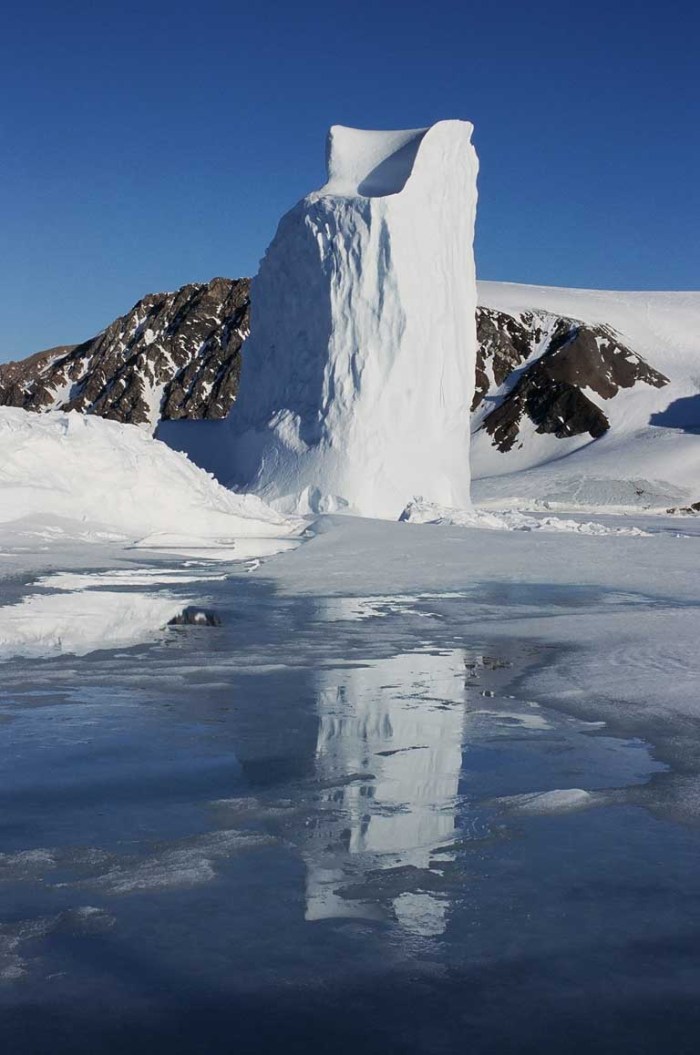
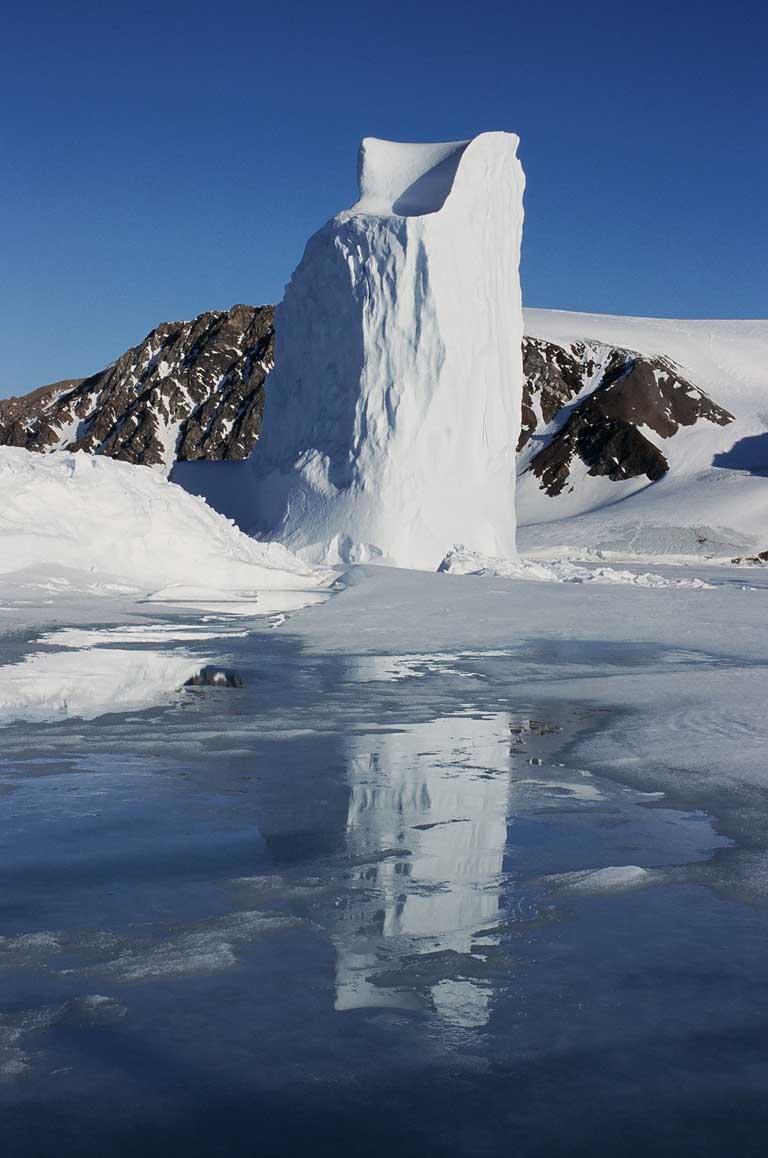
Iceberg in Glacier Strait, Nunavut, Canada, Image credit- Sandy Briggs.By Stephen Leahy

GENEVA, Sep 2 (IPS)

The rapidly warming Arctic region is destabilising Earth’s climate in ways science is just beginning to comprehend.

The entire world is being affected, and without urgent action to cut emissions, a too-warm Arctic could trigger catastrophic, irreversible climate change, top scientists say in a report released Wednesday in Geneva.

“It is crucial to know the full consequences of the Arctic warming, and this is an unprecedented review of the latest science,” said Martin Sommerkorn, an Arctic researcher and senior climate change advisor to World Wildlife Fund International.

“Simply put, if we do not keep the Arctic cold enough, people across the world will suffer the effects,” Sommerkorn told IPS.

Sea level rise of more than one metre, flooding affecting one quarter of the world’s population, and extreme global weather changes are on the way at the current pace of unchecked carbon emissions, the “Arctic Climate Feedbacks: Global Implications” report warns.

A warming Arctic has far wider and more serious consequences than previously believed based on the latest science of the past three years, including the very recent research from International Polar Year 2008-2009.

“There is a large potential that a warming Arctic will make climate change far worse,” said Sommerkorn, who acted as editor of the report written by 10 of the world’s leading climate scientists. Continue reading
Earth’s Arctic Freezer Turning Into Hothouse

meltwater-ponds-on-sea-ice-off-coburg-island-nunavut-canada-arctic-warming-has-been-associated-with-a-rapid-decline-in-arctic-summer-sea-ice-extent-image-credit-sandy-briggs1By Stephen Leahy

UXBRIDGE, Apr 10 (IPS) – The world is losing its northern freezer as Arctic winter ice is in sharp decline, NASA scientists reported this week. Even with below average winter temperatures, Arctic ice is thinner and covers less area than it did a decade ago.

Arctic sea ice is the cooling mechanism for the global climate system. As it declines and the region warms – already three to five degrees Celsius warmer – then inevitably there are local, regional and hemispheric climate impacts.

“We’ve already lost one third of the summer ice cover since the 1980s. There are already impacts from this,” says Ron Kwok of NASA’s Jet Propulsion Laboratory in Pasadena.

“A completely ice-free summer by 2013 is not impossible,” Kwok said in a telephone news conference. “You would have been laughed out the room if you suggested this five years ago.”

The new study shows that the maximum extent of the 2008-2009 winter sea ice cover was the fifth-lowest since researchers began collecting such information 30 years ago. The past six years have produced the six lowest maximums in that record.

More stunning, and indicative of the rapid warming of the region, is the decline in the thick, hard-to-melt multi-year ice, says Walter Meier, research scientist at the National Snow and Ice Data Centre in Boulder, Colorado. Multiyear ice is ice that is two or more years old and therefore doesn’t melt in the summer.

“Less than 10 percent is multiyear now. It used to be 30 percent in 1981,” Meier said at the news conference.

via ENVIRONMENT: Earth’s Arctic Freezer Turning Into Hothouse.

Polar Bears and the Arctic Meltdown

polar-bear-snout-wwwfirstpeopleus-smlA warm Arctic six-pack of 2008 science articles on how global warming is transforming the Arctic:

1. Arctic Ice Gone in 5 Years – First Time in One Million Years — “We’re going to see huge changes in the Arctic ecosystem”

2. Burning Down Our HouseThe roof of our house is on fire while the leaders of our family sit comfortably in the living room below preoccupied with “political realities”.

3. Things Happen Much Faster in the Arctic — “Things are happening much faster in the Arctic. I think it will be summer ice-free by 2015,” said David Barber, an Arctic climatologist at the University of Manitoba.

4. Arctic Is the Canary in the Coalmine — The Arctic is “ground zero” for climate change, with temperatures rising far faster than anywhere else on the planet.

5. Arctic Meltdown Signals Long-Term Trend — Soaring temperatures have led to the collapse of several huge ice shelves in the Canadian Arctic over the past few weeks.

6. Arctic Oil and Gas Rush Alarms Scientists — As greenhouse gas pollution destroys Arctic ecosystems, countries like Canada are spending millions not to halt the destruction but to exploit it.ceberg-in-glacier-strait-nunavut-canada-image-credit-sandy-briggs

Oh yeah, and about those polar bears:

Polar Bears Go Hungry as Icy Habitat Melts Away — The iconic animal of the frozen north, the polar bear, is starving to death because climate change is melting the Arctic Ocean sea ice.

Oil vs Polar Bears in Alaska — A coalition of environmental groups sued the George W. Bush administration Monday for delaying a decision to protect polar bears threatened with extinction

Polar Bears’ Future Bleak in Melting Arctic — “Without taking serious and urgent action to stabilize the climate, there is no future for polar bears” says Andrew Derocher, Chair of the World Conservation Union (IUCN), Polar Bear Specialist Group.

Burning Down Our House

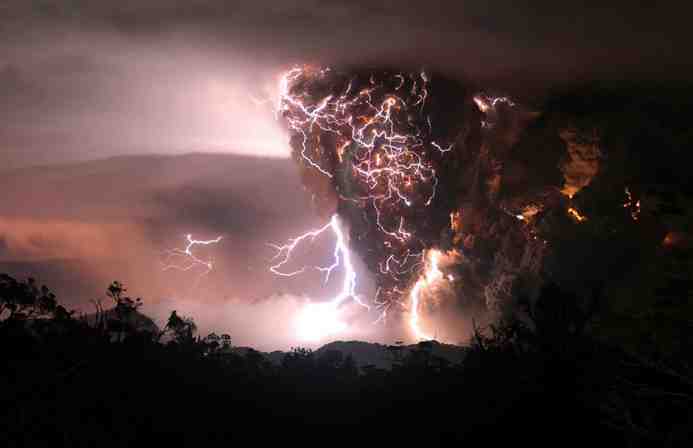
chilee28094the-fury-of-chaiten-volcano-nat-geoAnalysis by Stephen Leahy

QUEBEC CITY, Canada, Dec 15 (IPS)

The roof of our house is on fire while the leaders of our family sit comfortably in the living room below preoccupied with “political realities”.

That was essentially the message from 1,000 scientists from around the world along with northern indigenous leaders gathered in Quebec City for the International Arctic Change conference that concluded last weekend.

“Climate change and its impacts are accelerating at unexpected rates with global consequences,” delegates warned in a statement.

Presenting data from hundreds of studies and research projects detailing the Arctic region’s rapid meltdown and cascading ecological impacts, participants urged governments to take “immediate measures to reduce greenhouse gas emissions”.

By happy coincidence, 190 governments were meeting at the same time in Poznan, Poland to do just that: reach an agreement on how much to reduce emissions from the burning of fossil fuels. Except that they decided to do nothing. Continue reading

Climate Change: ‘Things Happen Much Faster in the Arctic’ – Summer Sea Ice Could be Gone Soon

polar-bear-leap-wwwfirstpeopleus-sml

By Stephen Leahy

We’re going to see huge changes in the Arctic ecosystem

QUEBEC CITY, Canada, Dec 13 2008 (IPS)

In just a few summers from now, the Arctic Ocean will lose its protective cover of ice for the first time in a million years, according to some experts attending the International Arctic Change conference here.

A summer ice-free Arctic wasn’t due for another 50 to 70 years under the worst-case climate change scenarios examined by the Intergovernmental Panel on Climate Change (IPCC).

“Things are happening much faster in the Arctic. I think it will be summer ice-free by 2015,” said David Barber, an Arctic climatologist at the University of Manitoba.

Such a “dramatic and serious loss of sea ice will affect everyone on the planet,” Barber told IPS. Continue reading

Arctic Is the Canary in the Coalmine

ceberg-in-glacier-strait-nunavut-canada-image-credit-sandy-briggsBy Stephen Leahy

QUEBEC CITY, Canada, Dec 12 (IPS) – Nearly 1,000 scientists and representatives of indigenous peoples from 16 countries have braved a major winter storm to share their findings and concerns about the rapidly warming Arctic region at the International Arctic Change conference in Quebec City.

The Arctic is “ground zero” for climate change, with temperatures rising far faster than anywhere else on the planet. Some predict an ice-free summer Arctic in less than five to 10 years — the first time the Arctic Ocean will be exposed to the sun in many hundreds of thousands of years.

The speed of change has scientists scrambling to understand the impacts on indigenous people, wildlife and ecology.

“The Arctic will be full of future surprises,” said David Carlson, an oceanographer and director of the International Polar Year programme office.

“Protected by its cover of sea ice, the Arctic Ocean is the last unblemished ocean on the planet,” Carlson told IPS.

Continue reading

Arctic Oil and Gas Rush Alarms Scientists

By Stephen Leahy

[See also more recent story: Arctic Ice Gone in 5 Years – First Time in One Million Years; see also other Arctic and oil stories below. US and Canada to start offshore drilling in the Arctic summer 2010 – your support is needed to investigate and report on this. ]

UXBRIDGE, Canada, Sep 8 2008 (IPS)

As greenhouse gas pollution destroys Arctic ecosystems, countries like Canada are spending millions not to halt the destruction but to exploit it.

Late last August, Canada announced a 93.7-million-dollar prospecting programme to map the energy and mineral resources of the region. There are “countless other precious resources buried under the sea ice and tundra,” Prime Minister Stephen Harper said during the announcement. The government’s mapping effort is expected to trigger 469 million dollars in private sector resource exploration and development.

“It is estimated that a quarter of the world’s undiscovered oil and gas lies under the Arctic,” Harper said.

This scramble to exploit some of the most environmentally delicate regions of Earth has alarmed international experts who are meeting this week in Iceland to make recommendations to the United Nations and world governments on how to protect the polar regions.

“Many experts believe this new rush to the polar regions is not manageable within existing international law,” says A.H. Zakri, director of the United Nations University’s Yokohama-based Institute of Advanced Studies (UNU-IAS), co-organisers of the conference with Iceland’s University of Akureyri. Continue reading

Oil vs Polar Bears in Alaska: Big Oil Sues Govt for Protecting Polar Bear Habitat

[Update Mar 3 2011: An Alaska oil industry trade group representing 15 oil & gas companies sued the US federal government because it banned drilling in 187,157 square miles as polar bear critical habitat. They claim plenty of polar bears without offering any evidence. And it’s not like Alaskan oil interests haven’t run the state for years. My article below documents how 30 million acres of polar bear habitat were auctioned off in a big hurry in 2008. It really is all about oil/gas $ VS survival of polar bears. — Stephen]

[Update: May 1 2010 – Alaska’s polar bears are now official listed as threatened. In April 2010, the Obama administration tried but failed to get the world’s 20-25,000 remaining polar bears listed as endangered species. What a difference a new administration makes .–Stephen]

By Stephen Leahy

BROOKLIN, Canada, Mar 11, 2008 (IPS)

A coalition of environmental groups sued the George W. Bush administration Monday for delaying a decision to protect polar bears threatened with extinction due to the melting ice in its Arctic habitat. Polar bears could be the first species officially threatened by climate change.

The huge loss of summer sea ice in 2007 has caused many scientists to project that the Arctic could be ice-free in summer by as soon as 2012. Although excellent swimmers, polar bears are not very good at catching seals in the water. Seals comprise the main diet for these giant bears, which are far larger than their grizzly bear cousins.

While legally required to make a decision Jan. 9, US Fish and Wildlife (U.S. FWS) officials have been silent. Meanwhile on Feb. 6, 2.6 billion dollars in oil and gas leases were auctioned off to energy companies on nearly 30 million acres of prime polar bear habitat in the Alaska’s Chukchi Sea.

This independent environmental journalism depends on public support. Click here learn more.

Coincidence? I doubt it, but I don’t have the smoking gun to prove it,” said Kassie Siegel of the Centre for Biological Diversity (CBD), an environmental non-governmental organisation based in Joshua Tree, California.

The CBD, along with Greenpeace and the Natural Resources Defence Council, filed the suit for missing the legal deadline for issuing a final decision on whether to list the polar bear under the Endangered Species Act due to global warming.

“There was absolutely no urgency to hold that lease sale and plenty of public opposition to it as well,” Siegel told IPS. Continue reading