Trawling Moratorium Dead in the Water


By Stephen Leahy

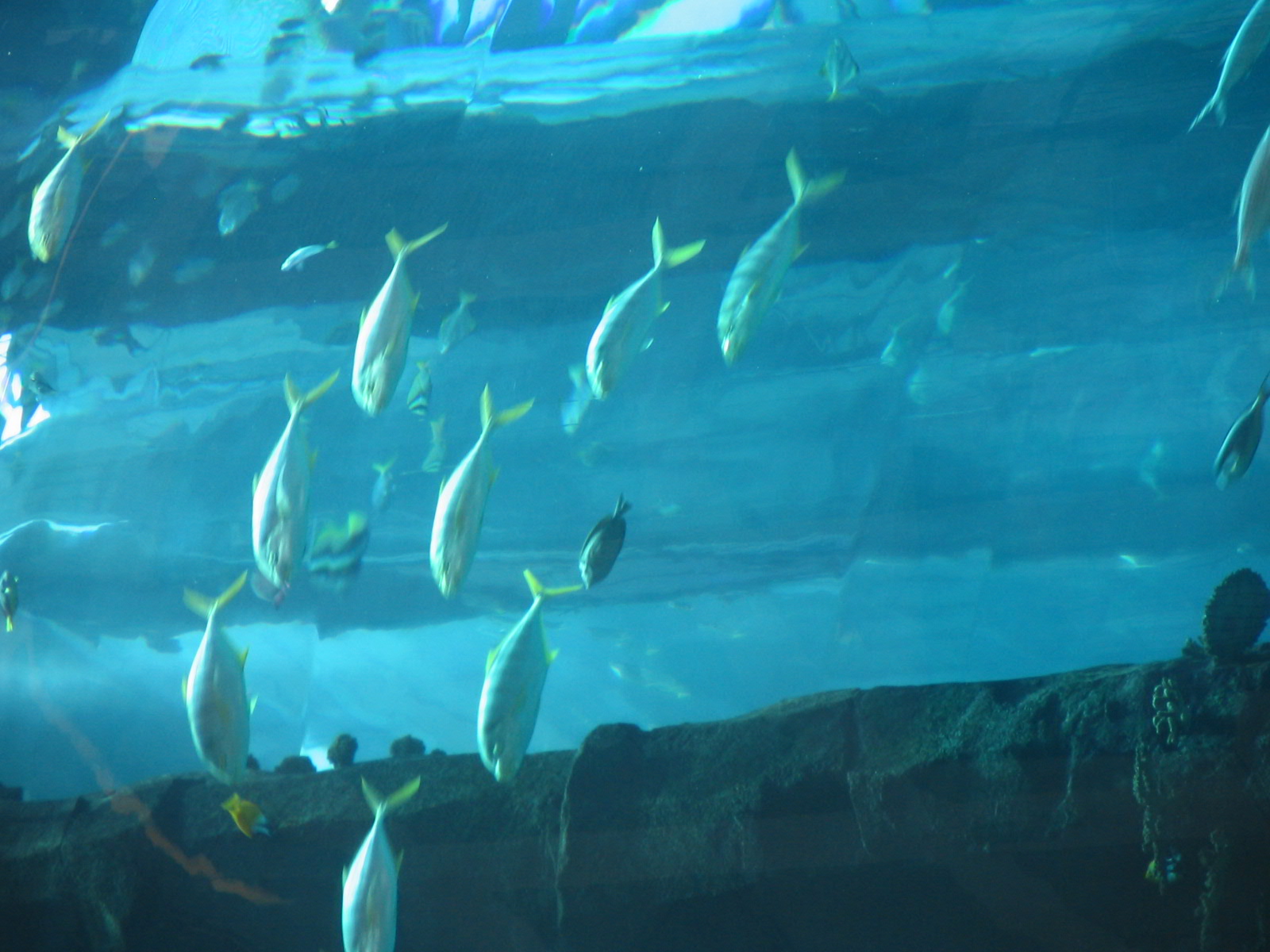
img_0165.JPGNov 23 (IPS) – Iceland and a few other fishing nations have successfully undermined a three-year international effort to place a moratorium on destructive deep-sea trawling.

Environmentalists say that the agreement reached at a U.N. meeting early Thursday morning puts the commercial interests of a few hundred trawlers from a handful of nations ahead of the international community and ignores the advice of the scientific community.

“The final agreement has more loopholes in it than a fisherman’s sweater,” said Karen Sack, an oceans policy advisor with Greenpeace International, who has been monitoring the negotiations at the U.N.

“The oceans are in crisis. It (the agreement) does nothing to significantly change the way our oceans are managed,” Sack told IPS.

Scientists and conservationists had hoped for a moratorium on bottom trawling in the open ocean.

“Iceland refused to endorse any measures on the unregulated high seas,” said Susanna Fuller, a marine biologist with Canada’s Ecology Action Centre.

Australia, Chile and other nations were extremely angry at Iceland’s willingness to sacrifice vital fish habitat in the high seas for its short-term fishing interests, said Fuller, who attended the meetings in New York as an observer.

While New Zealand, the Pacific Island States, the United States, Brazil, India, South Africa, Germany and even previously reluctant Spain and Canada supported stronger action, the desire to achieve a consensus meant Iceland’s interests won out over common sense and the science, Fuller told IPS.

Scientific evidence of the need to halt unregulated deep-sea or bottom trawling is overwhelming.

Full Story here

Canada Trying to Scuttle Temporary Halt to Destructive, Unregulated Bottom Trawling on High Seas

Quote of the Day:


“Canada’s attitude towards the oceans are embarrassing and archaic,” says Elliott Norse, President of the Marine Conservation Biology Institute, a scientific environmental NGO in Washington State.

“Canada treats the oceans as if nothing could harm them,” Norse told IPS.

Full story here

Polar Bears Go Hungry as Icy Habitat Melts Away

By Stephen Leahy

BROOKLIN, Canada, Nov 17 (IPS) – The iconic animal of the frozen north, the polar bear, is starving to death because climate change is melting the Arctic Ocean sea ice.

10000660_jpg.jpg

Polar bears hunt seals almost exclusively and do so from the sea ice. But in the past five years, summer sea ice coverage has declined by 20 percent due to warming temperatures. Although excellent swimmers, the bears are not very good at catching seals in the water, so changes in the ice are making it difficult for these giant bears to survive — several have recently been found drowned and to have died of starvation.

This week scientists announced new findings that the survival rate of polar bear cubs in Alaska’s Beaufort Sea has plummeted. In the late 1980s, 65 percent of polar bear cubs in the southern Beaufort Sea survived their first year. That has fallen to an average of 43 percent in the past five years, report scientists at the Canadian Wildlife Service and the U.S. Geological Survey (USGS).

“This an extremely ominous finding for polar bears,” said Kassie Siegel of the Centre for Biological Diversity, an environmental non-governmental organisation, based in Joshua Tree, California.

“We’ve observed massive melting of the sea ice in the Arctic in recent years, and they can’t survive without it,” Siegel told IPS.

Full Story here

And here are my most recent articles on the state of the ArcticArctic Ice Gone in 5 Years – First Time in One Million Years

Arctic Is the Canary in the Coalmine

Burning Down Our House

Arctic Oil and Gas Rush Alarms Scientists

Arctic Meltdown Signals Long-Term Trend


CANADA BAD: New Environment Policy Ignores Science

Critics Say New Environment Policy Ignores Science

By Stephen Leahy

Canada has officially turned its back on the Kyoto Protocol and climate change in its new “green plan” introduced Thursday, environmentalists say.

The new Conservative government’s environmental legislation called the Clean Air Act does not offer specific reduction targets other than a goal of cutting emissions of greenhouse gases 45-65 percent below 2003 levels by 2050.

“It’s a green scam, a delaying tactic that involves three more years of consultations,” said Claire Stockwell of the Canadian Youth Climate Coalition.

“We have already had six years of consultations and under existing legislation we could regulate emissions of greenhouse gases tomorrow,” Stockwell told IPS.

About 40 youth groups formed the non-partisan coalition this past September because of the realisation that the Conservative government will not comply with Canada’s commitments under the Kyoto Protocol, she said.

The coalition organised mock “funerals for the future” in 14 Canadian cities last week to protest the lack of urgent action on “the most pressing issue of our time”.

IPS News – published October 20 2006

Canada Fights Ban on “Bulldozers of the Sea”

By Stephen Leahy

Oct 12 (IPS) – Canada is trying to scuttle a proposed United Nations moratorium on destructive bottom trawling of the open ocean that has received surprisingly strong support from the United States, as well as other countries.

“Canada’s attitude towards the oceans is embarrassing and archaic,” said Elliott Norse, president of the Marine Conservation Biology Institute, a scientific environmental group in Washington State.

“Canada treats the oceans as if nothing could harm them,” Norse told IPS.

The U.N. General Assembly started debate this week on an Australian-led plan for a temporary moratorium on deep-sea bottom trawling in unmanaged high seas and to impose tougher regulation of other destructive fishing practices.

Because of Canada’s good international reputation, other nations are listening and that greatly increases the risks the U.N. will not act on the proposed moratorium, Norse said.

Canada’s opposition, especially from a recently elected government, comes as a surprise.

“Canada doesn’t have any open ocean trawlers and has everything to gain from a ban,” Norse pointed out.

–FULL STORY

Related stories by Stephen Leahy

Trawling seamounts threatens ocean’s biodiversity
Hundreds of deep-sea species new to science are disappearing before they can be identified or studied, oceanographers are warning. The organisms are being pushed to extinction by trawlers targeting undersea volcanic mountains called seamounts. — New Scientist Magazine

A Plan to Torpedo the Trawlers
Environmentalist groups will soon be dragging deep-sea trawl nets the size of Boeing 747s across cities, rolling out ad campaigns featuring photos of unique creatures from the ocean’s depths, and sending out ships to dog the movements of ocean-going trawlers. — Wired News

Forests Worth Far More Alive Than Dead

Stephen Leahy

BROOKLIN, Canada, Sep 27 (IPS) – Boreal forests provide 250 billion dollars a year in ecosystem services like reducing atmospheric carbon and water filtration, but which have gone unacknowledged by governments and industry, experts say.

Governments need to begin accounting for those services before allowing timber, oil and gas and mining to carve up the world’s remaining northern forests, argues the Edmonton, Canada-based ecological economist Mark Anielski.

The globe-spanning boreal forest is the last great forest ecosystem — larger even than the Amazon. The boreal is also the largest terrestrial storehouse of carbon, making it one of the world’s best defences against global climate change.

“The boreal is like a giant carbon bank account. The forests and peatlands store an estimated 67 billion tonnes of carbon in Canada alone — almost eight times the amount of carbon produced worldwide in the year 2000,” Anielski told IPS.

—Inter Press News Service

Activists Push for Sustainable Mining

By Stephen Leahy

TORONTO, Sep 29, 2006 (Tierramérica)

Civil society activists want the Canadian government to impose mandatory human rights and environmental standards on Canadian mining and oil companies operating in Latin America and other developing regions.

In the past decade Canada has been the world’s biggest investor in the hunt for valuable metals and minerals in Latin America, Jamie Kneen of Mining Watch told Tierramérica. Canadian miners are responsible for environmental contamination and human rights violations all over Latin America, he says.

Canada has nearly 60 percent of the mining and exploration companies in the world; they generate more than 40 billion dollars annually, representing about four percent of Canada’s GDP.

“Canada must set some limits on its companies,” activist Lucio Cuenca Berger told a Canadian government panel holding an open forum on corporate social responsibility in the mining, oil and gas sectors in Toronto Sep. 12-14.

Cuenca Berger is a representative from the Latin America Observatory for Environmental Conflicts, a non-governmental organisation working with Chilean communities affected by mining, including the controversial Pascua-Lama gold mine project owned by Canada’s Barrick Gold Corporation, on the border between Chile and Argentina.

There are environmental concerns that mining operations and waste rock from the Pascua Lama will contaminate the rivers supplying the nearby Huasco Valley where there are some 70,000 small farmers, Berger said through a translator. The 1.5-billion-dollar project’s original design would have had a major impact on the glaciers, but was discarded.

Barrick, the world’s largest gold producer, recently received environmental approval from Chilean authorities to go ahead with Pascua Lama, despite ongoing local opposition.

“In Chile environmental approval is more political than technical,” said Berger.

The inability or unwillingness of local governments to enforce international human rights and environmental standards should not give Canadian companies license to ignore these standards, activists say.

One such company, Manhattan Minerals, spent years trying to force people in the northern town of Tambogrande, Peru to accept an open pit gold mine in the middle of their village before conceding defeat in 2005.

Communities in the Imbabura province in northwestern Ecuador have been forced to file an injunction to stop Ascendant Copper Corporation of Toronto from building an open-pit copper mine on their land, Keen said.

In Mexico, Toronto-based Metallica Resources’ subsidiary, Minera San Xavier (MSX) has begun building a gold mine in San Luis Potosi despite bitter local opposition and court rulings against the mine.

Pierre Gratton of the Canadian Mining Association (CNA), which represents Canada’s largest 25 mining companies, says some Canadian were ill-prepared for conditions in developing countries with weaker governance, unresolved local conflicts and weak environmental laws.

“Clearly there are issues and problems and that’s why we are having these CSR (corporate social responsibility) roundtables,” Gratton told Tierramérica

The current series of public forums, such as the one in Toronto, is a response to both the rising criticism of Canadian mining companies operating abroad and the commitment of the Stephen Harper administration to promote corporate social responsibility internationally.

Two more forums will be held, one in October in Calgary and another in November in Montreal. Based on that input, recommendations will go before the Canadian parliament sometime in 2007.

There are a number of international standards, such as the Organisation for Economic Cooperation and Development (OECD) Guidelines for Multinational Enterprises, the United Nations Global Compact, and the International Council on Metals and Mining Sustainable Development Charter, among others.

The CNA has its own standards and most Canadian mining, oil and gas companies have internal standards.

However, a September 2006 research survey by the Canadian Centre for the Study of Resource Conflict shows that only five percent of 584 Canadian extractive-sector companies with international holdings adhere to recognised national or international standards.

“It is abundantly clear existing voluntary standards are not working,” said Omega Bula of the United Church of Canada, which partnered with Catholic organisations and others in the “Life before profit” campaign to improve practices of Canada’s huge international mining industry.

Bula, like most activists at the Toronto meeting, insists that it is Canada’s responsibility to set mandatory codes of conduct for Canadian companies operating in developing countries. Independent audits and a monitoring body would ensure compliance. Companies and company directors should be held accountable for non-compliance under stronger Canadian laws, Bula said.

Transparency is another requirement, activists say. Currently local people do not know how much money their government receives from foreign mining companies.

“The OECD guidelines are fine, as long as there is an independent third party to monitor,” said one activist.

However, an industry official said Canada ought not to presume to regulate how a company operates in another country.

“If it becomes too onerous for Canadian companies to operate in developing countries, they’ll leave,” said Erin Airton of Vancouver’s Platinum Group Metals, which has mines in South Africa and Mexico. “Then someone else will take the minerals.”

Instead of setting mandatory rules, the Canadian government should help countries build their capacity to enforce their own laws and regulations, she said.

Kerry Knoll, President and Chief Executive Officer of Glencairn Gold Corporation, spoke during the forum on the social contributions of his company, which employs 1,200 workers in mines in Costa Rica and Nicaragua. Glencairn provides breakfast for 500 children each morning and training programmes for adults not employed in the mines, Knoll said.

“We operate a gold mill for local artisan miners so they won’t use mercury and pollute the rivers.”

Knoll estimates his company has spent several million dollars on such programmes, but has been accused by NGOs of trying to bribe local people.

However he is in favour of a government report card or audit system.

“Financial investors are increasingly interested in the environmental and social record of companies,” he said. “Making that record public would be a good thing.”

…Tierramerica and Inter Press News Service

Canada Urged to Rein In Soaring Emissions

Stephen Leahy

BROOKLIN, Canada, Sep 29 (IPS) – Canada should move quickly to cut greenhouse gas emissions, the country’s environmental auditor warned Thursday.

Earlier this week, leading U.S. scientists said that the Earth is warmer than it has been in 10,000 years and less than one degree C from being the warmest in a million years.

“Our future is at stake,” said Johanne Gélinas, Canada’s commissioner of the environment and sustainable development.

“I am more troubled than ever by the federal government’s longstanding failure to confront one of the greatest challenges of our time,” Gélinas wrote in her annual audit report.

…Inter Press News Service

Copyright Stephen Leahy

Farmed Salmon Killing Off Wild Cousins

Stephen Leahy

BROOKLIN, Canada, Oct 2 (IPS) – Canada’s open-ocean salmon farms are killing enormous numbers of wild salmon, threatening the species, a new study shows.

Research published Monday found that sea lice — a fish parasite — from salmon farms along the British Columbia coast kill up to 95 percent of the wild juvenile salmon as they head out to sea.

“It is a startling conclusion,” said Alexandra Morton, a biologist with the Raincoast Research Society and co-author of the study published in the Proceedings of the National Academy of Sciences.

“We are not going to have any wild salmon at this rate,” Morton told IPS.

—Inter Press News Service