The Earth is Going Dark Scientists Say

From Big Melt to Big Swamp
By Stephen Leahy


Credit:Mette M.

Spitsbergen glacier in Norway, Arctic Ocean

Jun 5 (IPS) – The Earth is going dark. From the Arctic Ocean to the Himalayan mountains to the Russian tundra, ice and snow are in rapid and permanent retreat in response to global warming, a new U.N. report said Tuesday.

Glaciers, ice sheets, sea and river ice are all melting. The areas in the northern hemisphere covered by snow and ice have declined 1.3 percent per decade for the past four decades. And that’s expected to accelerate dramatically in the coming years.

“Around the Earth, white is being replaced by dark,” said Gunnar Sander of the Norwegian Polar Institute in Tromso, Norway.

The white — snow and ice — reflect sunlight while the dark — bare ground and open water — absorb the heat from sunlight, increasing the pace of global warming.

“This is affecting the heat balance of the planet,” Sander told IPS.

Continue reading

How to Kick-Start the 21st Century Eco-Economy

restore-cover-wri-sml.jpg Toward a Green Economy
By Stephen Leahy*


May 31 (IPS) – Humanity is facing historic and truly unprecedented challenges from climate change and the rapid decline of ecosystems that sustain life.

This article is final part of a three-part series published by IPS on natural capital and how future global prosperity and equity can be achieved through the preservation of ecosystems. See Part One: Like Enron, Earth Inc. Sliding Into Bankruptcy and Part Two: Global Warming is Real But I didn’t Do It 

The 2005 Millennium Ecosystem Assessment (MA) found that 83 percent of the planet’s natural systems are in serious decline or on the brink. Adding to this already dire situation are the twin pressures of population growth and increasingly consumptive lifestyles.

Global population is expected to soar from today’s 6.6 billion to 9 billion by 2050. Even though we crossed the point of sustainable use of natural resources in the mid-1980s, many of the 2.4 billion people living in China and India are striving mightily right now to approach the materialistic lifestyle of the average North American.

So how can we find our way around the global calamity the human race seems to be hurtling towards?

“Humanity needs a fundamentally new approach to managing the assets upon which we all depend,” said Janet Ranganathan, director of the People and Ecosystems programme at the World Resources Institute, an environmental group based in Washington.

“We need new ways of making decisions at all levels that fully value ecosystems and the services they provide us,” she said.

Continue reading

Global Warming Is Real But I Didn’t Do It


CLIMATE CHANGE:
Overcoming the Ostrich Effect
By Stephen Leahy

May 30 (IPS) – The vast majority of North Americans now declare that they want action on climate change. But whether people are truly willing to embrace “carbon-neutral” lifestyles — including giving up their gas-guzzling sports utility vehicles — remains an open question, say experts.

This article is part two of a three-part series published by IPS on natural capital and how future global prosperity and equity can be achieved through the preservation of ecosystems. See Part One: Like Enron, Earth Inc. Sliding Into Bankruptcy and Part Three: How to Kick-Start the 21st Century Eco-Economy

Scientists have made a strong case that the only way to stave off the worst impacts of climate change — floods, storms, wildfires, disease epidemics and sundry other unpleasant events — is by slashing greenhouse gas emissions a whopping 80 percent from the 1990 baseline by 2050. European policy-makers are already putting plans in place to meet that target.
North Americans, whose region is by far the worst polluter, are beginning to talk about reductions, but few understand the sweeping breadth of the changes needed to reach the 80 percent target.

“The American public’s awareness about global warming is extremely high, but that doesn’t mean very much,” said Anthony Leiserowitz, director of Strategic Initiatives at Yale University’s School of Forestry and Environmental Studies

Continue reading

Hurricane Katrina Only Cat 1/2 When It Hit New Orleans – NOAA

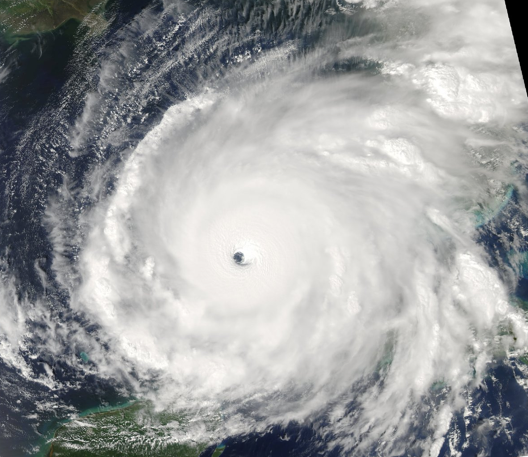
hurricane-rita-noaanasa.pngAfter a recent trip to New Orleans an environmental expert was astonished to learn that Hurricane Katrina was not a powerful hurricane when it struck New Orleans in 2005

While not widely covered by the mainstream media the National Oceanic and Atmospheric Administration (NOAA) released its final data analysis in late Dec 2005 that Katrina was only a Cat 1 or 2 on landfall.

In an overview written for IPS on Jan 11/06 I wrote:

Hurricane Katrina was the worst U.S. natural or environmental disaster ever, and a new analysis of the storm by NOAA’s National Hurricane Centre released in late December reveals some chilling, overlooked details. Perhaps most stunning of those is that more than 4,000 people are still missing nearly four months after Katrina’s landfall in late August. The official death toll is 1,336 people.

But the most worrisome is that Katrina was not a particularly powerful storm on landfall. While it was of Category 5 strength briefly while out in the Gulf of Mexico, new data reveals that its winds were in the Category 1 or 2 class when it struck New Orleans. What Katrina did generate was an enormous storm surge topping 27 feet, sweeping inland some six miles in places. Katrina’s “tsunami” is what resulted in the flooding of 80 percent of New Orleans, and massive destruction along the Gulf Coast.
Such storm surges are bound to worsen with rising sea levels.

See More Unnatural Disasters on the Horizon for rest of story.

Steve’s Hurricane Handbook 2008
25-page eBook a collection of the best bits from 4 years of articles on science of hurricanes and global warming. Arranged chronologically, the scientific story about hurricanes and climate change becomes increasingly evident. Colour pix of hurricane devastation.

Get links to my latest articles once a week.

See other hurricane stories:

First Ever: Two Hurricane Landfalls on Same Day – Pix

Hurricane Felix Category Five — Pix

Flying Blind Into a Monster Hurricane Season

New Data Erases Doubt on Storms and Warming

We are Undermining Life on Earth — World Biodiversity Day (May 22)

Putting a Human Face on Biodiversity
By Stephen Leahy


Credit:Courtesy of CBD

Ahmed Djoghlaf, executive secretary of the Convention on Biological Diversity.


May 21 (Tierramérica) – Biodiversity is what sustains life on Earth, but we are on the verge of the sixth mass extinction of species in the planet’s history, Ahmed Djoghlaf, executive secretary of the Convention on Biological Diversity, told Tierramérica.

On the eve of World Biodiversity Day, May 22, Djoghlaf underscored that climate change is creating conditions to which plant and animal life cannot react to quickly enough. In turn, the loss of species will aggravate global warming, creating a vicious cycle.

TIERRAMÉRICA: What is the link between climate change and biodiversity?

AHMED DJOGHLAF: Species cannot respond fast enough to changing climatic conditions. The warming oceans are having a tremendous impact on coral reefs and plankton, crucial to marine biodiversity. And combined with over-fishing, this means fish stocks will be effectively wiped out by 2048, recent research shows. That will affect the livelihoods of many millions of people. Continue reading

No More Lions, Tigers or Bears in a Warmer World (and two steps to keep that from happening)

The really awful predications about rapid, massive extinction appear to be true” Jeremy Kerr, University of Ottawa

“Unless we do something there will be no tigers, lions or bears left in the wild for my grandchildren” Stuart Pimm, Duke University

Scientists Foresee Extinction Domino Effect
By Stephen Leahy


Credit:morgueFile

Sri Lankan monkey with its young.

May 17 (IPS) – Climate change is accelerating species extinctions and unraveling the intricate web of life, experts fear.

Birds, animals, insects and even plants are on the move around the Earth, trying to flee new and increasingly inhospitable local weather conditions. For some, including alpine species and polar bears, there is nowhere to go. And many others, like plants, lack the mobility to stay ahead of changing climatic conditions.

“We’re already seeing species moving, but they’re not moving fast enough to avoid potential extinction,” says Jeremy Kerr, an ecologist at the University of Ottawa in Canada.

“The really awful predications about rapid, massive extinction appear to be true, according to the early evidence,” Kerr told IPS.

One of those predictions came last year from the Millennium Ecosystem Assessment (MA), an unprecedented international four-year research effort. The MA warned that up to 30 percent of all species on Earth could vanish by 2050 due to unsustainable human activities. Continue reading

Ocean No Longer Taking As Much CO2 (and why that’s bad news)

Coral Sea Copyright 2004 Renate LeahySouthern Ocean Nears CO2 Saturation Point
By Stephen Leahy

May 17 (IPS) – Climate change has arrested the Southern Ocean’s ability to absorb greenhouse gases from the atmosphere, researchers announced Thursday.

That will make it more difficult to stabilise carbon dioxide (CO2) levels in the atmosphere and to reduce the risks of extreme forms of global warming.

The Southern Ocean has been absorbing less CO2 from the atmosphere since 1981, even though levels have increased 40 percent due to burning of fossil fuels. Oceans absorb half of all human carbon emissions, but the Southern Ocean is taking up less and less and is reaching its saturation point, reported an international research team in the journal Science.

This is the first evidence of the long-feared positive feedbacks that could rapidly accelerate the rate of climate change, pushing impacts to the extreme end of the scale.

“This is serious. All climate models predict that this kind of feedback will continue and intensify during this century,” said Corinne Le Quere of Britain’s University of East Anglia and the paper’s lead author. Continue reading

US Generals Say Warming Poses Major Security Threat

US Military Panel Calls Warming a Major Threat
By Stephen Leahy


May 15 (IPS) – Senior retired military officers in the United States are urging immediate action on climate change to avoid a massive upsurge in regional and global instability that could threaten their country’s security.

Climate change is a “threat multiplier”, said 11 retired three- and four-star U.S. generals and admirals who make up a military advisory board put together by the non-profit CNA Corporation. They warned Monday that many Asian, African and Middle Eastern nations could fail, opening the door for terrorists and drawing the U.S. into a variety of new conflicts.
Continue reading

Destroying Canada’s Forests for America’s Oil

“Nowhere else in the world where this much money is being invested”

cover 2.0**REVISED** Oil Stains in the Boreal Forest:

The Environmental Cost of Canada’s Oil Sands

An eBook by Stephen Leahy

Oil Stains in the Boreal Forest is a 30-page eBook presenting a factual overview of the environmental impacts of pumping more than 1.1 million barrels of oil — 175 million litres (50 million gallons) — each day to thirsty US markets.

Based on a 4-part investigative journalism series, leading scientific and environmental experts along with industry officials are interviewed.

Recipe for making a make a gallon of gasoline from the oil sands:

  • burn 1500 cubic feet of natural gas
  • use up 700 litres of water
  • dig up two tonnes of earth and rock
  • dump 948 litres (250 gallons) of mine tailings

And that’s just the beginning – now the crude has to be processed.

Oil Stains in the Boreal Forest   includes pictures of the destruction of virgin boreal forest, links to access additional information, and a peek at a new economic study that shows oil company profits are subsidized by not having to pay for their pollution.

Download your copy of the updated 2009 version 2.1 today for only $3.75
Oil Stains in the Boreal Forest: The Environmental Cost of Canada’s Oil Sands 2.1

eBook -Version 2.1 (2009) – full-color, 8 1/2 x 11″,  30 pages   (14 mb pdf download) 

Learn more about the author


Free Access to Every Species on the Planet

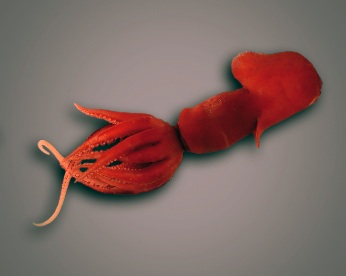
new-species-of-squid-coml.jpg

A Web Page for Each of the World’s Creatures

By Stephen Leahy

May 10 (IPS) – Scientists launched a global initiative Thursday called the “Encyclopedia of Life” that will document the Earth’s 1.8 million known species and track the impacts of habitat loss and climate change.

The ambitious electronic encyclopedia will catalogue the details of every species thus far identified and put all this information on the Internet so anyone can access it.

“This will be a fantastic resource for the developing world,” said James Edwards, the new executive director of the Encyclopedia of Life project headquartered in Washington at the Smithsonian Institution.

Continue reading