DIRTY GOLD: Protests at Canada’s Goldcorp Mines In Honduras and Guatemala

[update: May 2010: The mining company Entremares, subsidiary of the Canadian consortium Glamis Gold, (Goldcorp _Vancouver, Canada) will be charged with polluting the central valley of Siria and of hiding information from the authorities. — Tierramerica]

By Stephen Leahy

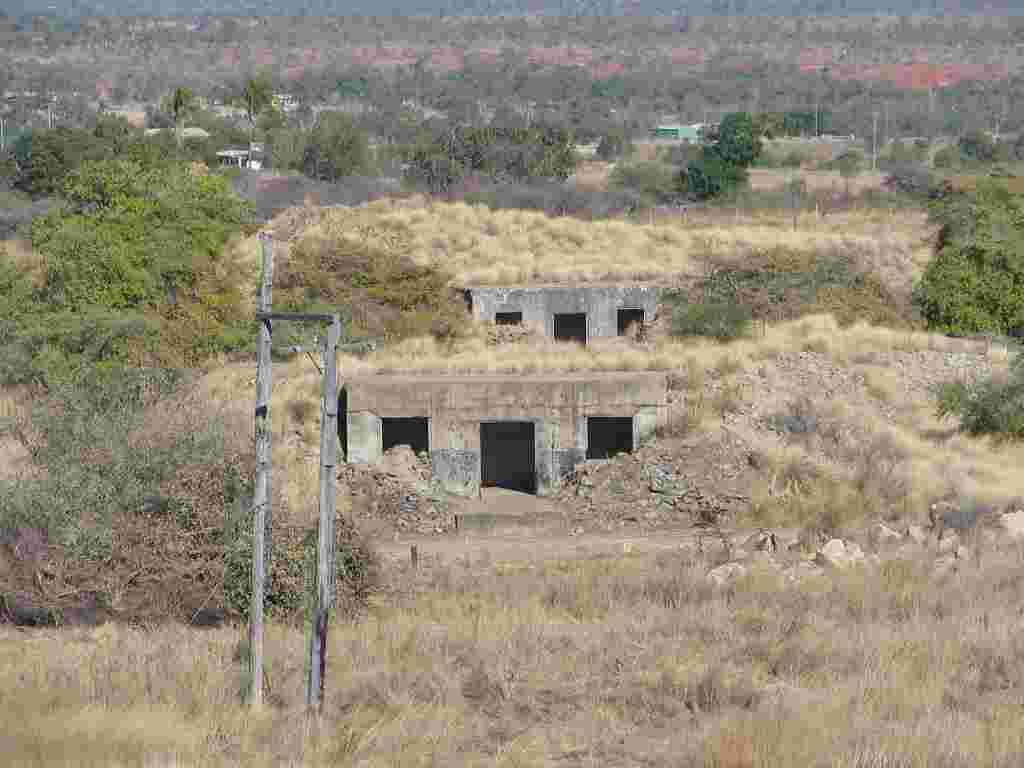
The Canadian mining giant Goldcorp, which runs the largest gold mine in Mexico, is racking up complaints about its environmental violations. In Honduras, officials are considering legal action.queensland-olf-goldmine.JPGOld gold mine Queensland Australia Copyright 2004 Renate Leahy

Continue reading

Strict Quarantines Possible for African Outbreak of Deadly New Infectious TB Strain (XDR-TB)

Deadly New Strain of TB May Require QuarantinesCopyright 2004 Renate Leahy

Stephen Leahy

Jan 22 (IPS) – Enforced quarantines may be needed in South Africa and elsewhere to bring a deadly, contagious and drug-resistant strain of tuberculosis under control, health experts say.

An outbreak of extensively drug-resistant tuberculosis (XDR-TB) in South Africa’s KwaZulu-Natal province gained the attention of the World Health Organisation last year. Hundreds have been infected and the fatality rate is extremely high.

“The problem is a lot bigger than we know,” said Jerome Amir Singh, an HIV/AIDS expert at the Nelson R. Mandela School of Medicine, University of KwaZulu-Natal in Durban.
Continue reading

World’s Poor Depend on Livestock But Little Aid for Vet Services

Saving Farmers’ Four-Legged Bank Accounts Fish and Meat for sale
Stephen Leahy

Jan 19 (IPS) – Most of the world’s poor depend on livestock to survive, but international poverty reduction efforts devote little attention to the health of these animals, experts say.

Animal diseases not only decimate herds and flocks in Africa and Asia, they prevent the sale of animals into the growing markets for meat, milk, eggs and other animal products at home and abroad, according to a policy paper published Friday in the journal Science.
Continue reading

Blood Diamonds and Prosecuting Child Soldiers for War Crimes

The first person they have to kill is someone in their own family — or be killed themselves,” says Susan McKay of the University of Wyoming who has interviewed boy and girl child soliders throughout central Africa.

blooddiamond-movie-poster-sml.jpgMost girls are forcibly abducted and given roles as cooks, porters, spies, “wives” and in combat, McKay said.

[FYI: I’m an independent journalist who supports his family and the public interest writing articles about important social/environmental issues. ]

In spite of this fact legal experts believe child soldiers should be held accountable for war crimes otherwise they may be more likely to be chosen by warlords to perform the worst atrocities.

See story Prosecuting Child Soldiers For Their Own Safety

Do you like this article? It is funded by contributions from readers like you. Please click here to make a donation.

See also my other articles:

Venezuelan Smuggling Opens Door to Blood Diamond Trade
Sierra Leone’s Blood Diamonds and the Kimberley Process,

For a good introduction to the issue  watch the excellent movie Blood Diamond.

**UPDATE JAN 2010**

Blood diamond problem has largely been solved but now there may be “Blood Coltan” in your phone, ipod, and other electronic devices…read the shocking story here World’s “Grotesque Indifference” to Congo “Rape Mines”

what you can do:

Electronic Gadgets Fuel Congo “Rape Mines”

Organic Agriculture Reduces Climate Change, Poverty and Hunger

An Organic Recipe for Development

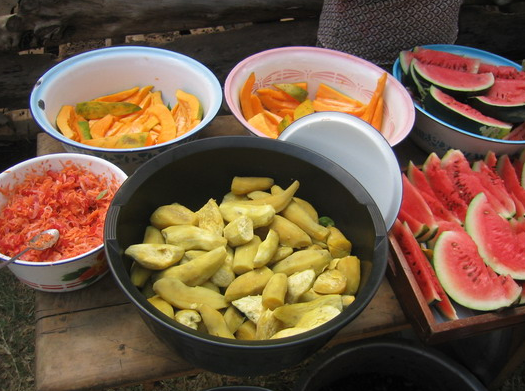
Organic food from Kenya

Stephen Leahy

Dec 18 (IPS/IFEJ) – Organic agriculture is a potent tool to reduce emissions of greenhouse gases, but also to alleviate poverty and improve food security in developing countries, many experts now believe.

Organic agriculture’s use of compost and crop diversity means it will also be able to better withstand the higher temperatures and more variable rainfall expected with global warming.

“Organic agriculture is about optimising yields under all conditions,” says Louise Luttikholt, strategic relations manager at the International Federation of Organic Agriculture (IFOAM) in Bonn, Germany. IFOAM is the international umbrella organisation of organic agriculture movements around the world.

For example, a village in the Tigray region of northern Ethiopia that had converted to organic agriculture continued to harvest crops even during a severe drought, while neighbouring villages using conventional chemical fertilisers had nothing, Luttikholt told IPS.

Because compost is used rather than chemical fertilisers, organic soils contain much more humus and organic carbon — which in turn retains much more water.

“They can also absorb more water faster which means they are less likely to flood,” she said.

It took more work to make the conversion to organic but it paid off when the drought stuck in the third year, according to Tewolde Berhan Gebre Egziabher, director general of the Environmental Protection Authority of Ethiopia.

Full story on how organic can reduce climate change, poverty and hunger.

Part of a series on sustainable development for IPS and IFEJ (International Federation of Environmental Journalists)

Related Stories:
Overweight? Hungry? Blame “Hollow Food”
Organic Provides 3X More Food Per Acre in Poor Countries – podcast
Food Additives Make Kids Hyperactive – Organic Better?
New Studies Back Benefits of Organic Diet

Contact: writersteve AT gmail . com (no spaces)

Organic Agriculture Best Solution for Hunger, Poverty and Climate Change

Quote of the Day:

food-basket-austria.png

“Organic brings a wide range of social and economic benefits making it a much better and more efficient way of farming,” says Volkert Englelsman, CEO of Eosta BV, a European distributor of organic fruits and vegetables.

— Story on how organic agriculture helps the poor and climate change now available.

Canada Reneges on Kyoto Climate Change agreement


Quote of the Day:
I am extremely frustrated by the double standards of industrialized nations. Canada criticizes other countries about their human rights policies or about the death penalty while they are playing with the lives of island people and the Inuit,” says Enele Sopoaga, Ambassador and Permanent Representative of Tuvalu to the United Nations and vice-chair of the Alliance of Small Island States.

Tuvalu is a small island country in the South Pacific ocean that is experiencing flooding due to rising sea levels.

Full story here

The Past a Warning For the Future

By Stephen Leahy

Drought in NE Kenya
Nov 25 (IPS) – A prolonged drought in East Africa in the 1890s not only killed tens of thousands of the native Maasai people, it also reshaped the ecological and political landscape — this according to new research published in the current issue of the ‘African Journal of Ecology’.

Droughts and also disease outbreaks took place from 1883 to 1902, a series of events which the Maasai dubbed the “Emutai” (“to wipe out”). Rinderpest killed Maasai cattle in 1883-1884, then small pox devastated the people; this was followed by a drought, including two years with no rain. Not surprisingly a severe famine persisted for much of the 1890s.

“There were skeleton-like women with the madness of starvation in their sunken eyes, children looking more like frogs than human beings, ‘warriors’ who could hardly crawl on all fours, and apathetic, languishing elders…They were refugees from the Serengeti…” wrote Austrian geographer Oscar Baumann in 1894.

A period of severe erosion resulted from the combination of drought, fire and overgrazing, reports researcher Lindsey Gillson of the University of Cape Town in South Africa. Gillson’s study was done in Tsavo National Park in south-eastern Kenya.

This is a surprising result because the region is semi-arid and plants are drought tolerant. However when the cattle died, the Maasai were forced to rely on goats and sheep which probably led to temporary overgrazing, Gillson writes.

By the time the rains finally came, erosion had changed the region’s capacity to support livestock and other grazing animals.

Kenya’s world-famous national parks — Serengeti, Tsavo, Amboseli and Mkomazi — were traditionally central to the Maasai tradition and economy, but were nearly depopulated when European colonists arrived, says Jon Lovett of the Center for Ecology, Law and Policy at the University of York in England.

Full Story here

Climate Change and Catastrophic Impacts on Societies

Quote of the day:

Predictions of future climate change only give a small part of the story. What history tells us is how ecological shocks are related and the catastrophic results this can have on social systems.Jon Lovett, of the Center for Ecology, Law and Policy at the University of York in England.

–from The Past a Warning For the Future

Deforestation and Climate Change To Devastate Amazon Rainforest

Paraphrase of the Day:   We’re like a two year old playing with fire when it comes to deforestation of the Amazon and global climate change.

rainforest in central amazonia


We’re messing around with something dangerous and don’t really understand what will happen. — William Laurence, Smithsonian Tropical Research Institute, Balboa, Panama.

Story here