Overfishing Sharks Leading to Ecological Collapse

As Sharks Vanish, Chaotic New Order EmergesWhite Shark courtesy of TOPP
By Stephen Leahy

Mar 29 (IPS) – Major declines in large sharks along the U.S. coast have in turn triggered declines in shellfish and reduced water quality, proof that the ocean’s food web is collapsing, a groundbreaking new study reveals.

With the virtual elimination of large sharks along the U.S. east coast, such as black tip and tiger sharks, the species they used to eat — small sharks, rays and skates – have boomed in numbers. Cownose ray populations increased 20-fold since 1970 and as a direct consequence, shellfish like scallops that the cownose ray eats have been nearly wiped out despite major conservation efforts.

The cascade of impacts resulting from overfishing large sharks goes further still, marine scientist Ransom Myers and coauthors document in a paper published Thursday in Science. The loss of scallops has reduced water quality because scallops and other shellfish filtre sea water. And the cownose ray is now feeding voraciously on other shellfish, like oysters and clams.
Continue reading

Iraq’s Environmental Nightmare

Bee Eaters in Iraq Copyright 2006 Laurie Haak IRAQ: Environmental Nightmare Drags On

“We inherited a terrible situation when it comes to the environment,” Narmin Othman, Iraq’s environment minister.

By Stephen Leahy

Mar 21 (Tierramérica) – Four years after the U.S.-led invasion of Iraq and despite 22 billion dollars spent on recovery and reconstruction, Iraq’s environment remains in disastrous shape.

“The Tigris and Euphrates rivers are essentially open sewers,” Azzam Alwash, head of Nature Iraq, a conservation group based in Baghdad, told Tierramérica.
Continue reading

Abrupt Environmental Change Sparks Violent Conflicts

Thirstier World Likely to See More Violence
By Stephen Leahy

Mar 16 (IPS) – A strong link between droughts and violent civil conflicts in the developing world bodes ill for an increasingly thirsty world, say scientists, who warn that drought-related conflicts are expected to multiply with advancing climate change.

“Severe, prolonged droughts are the strongest indicator of high-intensity conflicts,” said Marc Levy of the Centre for International Earth Science Information Network at Columbia University’s Earth Institute in New York.

Continue reading

40 Million Tonnes of Electronic Waste Each Year

Copyright EMPA, Switzerland E-Waste Dumping Needs International Solution

By Stephen Leahy

Mar 9 (IPS) – A global public-private partnership was launched this week to reduce the toxic mountains of electronic waste and recycle increasingly valuable metals and components.

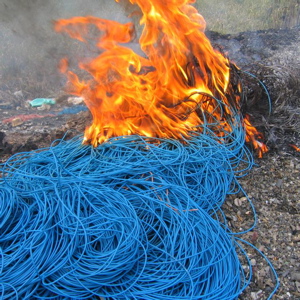
Much of the nearly 40 million tonnes of “e-waste” — discarded electronics and electrical appliances — produced globally each year ends up in China, India and other developing countries.
Continue reading

Environmental Changes Wiped Out 170 Amphibian Species Over Past 20 years

Frogs Fading Into Silence

By Stephen Leahy

The extinction of amphibians in Latin America has reached alarming proportions: 209 species in Colombia and 198 in Mexico alone are in danger of disappearing forever

Mar 5 (Tierramérica) – Frogs and other amphibians are rapidly becoming extinct around the world and in Latin American countries in particular. In the Caribbean as many as 80 percent of these species are endangered, while in Colombia there are 209 and in Mexico 198 amphibians may soon disappear.

Environmental degradation along with habitat loss, ultraviolet radiation, disease and climate change are all factors involved in these unprecedented losses.

Continue reading

Tackling the E-waste Pollution Monster

Copyright EMPA, SwitzerlandParaphrase for the day:

One tonne of discarded mobile phones has about 7000 euros worth of precious metals.

— Ruediger Kuehr of the United Nations University

Story about a global public-private initiative is now available see 40 Million Tonnes of Electronic Waste. Describes global effort to reduce the toxic mountains of electronic waste and recycle increasingly valuable metals and components.

My related articles:

Is Your Old TV Poisoning a Child in China? Where Your e-waste Goes

Greener Cell Phones Thanks to European Laws

30 Million Lead-laden TVs Dumped on Poor Countries

Top Ten Worst Pollution Problems That Kill Millions – Including Ones You’ve Never Heard Of

Peak Fish: The Beginning of the End of Ocean Seafood

Ocean Fisheries Maxed OutCopyright 2004 Renate Leahy

By Stephen Leahy

Mar 5 (IPS) – Two-thirds of fish stocks in the world’s high seas are overfished, while most of those closer to shore are failing or fished to the maximum, a new U.N. report said Monday.

More and stronger regional fisheries management organisations are needed to rebuild depleted stocks and prevent the collapse of other stocks, warned the FAO’s latest “State of World Fisheries and Aquaculture” (SOFIA) report.
Continue reading

Response To Global Change Too Slow


Paraphrase of the Day:

Institutions are not responding fast enough to the industrial might and scale of change that is happening be it climate change or rapid loss of species or decline in the global fisheries. The rate are which our institutions take action is simply too slow. — Daniel Pauly, director of the Fisheries Centre at the University of British Columbia.

See complete story

Heed the Warning of the Frogs

Amphibians are rapidly going extinct around the world — 43 per cent of known species are in decline according to the Global Amphibian Assessment.

Frogs and other amphibians are warning us about environmental deterioration that threatens all species and our own well being, said Alan Pounds an ecologist at the Tropical Science Center, Monteverde Cloud Forest Preserve in Costa Rica.

“We should be listening to the message from the frogs.”

Story to be completed and published in a few days.