Oil vs Polar Bears in Alaska: Big Oil Sues Govt for Protecting Polar Bear Habitat

[Update Mar 3 2011: An Alaska oil industry trade group representing 15 oil & gas companies sued the US federal government because it banned drilling in 187,157 square miles as polar bear critical habitat. They claim plenty of polar bears without offering any evidence. And it’s not like Alaskan oil interests haven’t run the state for years. My article below documents how 30 million acres of polar bear habitat were auctioned off in a big hurry in 2008. It really is all about oil/gas $ VS survival of polar bears. — Stephen]

[Update: May 1 2010 – Alaska’s polar bears are now official listed as threatened. In April 2010, the Obama administration tried but failed to get the world’s 20-25,000 remaining polar bears listed as endangered species. What a difference a new administration makes .–Stephen]

By Stephen Leahy

BROOKLIN, Canada, Mar 11, 2008 (IPS)

A coalition of environmental groups sued the George W. Bush administration Monday for delaying a decision to protect polar bears threatened with extinction due to the melting ice in its Arctic habitat. Polar bears could be the first species officially threatened by climate change.

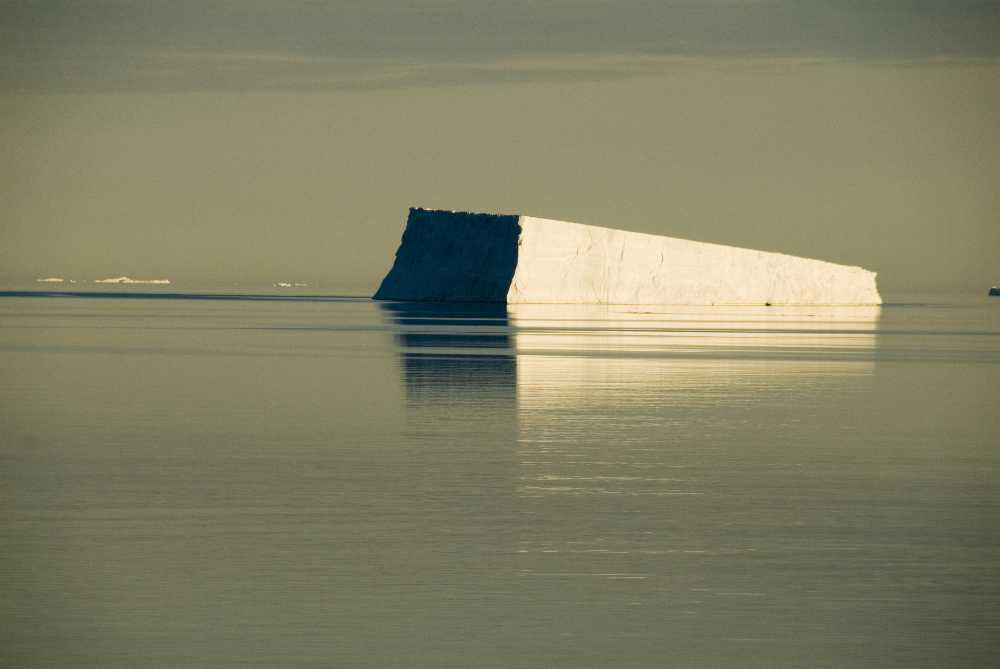
The huge loss of summer sea ice in 2007 has caused many scientists to project that the Arctic could be ice-free in summer by as soon as 2012. Although excellent swimmers, polar bears are not very good at catching seals in the water. Seals comprise the main diet for these giant bears, which are far larger than their grizzly bear cousins.

While legally required to make a decision Jan. 9, US Fish and Wildlife (U.S. FWS) officials have been silent. Meanwhile on Feb. 6, 2.6 billion dollars in oil and gas leases were auctioned off to energy companies on nearly 30 million acres of prime polar bear habitat in the Alaska’s Chukchi Sea.

This independent environmental journalism depends on public support. Click here learn more.

Coincidence? I doubt it, but I don’t have the smoking gun to prove it,” said Kassie Siegel of the Centre for Biological Diversity (CBD), an environmental non-governmental organisation based in Joshua Tree, California.

The CBD, along with Greenpeace and the Natural Resources Defence Council, filed the suit for missing the legal deadline for issuing a final decision on whether to list the polar bear under the Endangered Species Act due to global warming.

“There was absolutely no urgency to hold that lease sale and plenty of public opposition to it as well,” Siegel told IPS. Continue reading

About Canada’s Seal Hunt

molting-harp-seal-ifaw.jpg

On Monday Canada announced this year’s seal hunt quota to allow the killing of 275,000 young harp seals near Newfoundland. The announcement sets off the annual round of protests mainly focused on sustainability of the seal population and animal cruelty issues. This feature article was written two years ago but would be little different if done today.

[Originally published by Mexico’s Tierramerica, Mar 29 2006 ]

By Stephen Leahy

The Canadian government increased the annual quota of harp seals (Phoca groenlandica) from 319,000 in 2005 to 325,000 this year. That’s too many seals, says Chris Cutter, an activist with the International Fund for Animal Welfare (IFAW).

An unusually warm winter has left little ice in the Gulf, Cutter told Tierramérica after a helicopter overflight last week, before the hunting season began on Mar. 25. “We hardly saw any seals,” he said.

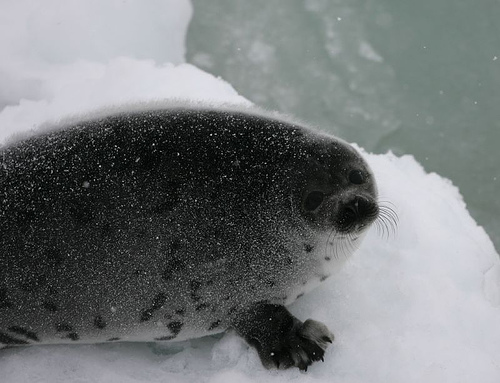
Named for the harp-shaped pattern on the backs of the adults, the seals mainly give birth to their pups on floating ice, where they are safe from land-based predators.

Young seal pups are able to float, but are poor swimmers and often drown in rough weather. The harp seal herd is about 5.8 million, with an estimated one million pups born each year, says Phil Jenkins, spokesman for Canada’s Federal Department of Fisheries and Oceans (DFO), which regulates the hunt.

The lack of ice was taken into account when setting this year’s quota, Jenkins told Tierramérica. “McCartney and the animal rights groups have got the wrong information about the hunt.”

Continue reading

Oceans Hit Hard By Human Activity

copyright Ove Hoegh-Guldberg

By Stephen Leahy

Feb 15 (IPS) – Oceans span nearly three quarters of the Earth’s surface and despite this vast size hardly a square kilometre has been untouched by humans.

Researchers released the first-ever global map of human impacts on oceans Thursday in the journal Science. Impacts ranged from fishing to pollution to ship transportation.

“There really aren’t any areas without human impacts,” said Kimberly Selkoe, a principal investigator on the project and a post-doctoral researcher at the University of Hawaii.

“The most shocking message here is that we don’t actually have a lot of data on human impacts,” Selkoe told IPS. Continue reading

Galapagos Islands Spared Ocean Dumping Experiment

galap3.jpgLast summer while working in the Galapagos Islands I wrote about Planktos, a company that wanted to create plankton blooms near the islands by dumping tons of iron particles into the ocean: Carbon Project Endangers the Galápagos.

Planktos hoped these plankton blooms would ultimately become a lucrative way of removing carbon from the atmosphere. However in a January issue of the journal Science, a number of international scientists issued a warning that not enough was known to commercialize what is known as iron fertilization of the oceans.

Last summer’s dumping in the Galapagos never went forward, in part because of strong local objections, concern by marine scientists over unintended impacts and international environmental group protests. Feb 13 Planktos announced indefinite postponement of the experiment due to lack of investment funds because of “an effective disinformation campaign” by those opposing the effort.

Fish Farms Pushing Wild Salmon to Extinction

courtesy Alexandra Morton

By Stephen Leahy

Dec 14 (IPS) – V
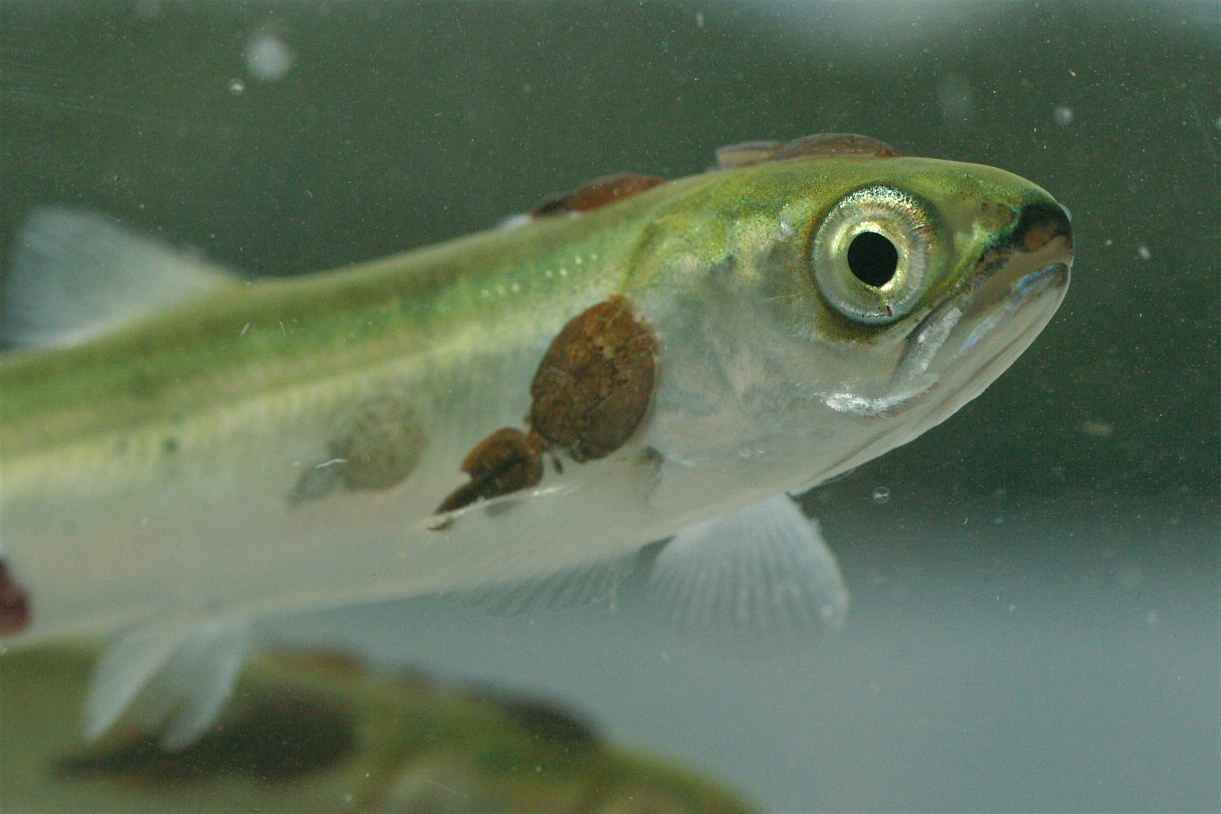
ast populations of pink salmon on Canada’s west coast will be extinct in four years due to infestations of parasites from open ocean salmon farms, scientists reported Friday in the prestigious journal Science.

Canadian officials seem likely to let the wild salmon go extinct, if past inaction is any indicator, Alexandra Morton, the study’s co-author and director of the Salmon Coast Field Station in Broughton, British Columbia, told IPS.

The Science study shows that infestations of sea lice have killed more than 80 percent of the annual pink salmon returns in British Columbia’s Broughton Archipelago, 300 kms north of the city of Vancouver, over the past four years. In another four years, there will be no more pinks if the infestations continue.

“If nothing changes, we are going to lose these fish,” said lead author Martin Krkosek, a fisheries ecologist from the University of Alberta. Continue reading

Catch less fish, Make More $

yellow-fin-tuna-catch-galapagos.jpg

By Stephen Leahy

Dec 11 (IPS) – Catch less fish. Make more money.

Could this be the solution to the global overfishing crisis?

Australian economists writing in the current issue of Science magazine think so.

Reducing fish catches in the short term will bring fishers big profits later. And that profit potential may finally persuade an intransigent fishing industry to agree to lower catch limits, they say.

“Bigger stocks mean bigger bucks,” says co-author Quentin Grafton, research director at the Crawford School of Economics and Government at the Australian National University (ANU).

“Our results prove that the highest profits are made when fish numbers are allowed to rise beyond levels traditionally considered optimal,” Grafton said. Continue reading

Oceans are the Heart and Blood of the Earth — But are They Healthy?

By Stephen Leahyapollo17_earth.jpg

Nov 27 (IPS) – If continents are the Earth’s sturdy bones and the atmosphere its thin skin, then the oceans are its heart, circulatory system and blood. And despite the crucial role played by the oceans in the health of the planet, and to our own health and well-being, there is little monitoring of ocean health.

Once the oceans were too big and too deep to probe, measure and observe, but between satellites, undersea robots, electronically tagged fish and deep sea sensors, scientists now have the tools.

On Tuesday, high-level officials began meeting in Cape Town, South Africa to see if governments have the will to create a Partnership for Observation of the Global Oceans (POGO) — a 10-year project to create a comprehensive monitoring system of what has been described as the last frontier.

“We have pathetically few measurements of the oceans relative to their importance to life on Earth and the extent to which we rely on them for energy, weather, food and recreation,” said D. James Baker, former administrator of the U.S. National Oceanic and Atmospheric Administration. Continue reading

Acid Oceans to ‘Dissolve’ Coral Reefs in 30 years

By Stephen Leahy

BROOKLIN, Canada, Nov 12, 2007 (IPS)

Coral reefs face certain extinction in a few decades unless there are unprecedented reductions in carbon emissions, leading Australian scientists warn.

Corals around the world may be nothing but rubble before a child born today turns 30 years old, and almost certainly before they’re 50.

The reason? Rising carbon dioxide (CO2) levels in the atmosphere are turning the oceans acidic far faster than previously observed.

“It isn’t just the coral reefs which are affected. A large part of the plankton in the Southern Ocean, the coccolithophorids, are also affected,” said Malcolm McCulloch, an environmental research scientist at the Australian National University in Canberra.

[Update Sept 2010 – wide spread coral bleaching reportedWhat if our air was 30% more acidic like the Oceans? May be 120% more acidic by 2060]

“These (coccolithophorids) drive ocean productivity and are the base of the food web which supports krill, whales, tuna and our fisheries,” McCulloch said in a statement. Continue reading

The Coming Oxygen Crisis?

“I have no idea how this will affect oxygen levels but it is something we should be thinking about.”Bradley Cardinale, biologist, University of California,

By Stephen Leahy


Credit:NASA

The Amazon River and rainforest viewed from space.

Nov 6 (IPS) – Plants are the only source of oxygen on Earth — the only source. Studies around the world show that as plant species become extinct, natural habitats can lose up to half of their living plant biomass.

Half of the oxygen they produced is lost. Half of the water, food and other ecological services they provide are lost.

If a forest loses too many unique species, it can reduce the total number of plants in that forest by half, says Bradley Cardinale, lead author of the meta-analysis published this week in the Proceedings of the National Academy of Sciences (PNAS).

“Those unique species are not replaceable. Nothing takes their place. It was a really shocking finding for me,” Cardinale, a biologist at the University of California, Santa Barbara, told IPS. “That’s how much biodiversity matters.”

Continue reading

Climate Change Shifts Into Fast Forward

larsen-ice-shelf-remnant.jpg

By Stephen Leahy

Oct 26 (IPS) – Global warming has been compared to a slow-moving train wreck, in which the passengers are blissfully unaware of the coming catastrophe.

With the shocking loss of the Arctic sea ice this summer and several new reports this week that oceans and tropical forests are now absorbing less of the world’s steadily rising carbon emissions, our collective train wreck appears to have already tipped into fast forward.

“Global warming is a big feature of our lives now. It is no longer something that only future generations will have to cope with,” said Ted Scambos, senior research scientist at the National Snow and Ice Data Centre in the U.S. city of Boulder, Colorado.

The major ecosystems that absorb carbon emissions from the atmosphere are failing, and it is happening faster than anticipated, Scambos told IPS.

Continue reading