Last March of the Global Warming Denialists

Analysis by Stephen Leahy

Mar 4 (IPS) – Colder than usual January temperatures in the United States have brought the climate change deniers out of hibernation, flooding websites, and opinion and letters pages about the “great global warming hoax”. They even organised their own conference on denial in New York City this week.

king-penguins-on-beach-pnas-sml.jpg

“Global warming is not a global crisis” declared the Heartland Institute, organiser of the “International Conference on Climate Change”. Heartland is a well-known right-wing lobby group which accepted more than half a million dollars from oil giant ExxonMobil between 1999 and 2005, according to Exxon documents disclosed by Greenpeace, and thousands of dollars more from the tobacco industry.

Not surprisingly, in a statement issued Tuesday, they insisted that all efforts “intended to reduce emissions of CO2 be abandoned forthwith”.

“Manmade global warming is a total hoax. It has no basis in fact,” shouted Rush Limbaugh, a U.S. conservative radio host, on his Feb. 27 show, which draws as many as 13 million listeners. Continue reading

Experimental Biotech Drugs Flourish in China

nature-biotech.pngJan 7 (IPS) – China’s booming medical biotechnology industry is producing controversial drugs and gene therapy treatment programmes for domestic use, as well as to treat critically ill foreigners seeking potential cures unavailable elsewhere.

China’s Beike Biotechnologies harvests stem cells from the umbilical cord or amniotic membrane and injects them into patient’s spinal region. More than 1,000 patients, including 60 foreigners, have been treated for a variety of conditions including Alzheimer’s disease, autism, brain trauma, cerebral palsy and spinal cord injury, according to a study published Monday in the journal Nature Biotechnology.

“We met foreigners there who were happy with Beike’s treatments,” said Peter Singer of the McLaughlin-Rotman Centre for Global Health at the University of Toronto and co-author of the study. Continue reading

Measuring Bali With A Scientific Yardstick

By Stephen Leahyunfccc-bali-logo.jpg


Dec 17 (IPS) – A tiny step was taken Saturday in meeting the greatest challenge humanity has ever faced.

But it was nearly a step backward as the crucial climate talks in Bali almost collapsed when the United States refused to join the global consensus. However, after Kevin Conrad representing Papua New Guinea told the U.S. delegation if they weren’t going to be leaders, to please get out of the way, the U.S. reversed its position and accepted what is called the “Bali roadmap“.

But before considering this new political roadmap on climate change, what route did the scientific roadmap tell us to take? Continue reading

Fish Farms Pushing Wild Salmon to Extinction

courtesy Alexandra Morton

By Stephen Leahy

Dec 14 (IPS) – V
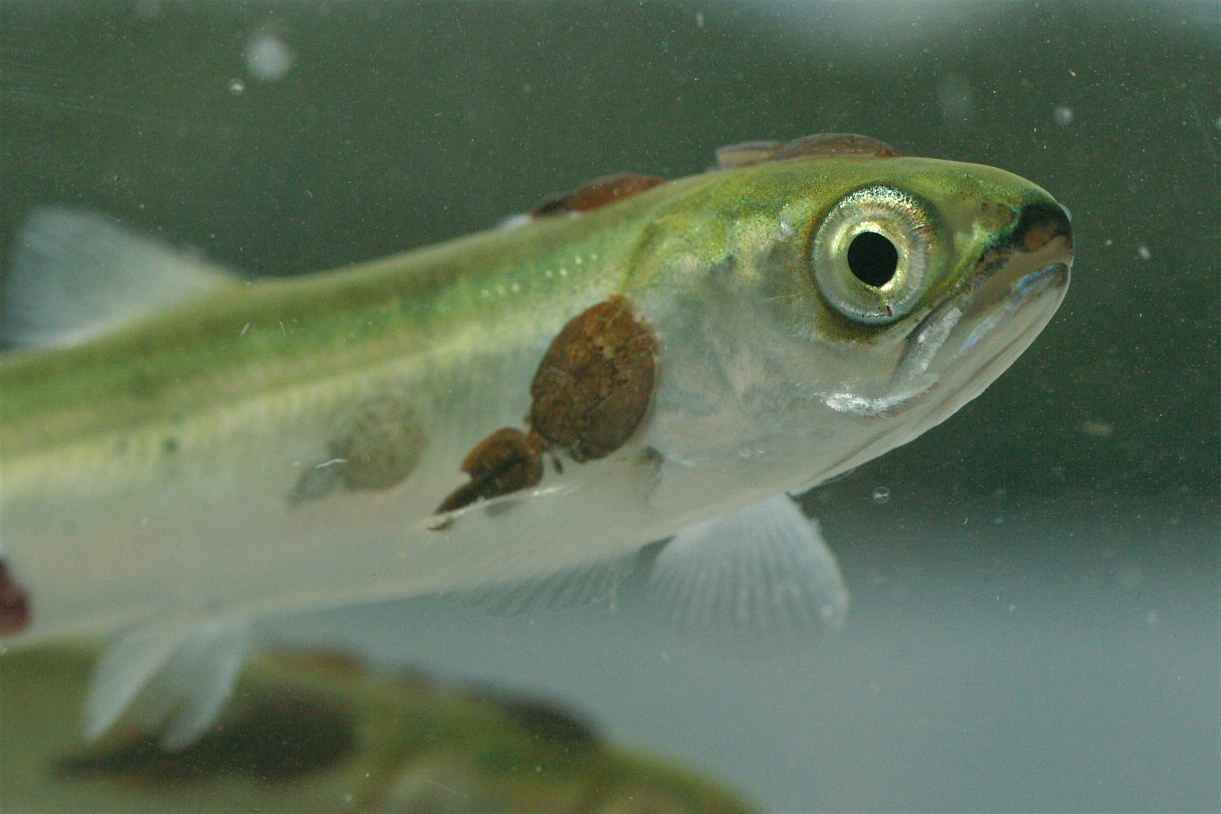
ast populations of pink salmon on Canada’s west coast will be extinct in four years due to infestations of parasites from open ocean salmon farms, scientists reported Friday in the prestigious journal Science.

Canadian officials seem likely to let the wild salmon go extinct, if past inaction is any indicator, Alexandra Morton, the study’s co-author and director of the Salmon Coast Field Station in Broughton, British Columbia, told IPS.

The Science study shows that infestations of sea lice have killed more than 80 percent of the annual pink salmon returns in British Columbia’s Broughton Archipelago, 300 kms north of the city of Vancouver, over the past four years. In another four years, there will be no more pinks if the infestations continue.

“If nothing changes, we are going to lose these fish,” said lead author Martin Krkosek, a fisheries ecologist from the University of Alberta. Continue reading

Forests, the Great Green Hope?

By Stephen Leahy


Credit:Tomasz Kuran

Mixed forest near Radziejowice, Poland.

Dec 3 (IPS) – Expanding European forests absorbed 126 million tonnes of carbon dioxide from 1990 to 2005 — equivalent to 11 percent of European Union emissions from human activities — while a U.N. target to plant one billion trees mainly in Africa has been surpassed.

“Forests reduced carbon dioxide more than twice the amount of Europe’s renewable energy programmes,” said Pekka Kauppi, who led the University of Helsinki study, published in the British journal Energy Policy on Nov. 29.

Better conservation, migration to cities, and conversion of surplus farmland are the reasons behind the growing and expanding forests, which are mainly in Latvia, Lithuania, Sweden, Slovenia, Bulgaria and Finland Kauppi, told IPS. The study is based on forestry statistics provided by governments and that were not independently verified.

The resulting “surprisingly high carbon dioxide removal” may be the major factor in Europe achieving its ambitious target of 20 percent reductions in greenhouse targets by 2020, Kauppi said.

“On a global scale, there is hope for the future if we stop deforestation and expand forests,” he added. Continue reading

Oceans are the Heart and Blood of the Earth — But are They Healthy?

By Stephen Leahyapollo17_earth.jpg

Nov 27 (IPS) – If continents are the Earth’s sturdy bones and the atmosphere its thin skin, then the oceans are its heart, circulatory system and blood. And despite the crucial role played by the oceans in the health of the planet, and to our own health and well-being, there is little monitoring of ocean health.

Once the oceans were too big and too deep to probe, measure and observe, but between satellites, undersea robots, electronically tagged fish and deep sea sensors, scientists now have the tools.

On Tuesday, high-level officials began meeting in Cape Town, South Africa to see if governments have the will to create a Partnership for Observation of the Global Oceans (POGO) — a 10-year project to create a comprehensive monitoring system of what has been described as the last frontier.

“We have pathetically few measurements of the oceans relative to their importance to life on Earth and the extent to which we rely on them for energy, weather, food and recreation,” said D. James Baker, former administrator of the U.S. National Oceanic and Atmospheric Administration. Continue reading

Climate Change Experts Warn World

We are riding in an airplane with the bolts falling out while heading into a storm.”

By Stephen Leahy*

TORONTO, Nov 19 (Tierramérica) – In the end, governments accepted evidence from the world’s top scientists that climate change impacts could be abrupt and irreversible, and that they require urgent action.

“The threat is real,” said United Nations Secretary General Ban Ki-moon.

“I have seen the impacts of climate change in Antarctica and the Amazon with my own eyes,” Ban said in a press conference in Valencia, Spain, at Saturday’s public unveiling of the Synthesis Report of the Intergovernmental Panel on Climate Change (IPCC).

“It is a very strong document. It sends a stark message that we face abrupt and irreversible impacts,” said Hans Verolme, director of the climate change programme for the international environmental group WWF.

Continue reading

‘Climate Apocalypse Around the Corner’ says Renowned Scientist

brushfire-oz-2004-copyright-renate-leahy.jpg

The rapid warming of our planet is unstoppable and will be apocalyptic Professor James Lovelock said in a speech at the Royal Society in London, England 29th October 2007 (video link of speech below)

[See also my 2009 interview with Lovelock “I Hope We Are Civilised When Climate Disaster Hits” -Stephen]

An eminent and influential scientist, Lovelock first proposed the Gaia Hypothesis that the Earth as a single highly complex organism the 1970s. Now proven correct, Lovelock told the experts in attendance that “now we are at war with the Earth and as in a blitzkrieg, events proceed faster than we can respond“.

james-lovelock.jpgHe calculates that Earth’s average global temperature will shoot up an apocalyptic 6 degrees C when the atmosphere has 500 ppm of CO2 (carbon dioxide). At the current, accelerating rate of CO2 emissions that may come in as soon as 30 years but almost certainly before 2050.

Some tipping points have been reached. Positive feedbacks “on heating from the melting of floating Arctic and Antarctic ice alone is causing an acceleration of system-driven heating whose total will soon or already be greater than that from all of the pollution CO2 that we have so far added.”

What Do We Do Now……?

Lovelock’s Five Step Survival Guide: Continue reading

Human Cloning Likely Legal and Popular

“Chances are clones will soon be sharing the planet with us.” — Brendan Tobin, Irish Centre for Human Rights, National University of Ireland

jamie-clone.jpg

Photo: “Jamie Clone” © 2007 citymorningblue. Used with kind permission.

By Stephen Leahy

Nov 13 (IPS) – As scientists master the technology to clone primates, some legal experts worry that human clones are no longer in the realm of science fiction, and wonder what legal rights they would have in the absence of an international ban on the practice.

More than a dozen animal species have been cloned in the last decade, including sheep, cows, dogs and pigs. Just last summer, a U.S. research team reported the first-ever cloning of a primate. A rhesus monkey embryo was cloned from adult cells and then grown to generate stem cells.

“Human clones are absolutely inevitable,” says Brendan Tobin, a barrister with the Irish Centre for Human Rights, National University of Ireland, who researched a United Nations University (UNU) report on the issue.

Continue reading

Acid Oceans to ‘Dissolve’ Coral Reefs in 30 years

By Stephen Leahy

BROOKLIN, Canada, Nov 12, 2007 (IPS)

Coral reefs face certain extinction in a few decades unless there are unprecedented reductions in carbon emissions, leading Australian scientists warn.

Corals around the world may be nothing but rubble before a child born today turns 30 years old, and almost certainly before they’re 50.

The reason? Rising carbon dioxide (CO2) levels in the atmosphere are turning the oceans acidic far faster than previously observed.

“It isn’t just the coral reefs which are affected. A large part of the plankton in the Southern Ocean, the coccolithophorids, are also affected,” said Malcolm McCulloch, an environmental research scientist at the Australian National University in Canberra.

[Update Sept 2010 – wide spread coral bleaching reportedWhat if our air was 30% more acidic like the Oceans? May be 120% more acidic by 2060]

“These (coccolithophorids) drive ocean productivity and are the base of the food web which supports krill, whales, tuna and our fisheries,” McCulloch said in a statement. Continue reading