Border Wall Condemns America’s Last Jaguars to Extinction

jaguar-defenders-of-wildlife.png

By Stephen Leahy*

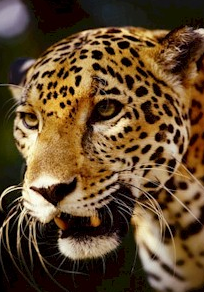
In announcing that they are giving up efforts to help the jaguar population recover, U.S. authorities have handed a death sentence to the big cat that was once plentiful along the border with Mexico.

Jan 28 (Tierramérica).- Jaguars have no place in the United States, although a handful still roam the Southwest. Environmentalists suspect the real reason U.S. officials will let the jaguar become extinct is the “security” wall being built along the Mexican border.

Ecologists have long warned that the border wall — actually a series of walls — will have big impacts on wildlife and the region’s fragile and unique ecology.

“There is no question that jaguars (Panthera onca) in the U.S. and northern Mexico would be significantly affected by the wall,” says Joe Cook, expert in mammal biology at the University of New Mexico.

us-mex-wall-under-construction.jpg

“As best we can tell, the few remaining U.S. jaguars are part of a larger population based in Northern Mexico,” Cook told Tierramérica.
Continue reading

Fish Farms Pushing Wild Salmon to Extinction

courtesy Alexandra Morton

By Stephen Leahy

Dec 14 (IPS) – V
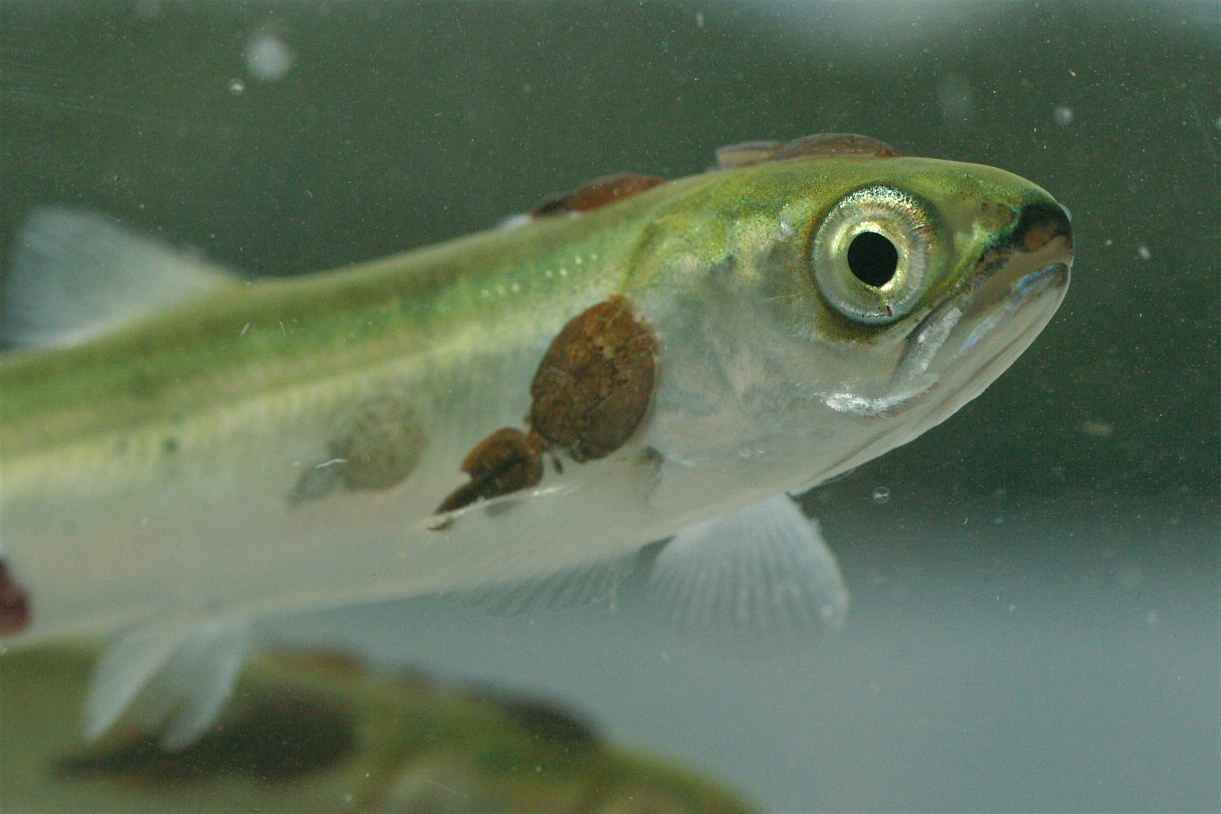
ast populations of pink salmon on Canada’s west coast will be extinct in four years due to infestations of parasites from open ocean salmon farms, scientists reported Friday in the prestigious journal Science.

Canadian officials seem likely to let the wild salmon go extinct, if past inaction is any indicator, Alexandra Morton, the study’s co-author and director of the Salmon Coast Field Station in Broughton, British Columbia, told IPS.

The Science study shows that infestations of sea lice have killed more than 80 percent of the annual pink salmon returns in British Columbia’s Broughton Archipelago, 300 kms north of the city of Vancouver, over the past four years. In another four years, there will be no more pinks if the infestations continue.

“If nothing changes, we are going to lose these fish,” said lead author Martin Krkosek, a fisheries ecologist from the University of Alberta. Continue reading

GW Dramatically Rearranging Arctic Landscape

By Stephen Leahy


Credit:micropolisnews

A lone glacier drifts in the Canadian Arctic, Aug. 14, 2007.

Oct 4 (IPS) – The hot breath of global warming has now touched some of the coldest northern regions of world, turning the frozen landscape into mush as temperatures soar 15 degrees C. above normal.

Entire hillsides, sometimes more than a kilometre long, simply let go and slid like a vast green carpet into valleys and rivers on Melville Island in Canada’s northwest Arctic region of Nunavut this summer, says Scott Lamoureux of Queens University in Canada and leader of one the of International Polar Year projects.

“The entire landscape is on the move, it was very difficult to find any slopes that were unaltered,” said Lamoureux, who led a scientific expedition to the remote and uninhabited island. Continue reading

Do you know what you’re eating? DNA barcoding IDs Fish Species

Geneticists Crack the Species Code
By Stephen Leahy


Credit:US CDC

Anopheles stephensi mosquito, a natural vector of malaria, which kills a million people per year.


Sep 14 (IPS) – Scientists are enthusiastic about a new DNA barcoding technology that will help keep illegal fish and timber out of global markets, slow the spread of invasive pests, and improve food safety and disease prevention and offer better environmental monitoring.

When a tree has been turned into a pile of lumber it’s very hard to know what species it was.” — David Schindel, executive secretary of the Consortium for the Barcode of Life

U.S. government regulatory agencies such as the Food and Drug Administration (FDA) and National Oceanic and Atmospheric Administration are beginning to utilise the three-year-old technology.

“It’s now a proven technology, everyone wants to use it,” said David Schindel, executive secretary of the Consortium for the Barcode of Life, comprised of 160 scientific and regulatory organisations from 50 countries and based at the Smithsonian Institution in Washington.

“It’s also an incredibly important technology for developing countries to research and protect their biodversity,” Schindel told IPS.

Continue reading

Wildlife Vanishing from African Game Parks

AFRICA: Game Parks Offering Protection in Name Only?
By Stephen Leahy

“If the international community increased funding by 10 times then there is hope. But I don’t think that’s realistic,” said Paul Scholte of the Institute of Environmental Science at Leiden University

kob-antelope.png

Sep 8 (IPS) – The sharp decline of Africa’s abundant wildlife is now happening inside the continent’s protected areas, a new analysis indicates. Africa’s world renowned parks are destined to become isolated pockets of wilderness with few large animals left, as is the case in Europe, conclude the authors of an article in the current edition of the ‘African Journal of Ecology’.

“It is not a pleasant conclusion,” said Paul Scholte, co-author of the article, and a researcher at the Institute of Environmental Science at Leiden University in the Netherlands.

“Where we have good data, there are dramatic declines in wildlife inside parks and protected areas,” he told IPS. “It was a shock. The declines are far worse than we expected.” Continue reading

Satélites revelan caída de tala amazónica en Perú

Para los lectores españoles:

Satélites revelan caída de tala amazónica en PerúRecently-contacted Murunahua man, River Yurua, Peru. He was shot in the eye by loggers during first contact. © David Hill / Survival
Por Stephen Leahy

La deforestación peruana, intensa en las áreas cercanas a carreteras y explotaciones minerales, ha tenido escaso impacto en las selvas protegidas, afirman investigadores.

TORONTO, 13 ago (Tierramérica).- Las políticas de conservación de selvas redujeron el ritmo de la deforestación en la Amazonia peruana, afirma un nuevo estudio basado en detección satelital de alta precisión.

Aunque los bosques amazónicos de Brasil son los que concitan la mayor parte de la atención internacional, los 661 mil kilómetros cuadrados de selvas peruanas son reconocidos como un ecosistema único.

Pero los impactos de la actividad humana en toda la región han sido mal comprendidos hasta un estudio publicado el viernes 10 en la revista científica Science.

“Las reservas forestales y las áreas de conservación de Perú parecen estar funcionando bien”, dijo Greg Asner, director del estadounidense Observatorio Aéreo de la Carnegie Institution of Washington, con sede en California.

Continue reading

Roads Lead to Deforestation in Untouched Peruvian Amazon

Recently-contacted Murunahua man, River Yurua, Peru. He was shot in the eye by loggers during first contact. © David Hill / Survival

Satellites Show Logging Decline in Peruvian Amazon
By Stephen Leahy

Deforestation in the Peruvian Amazon, intense in zones near roads and mining operations, has had little impact in protected forests, say researchers.

Aug 13 (Tierramérica).- Rainforest conservation policies are reducing the rate of deforestation in the Peruvian Amazon, but roads are unquestionably the drivers of change, new satellite data reveal.

Although Brazil’s Amazon forests draw the most international attention, Peru’s 661,000 square kilometers of rainforests are recognized as a unique and important ecosystem.

However, the impacts of human activities throughout the region have been poorly understood, until a study published Aug. 10 in the journal Science.

“Peru’s forest reserves and conservation areas appear to be working well,” said Greg Asner, director of the Carnegie Airborne Observatory, at Stanford University in California.

Continue reading

Carbon Project Endangers the Galápagos

img_0235.jpg


By Stephen Leahy

A company is preparing to enrich seawater with iron in order to promote phytoplankton growth and the absorption of carbon from the atmosphere near the environmentally-protected Galápagos Islands.

PUERTO AYORA, Galápagos, Ecuador, Jul 9 ’07 (Tierramérica).- Later this month a U.S. company, Planktos Inc., plans to dump 100 tons of iron dust into the ocean near Ecuador’s Galápagos Islands, despite opposition from environmental groups and marine scientists.This will be the first-ever commercial effort to reduce carbon dioxide in the atmosphere, one of the main gases blamed for climate change, by using iron particles to create a 10,000-square-kilometer “plankton bloom”.

Planktos says the extra volume of these small, floating organisms will absorb large amounts of CO2 from the atmosphere and take it deep into the sea. And this method may be the fastest and most powerful tool to battle climate change.

img_0508.jpg

“The currents will likely bring the bloom into the [Galápagos] Marine Reserve,” covering 133,000 sq. km, the world’s third largest marine reserve, says Washington Tapia, director of the Galápagos National Park, which includes the reserve. Continue reading

Aliens of the Deep Seas

350 Degrees Is Bathwater to These Animals
By Stephen Leahy


Credit:NASA

Hydrothermal vent


PUERTO AYORA, Galapagos Islands, Ecuador , Jul 5 (IPS) – Marine scientists returned to the Galapagos Islands this week to celebrate a discovery that Charles Darwin never dreamt of: bizarre animals that live in total darkness around active deep-sea volcanoes.

Thirty years ago, researchers found the first chimney spewing super-hot water — called a hydrothermal vent — 2,500 metres below the surface on the sea floor, with its own thriving  animal community. That life could prosper without sunlight or photosynthesis changed forever the very definition of what constitutes “life” on the Earth. And it opened a new window on the possibilities of life elsewhere in the universe.

After all, if a tiny shrimp can live in total darkness, under tonnes of pressure in a toxic chemical soup boiling away at 350 degrees C, why could not life take hold on some distant planetoid where conditions might not be so harsh?
Continue reading

We are Undermining Life on Earth — World Biodiversity Day (May 22)

Putting a Human Face on Biodiversity
By Stephen Leahy


Credit:Courtesy of CBD

Ahmed Djoghlaf, executive secretary of the Convention on Biological Diversity.


May 21 (Tierramérica) – Biodiversity is what sustains life on Earth, but we are on the verge of the sixth mass extinction of species in the planet’s history, Ahmed Djoghlaf, executive secretary of the Convention on Biological Diversity, told Tierramérica.

On the eve of World Biodiversity Day, May 22, Djoghlaf underscored that climate change is creating conditions to which plant and animal life cannot react to quickly enough. In turn, the loss of species will aggravate global warming, creating a vicious cycle.

TIERRAMÉRICA: What is the link between climate change and biodiversity?

AHMED DJOGHLAF: Species cannot respond fast enough to changing climatic conditions. The warming oceans are having a tremendous impact on coral reefs and plankton, crucial to marine biodiversity. And combined with over-fishing, this means fish stocks will be effectively wiped out by 2048, recent research shows. That will affect the livelihoods of many millions of people. Continue reading