Just Published: Oil Stains in the Boreal Forest

os-cover.jpg


Oil Stains in the Boreal Forest:
The Environmental Cost of Canada’s Oil Sands

A New eBook Available Here

Canada’s oil sands are the world’s largest industrial project easily visible from space. Some of the environmental impacts can also be seen from space but many more are invisible and unacknowledged in their entirety until now.

Oil Stains in the Boreal Forest offers a fast, factual overview of the environmental impacts of pumping more than 1.1 million barrels of oil — 175 million litres/50 million gallons — each day to thirsty US markets. Leading scientific and environmental experts along with industry officials are interviewed to provide the full story.

Oil Stains in the Boreal Forest includes pictures of the environmental destruction, hyperlinks for additional information, a bonus chart on The Real Cost of Tank of Oil Sands Gas and a new economic study that shows Oil Company profits are based on no-cost pollution.

Written by independent journalist Stephen Leahy who has been published in New Scientist, The London Sunday Times, Maclean’s Magazine, The Toronto Star, Wired News, Audubon, BBC Wildlife, and Canadian Geographic. Leahy is the science and environment correspondent for Inter Press Service News Agency (IPS), a wire service headquartered in Rome that covers global issues, and its Latin American affiliate,Tierramérica, located in Mexico City.

Oil Stains in the Boreal ForesteBook – full-color, 8 1/2 x 11″, 28 page pdf (1.2 mb download) Special publication price $6.00

Passion Needed to Meet Climate Challenge

Copyright Alfred Wegener Institute for Polar and Marine ResearchClimate Change: The Challenge of the Century?

By Stephen Leahy


Apr 6 (IPS) – Climate change is already altering the Arctic, sub-Saharan Africa, small islands and Asia’s river deltas, the Intergovernmental Panel on Climate Change (IPCC) reported Friday in Brussels.

And these observed impacts will only increase and widen in the years to come, along with some nasty surprises as the human race’s global climate-altering experiment rapidly gains momentum.

Scientists and environmental activists say the overarching question — and the challenge of the century — is what will we do about it?

“The irritating thing is that we have all the tools at hand to limit climate change and save the world from the worst impacts,” said Lara Hansen, chief scientist of the World Wildlife Fund’s Global Climate Change Programme.

Continue reading

Bio-Pirates of the Pacific

A Brazilian publication ‘ambiente’ made this clever graphic to illustrate my Pacific Islanders Preyed on by Bio-Pirates story of a couple of weeks ago.

biopirate-brazil-graphic.png

FYI magazines, newspapers and news websites around the world subscribe to the IPS wire service and stories are translated in different languages. I’ve seen mine in Finnish, Swedish, Dutch, German, French, Spanish, Italian, Turkish, Malay , Suomi– it’s a little weird to be honest.

Thanks to Terry Collins for letting me know.

Dust Bowl Returns Permanently to US Southwest

Southwestern U.S. Becoming a Dust Bowl
Stephen Leahy

Apr 5 (IPS) – The severe seven-year drought in the Southwestern United States is just the beginning of a new and even drier climate for the region due to climate change, scientists say.

The infamous “dust bowl” conditions of the 1930s will be the norm, with the possibility that the aridity will be unlike anything in the past, according to research published Thursday in Science — one day before the release of another key report by the Inter-Governmental Panel on Climate Change, which also warns that drought-prone areas are likely to become even drier due to global warming.

According to Ming Fang Ting, a senior research scientist at Columbia University’s Lamont-Doherty Earth Observatory and co-author of the Science study, the current drought in the U.S. Southwest is not part of the natural variability in climactic conditions.
Continue reading

New eBook on Enviromental Impacts of Canada’s Oil Sands

copyright Pembina Institutecopyright Pembina Institute

Now Available:

Oil Stains in the Boreal Forest:
The Environmental Cost of Canada’s Oil Sands


A new eBook by Stephen Leahy

Canada’s oil sands are the world’s largest industrial project easily visible from space. Some of the environmental impacts can also be seen from space but many more are invisible and unacknowledged in their entirety until now.

Oil Stains in the Boreal Forest offers a fast, factual overview of the environmental impacts of pumping more than 1.1 million barrels of oil — 175 million litres/50 million gallons — each day to thirsty US markets. Leading scientific and environmental experts along with industry officials are interviewed to provide the full story.

Oil Stains in the Boreal Forest includes pictures of the environmental destruction, hyperlinks for additional information, a bonus chart on The Real Cost of Tank of Oil Sands Gas and a new economic study that shows Oil Company profits are based on no-cost pollution. (special publication price $6.00)

The Ultimate Apex Predators

shodou-calligraphy.gifHumans are the ultimate apex predator — we eat anything that moves and hardly anything wants to eat us.

Sharks got nothing on us.

So what does it mean in ecological terms when there are six billion+ apex predators roaming the planet?

Massive extinctions of other species for one thing as we munch our way down the food chain. As species decline, ecosystems unravel leading to more declines and maybe some blooms of things like weeds and jellyfish. And eventually (perhaps sooner than later) we run out of food and lose ecosystem services, both of which will contribute greatly to rapid increases in disease and death in humans.

That seems to be the logical and grim ecological prognosis.

However, like a car hurtling towards the edge of the cliff, we’re arguing about what CD to listen too instead of applying the brakes. [Or more likely, each of us is plugged into our own IPOD and oblivious to each other and anything else.]

I admit that writing about environmental issues can be depressing. I’m actually an optimist and believe we will jump on those brakes at the last minute.

Overfishing Sharks Leading to Ecological Collapse

As Sharks Vanish, Chaotic New Order EmergesWhite Shark courtesy of TOPP
By Stephen Leahy

Mar 29 (IPS) – Major declines in large sharks along the U.S. coast have in turn triggered declines in shellfish and reduced water quality, proof that the ocean’s food web is collapsing, a groundbreaking new study reveals.

With the virtual elimination of large sharks along the U.S. east coast, such as black tip and tiger sharks, the species they used to eat — small sharks, rays and skates – have boomed in numbers. Cownose ray populations increased 20-fold since 1970 and as a direct consequence, shellfish like scallops that the cownose ray eats have been nearly wiped out despite major conservation efforts.

The cascade of impacts resulting from overfishing large sharks goes further still, marine scientist Ransom Myers and coauthors document in a paper published Thursday in Science. The loss of scallops has reduced water quality because scallops and other shellfish filtre sea water. And the cownose ray is now feeding voraciously on other shellfish, like oysters and clams.
Continue reading

Plagiarism plague

What would you do?shodou-calligraphy.gif

A commercial trade magazine ($32/yr) took one of my stories, acknowledged me as the original author, rewrote portions but added no new material and put it in their magazine and on their website. I did several interviews with experts who were hard to find and wrote a pretty good story on a new discovery that would benefit farmers. I own the copyright to the story and they didn’t ask and they didn’t pay me to use it.

It is tempting to either use someone else’s writing or make some cosmetic revisions and feel free to profit from it. But its wrong, illegal and adds nothing. Better by far to express your thoughts and research — even if poorly written.


Any ways I asked this publication (which may or may not make this theft a habit) to take the story off their site and compensate me for the use of my material.

So far I’ve been ignored.

What would you do?

Biofuels and Carbon Credits Behind Global Deforestation

Biofuels Boom Spurring Deforestation
By Stephen Leahy

Mar 21 (IPS/IFEJ) – Nearly 40,000 hectares of forest vanish every day, driven by the world’s growing hunger for timber, pulp and paper, and ironically, new biofuels and carbon credits designed to protect the environment.

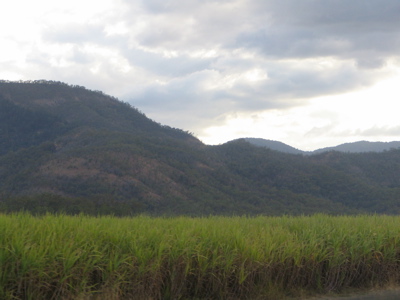
Sugarcane field Queensland Australia Copyright Renate Leahy 2004The irony here is that the growing eagerness to slow climate change by using biofuels and planting millions of trees for carbon credits has resulted in new major causes of deforestation, say activists. And that is making climate change worse because deforestation puts far more greenhouse gases into the atmosphere than the entire world’s fleet of cars, trucks, planes, trains and ships combined.

“Biofuels are rapidly becoming the main cause of deforestation in countries like Indonesia, Malaysia and Brazil,” said Simone Lovera, managing coordinator of the Global Forest Coalition, an environmental NGO based in Asunción, Paraguay. Continue reading

Iraq’s Environmental Nightmare

Bee Eaters in Iraq Copyright 2006 Laurie Haak IRAQ: Environmental Nightmare Drags On

“We inherited a terrible situation when it comes to the environment,” Narmin Othman, Iraq’s environment minister.

By Stephen Leahy

Mar 21 (Tierramérica) – Four years after the U.S.-led invasion of Iraq and despite 22 billion dollars spent on recovery and reconstruction, Iraq’s environment remains in disastrous shape.

“The Tigris and Euphrates rivers are essentially open sewers,” Azzam Alwash, head of Nature Iraq, a conservation group based in Baghdad, told Tierramérica.
Continue reading