Ethanol Worse Than Gasoline

oil-palm-seedling-in-burned-peat-forest-wetland-international.jpg

By Stephen Leahy
Feb 8 (IPS) – Biofuels are making climate change worse, not better, according to two new studies which found that total greenhouse gas emissions from biofuels are far higher than those from burning gasoline because biofuel production is pushing up food prices and resulting in deforestation and loss of grasslands.

Emissions from ethanol are 93 percent higher than gasoline,” said David Tilman, an ecologist at the University of Minnesota and co-author of one of the papers published Thursday in the journal Science.

“The bottom line is that using good farmland for biofuels increases greenhouse emissions,” he said.
Continue reading

Border Wall Condemns America’s Last Jaguars to Extinction

jaguar-defenders-of-wildlife.png

By Stephen Leahy*

In announcing that they are giving up efforts to help the jaguar population recover, U.S. authorities have handed a death sentence to the big cat that was once plentiful along the border with Mexico.

Jan 28 (Tierramérica).- Jaguars have no place in the United States, although a handful still roam the Southwest. Environmentalists suspect the real reason U.S. officials will let the jaguar become extinct is the “security” wall being built along the Mexican border.

Ecologists have long warned that the border wall — actually a series of walls — will have big impacts on wildlife and the region’s fragile and unique ecology.

“There is no question that jaguars (Panthera onca) in the U.S. and northern Mexico would be significantly affected by the wall,” says Joe Cook, expert in mammal biology at the University of New Mexico.

us-mex-wall-under-construction.jpg

“As best we can tell, the few remaining U.S. jaguars are part of a larger population based in Northern Mexico,” Cook told Tierramérica.

Continue reading

Oil Sands Projects Ignore Environment – New Report

syncrude-open-pit.jpg

Canada’s oil sand companies continue to pollute the air, water and landscape of a large portion of northern Alberta to supply America’s oil.

Canadian pollution regulations are far less stringent than the US and voluntary for the most part. Now a groundbreaking study by the Pembina Institute and the World Wildlife Fund, released Thursday, shows government reliance on industry to voluntarily do the right thing for the land, water and air of northern Alberta has failed.

For the complete story on the Oil Sands Project that supplies much of America’s oil see: Destroying Canada’s Boreal Forest for America’s Oil – 30-page eBook

See also:

Oil Sands Toxins Poison Food

Fish Farms Pushing Wild Salmon to Extinction

courtesy Alexandra Morton

By Stephen Leahy

Dec 14 (IPS) – V
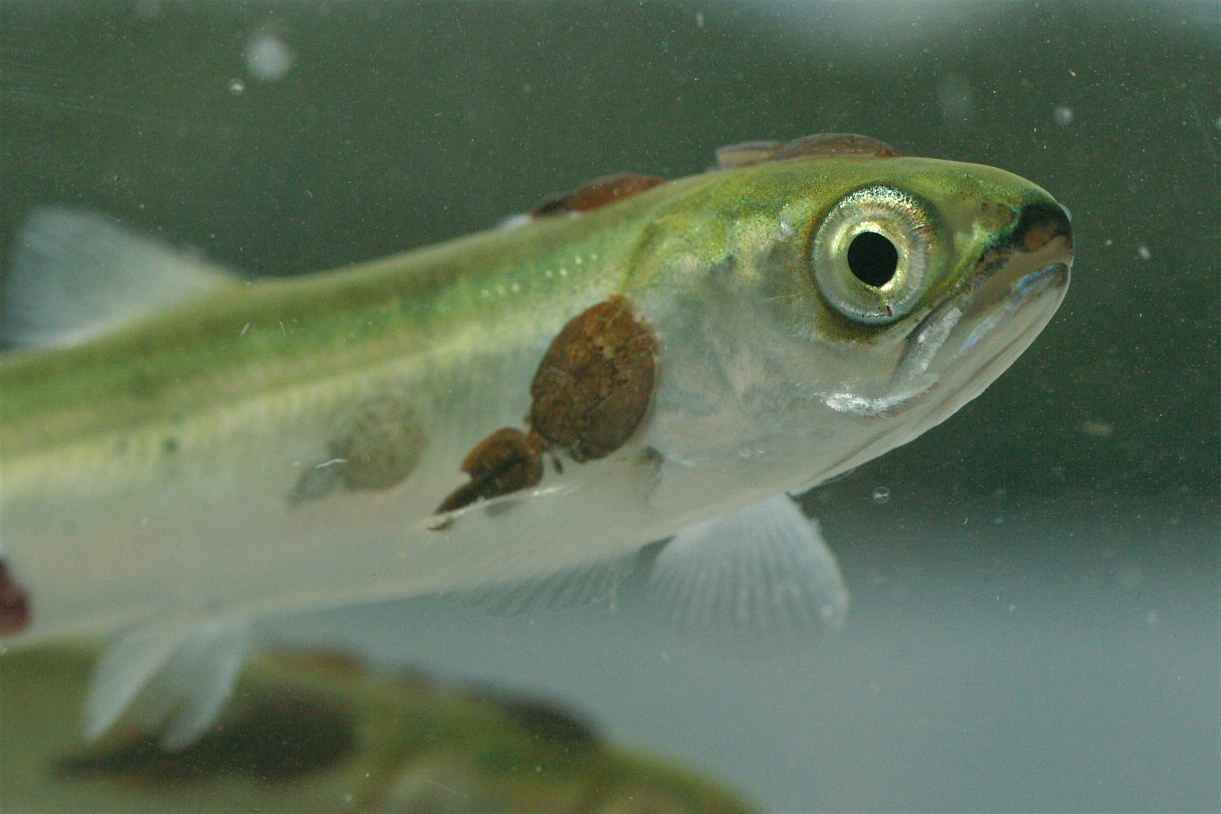
ast populations of pink salmon on Canada’s west coast will be extinct in four years due to infestations of parasites from open ocean salmon farms, scientists reported Friday in the prestigious journal Science.

Canadian officials seem likely to let the wild salmon go extinct, if past inaction is any indicator, Alexandra Morton, the study’s co-author and director of the Salmon Coast Field Station in Broughton, British Columbia, told IPS.

The Science study shows that infestations of sea lice have killed more than 80 percent of the annual pink salmon returns in British Columbia’s Broughton Archipelago, 300 kms north of the city of Vancouver, over the past four years. In another four years, there will be no more pinks if the infestations continue.

“If nothing changes, we are going to lose these fish,” said lead author Martin Krkosek, a fisheries ecologist from the University of Alberta. Continue reading

Catch less fish, Make More $

yellow-fin-tuna-catch-galapagos.jpg

By Stephen Leahy

Dec 11 (IPS) – Catch less fish. Make more money.

Could this be the solution to the global overfishing crisis?

Australian economists writing in the current issue of Science magazine think so.

Reducing fish catches in the short term will bring fishers big profits later. And that profit potential may finally persuade an intransigent fishing industry to agree to lower catch limits, they say.

“Bigger stocks mean bigger bucks,” says co-author Quentin Grafton, research director at the Crawford School of Economics and Government at the Australian National University (ANU).

“Our results prove that the highest profits are made when fish numbers are allowed to rise beyond levels traditionally considered optimal,” Grafton said. Continue reading

Forests, the Great Green Hope?

By Stephen Leahy


Credit:Tomasz Kuran

Mixed forest near Radziejowice, Poland.

Dec 3 (IPS) – Expanding European forests absorbed 126 million tonnes of carbon dioxide from 1990 to 2005 — equivalent to 11 percent of European Union emissions from human activities — while a U.N. target to plant one billion trees mainly in Africa has been surpassed.

“Forests reduced carbon dioxide more than twice the amount of Europe’s renewable energy programmes,” said Pekka Kauppi, who led the University of Helsinki study, published in the British journal Energy Policy on Nov. 29.

Better conservation, migration to cities, and conversion of surplus farmland are the reasons behind the growing and expanding forests, which are mainly in Latvia, Lithuania, Sweden, Slovenia, Bulgaria and Finland Kauppi, told IPS. The study is based on forestry statistics provided by governments and that were not independently verified.

The resulting “surprisingly high carbon dioxide removal” may be the major factor in Europe achieving its ambitious target of 20 percent reductions in greenhouse targets by 2020, Kauppi said.

“On a global scale, there is hope for the future if we stop deforestation and expand forests,” he added. Continue reading

Oceans are the Heart and Blood of the Earth — But are They Healthy?

By Stephen Leahyapollo17_earth.jpg

Nov 27 (IPS) – If continents are the Earth’s sturdy bones and the atmosphere its thin skin, then the oceans are its heart, circulatory system and blood. And despite the crucial role played by the oceans in the health of the planet, and to our own health and well-being, there is little monitoring of ocean health.

Once the oceans were too big and too deep to probe, measure and observe, but between satellites, undersea robots, electronically tagged fish and deep sea sensors, scientists now have the tools.

On Tuesday, high-level officials began meeting in Cape Town, South Africa to see if governments have the will to create a Partnership for Observation of the Global Oceans (POGO) — a 10-year project to create a comprehensive monitoring system of what has been described as the last frontier.

“We have pathetically few measurements of the oceans relative to their importance to life on Earth and the extent to which we rely on them for energy, weather, food and recreation,” said D. James Baker, former administrator of the U.S. National Oceanic and Atmospheric Administration. Continue reading

Philippines hit by 13 Major Storms – Two Arrive Today

picture-2.jpg

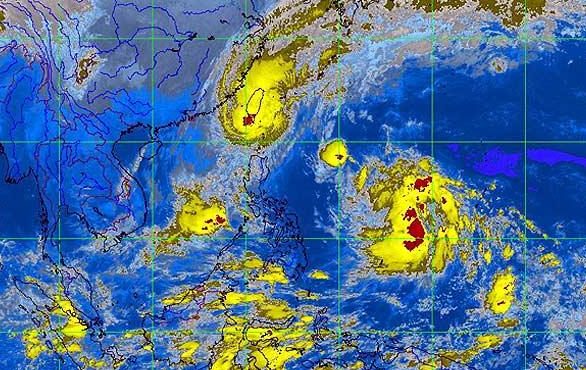
Although the Atlantic hurricane season has been relatively quiet, the Eastern Pacific has already seen 24 typhoons (hurricane). The Philippines have been hit by 13 this season and two arrived this week, including one that killed 13 people last week and and then completely reversed itself and returned. Over a half million people have been forced from their homes.

Related stories:
First Ever: Two Hurricane Landfalls on Same Day – Pix
Hurricane Felix Category Five — Pix
Steve’s Hurricane Handbook 2007
Hurricane Katrina Only Cat 1/2 When It Hit New Orleans – NOAA

Kill Kyoto or Kyoto II Our Only Hope?

franke-polar-sml.jpg“We don’t have time to start over… global carbon emissions have to peak in 2015 …”Jonathan Pershing, World Resources Institute

By Stephen Leahy

Nov 21 (IPS) – Total greenhouse gas emissions of 40 industrialised countries rose to a near all-time high in 2005, but the Kyoto Protocol will still exceed its reduction targets, a United Nations agency said two weeks before political leaders meet in Bali, Indonesia to begin negotiations on a new and more aggressive treaty to battle climate change.

“Greenhouse-gas emissions between 1990 and 2000 went down, but then between 2000 and 2005 they increased again, by 2.6 percent,” said Yvo de Boer, executive secretary of the United Nations Framework Convention on Climate Change (UNFCCC).

Countries that signed the Kyoto Protocol are expected to achieve reductions of 11 percent compared to 1990 by 2012 if their policies deliver the promised reductions, the UNFCCC report said — a significant achievement and surpassing the Kyoto Protocol target of five percent.

“For the totality of Kyoto signatory countries, reductions of 15 percent are feasible should additional policies be planned and implemented,” de Boer said. Continue reading

Acid Oceans to ‘Dissolve’ Coral Reefs in 30 years

By Stephen Leahy

BROOKLIN, Canada, Nov 12, 2007 (IPS)

Coral reefs face certain extinction in a few decades unless there are unprecedented reductions in carbon emissions, leading Australian scientists warn.

Corals around the world may be nothing but rubble before a child born today turns 30 years old, and almost certainly before they’re 50.

The reason? Rising carbon dioxide (CO2) levels in the atmosphere are turning the oceans acidic far faster than previously observed.

“It isn’t just the coral reefs which are affected. A large part of the plankton in the Southern Ocean, the coccolithophorids, are also affected,” said Malcolm McCulloch, an environmental research scientist at the Australian National University in Canberra.

[Update Sept 2010 – wide spread coral bleaching reportedWhat if our air was 30% more acidic like the Oceans? May be 120% more acidic by 2060]

“These (coccolithophorids) drive ocean productivity and are the base of the food web which supports krill, whales, tuna and our fisheries,” McCulloch said in a statement. Continue reading