Climate Change: ‘Things Happen Much Faster in the Arctic’ – Summer Sea Ice Could be Gone Soon

polar-bear-leap-wwwfirstpeopleus-sml

By Stephen Leahy

We’re going to see huge changes in the Arctic ecosystem

QUEBEC CITY, Canada, Dec 13 2008 (IPS)

In just a few summers from now, the Arctic Ocean will lose its protective cover of ice for the first time in a million years, according to some experts attending the International Arctic Change conference here.

A summer ice-free Arctic wasn’t due for another 50 to 70 years under the worst-case climate change scenarios examined by the Intergovernmental Panel on Climate Change (IPCC).

“Things are happening much faster in the Arctic. I think it will be summer ice-free by 2015,” said David Barber, an Arctic climatologist at the University of Manitoba.

Such a “dramatic and serious loss of sea ice will affect everyone on the planet,” Barber told IPS. Continue reading

Carbon-Credit Gold: Who is going to get rich?

forest-fireBy Stephen Leahy

Paying the poor to conserve forests through a market scheme is the new star among initiatives in climate talks.

UXBRIDGE, Canada, Dec 15 (Tierramérica).- Climate experts meeting in Poznan, Poland, promised to create a new pot of carbon-credit gold for the rural poor as guardians of rural lands and forests.

But there are many who warn that the gold will flow only to corporate interests.

One of the most effective ways to combat climate change, caused by gases like carbon dioxide that trap heat in the atmosphere, is through biological sequestration of carbon in plants, trees and soils. That means reducing deforestation, increasing reforestation, and utilizing sustainable agriculture and grazing practices that conserve soil and water.

If these activities become part of a multi-billion-dollar global carbon finance regime, under a new 2009 climate treaty, there could be extraordinary benefits for the rural poor and the environment, according to Olav Kjørven, the former director of the United Nations Development Program’s (UNDP) Energy and Environment Group. Continue reading

Arctic Is the Canary in the Coalmine

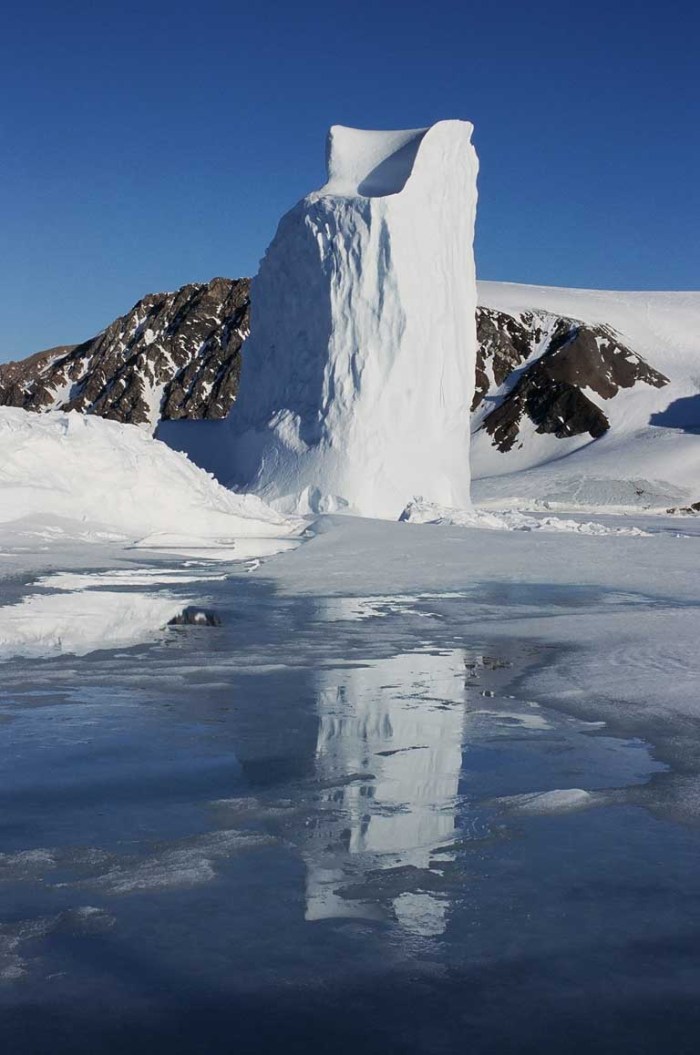
ceberg-in-glacier-strait-nunavut-canada-image-credit-sandy-briggsBy Stephen Leahy

QUEBEC CITY, Canada, Dec 12 (IPS) – Nearly 1,000 scientists and representatives of indigenous peoples from 16 countries have braved a major winter storm to share their findings and concerns about the rapidly warming Arctic region at the International Arctic Change conference in Quebec City.

The Arctic is “ground zero” for climate change, with temperatures rising far faster than anywhere else on the planet. Some predict an ice-free summer Arctic in less than five to 10 years — the first time the Arctic Ocean will be exposed to the sun in many hundreds of thousands of years.

The speed of change has scientists scrambling to understand the impacts on indigenous people, wildlife and ecology.

“The Arctic will be full of future surprises,” said David Carlson, an oceanographer and director of the International Polar Year programme office.

“Protected by its cover of sea ice, the Arctic Ocean is the last unblemished ocean on the planet,” Carlson told IPS.

Continue reading

Top Ten Worst Pollution Problems That Kill Millions – Including Ones You’ve Never Heard Of

By Stephen Leahychromium-a-carcinogenic-commonly-used-in-the-tanning-industry-noraiakheda-kanpur-india-photo-by-blacksmith-institute-sml

UXBRIDGE, Canada, Oct 23 (IPS)

Gold mining and recycling car batteries are two of the world’s Top 10 most dangerous pollution problems, and the least known, according a new report.

The health of hundreds of millions of people is affected and millions die because of preventable pollution problems like toxic waste, air pollution, ground and surface water contamination, metal smelting and processing, used car battery recycling and artisanal gold mining, the “Top Ten” report found.

“The global health burden from pollution is astonishing, and mainly affects women and children,” said Richard Fuller, director of the New York- based Blacksmith Institute, a independent environmental group that released the list Tuesday in partnership with Green Cross Switzerland.

“The world community needs to wake up to this fact,” Fuller told IPS.

Continue reading

Acid Oceans to ‘Dissolve’ Coral Reefs in 30 years

By Stephen Leahy

BROOKLIN, Canada, Nov 12, 2007 (IPS)

Coral reefs face certain extinction in a few decades unless there are unprecedented reductions in carbon emissions, leading Australian scientists warn.

Corals around the world may be nothing but rubble before a child born today turns 30 years old, and almost certainly before they’re 50.

The reason? Rising carbon dioxide (CO2) levels in the atmosphere are turning the oceans acidic far faster than previously observed.

“It isn’t just the coral reefs which are affected. A large part of the plankton in the Southern Ocean, the coccolithophorids, are also affected,” said Malcolm McCulloch, an environmental research scientist at the Australian National University in Canberra.

[Update Sept 2010 – wide spread coral bleaching reportedWhat if our air was 30% more acidic like the Oceans? May be 120% more acidic by 2060]

“These (coccolithophorids) drive ocean productivity and are the base of the food web which supports krill, whales, tuna and our fisheries,” McCulloch said in a statement. Continue reading

3 Reasons Why Gore Should Not Have Won Nobel Prize

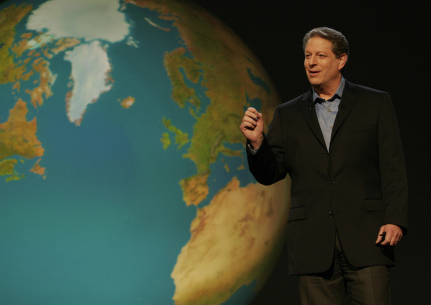
al-gore.pngThis year’s Nobel Prize for Peace went to Al Gore and the UN’s Intergovernmental Panel on Climate Change (IPCC) for their efforts to awaken the world about the risks of climate change. That’s great news but I’d have preferred to see the other candidate for the prize, Canadian Inuit Sheila Watt-Cloutier share the award with the IPCC not Gore.

Three Reasons Why Gore Should Not Have Won:

1. Watt-Cloutier has been a passionate and eloquent communicator about the fact that indigenous people of the Arctic, and indigenous peoples elsewhere, have taken the first and hardest climate change hits so far. It would be been fairer and more representative of the reality to award the prize to an indigenous person.watt-cloutier.png

2. For eight long years Al Gore was second in command of the largest greenhouse gas emitting country in the world. And yet emissions climbed and climbed even though Gore knew climate change was a real and pressing emergency. When running for President Gore barely mentioned GW and then the world had to suffer thru the other GW — George W Bush and his blind and selfish intransigence.

3. Al Gore’s GW solutions are mostly wrong. Biofuels are a bad idea and only make rich agri-corporations richer. Carbon trading markets are an equally bad idea — enshrines the rich countries’ right to pollute our common atmosphere. A moratorium on coal and a carbon tax are some of his better ideas. However, Gore fails to address the root of the problem which is an economic system based on endless growth on a tiny planet with an awful lot of people.

“People do want to do the right thing, but they just don’t realise that the Arctic is melting and they are responsible,” Watt-Cloutier told me in 2004. From Global Warming Will Decimate Arctic Peoples and also see Inuit Sue America Over Climate Change

Inuit Sue America over Climate Change

By Stephen Leahy

The Inuit people of the Arctic regions are preparing to charge the United States with human rights violations, saying that country is the leading culprit behind climate change, which threatens their way of life — and their very survival.

Originally published in Latin America Feb 15 2005 by Tierramérica

The sharp increase in temperatures in the Arctic has led to dramatic losses of sea ice and melting permafrost (the layer of ground that normally remains frozen year round), which have destroyed buildings and roads and forced relocations of entire native Inuit villages. Continue reading

Global Warming Will Decimate Arctic Peoples

By Stephen Leahy10000660_jpg.jpg

Climate change will soon make the Arctic regions of the world nearly unrecognisable, dramatically disrupting traditional Inuit and other northern native peoples’ way of life, according to a new report that has yet to be publicly released.

Originally published in September 11 2004 by the Inter Press Service

The dire predictions are just some of the findings by the Arctic Climate Impact Assessment (ACIA), an unprecedented four-year scientific investigation into the current and future impact of climate change in the region. “This assessment projects the end of the Inuit as a hunting culture,” said Sheila Watt-Cloutier, chairwoman of the group that represents about 155,000 Inuit in the Arctic regions of Canada, Russia, Greenland, and the United States.

The report predicts the depletion of summer sea ice, which will push marine mammals like polar bears, walrus and some seal species into extinction by the middle of this century, Watt-Cloutier told IPS. Continue reading

GW Dramatically Rearranging Arctic Landscape

By Stephen Leahy


Credit:micropolisnews

A lone glacier drifts in the Canadian Arctic, Aug. 14, 2007.

Oct 4 (IPS) – The hot breath of global warming has now touched some of the coldest northern regions of world, turning the frozen landscape into mush as temperatures soar 15 degrees C. above normal.

Entire hillsides, sometimes more than a kilometre long, simply let go and slid like a vast green carpet into valleys and rivers on Melville Island in Canada’s northwest Arctic region of Nunavut this summer, says Scott Lamoureux of Queens University in Canada and leader of one the of International Polar Year projects.

“The entire landscape is on the move, it was very difficult to find any slopes that were unaltered,” said Lamoureux, who led a scientific expedition to the remote and uninhabited island. Continue reading

10 Worst Places on Earth – 2007

linfen-coalminer.jpgWorst Places on Earth Are Home to Millions
By Stephen Leahy

Sep 12 (IPS) – Rapidly industrialising India and China have claimed four of the top 10 most polluted places on the planet for the first time, according to a report by U.S. and European environmental groups.

In 2006, Russia topped the list with the three sites in the top 10, but this year, two very large toxic sites affecting hundreds of thousands of people in India and China were included that had been missed in the previous global survey, said Richard Fuller, director of the New York- based Blacksmith Institute, a independent environmental group that released the list Sep. 12 report in partnership with Green Cross Switzerland.

“We were surprised these sites had not been reported before,” Fuller told IPS.

One is Tianjin in the Anhui Province of China, which produces about 50 percent of the country’s lead, often from low-level and illegal production facilities. A lack of environmental enforcement has resulted in severe lead poisoning, with soil and homes contaminated at levels 10 to 24 times China’s national standards.

Up to 140,000 people may be affected, suffering from brain damage and mental retardation. Continue reading