Peak Fish: The Beginning of the End of Ocean Seafood

Ocean Fisheries Maxed OutCopyright 2004 Renate Leahy

By Stephen Leahy

Mar 5 (IPS) – Two-thirds of fish stocks in the world’s high seas are overfished, while most of those closer to shore are failing or fished to the maximum, a new U.N. report said Monday.

More and stronger regional fisheries management organisations are needed to rebuild depleted stocks and prevent the collapse of other stocks, warned the FAO’s latest “State of World Fisheries and Aquaculture” (SOFIA) report.
Continue reading

Response To Global Change Too Slow


Paraphrase of the Day:

Institutions are not responding fast enough to the industrial might and scale of change that is happening be it climate change or rapid loss of species or decline in the global fisheries. The rate are which our institutions take action is simply too slow. — Daniel Pauly, director of the Fisheries Centre at the University of British Columbia.

See complete story

Heed the Warning of the Frogs

Amphibians are rapidly going extinct around the world — 43 per cent of known species are in decline according to the Global Amphibian Assessment.

Frogs and other amphibians are warning us about environmental deterioration that threatens all species and our own well being, said Alan Pounds an ecologist at the Tropical Science Center, Monteverde Cloud Forest Preserve in Costa Rica.

“We should be listening to the message from the frogs.”

Story to be completed and published in a few days.

Melting Ice Offers Window on Polar Ecosystem

Copyright Alfred Wegener Institute for Polar and Marine Research

By Stephen Leahy

Feb 27 (IPS) – The collapse of Antarctic ice shelves due to climate change is providing the first views of marine life hidden deep under the polar ice for more than 5,000 years.

A 10-week Antarctic international expedition to probe the region’s secrets is also the first major scientific effort of the International Polar Year that was officially launched Monday in Paris and London.

Continue reading

Global Food Supply Near the Breaking Point

Global Food Supply Near the Breaking Point

By Stephen Leahy

[Written last year, this article continues to be re-published frequently and often illegally (sigh) – remember short quote and link is ok but reposting entire articles violates copyright]

May 17 (IPS) The world is now eating more food than farmers grow, pushing global grain stocks to their lowest level in 30 years.

Rising population, water shortages, climate change, and the growing costs of fossil fuel-based fertilisers point to a calamitous shortfall in the world’s grain supplies in the near future, according to Canada’s National Farmers Union (NFU).

Continue reading

DIRTY GOLD: Protests at Canada’s Goldcorp Mines In Honduras and Guatemala

[update: May 2010: The mining company Entremares, subsidiary of the Canadian consortium Glamis Gold, (Goldcorp _Vancouver, Canada) will be charged with polluting the central valley of Siria and of hiding information from the authorities. — Tierramerica]

By Stephen Leahy

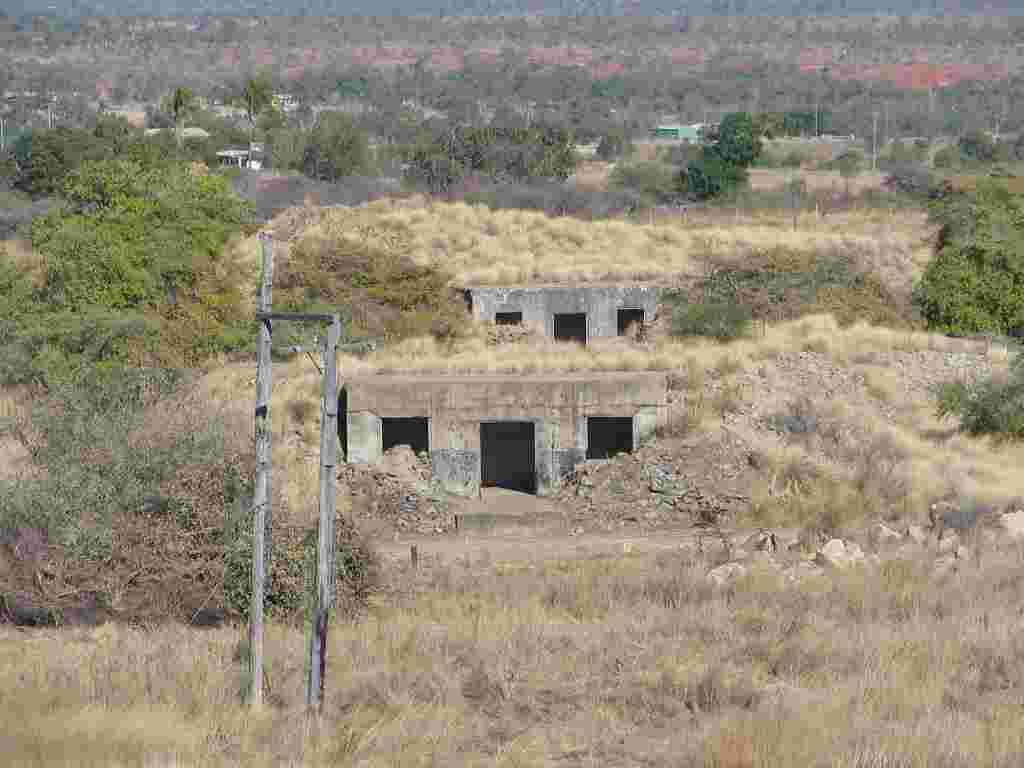
The Canadian mining giant Goldcorp, which runs the largest gold mine in Mexico, is racking up complaints about its environmental violations. In Honduras, officials are considering legal action.queensland-olf-goldmine.JPGOld gold mine Queensland Australia Copyright 2004 Renate Leahy

Continue reading

Fish with Chips — Underwater Electronics to Revolutionize Fisheries Management

Scientists Put an Ear to the Ocean Floor

Photo courtesy of TOPP

By Stephen Leahy

Feb 14 (IPS) – Canada will spend 38 million dollars to install thousands of undersea listening posts along the continental shelves of North America, the Mediterranean, Gulf of Mexico and Australia.

Akin to military hydrophones used to detect the underwater passage of submarines, the receivers of the new Ocean Tracking Network will track movements of fish and marine mammals tagged with tiny acoustic transmitters.

And this too is a security issue — fish stock security.

Continue reading

Fish Stocks and Science to Benefit from Undersea Listening Devices

Paraphrase for the day:


“This will change the way marine science does business.” — Ron O’Dor, a researcher at Dalhousie University in Nova Scotia who leads the Ocean Tracking Network.


Movements of thousands of ocean-going fish and marine mammals are being followed by scientists using the new Ocean Tracking Network that could ramp up to track a million animals around the globe.

Story here:

Fish with Chips — Underwater Electronics to Revolutionize Fisheries Management


Capturing Carbon Crucial to Preventing Climate Catastrophe

img_0510.JPG Recapturing Carbon Won’t Come Cheap
By Stephen Leahy

Feb 9 (IPS) – Putting climate-altering greenhouse gases back in the ground where they came from is an essential part of any global plan to avoid catastrophic climate change, scientists say.

Capturing carbon dioxide emissions from coal-fired power plants and pumping the global warming gas deep underground or under the sea “may well be the most critical challenge we face, at least for the next 100 years,” writes Daniel Schrag, director of Harvard University’s Centre for the Environment, in the journal Science Friday.

Coal is, and will continue to be, a major source of the world’s energy and emissions of carbon dioxide (CO2), writes Schrag in the report “Preparing to Capture Carbon”.

“By the end of the century, coal could account for more than 80 percent” of all CO2 emissions — double the present level — he writes. Continue reading