No More Lions, Tigers or Bears in a Warmer World (and two steps to keep that from happening)

The really awful predications about rapid, massive extinction appear to be true” Jeremy Kerr, University of Ottawa

“Unless we do something there will be no tigers, lions or bears left in the wild for my grandchildren” Stuart Pimm, Duke University

Scientists Foresee Extinction Domino Effect
By Stephen Leahy


Credit:morgueFile

Sri Lankan monkey with its young.

May 17 (IPS) – Climate change is accelerating species extinctions and unraveling the intricate web of life, experts fear.

Birds, animals, insects and even plants are on the move around the Earth, trying to flee new and increasingly inhospitable local weather conditions. For some, including alpine species and polar bears, there is nowhere to go. And many others, like plants, lack the mobility to stay ahead of changing climatic conditions.

“We’re already seeing species moving, but they’re not moving fast enough to avoid potential extinction,” says Jeremy Kerr, an ecologist at the University of Ottawa in Canada.

“The really awful predications about rapid, massive extinction appear to be true, according to the early evidence,” Kerr told IPS.

One of those predictions came last year from the Millennium Ecosystem Assessment (MA), an unprecedented international four-year research effort. The MA warned that up to 30 percent of all species on Earth could vanish by 2050 due to unsustainable human activities. Continue reading
Free Access to Every Species on the Planet

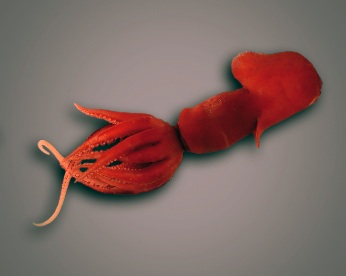
new-species-of-squid-coml.jpg

A Web Page for Each of the World’s Creatures

By Stephen Leahy

May 10 (IPS) – Scientists launched a global initiative Thursday called the “Encyclopedia of Life” that will document the Earth’s 1.8 million known species and track the impacts of habitat loss and climate change.

The ambitious electronic encyclopedia will catalogue the details of every species thus far identified and put all this information on the Internet so anyone can access it.

“This will be a fantastic resource for the developing world,” said James Edwards, the new executive director of the Encyclopedia of Life project headquartered in Washington at the Smithsonian Institution.

Continue reading

Sushi, Moonies, Whales and $Commerce

Top U.S. Sushi Company Linked to Whaling
By Stephen Leahy

Blue whale, courtesy IFAW

Apr 11 (IPS) – An investigation has revealed that the U.S. supplier of sushi to more than 6,000 restaurants is associated with a Japanese company that sells millions of tins of whale meat.

Despite a global ban on killing whales, Japan’s Kyokuyo, a multinational seafood conglomerate, sells between 10 and 20 million cans of whale meat a year, according to an Environmental Investigation Agency (EIA) report released Tuesday. Continue reading

New eBook on Enviromental Impacts of Canada’s Oil Sands

copyright Pembina Institutecopyright Pembina Institute

Now Available:

Oil Stains in the Boreal Forest:
The Environmental Cost of Canada’s Oil Sands


A new eBook by Stephen Leahy

Canada’s oil sands are the world’s largest industrial project easily visible from space. Some of the environmental impacts can also be seen from space but many more are invisible and unacknowledged in their entirety until now.

Oil Stains in the Boreal Forest offers a fast, factual overview of the environmental impacts of pumping more than 1.1 million barrels of oil — 175 million litres/50 million gallons — each day to thirsty US markets. Leading scientific and environmental experts along with industry officials are interviewed to provide the full story.

Oil Stains in the Boreal Forest includes pictures of the environmental destruction, hyperlinks for additional information, a bonus chart on The Real Cost of Tank of Oil Sands Gas and a new economic study that shows Oil Company profits are based on no-cost pollution. (special publication price $6.00)

Overfishing Sharks Leading to Ecological Collapse

As Sharks Vanish, Chaotic New Order EmergesWhite Shark courtesy of TOPP
By Stephen Leahy

Mar 29 (IPS) – Major declines in large sharks along the U.S. coast have in turn triggered declines in shellfish and reduced water quality, proof that the ocean’s food web is collapsing, a groundbreaking new study reveals.

With the virtual elimination of large sharks along the U.S. east coast, such as black tip and tiger sharks, the species they used to eat — small sharks, rays and skates – have boomed in numbers. Cownose ray populations increased 20-fold since 1970 and as a direct consequence, shellfish like scallops that the cownose ray eats have been nearly wiped out despite major conservation efforts.

The cascade of impacts resulting from overfishing large sharks goes further still, marine scientist Ransom Myers and coauthors document in a paper published Thursday in Science. The loss of scallops has reduced water quality because scallops and other shellfish filtre sea water. And the cownose ray is now feeding voraciously on other shellfish, like oysters and clams.
Continue reading

Environmental Changes Wiped Out 170 Amphibian Species Over Past 20 years

Frogs Fading Into Silence

By Stephen Leahy

The extinction of amphibians in Latin America has reached alarming proportions: 209 species in Colombia and 198 in Mexico alone are in danger of disappearing forever

Mar 5 (Tierramérica) – Frogs and other amphibians are rapidly becoming extinct around the world and in Latin American countries in particular. In the Caribbean as many as 80 percent of these species are endangered, while in Colombia there are 209 and in Mexico 198 amphibians may soon disappear.

Environmental degradation along with habitat loss, ultraviolet radiation, disease and climate change are all factors involved in these unprecedented losses.

Continue reading

Peak Fish: The Beginning of the End of Ocean Seafood

Ocean Fisheries Maxed OutCopyright 2004 Renate Leahy

By Stephen Leahy

Mar 5 (IPS) – Two-thirds of fish stocks in the world’s high seas are overfished, while most of those closer to shore are failing or fished to the maximum, a new U.N. report said Monday.

More and stronger regional fisheries management organisations are needed to rebuild depleted stocks and prevent the collapse of other stocks, warned the FAO’s latest “State of World Fisheries and Aquaculture” (SOFIA) report.
Continue reading

Response To Global Change Too Slow


Paraphrase of the Day:

Institutions are not responding fast enough to the industrial might and scale of change that is happening be it climate change or rapid loss of species or decline in the global fisheries. The rate are which our institutions take action is simply too slow. — Daniel Pauly, director of the Fisheries Centre at the University of British Columbia.

See complete story

Heed the Warning of the Frogs

Amphibians are rapidly going extinct around the world — 43 per cent of known species are in decline according to the Global Amphibian Assessment.

Frogs and other amphibians are warning us about environmental deterioration that threatens all species and our own well being, said Alan Pounds an ecologist at the Tropical Science Center, Monteverde Cloud Forest Preserve in Costa Rica.

“We should be listening to the message from the frogs.”

Story to be completed and published in a few days.

Factory Farms, Bird Flu and Global Warming

Report Blames Factory Farms for Bird Flu
By Stephen Leahy

Feb 20 (IPS) – Factory farms are responsible for both the bird flu and emissions of greenhouse gases that now top those of cars and sport utility vehicles (SUVs), according to a report released Monday.

Sixty percent of global livestock production, including chicken and pig “confined animal feedlot operations” (CAFOs), now occur in the developing world. Unregulated zoning and subsidies that encourage these CAFOs or factory farms are moving closer to major urban areas in China, Bangladesh, India, and many countries in Africa, said the report, “Vital Signs 2007-2008” by the Worldwatch Institute.

Continue reading