China, India, Brazil Doing More to Cut Carbon Emissions Cuts Than USA, Canada, Australia

By Stephen Leahy

BONN, Jun 17, 2011 (IPS)

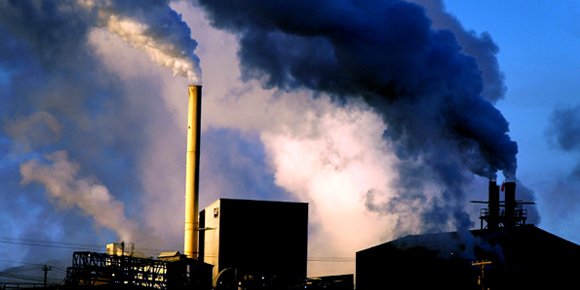
Negotiations over a new international climate agreement are on the brink as new analyses show that carbon emission reduction promises by industrialised nations are actually lower than those made by China, India, Brazil and other developing nations.

Even with all the promises or pledges added together they are still far short of cuts needed to prevent global temperatures from rising two degrees Celsius, experts reported here.

“It’s a very sad picture we see here,” said Marion Vieweg of Climate Analytics, a German NGO that analyses climate science and policy.

This independent environmental journalism depends on public support. Click here learn more.

“The rich nations are doing nothing to improve their emissions pledges,” Vieweg told reporters during the final hours of the United Nations Framework Convention on Climate Change (UNFCCC) negotiating session here in Bonn. These meetings are intended to work out the details for a new international agreement for government ministers to consider at the 17th Conference of the Parties under the UNFCCC in Durban, South Africa in late November.
Continue reading

Africa’s Future Lies in a Green Energy Grid – Universal Access to Electricity Less Than Cost of Fossil Fuel Subsidies

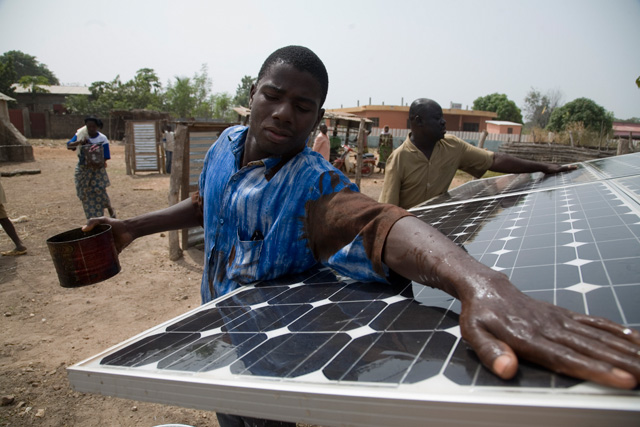
Kenya switched to green energy and now more people than ever have electricity

Universal access to modern electricity would cost much less than current subsidies to fossil fuel industry

By Stephen Leahy*

UXBRIDGE, Canada, Dec 14, 2010 (IPS)

Development in Africa could falter as climate change grips the continent, increasing the length and severity of droughts and floods by altering precipitation patterns, among other impacts.

The region needs a major shift in its economic development policies and thinking towards decentralised, green economic development, experts now say.

“The world’s big economies are largely living off financial transactions which are unconnected to development,” warns Supachai Panitchpakdi, secretary-general of United Nations Conference on Trade and Development.

“Export growth does not automatically result in green economic growth, we must look at trade for development,” said Panitchpakdi.

In a rejection of failed neoliberal economic policies, Panitchpakdi said strong national policies on investments, taxation, protection of local industries, including subsidies, and changes to less restrictive intellectual property regimes are what is needed to green economies in Africa and elsewhere.

“Green economic development underpins environmental protection, economic growth and development,” he said.

This independent environmental journalism depends on public support. Click here learn more.

Continue reading

Why Are We Looking for More Oil & Coal? We Already Have Enough to Cook the Planet 4X

Proven reserves of oil, gas and coal represent four times the amount of carbon that would blow through the 2-degree C climate target (which no one really thinks is ‘safe’).  Burning just one quarter of those proven reserves will bring humanity to the 50-50 point of tipping into dangerous climate change said leading climate scientists in 2009. We need a plan to phase out emissions of carbon entirely they said in my article for IPS. — Stephen

“Only a fast switch away from fossil fuels will give us a reasonable chance to avoid considerable warming,” said Malte Meinshausen, climate researcher at the Potsdam Institute for Climate Impact Research.

See full article based on studies published in Nature:

Heading for +2 degrees C (3.6 degrees F) Carbon Use Must Peak by 2015 Scientists Warn

Energy Use On Suicidal Path

niger-delta-air-pollution-george-osodi.jpg

“If we get that kind of increase it will be societal suicide”

By Stephen Leahy

Nov 9 (IPS) – Today’s skyrocketing fossil fuel use will accelerate far faster in the coming decades, driving oil prices higher and virtually guaranteeing catastrophic climate change in the decades to come, energy experts say.

Emissions of greenhouse gases could increase a staggering 57 percent by 2030 if current trends continue, and with the strong growth of coal and oil energy use in India and China, the International Energy Agency (IEA) reported this week.

“If we get that kind of increase it will be societal suicide,” says Gavin Schmidt, a climate researcher at NASA Goddard Institute for Space Studies at Columbia University.

“It really is a huge increase,” Schmidt told IPS. Continue reading