Ecology Blog Carnival

My Peak Fish story is referenced on a relatively new ecology and science blog carnival called “Oekologie“.shodou-calligraphy.gif

What’ a Blog Carnival?

Here’s what I found out. People collect the best blog posts on a given topic, and then someone puts all those posts together in a blog post called a “carnival”. With “Oekologie” a different site hosts the once a month carnival.

It’s a very smart idea and makes for great reading. (And certainly not because my one of stories is posted)

Lesson in Democracy from Iraq

interconnections In the 12 years I have covered environmental issues for newspapers, news services and magazines I have rarely spoken to elected officials who head state, provincial or federal environment departments. Instead I leave a trail of unanswered messages or play phone tag with government PR folks who know little about their department or aren’t willing to comment.

That’s my North American experience 95 per cent of the time.

So today I phone Baghdad.

Continue reading

40 Million Tonnes of Electronic Waste Each Year

Copyright EMPA, Switzerland E-Waste Dumping Needs International Solution

By Stephen Leahy

Mar 9 (IPS) – A global public-private partnership was launched this week to reduce the toxic mountains of electronic waste and recycle increasingly valuable metals and components.

Much of the nearly 40 million tonnes of “e-waste” — discarded electronics and electrical appliances — produced globally each year ends up in China, India and other developing countries.
Continue reading

Environmental Changes Wiped Out 170 Amphibian Species Over Past 20 years

Frogs Fading Into Silence

By Stephen Leahy

The extinction of amphibians in Latin America has reached alarming proportions: 209 species in Colombia and 198 in Mexico alone are in danger of disappearing forever

Mar 5 (Tierramérica) – Frogs and other amphibians are rapidly becoming extinct around the world and in Latin American countries in particular. In the Caribbean as many as 80 percent of these species are endangered, while in Colombia there are 209 and in Mexico 198 amphibians may soon disappear.

Environmental degradation along with habitat loss, ultraviolet radiation, disease and climate change are all factors involved in these unprecedented losses.

Continue reading

Tackling the E-waste Pollution Monster

Copyright EMPA, SwitzerlandParaphrase for the day:

One tonne of discarded mobile phones has about 7000 euros worth of precious metals.

— Ruediger Kuehr of the United Nations University

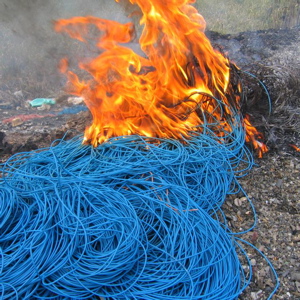
Story about a global public-private initiative is now available see 40 Million Tonnes of Electronic Waste. Describes global effort to reduce the toxic mountains of electronic waste and recycle increasingly valuable metals and components.

My related articles:

Is Your Old TV Poisoning a Child in China? Where Your e-waste Goes

Greener Cell Phones Thanks to European Laws

30 Million Lead-laden TVs Dumped on Poor Countries

Top Ten Worst Pollution Problems That Kill Millions – Including Ones You’ve Never Heard Of

International Women’s Day: 500,000 Women Die Needlessly

U.S. Gag Rule Killing Women, Experts SayCopyright 2004 Renate Leahy
Stephen Leahy

[Written last Dec, I’m posting this article for the first time because of International Women’s Day]


Dec 7 (IPS) – While world attention has focused on the HIV/AIDS pandemic, public health experts say that U.S. political interference and declining financial support for family planning, abortion and prevention of other sexually transmitted infections has contributed to shockingly high death and disability rates in developing countries.

Approximately 500,000 women die each year of causes related to pregnancy, abortion and childbirth, 99 percent of them in developing countries, according to the World Health Organisation.
Continue reading

Interconnections: Global E-waste and a Writer’s Decisions

Working on story about E-waste and global efforts to deal with what is an environmental pollution issue and depletion of limited natural resources issues. Wrote about problem of billions of mobile phones being discarded previously but this looks at all electronic waste.

It’s a complex issue with new European laws, lack of laws in US, the Basel Convention, China/India as giant scrap yards while generating their own e-waste.

As in most writing and journalism the challenge here is what to leave out and still be able to tell a complete story. And those decisions should be in service to the story not to a particular POV. Often my fave bits of a story, interesting facts or important issues have to be pushed aside.

Also working on another story about new research on connection between droughts, civil wars and climate change.

Interconnections: Diary of an Independent Environmental Journalist

This is the first of a hopefully a daily conversation about the stories I am working on, the process of researching and covering environmental and other issues and probably some rants. Ok, that’s what everyone does in the blogosphere. Turned out to be a big deal for me because even after six months of agonizing over it I remain ….

A Reluctant Blogger.

Why?

Like many journalists, I am more than a little shy of revealing what I am doing and how I do it. Not sure why this is exactly, so we’ll see what happens here. Also not keen either on sharing my opinions beyond family and a few friends, unless I am getting paid for doing op eds or columns.

That brings me to the real sticking point.

As an independent journalist, I have supported my family by the paid word for the last 12 years. Writing about environmental issues is one of the steeper paths in the very challenging career of freelancing so it’s hard to write anything for free.

Hard as Granite

Why now?

Interconnections. So I can get your input on what I am doing, and hear your ideas, sources of information, contacts etc. I have already received some thoughtful feedback which has improved my work I hope. And I will try to answer your questions about environmental issues, journalism and media. When ever I do talks there are usually lots of media questions such as why was that story is on the front page or lead item on a TV newscast and not another.

I’d really like to make this a conversation. I hope you do too.

Cheers
Stephen

Peak Fish: The Beginning of the End of Ocean Seafood

Ocean Fisheries Maxed OutCopyright 2004 Renate Leahy

By Stephen Leahy

Mar 5 (IPS) – Two-thirds of fish stocks in the world’s high seas are overfished, while most of those closer to shore are failing or fished to the maximum, a new U.N. report said Monday.

More and stronger regional fisheries management organisations are needed to rebuild depleted stocks and prevent the collapse of other stocks, warned the FAO’s latest “State of World Fisheries and Aquaculture” (SOFIA) report.
Continue reading

Response To Global Change Too Slow


Paraphrase of the Day:

Institutions are not responding fast enough to the industrial might and scale of change that is happening be it climate change or rapid loss of species or decline in the global fisheries. The rate are which our institutions take action is simply too slow. — Daniel Pauly, director of the Fisheries Centre at the University of British Columbia.

See complete story