Who Controls the Nuclear Control Agencies?

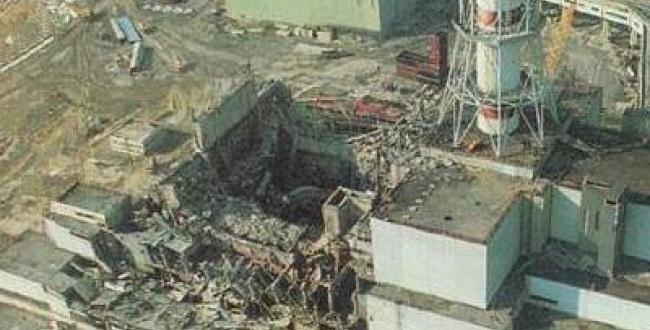
April 1986 disaster at the Chernobyla nuclear power plant in Ukraine

“There are few independent nuclear experts in the world. Everyone either works in the industry or used to and are now regulators.”

Canadian Government fired chief regulator for trying to improve safety standards — Greenpeace

By Stephen Leahy*

UXBRIDGE, Canada, Mar 23, 2011 (Tierramérica)

As Japan struggles to confront a nuclear disaster that could be the worst in history, it seems clear that any discussion about the safety of nuclear energy should address the independence of regulatory agencies.

On Apr. 26, 1986 a series of explosions and fires at the Chernobyl nuclear power plant in Ukraine released radioactive fallout that spread over eastern and western Europe, particularly affecting Ukraine itself, Byelorussia (now Belarus) and Russia, all Soviet republics at the time.

Twenty-five years later, Chernobyl’s reactor number 4 continues to emit high levels of radioactivity even though it is buried under a thick but decaying layer of concrete.

Europe and the United States are trying to raise more than two billion dollars to build a permanent sarcophagus to contain the radiation.

The Chernobyl disaster is usually attributed to obsolete technology and the secrecy characteristic of the Soviet regime.

The accident at the Tokyo Electric Power Co. (TEPCO) Fukushima I Nuclear Power Plant was triggered by the damage resulting from the 9.0-magnitude earthquake and subsequent tsunami on Mar. 11.

But “TEPCO doesn’t have the best record for safety or disclosure of information,” said Mycle Schneider, a Paris-based energy and nuclear policy analyst who also works in Japan.
Continue reading
Geoengineering for a Desperate Planet — UN Declares Global Moratorium

By Stephen Leahy*

NAGOYA, Japan, Oct 25, 2010 (Tierramérica)

[Update from Nagoya 30 October 2010. Global moratorium passes.]

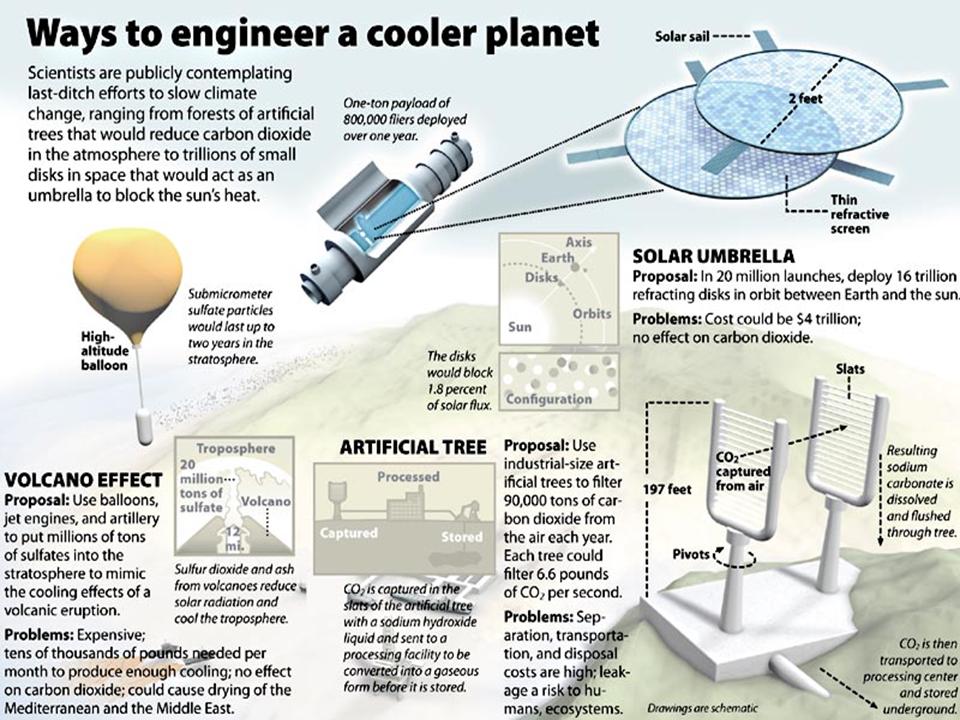
Delegates to the world summit on biodiversity here are calling for a moratorium on climate engineering research, like the idea of putting huge mirrors in outer space to reflect some of the sun’s heating rays away from the planet.

Climate engineering or geoengineering refers to any large-scale, human- made effort to manipulate the planet to adapt to climate change.

Representatives from Africa and Asia expressed concern about the negative impacts of geoengineering during the opening week of the 10th Conference of Parties (COP 10) to the United Nations Convention on Biological Diversity (CBD), Oct. 18-29. They were joined by civil society organisations in calling for a moratorium on geoengineering experiments.

The geoengineering proposals include installing giant vertical pipes in the ocean to bring cold water to the surface, pumping vast amounts of sulphates into the stratosphere to block sunlight, or blowing ocean salt spray into clouds to increase their reflectivity.

[Previously posted – Full Story here] 

The Oxymoron of Political Leadership and Political Will

Analysis by Stephen Leahy

VIENNA, Jun 29, 2011 (IPS)

Political will is all that’s needed to bring electricity to the 2.5 billion people with no or unreliable access to power, or to feed the one billion who go hungry every day, or to finally begin to slash carbon emissions to avoid dangerous climate change, or just about any other global problem.

Humanity has the technology, resources and even the money to solve these problems, agree scientists, corporate business leaders, heads of civil society organisations and United Nations agencies and government ministers. “All that is lacking is political will,” they almost always declare at the dozens of international conferences, summits and forums this reporter has attended for the past five years. And then everyone goes home.

What is this magical “political will” that can solve any problem?

via The Oxymoron of Political Leadership – IPS ipsnews.net.

Talking green is cheap

Postponing emissions cuts carries steep price-tag.

Dateline: Tuesday, June 28, 2011

by Stephen Leahy for InterPress Service

BONN, Jun 20, 2011 (IPS) — If we’re lucky, by the time a tough but fair international treaty to meet the climate change challenge is finalised, it will be largely unnecessary. The snail’s pace of negotiations certainly gives countries plenty of time to understand the financial, social and environmental advantages of kicking their dangerous addiction to fossil fuels.

That may be a cynical optimist’s hope, but the European Union is already moving in that direction.


No developed country is close to the 40-percent cut that the science says is needed by 2020 to stay below a two degrees C increase.

via Straight Goods – Talking green is cheap.

Reducing Soot and Smog Would Help Stabilise Climate and Save Millions of Lives

Picture of smog in Cairo.
Image via Wikipedia

By Stephen Leahy

BONN, Jun 14, 2011 (IPS)

Clean the air, cool the planet and prevent millions of deaths with fast action on soot and smog, a new report urges.

Air pollutants like black carbon (soot) and ground-level ozone (smog) arise from incomplete combustion of fossil fuels and biomass like wood and charcoal.

Nations or regional blocks of nations could decide to put measures into place that quickly improve their air quality, reduce crop losses and shorten lives. And, almost as a side benefit, those efforts would do much to slow the rate of global warming, says the scientific assessment report released at the United Nations Framework Convention on Climate Change (UNFCCC) negotiating session here in Bonn.

Continue reading

On the Road to Green Energy for All

27 Jun 2011 09:33

By Stephen Leahy

VIENNA, Jun 27 (IPS)

Like our cave-dwelling ancestors of 200,000 years ago, nearly three billion people still use fire for cooking and heating. Of those, some 1.5 billion people have no access to electricity. For a billion more, their only access is to sporadic and unreliable electricity networks.Now an ambitious global effort is being launched by the United Nations to bring electricity to everyone on the planet by 2030.

“Energy is the issue for the next decade,” said Kandeh Yumkella, director-general of the United Nations Industrial Development Organization (UNIDO).

“Achieving the Millennium Development Goals (MDGs) is impossible without energy,” Yumkella said at the opening of the 2011 Vienna Energy Forum last week.

via On the Road to Green Energy for All – AlertNet.

Nuclear for the Poor, Renewables for the Rich?

By Stephen Leahy

VIENNA, Jun 27, 2011 (IPS)

In a debate about the future of energy, the global south wants to spend tens of billions of dollars on nuclear plants while the global north looks to spend hundreds of millions on decentralised, renewable energy.

At least those were the positions taken by representatives during the BBC TV’s World Debate programme filmed at the 2011 Vienna Energy Forum.

“We must have nuclear energy if India is to develop,” said Srikumar Banerjee, the chair of India’s Atomic Energy Commission.

via Nuclear for the Poor, Renewables for the Rich? – IPS ipsnews.net.

Colombian Forest Project Reaps Credits… and Criticism

Procuenca reforestation

By Stephen Leahy*

UXBRIDGE, Canada, May 6, 2010 (Tierramérica)

The “Procuenca Initiative” in the Andes region of western Colombia may be the first in the world to sell certified forest carbon credits with a biodiversity protection component. But alarms are sounding about the potential negative social and environmental consequences.

Under way since 2001, the programme will begin to operate in the international market next year, having received official registration Apr. 16 under the Clean Development Mechanism (CDM).

Part of the Kyoto Protocol on Climate Change, in force since 2005, the CDM allows industrialised countries to earn credits for reducing emissions of greenhouse gases by investing in projects in developing countries that expand their capacity to absorb the carbon emissions.

Procuenca is expected to auction credits for some 350,000 tonnes of carbon that has been sequestered since the project began, initiative director Francisco Ocampo told Tierramérica through a translator.

At the current market value of 20 dollars per tonne, the total would be 7 million dollars for a struggling community, one that is still suffering from the collapse of coffee prices more than a decade ago.

“This project demonstrates the international importance of these forests for carbon storage,” said Ocampo. Continue reading

Injecting Drug Use Spreads HIV in Eastern Europe

By Stephen Leahy

LIVERPOOL, Apr 29, 2010 (IPS)

Poor intervention in Injecting drug use (IDU) is driving the HIV/AIDS epidemic in Eastern Europe and is also largely responsible for the tuberculosis epidemic in parts of Russia, says a new study.

Shockingly, a mere three US cents a day per injecting drug user are being invested to prevent the spread of HIV/AIDS and TB, according to the study released at the opening of the Harm Reduction 2010 conference this week in this English port city.

“Our report shows that just 160 million US dollars a year are being used in total for all the harm reduction programmes to prevent the spread of HIV around the world,” says Gerry Stimson, executive director of the International Harm Reduction Association.

Harm reduction involves providing access to the drug methadone, needle exchange services, and counselling. “Barack Obama’s presidential inauguration cost at least that much,” Stimson, emeritus professor at the Imperial College, London, told IPS in an interview.

In Russia there are an estimated 1.6 million IDUs of which 60 to 70 percent have HIV-related illnesses. In the past decade the number of HIV-infected people increased tenfold from an estimated 100,000 to one million, he said.

“Three cents a day is a terrifying figure and equally terrifying are the HIV infection rates amongst IDUs in parts of Eastern Europe and Asia.

See rest of story here:  HEALTH: Injecting Drug Use Spreads HIV in Eastern Europe 

Former Presidents Denounce Drug War As Failure

By Stephen Leahy

BERLIN, Jul 14, 2010 (IPS)

The failed “war on drugs” has not only badly damaged countries where it is waged, it is responsible for driving up HIV infection rates in some countries, says an official declaration endorsed Wednesday by three former Latin American presidents in advance of the XVIII International AIDS Conference that begins Jul. 18 in Vienna.

In Eastern Europe and Central Asia, injecting drug use is the primary cause of new HIV infections. Outside of sub- Saharan Africa, injecting drug use accounts for approximately one in three new cases of HIV, experts will report at the week-long meeting.

“The war on drugs has failed…Instead of sticking to failed policies with disastrous consequences, we must direct our efforts to the reduction of consumption and the reduction of the harm caused by drugs to people and society,” said former Brazilian president Fernando Henrique Cardoso.

“Repressive policies are firmly rooted in prejudices, fears and ideological visions. The way forward to safeguard human rights, security and health is a strategy of peace not war,” said Cardoso.

This independent environmental journalism depends on public support. Click here learn more.


Cardoso, along with former presidents Ernesto Zedillo of México and César Gaviria of Colombia, have endorsed the Vienna Declaration that lists a range of harms stemming from the war on drugs, and notes that the criminalisation of people who use drugs has resulted in record high incarceration rates, placing a massive burden on taxpayers.

Continue reading