New eBook on Enviromental Impacts of Canada’s Oil Sands

copyright Pembina Institutecopyright Pembina Institute

Now Available:

Oil Stains in the Boreal Forest:
The Environmental Cost of Canada’s Oil Sands


A new eBook by Stephen Leahy

Canada’s oil sands are the world’s largest industrial project easily visible from space. Some of the environmental impacts can also be seen from space but many more are invisible and unacknowledged in their entirety until now.

Oil Stains in the Boreal Forest offers a fast, factual overview of the environmental impacts of pumping more than 1.1 million barrels of oil — 175 million litres/50 million gallons — each day to thirsty US markets. Leading scientific and environmental experts along with industry officials are interviewed to provide the full story.

Oil Stains in the Boreal Forest includes pictures of the environmental destruction, hyperlinks for additional information, a bonus chart on The Real Cost of Tank of Oil Sands Gas and a new economic study that shows Oil Company profits are based on no-cost pollution. (special publication price $6.00)

DIRTY GOLD: Protests at Canada’s Goldcorp Mines In Honduras and Guatemala

[update: May 2010: The mining company Entremares, subsidiary of the Canadian consortium Glamis Gold, (Goldcorp _Vancouver, Canada) will be charged with polluting the central valley of Siria and of hiding information from the authorities. — Tierramerica]

By Stephen Leahy

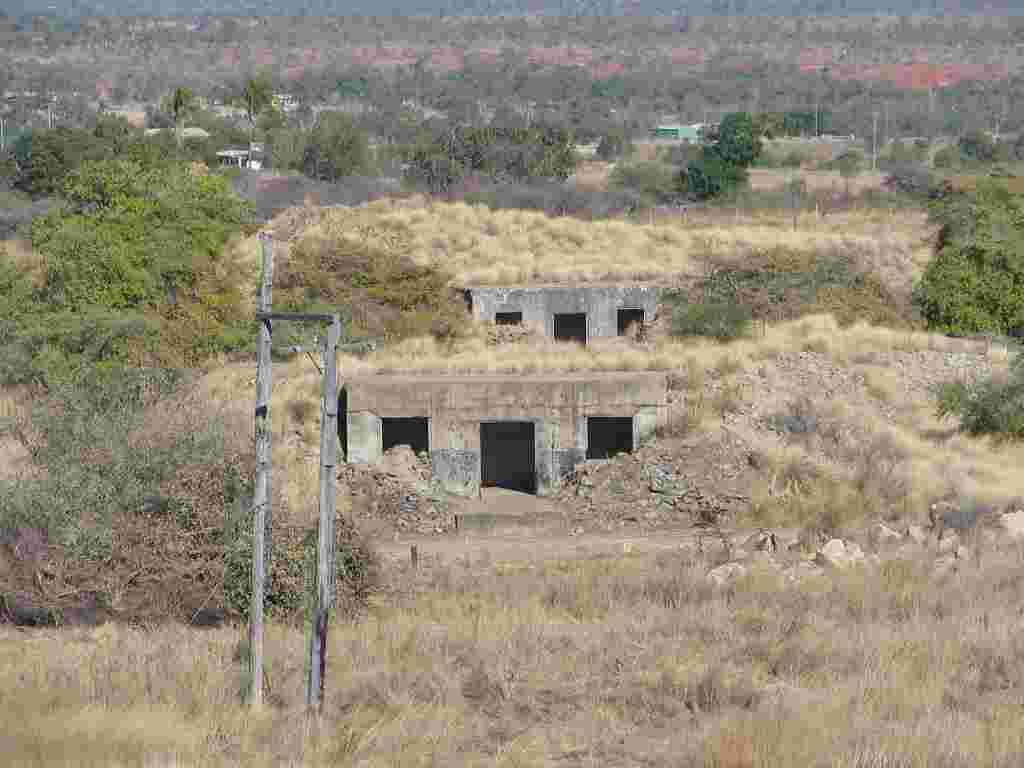
The Canadian mining giant Goldcorp, which runs the largest gold mine in Mexico, is racking up complaints about its environmental violations. In Honduras, officials are considering legal action.queensland-olf-goldmine.JPGOld gold mine Queensland Australia Copyright 2004 Renate Leahy

Continue reading

Fish with Chips — Underwater Electronics to Revolutionize Fisheries Management

Scientists Put an Ear to the Ocean Floor

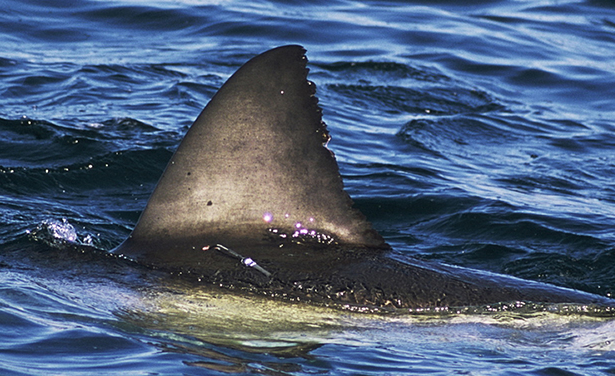
Photo courtesy of TOPP

By Stephen Leahy

Feb 14 (IPS) – Canada will spend 38 million dollars to install thousands of undersea listening posts along the continental shelves of North America, the Mediterranean, Gulf of Mexico and Australia.

Akin to military hydrophones used to detect the underwater passage of submarines, the receivers of the new Ocean Tracking Network will track movements of fish and marine mammals tagged with tiny acoustic transmitters.

And this too is a security issue — fish stock security.

Continue reading

Fish Stocks and Science to Benefit from Undersea Listening Devices

Paraphrase for the day:


“This will change the way marine science does business.” — Ron O’Dor, a researcher at Dalhousie University in Nova Scotia who leads the Ocean Tracking Network.


Movements of thousands of ocean-going fish and marine mammals are being followed by scientists using the new Ocean Tracking Network that could ramp up to track a million animals around the globe.

Story here:

Fish with Chips — Underwater Electronics to Revolutionize Fisheries Management


Rapidly Warming Polar Regions Creates Urgency for 50,000 Scientists

“One day in the future there might be an oil rig sitting on top of the North Pole” said David Hik, chairman of International Polar Year Canada.

arctic-oil-rig-on-ice.png

The International Polar Year begins in March, and will involve 50,000 scientists studying the impact of climate change at the poles. Canada is the main contributor, donating 160 million dollars.

By Stephen Leahy

TORONTO, Canada, Jan 13 (Tierramérica) – The recent collapse of a Canadian Arctic ice shelf illustrates why Canada is the biggest contributor to the International Polar Year, the world’s largest scientific research program, focused on climate change. More than 60 nations,¬ from Chile to China, and 50,000 scientists and researchers will be involved in the International Polar Year (IPY) 2007-2008, actually a two-year period that will last from Mar. 1, 2007 to the same date in 2009.

Continue reading

Canada’s Transformation to Conservation Agriculture

Catching the Green Wave

greenwave-title.png

By Stephen Leahy

“Conservation is getting nowhere,” Aldo Leopold lamented in his foreword to A Sand County Almanac in 1948. It’s taken too long but conservation is getting somewhere in Canada and will take a major leap forward as agriculture undergoes a major transformation from low-price commodity agriculture toward conservation agriculture.

Tens of thousands of Canadian farmers and ranchers are taking action right now to improve the environmental health of their lands in spite of the enormous pressures of the global marketplace and often poor crop prices.

— First published in Conservator magazine, Jan 2006. See Catching the Green Wave for full story.

Contact: writersteve AT gmail . com (no spaces)

PlayStation 3 vs Global Warming

Stephen Leahyart not oil

Dec 18 (IPS) – This was the year that most people in the U.S. and Canada began to take climate change seriously and express hope that their governments would take action to reduce emissions — but it is unclear if they will take action themselves.

Last month, thousands of people stood outside electronics stores for three, four and more days and nights to be the first to spend 600 dollars for the latest electronic video game console, but how many would spend two hours protesting the inaction of their governments on climate change?

“There is increasing public support for action but I’m not sure there’s a willingness to do anything,” said Eileen Claussen of the Pew Centre on Global Climate Change, a U.S. environmental think-tank working with business leaders and policymakers.

Public opinion polls conducted last fall show that Canadian and U.S. citizens are clearly worried about the impact of climate change on their children and grandchildren. And they know their governments aren’t doing much to reduce emissions, the polls show..

The recent film “An Inconvenient Truth” by former U.S. Vice President Al Gore, in which he systematically lays out the enormous body of evidence that the world is becoming dangerously warm due to human-generated greenhouse gas emissions, is the third-highest-grossing documentary in the United States ever and has been screened around the world.

But experts caution that simply raising public awareness of the problem is not nearly enough.

“The most important action needed is to establish a national policy to reduce emissions,” Claussen told IPS. “Cities, states, industry and business all agree we need a national policy.”

For example, the U.S. retail giant Wal-mart is both insisting that its 30,000 plus suppliers reduce their greenhouse gas emissions, and also informing people who shop in their stores about the issue, she said.

“But there won’t be a U.S. national emission reduction policy for at least two years and more likely four,” she added — in other words, long after the George W. Bush administration has left office.

Full story “The Climate Change Tipping Point?”

Contact: writersteve AT gmail . com (no spaces)

Thousands Lined Up for PlayStation 3 – Will Anyone Protest Government Inaction on Climate Change?

Larsen B Ice Shelf Collapse - Antarctica

While thousands of people stood outside electronics stores for three, four and more days and nites last November to be the first to spend 600 dollars for the latest electronic video game console, how many would spend two hours protesting the inaction of their governments on climate change?

“There is increasing public support for action but I’m not sure there’s a willingness to do anything,” says Eileen Claussen of the Pew Center on Global Climate Change, a US environmental NGO working with business leaders and policy makers.

— see complete PlayStation 3 vs Climate Change story

Kyoto Gets a Slap in the Face from Canada

The withdrawal from the Kyoto Protocol of one of the world’spicture-2.png leaders in fighting climate change could weaken a new agreement far beyond the 2012 scope of the treaty.

By Stephen Leahy

TORONTO, Dec 2 (Tierramérica) – Much to the surprise of most Canadians and the world community, Canada is reneging on its international commitments under the 1997 Kyoto Protocol, which could weaken an international agreement to fight climate change after Kyoto expires in 2012.

Canadian Prime Minister Stephen Harper, elected early this year, and the new environment minister, Rona Ambrose, have dismissed Canada’s Kyoto commitments for reducing greenhouse gases as impossible to achieve.

They have also cancelled a five-million-dollar pledge to help least developed countries adapt to the impacts of climate change and have withdrawn Canada’s participation and funding of the Kyoto Clean Development Mechanism (CDM).

“That’s totally irresponsible… It’s a slap in the face to the people of small island states and Inuit people of the North,” said Enele Sopoaga, permanent representative of Tuvalu to the United Nations. His small island country in the South Pacific is experiencing flooding due to rising sea levels.

“I am extremely frustrated by the double standards of industrialized nations. Canada criticizes other countries about their human rights policies or about the death penalty while they are playing with the lives of island people and the Inuit,” Sopoaga said in a Tierramérica interview.

— Complete “Kyoto Gets a Slap in the Face from Canada” story at Tierramerica


Canada Reneges on Kyoto Climate Change agreement


Quote of the Day:
I am extremely frustrated by the double standards of industrialized nations. Canada criticizes other countries about their human rights policies or about the death penalty while they are playing with the lives of island people and the Inuit,” says Enele Sopoaga, Ambassador and Permanent Representative of Tuvalu to the United Nations and vice-chair of the Alliance of Small Island States.

Tuvalu is a small island country in the South Pacific ocean that is experiencing flooding due to rising sea levels.

Full story here