Green Energy for All by 2030?

WED kidjo smlBy Stephen Leahy

VIENNA, Jun 26 (IPS)

While industrialised countries struggle to switch from climate-damaging, carbon-based energy to greener energy sources, much of the world is desperately energy poor, with 1.6 billion people having no access to electricity and 2.4 billion relying on wood and dung for heat and cooking.

“Over 1.6 million deaths a year are attributed to indoor use of biomass for cooking and heating,” Kandeh Yumkella, director-general of the United Nations Industrial Development Organisation (UNIDO), told more than 600 participants from 80 countries at the Vienna Energy Conference this week in Austria’s capital city.

The conference concluded with a recommendation to create a 20-year plan to end energy poverty by 2030.

Women and children in many parts of the world have little choice but to spend hours each day in search of firewood, trapped in a vicious cycle of deforestation that increases erosion and reduces the fertility of their land. “Energy interacts with all of the development challenges we face,” said Yumkella.

The developing world – and especially those without access to electricity – must be part of the new green energy revolution, he said. “We can’t leave people out. We must have climate justice and energy justice,” he told IPS in an interview.

For complete story see  Green Energy for All by 2030?
Green Energy Investments Beat Fossil Fuel For First Time in History

wind turbines at night USABy Stephen Leahy

UXBRIDGE, Canada, Jun 5 (IPS) 

The world has turned a green corner toward a more sustainable future, with investments in clean energy outpacing fossil fuel power generation for the first time.

Despite the global economic crisis, a record 155 billion dollars was invested in clean energy companies and projects worldwide last year, mainly in wind and solar, according to a new report from the U.N. Environment Programme (UNEP).

More remarkably, that investment in clean energy topped 2007’s record investments by five percent, in large part as a result of investments by China, Brazil and other emerging economies.

Achim Steiner, UNEP’s executive director, says that “2008 was the first year where there was more investment in non-carbon energy sources than in high carbon and nuclear energy.”

“That’s hugely significant,” Steiner told IPS in an interview.

UNEP has been calling for a “Global Green New Deal” to jump-start the global economy and use the various economic stimulus packages to make investments in clean technologies and ‘natural’ infrastructure such as forests and soils. Experts argue that this is the best bet for real growth, combating climate change and sparking an employment boom in the 21st century.

“There are literally millions of new jobs that could be created in the next few years,” Steiner said. Continue reading

You Go First Carbon Politics Threatens Us All

mage showing iceberg off Baffin Island, Nunavut, Canada with meltwater ponds in the foreground. Arctic warming has been associated with a rapid decline in Arctic summer sea ice extent. Image credit- Sandy BriggsBy Stephen Leahy

NY-ÅLESUND, Svalbard, Norway, Jun 15 (IPS)

Political and business leaders may agree in principle that climate change is a serious threat, but there is a startling lack of consensus and a ‘you-go-first’ attitude on taking action, even amongst a small group of high-level decision makers disconnected from their cell phones here in the Arctic.

“We want to reduce China’s CO2 (carbon dioxide) emissions, but we are a market-driven economy,” Liu Yanhua, China’s vice minister for science and technology, told 30 participants at the Ny-Ålesund Symposium located at a scientific research centre called Kings Bay on the western coast of Spitsbergen Island about 1,200 kilometers from the North Pole.

“Climate change is a matter of economy, of energy,” said Yanhua, a former scientist at the Chinese Institute of Geography.

It is also an issue of generational equity, since at current rates all fossil fuels will be consumed in 50 to 80 years, leaving nothing for future generations, he said.

China’s CO2 emissions have soared 150 percent in the last 20 years, Yanhua acknowledged, and are now the highest of any country, including the United States. China’s carbon intensity – the amount of carbon emitted per unit of production – is 10 times higher than Germany’s and major efficiency improvements are needed, he said. Continue reading

Science vs Politics at the Edge of the North Pole

SN852510

By Stephen Leahy

NY-ÅLESUND, Svalbard, Norway, Jun 14 (IPS)

Spectacular views of mountains and glaciers here in the world’s most northerly permanent human settlement contrasted with business and political leaders’ pessimism and concern about the enormous gap between the action on climate that science deems necessary and what politics considers realistic.

“We must push beyond the politically feasible,” said Tora Aasland, Norway’s minister of research and higher education.

SN852503“Here we are at the edge of the North Pole where climate change is easier to see…How do we communicate the urgency of our situation?” Aasland asked several dozen attendees at a recent high-level symposium in Ny-Ålesund, on the western coast of Spitsbergen Island about 1,200 kilometers from the North Pole.

She emphasised that we already know what to do and how to do it, including reducing fossil fuel energy use, improving energy efficiency, and investing in new technologies like carbon capture and storage.

Taking action on climate is imperative and an ambitious international agreement is urgently needed based on what scientists say is required to stabilise the climate system, participants concluded in a final statement. However, the current series of international climate negotiations in Bonn, Germany have bogged down and are on the edge of collapse, several participants noted. Continue reading

New $Billion Cash Hand Out To Fossil Fuel Companies Under ‘Green’ Economic Stimulus Plans

Shell in Curacao, Netherlands - Humane Care Fondation, Curacao[Updated: Monday Sept 28/09

Last Friday at the G20 countries agreed to phase out subsidies for oil and other carbon dioxide-spewing fossil fuels in the “medium term” as part of efforts to combat global warming. This article documents NEW taxpayer subsidies to some of the world’s richest corporations]


By Stephen Leahy

UXBRIDGE, Canada, May 29 2009 (IPS)

Despite the economic slow down, growing numbers of world leaders are calling for urgent action on climate change while many governments used their economic stimulus packages to increase subsidies to the fossil fuel industry.

Consider Europe, with the strongest public commitment to reduce carbon emissions that are causing climate change.

In the past five years, 8 billion U.S. dollars of public money went to Europe’s fossil fuel companies mainly to the natural gas sector. And in May the European Parliament approved an additional 3.35 billion dollars in subsides as part of Europe’s 225 billion dollars economic recovery plan, according to a new research report by Friends of the Earth Europe.

“We Europeans are supposedly leading the world on the path to a new green economy but we’re putting billions of euros into fossil fuel sector that’s taking us in the opposite direction,” Darek Urbaniak of Friends of the Earth Europe.

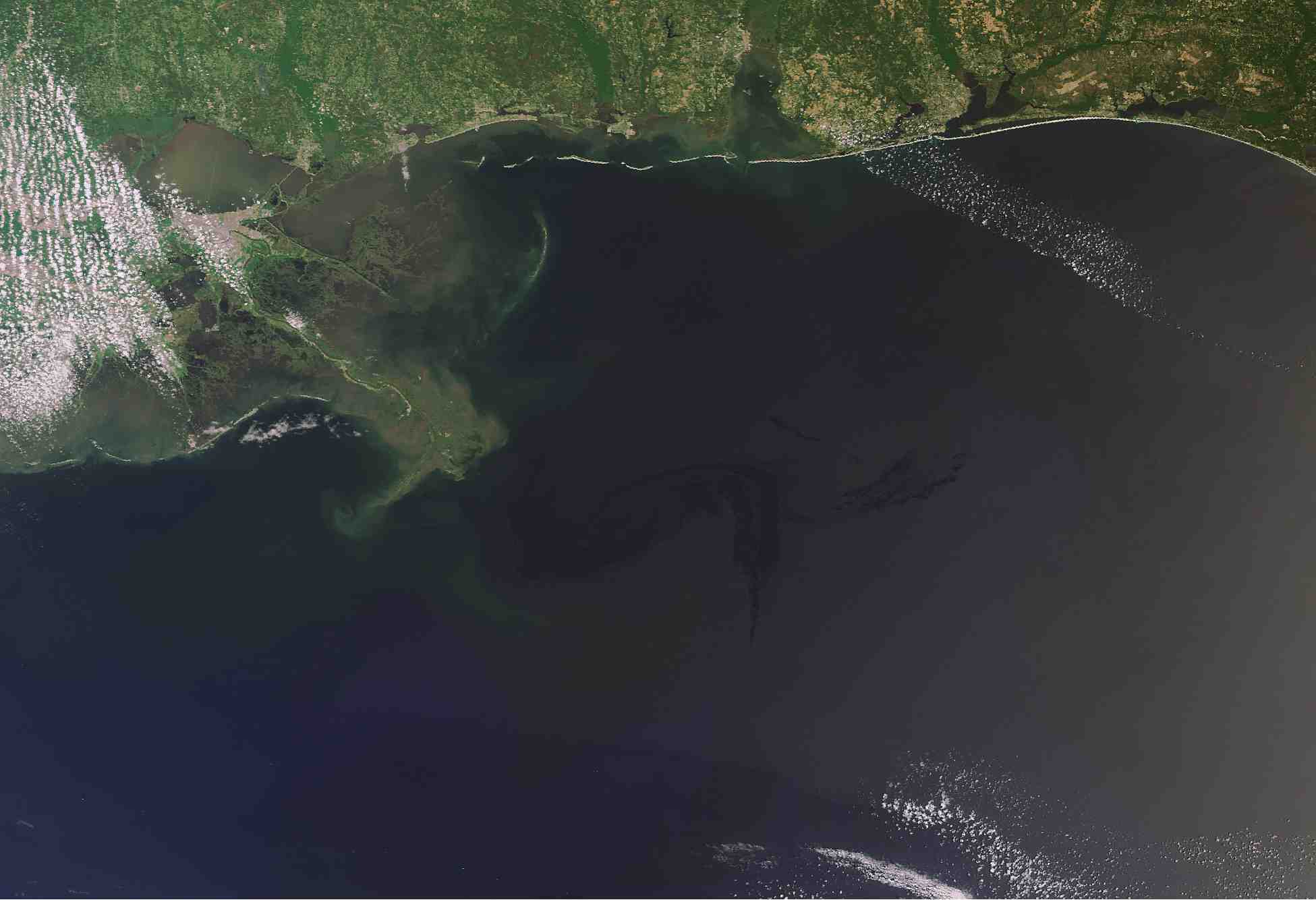
gulf spill nears coast Apr 30 2010 - ESA

Its complete hypocrisy,” Urbaniak told IPS from Brussels.

Perhaps recognising this fact, global business leaders at the World Business Summit on Climate Change that concluded May 26 called on governments to “strive to end the current perverse subsidies that favour high-emissions transport and energy”.
Continue reading

Massive subsidies to oil companies continue – Podcast

redeyePodcast from REDEYE RADIO:

Oil companies are some of the most profitable corporations in the world. Yet they receive between 20 and 40 billion dollars a year in subsidies, according to a report produced for the OECD by Earth Track, an independent energy information research organisation in Boston, Massachusetts.

LORRAINE CHISHOLM interviews Stephen Leahy an environmental journalist who documented these facts in a recent article. Listen to podcast

Read article: ‘Bailout’ for Oil Companies $20-40 Billion (and maybe more) every year

Speaking of subsidies, here’s my articles on ethanol and biofuels :

Quotes From Six Experts On Ethanol

Biofuels: Another Good Reason to Hate American Policy

Ethanol: The Great Big Green Fraud

Record $Financing For Biofuels, Not Food


Smart, Realistic Action on Climate Will Bring Long Term Prosperity

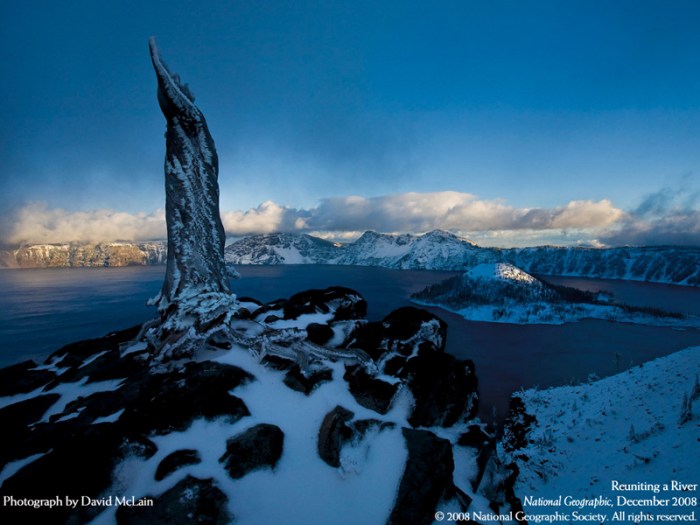
crater-lake-cascade-mtns-nat-geo

By Stephen Leahy

UXBRIDGE, Canada, Mar 16 (IPS) – The high-level scientific climate conference that concluded last week in Copenhagen warned that humanity is rapidly approaching an irreversible, 1,000-year-long climate catastrophe.

The good news is that this dark future has an escape hatch: make major and immediate reductions in carbon emissions.

However, climate change activists worry that instead, trillions of dollars, endless hours of media coverage and all of policy-makers’ attention are being devoted to the economic crisis. That’s a bit like trying to get a clearer channel on the radio as your car is about to slam full speed into a bridge abutment, they say.

And while the current economic crisis affects tens of millions of people, the economic system has long been nothing but a “global Ponzi scheme,” as Paul Reitan, a geologist and climate expert at the University of Buffalo, commented recently.

This system, rooted in the concept of never-ending growth, was always guaranteed to collapse because humanity is living off Earth’s limited capital – natural resources and services provided by healthy ecosystems.

“Let’s be practical, we live on ‘Lifeboat Earth'” and need to base our values, norms and institutions on this reality, asserts Reitan. Continue reading

Paris Hilton vs Global Warming

Global warming (climate change) is the most pressing issue humanity has EVER faced.

And yet mainstream media devote nearly all of their time and attention to Paris Hiltonesque celebrity culture, Iraq or some other conflict zone and any political controversy no matter how trivial.

Sure there is a bit of ‘green’ coverage but it is thin, inconsistent and rarely examines the roots of this growing global crisis.

This chart from a University of Oxford study shows how world-wide media coverage of global warming has DECLINED in the 2008 even as the science is clear that its affects are coming faster (happening right now) and with much bigger impacts than expected. news-coverage-gw-oxford

Fortunately there are some alternative news media working extremely hard to cover the truly important issues that are shaping our future and our children’s future. What most people may not realize is that precious few of these alternative media can afford pay journalists and writers a living wage.

Here’s what you can do:

truth-over-fear

1. Spread the word. Circulate these stories to everyone on your email list — and ask them to pass them on.

2. Write a letter. Contact Canadian and US media outlets asking them to use stories published by media outlets like IPS.

[Remarkably while 200 million people read IPS stories in the newspapers and magazines published in Latin America, Asia, Europe and Africa but they are rarely published in North America.]

3. Become a supporter. Financial support is important if this work is to continue. Here is a safe and convenient way via PayPal or Credit Card:

Or contact Stephen

Carbon-Credit Gold: Who is going to get rich?

forest-fireBy Stephen Leahy

Paying the poor to conserve forests through a market scheme is the new star among initiatives in climate talks.

UXBRIDGE, Canada, Dec 15 (Tierramérica).- Climate experts meeting in Poznan, Poland, promised to create a new pot of carbon-credit gold for the rural poor as guardians of rural lands and forests.

But there are many who warn that the gold will flow only to corporate interests.

One of the most effective ways to combat climate change, caused by gases like carbon dioxide that trap heat in the atmosphere, is through biological sequestration of carbon in plants, trees and soils. That means reducing deforestation, increasing reforestation, and utilizing sustainable agriculture and grazing practices that conserve soil and water.

If these activities become part of a multi-billion-dollar global carbon finance regime, under a new 2009 climate treaty, there could be extraordinary benefits for the rural poor and the environment, according to Olav Kjørven, the former director of the United Nations Development Program’s (UNDP) Energy and Environment Group. Continue reading

Electronic Gadgets Fuel Congo “Rape Mines”

congo-survivors-age-9

[Update: Mar 4 2010. The United States senate moved to stem the flow of money from mineral mines fuelling the brutal conflict in the Democratic Republic of Congo (DRC), the watchdog group Global Witness (GW) is calling on Europe to follow suit. http://ipsnews.net/news.asp?idnews=50543

See also this shocking report in the journal PLoS Medicine  (22 Dec 2009) http://tiny.cc/60fjz ]

What can you do?

1. Lobby your government to be more involved in the DRC and stopping this. Encourage them to help train of local police and army and prosecute all those involved

2. Help out local and international organizations that are helping the women and children of the Congo

3. Don’t buy any electronic devices until manufacturers can guarantee those purchases are not funding this continuing atrocity

By Stephen Leahy

TORONTO, Canada, Dec 3 2008 (IPS)

International lust for the enormous mineral and resource riches of the Democratic Republic of the Congo (DRC) abetted by international indifference has turned much of country into a colossal “rape mine” where more than 300,000 women and girls have been brutalised, say activists.

Much of Congo’s misery due to “blood coltan” that powers our electronics

“Rape is being used as a deliberate tool to control people and territory,” said Eve Ensler, a celebrated U.S. playwright and founder of V-Day, a global movement in 120 countries to end violence against women and girls.

“The rapes are systematic, horrific and often involve bands of rebels infected with HIV/AIDS,” Ensler, who recently returned from the DRC, told IPS.

Ensler was in Toronto to help raise funds for the Panzi Hospital in the DRC’s South Kivu Province where many rape victims are brought. Once a maternity hospital, Panzi Hospital now provides free care and refuge to 3,500 victims of sexual violence each year. Denis Mukwege leads a team of six surgeons who routinely work 18-hour days to repair women’s extensive internal injuries.

Hundreds of women and children were raped yesterday, hundreds more today. This is an economic war that uses terror as its main weapon to ensure warlords and their bands control regions where international companies mine for valuable metals like tin, silver and coltan, or extract lumber and diamonds, Ensler said. Continue reading