Galapagos Islands Spared Ocean Dumping Experiment

galap3.jpgLast summer while working in the Galapagos Islands I wrote about Planktos, a company that wanted to create plankton blooms near the islands by dumping tons of iron particles into the ocean: Carbon Project Endangers the Galápagos.

Planktos hoped these plankton blooms would ultimately become a lucrative way of removing carbon from the atmosphere. However in a January issue of the journal Science, a number of international scientists issued a warning that not enough was known to commercialize what is known as iron fertilization of the oceans.

Last summer’s dumping in the Galapagos never went forward, in part because of strong local objections, concern by marine scientists over unintended impacts and international environmental group protests. Feb 13 Planktos announced indefinite postponement of the experiment due to lack of investment funds because of “an effective disinformation campaign” by those opposing the effort.

Protecting Canada’s Water from the US

07102005-dry-mud-fish-manaquiri-amazonas-state-greenpeace.jpg

Under the North American Free Trade Agreement (NAFTA), Canada lost control over its energy resources. Now, with “NAFTA-plus”, Canada could also lose control over its freshwater resources, say experts in this Sept 2007 article CANADA: Losing Control of Water Through NAFTA and SPP

Now the Canadian Water Issues Council (CWIC) has written a model law to protect Canadian waters.

“There is a growing risk that North Americans may commit the ultimate ecological error by beginning to move large amounts of water over long distances, resulting in massive economic losses and ecosystem collapse in many donor regions,” says Ralph Pentland, CWIC’s Acting Chairman.

“The model legislation, drafted by the Council, addresses the need for a national approach to protecting this vital resource.”

See webcast of panel discussion on this and what it may take to turn this into real law.

Ethanol Worse Than Gasoline

oil-palm-seedling-in-burned-peat-forest-wetland-international.jpg

By Stephen Leahy
Feb 8 (IPS) – Biofuels are making climate change worse, not better, according to two new studies which found that total greenhouse gas emissions from biofuels are far higher than those from burning gasoline because biofuel production is pushing up food prices and resulting in deforestation and loss of grasslands.

Emissions from ethanol are 93 percent higher than gasoline,” said David Tilman, an ecologist at the University of Minnesota and co-author of one of the papers published Thursday in the journal Science.

“The bottom line is that using good farmland for biofuels increases greenhouse emissions,” he said.
Continue reading

Only Green Part of Most Biofuels is the Wealth (Subsidies) They Generate

sugar-cane-field-oz-rslpix1By Stephen Leahy

Feb 4 (IPS) – Biofuels have quickly turned from environmental saviour to just another mega-scale get-rich quick scheme. Countries and regions without their own oil reserves to tap now see their farms, peatlands and forests as potential “oil fields” — shallow but renewable lakes of green oil.

Renewable does not mean sustainable, and in most cases the only green part of biofuel is the wealth they generate.

Not surprisingly, given the record high oil prices, worldwide investment in bioenergy reached 21 billion dollars in 2007, according to the U.N. Environment Programme. The Inter-American Development Bank announced 3 billion dollars for investment in private sector biofuel projects — mainly in Brazil — while the World Bank said it had 10 billion dollars available in 2007.

Meanwhile development assistance for food-producing agriculture had fallen to 3.4 billion dollars in 2004 — with the World Bank’s share less than 1 billion dollars, according to the Bank’s own World Development Report on Agriculture released in October 2007. And most of this financial assistance was spent on subsidising use of chemical fertilisers. Continue reading

Fidel Castro Endorses “Plan B” To Save Civilization

castro.pngFidel Castro, yes El Presidente Fidel Castro of Cuba, writes in an Jan 31st article posted in English by the Cuban News Agency about a recent visit with Brazilian President Lula:

I talked to him, of course, about the climate change, and the little attention paid by a great number of leaders of the industrialized world to this issue.

When I spoke with him on January 15 in the afternoon, I could not make reference to the article that would be published only three days later, written by Stephen Leahy from Toronto. This article announces a new book by Lester Brown called Mobilizing to Save Civilization. “

Castro goes on to quote extensively — with a few translation errors — from my IPS article: How to Halt Collapse of Civilization – new bk.

Who knew that Castro was deeply concerned about climate change? And he aptly summarizes the complete absence of discussion about climate change during the US Presidential primaries. Sure the economy may be in trouble, but there is no economy without a stable climate system.
See also: Plan B 3.0: Mobilising to Save Civilisation

Biofuels: Another Good Reason to Hate American Policy

biofuel-gsi-rpt-1.png

By Stephen Leahy

Jan 25 (IPS) – U.S. biofuels production is driving up food prices around the world, giving billions of poor people a very good reason to hate U.S. policy, say environmentalists.

“The U.S. has led the fight to stem global hunger, now we are creating hunger,” said Lester Brown, president of the Earth Policy Institute, an environmental think tank in Washington.

The booming U.S. ethanol industry is diverting enormous amounts food into fuel: 81 million tonnes of grain in 2007 and 114 million tonnes this year, equaling 28 percent of the entire U.S. grain harvest, Brown told IPS.

Previous eras of high grain prices were mainly the result of bad weather, but these price hikes are the result of government policy, he said.”Grain prices are at record or near-record highs and they will go higher,” he said. “We might be the first society in history to use public tax dollars to drive up its own food prices.” Continue reading

Carbon Taxes Coming; Corpos Get Ready for Low-Carbon Diet

carbon-disclose-banner.png

By Stephen Leahy

Jan 21 (IPS) – With a tax on carbon emissions appearing to be inevitable, some of the world’s largest corporations will be asking their suppliers to report on their carbon emissions as part of future reduction efforts.

“Investors are demanding that companies know what their carbon emissions are and consumers want companies to be green,” said Paul Dickinson, CEO of the Carbon Disclosure Project (CDP), an independent not-for-profit organisation in Britain that is coordinating the effort.

“A global price for carbon is coming and we are helping companies to prepare to operate in a carbon-constrained world,” Dickinson told IPS. Continue reading

Extinction Tourism — See It Now Before Its Gone

isfjorden-ved-jakobshavn-ilulissat-greenland-sml.jpg

By Stephen Leahy*

TORONTO, Jan 18 (Tierramérica) – Hurry! Hurry! See the polar bears, penguins, Arctic glaciers, small pacific islands before they disappear forever due to global warming.

Tourism companies are now using climate change as a marketing tool: Visit the pacific island paradise of Tuvalu before rising sea levels swallow it in the next 30 to 50 years. See the Arctic while there is still ice and polar bears.

“Some companies are using climate change as a marketing pitch, a ‘see it now before it’s gone’ kind of thing,” says Ayako Ezaki, communications director for the International Ecotourism Society, based in Washington DC.

This independent environmental journalism depends on public support. Click here learn more.

emperor penguins

Continue reading

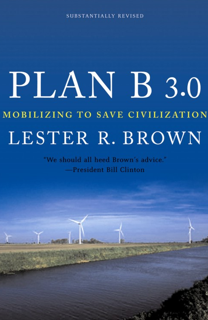
How to Halt Collapse of Civilization – new bk

plan-b-30-cover.png

By Stephen Leahy

Jan 17 (IPS) – Imagine it’s a glorious new era and everything you’ll do as part of your normal day helps to stabilise the climate and the global population, eradicate poverty, and restore the earth’s damaged ecosystems.

Sound unrealistic?

It better not be because that is what it will take to prevent the end of human society as we know it, according to a new book, “Plan B 3.0: Mobilising to Save Civilisation“.

The crisis we face is both dire and urgent, requiring a transformative effort like the mobilisation of nations during World War II, says author Lester Brown, president of the Earth Policy Institute, an environmental think tank in Washington. Continue reading

Global Economy Going Green?

sow-08-cover.jpg

By Stephen Leahy

Jan 9 (IPS) – There appears to be hope for the planet yet.

After much urging and dire threats, the global economy, much like a stubborn and temperamental toddler, is starting to reluctantly turn towards sustainability, according to the “State of the World 2008” report released by the Worldwatch Institute Wednesday.

“Innovative green efforts by governments and business are becoming commonplace,” said Gary Gardner of Worldwatch, a U.S.-based environmental think tank.

Continue reading