Ending The Oil Addiction: Galápagos Islands

img_0501.jpg

By Stephen Leahy*

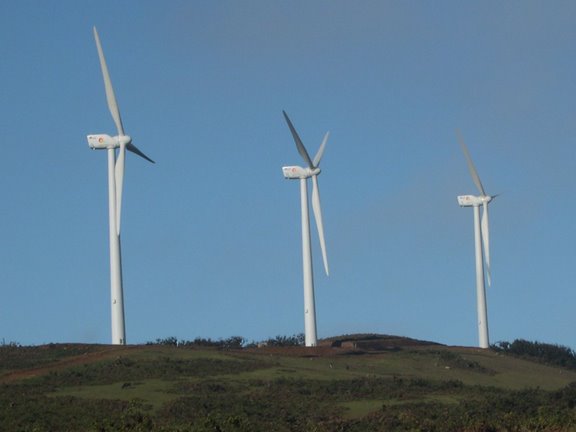
TORONTO, Feb 29 (Tierramérica) – Ecuador has taken the first step towards ending the oil dependence of its Galápagos Islands, in the eastern Pacific Ocean, with the official opening of a 10.8 million dollar wind energy facility on the island of San Cristóbal.

Ecuador’s President Rafael Correa toured the facility as part of a celebration of the 500th anniversary of the discovery of the Galápagos, and proposed to declare the islands fossil fuel free by 2015.

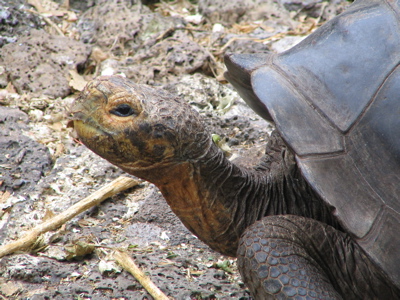
Located 1,000 kilometres off the coast of Ecuador, the archipelago comprises 17 small and 13 large islands that are home to 30,000 people and visited by more than 120,000 tourists each year.

Nearly everything is imported from the mainland, including vast quantities of diesel fuel for energy and transport. In 2001, a tanker ship struck a reef off the coast of San Cristóbal, one of the main islands, spilling 150,000 gallons of fuel into the ocean. Continue reading

Oceans Hit Hard By Human Activity

copyright Ove Hoegh-Guldberg

By Stephen Leahy

Feb 15 (IPS) – Oceans span nearly three quarters of the Earth’s surface and despite this vast size hardly a square kilometre has been untouched by humans.

Researchers released the first-ever global map of human impacts on oceans Thursday in the journal Science. Impacts ranged from fishing to pollution to ship transportation.

“There really aren’t any areas without human impacts,” said Kimberly Selkoe, a principal investigator on the project and a post-doctoral researcher at the University of Hawaii.

“The most shocking message here is that we don’t actually have a lot of data on human impacts,” Selkoe told IPS. Continue reading

Galapagos Islands Spared Ocean Dumping Experiment

galap3.jpgLast summer while working in the Galapagos Islands I wrote about Planktos, a company that wanted to create plankton blooms near the islands by dumping tons of iron particles into the ocean: Carbon Project Endangers the Galápagos.

Planktos hoped these plankton blooms would ultimately become a lucrative way of removing carbon from the atmosphere. However in a January issue of the journal Science, a number of international scientists issued a warning that not enough was known to commercialize what is known as iron fertilization of the oceans.

Last summer’s dumping in the Galapagos never went forward, in part because of strong local objections, concern by marine scientists over unintended impacts and international environmental group protests. Feb 13 Planktos announced indefinite postponement of the experiment due to lack of investment funds because of “an effective disinformation campaign” by those opposing the effort.

Protecting Canada’s Water from the US

07102005-dry-mud-fish-manaquiri-amazonas-state-greenpeace.jpg

Under the North American Free Trade Agreement (NAFTA), Canada lost control over its energy resources. Now, with “NAFTA-plus”, Canada could also lose control over its freshwater resources, say experts in this Sept 2007 article CANADA: Losing Control of Water Through NAFTA and SPP

Now the Canadian Water Issues Council (CWIC) has written a model law to protect Canadian waters.

“There is a growing risk that North Americans may commit the ultimate ecological error by beginning to move large amounts of water over long distances, resulting in massive economic losses and ecosystem collapse in many donor regions,” says Ralph Pentland, CWIC’s Acting Chairman.

“The model legislation, drafted by the Council, addresses the need for a national approach to protecting this vital resource.”

See webcast of panel discussion on this and what it may take to turn this into real law.

Time To Panic Over Climate Change

protestor-bush-climate-mtg-jan-30.jpg

UK-based jurno Gwynne Dyer suggests it is time to panic over climate change and cites plenty of evidence (nearly all of which you can find on this site) including southern Africa losing 30 per cent of its corn crop as climate gets hotter and drier there.

Dyer goes on to say:

The two Democratic candidates for the presidency in the United States promise 80 per cent cuts in emissions by 2050, and John McCain for the Republicans promises 50 per cent cuts by then.

Nobody points out such a leisurely approach condemns the world to a global temperature regime at least three or four degrees Celsius (5.5 to 7 degrees Fahrenheit) warmer than today.

Nobody points out those are average global temperatures which take into account the relatively cool air over the oceans. Continue reading

Ethanol Worse Than Gasoline

oil-palm-seedling-in-burned-peat-forest-wetland-international.jpg

By Stephen Leahy
Feb 8 (IPS) – Biofuels are making climate change worse, not better, according to two new studies which found that total greenhouse gas emissions from biofuels are far higher than those from burning gasoline because biofuel production is pushing up food prices and resulting in deforestation and loss of grasslands.

Emissions from ethanol are 93 percent higher than gasoline,” said David Tilman, an ecologist at the University of Minnesota and co-author of one of the papers published Thursday in the journal Science.

“The bottom line is that using good farmland for biofuels increases greenhouse emissions,” he said.
Continue reading

Only Green Part of Most Biofuels is the Wealth (Subsidies) They Generate

sugar-cane-field-oz-rslpix1By Stephen Leahy

Feb 4 (IPS) – Biofuels have quickly turned from environmental saviour to just another mega-scale get-rich quick scheme. Countries and regions without their own oil reserves to tap now see their farms, peatlands and forests as potential “oil fields” — shallow but renewable lakes of green oil.

Renewable does not mean sustainable, and in most cases the only green part of biofuel is the wealth they generate.

Not surprisingly, given the record high oil prices, worldwide investment in bioenergy reached 21 billion dollars in 2007, according to the U.N. Environment Programme. The Inter-American Development Bank announced 3 billion dollars for investment in private sector biofuel projects — mainly in Brazil — while the World Bank said it had 10 billion dollars available in 2007.

Meanwhile development assistance for food-producing agriculture had fallen to 3.4 billion dollars in 2004 — with the World Bank’s share less than 1 billion dollars, according to the Bank’s own World Development Report on Agriculture released in October 2007. And most of this financial assistance was spent on subsidising use of chemical fertilisers. Continue reading

Fidel Castro Endorses “Plan B” To Save Civilization

castro.pngFidel Castro, yes El Presidente Fidel Castro of Cuba, writes in an Jan 31st article posted in English by the Cuban News Agency about a recent visit with Brazilian President Lula:

I talked to him, of course, about the climate change, and the little attention paid by a great number of leaders of the industrialized world to this issue.

When I spoke with him on January 15 in the afternoon, I could not make reference to the article that would be published only three days later, written by Stephen Leahy from Toronto. This article announces a new book by Lester Brown called Mobilizing to Save Civilization. “

Castro goes on to quote extensively — with a few translation errors — from my IPS article: How to Halt Collapse of Civilization – new bk.

Who knew that Castro was deeply concerned about climate change? And he aptly summarizes the complete absence of discussion about climate change during the US Presidential primaries. Sure the economy may be in trouble, but there is no economy without a stable climate system.
See also: Plan B 3.0: Mobilising to Save Civilisation

Organic Cure for Brain-damaging Pesticides Found in US Children

organic-banana-box.jpg

Children eating a normal diet have low levels of organophosphates — the family of pesticides spawned by the creation of nerve gas agents in World War II — according to a recent research says the Seattle Post-Intelligencer.

But once they switched to eating only organic foods these pesticides disappeared within 36 hours from the kids’ bodies.

Malathion and chlorpyrifos were the principal chemicals Emory University’s School of Public Health study found. Death or serious health problems have been documented in thousands of cases with high-level exposures. But impacts at low levels have been more difficult to determine. Animal studies do show chronic dietary exposure to chlorpyrifos results in neurological impairment i.e. brain and nervous system affects.

bio-fruit-counter-austria.jpgThe P-I article also details what foods have highest levels pesticides.

I wrote a detailed article about an earlier study by Emory U: Overweight? Hungry? Blame “Hollow Food”

Other related stories about organic foods/agriculture:

Food Additives Make Kids Hyperactive – Organic Better?

Organic Agriculture Reduces Climate Change, Poverty and Hunger

Organic Provides 3X More Food Per Acre in Poor Countries – podcast

Africa, South Asia Face Mega-Famines

stanford-food-security-banner-sml.jpg

By Stephen Leahy

Feb 1 (IPS) – Climate change will cause major disruptions in the global food system, and adaptation to those changes needs to begin immediately, experts say.

Otherwise one-fifth of the world’s population could starve and millions of others become climate refugees, forced by heat and drought to abandon their lands and hunt for food elsewhere in the coming decades.

To prevent this nightmarish future, researcher David Lobell says the world community should focus its efforts where climate threats are likely to make the greatest impacts.

“We used historical data to determine what food-producing regions of the world were most sensitive to changes in temperature and rainfall,” said Lobell, author of the study published in the journal Science today.

“Impoverished regions of Southern Africa and South Asia will be hit first and hardest by climate change,” Lobell told IPS from his office at Stanford University’s Programme on Food Security and the Environment. Continue reading