Reducing Fossil Fuel Use Only Way to Save Dying Corals

Another important reason why continuing to burn more fossil fuels is very dangerous for all of us. Excerpts from July 2008 article — Stephen 

‘The world’s fossil fuel economy is like the Titanic — we know its going to hit an iceberg but it takes a very long time to stop a really big ship..’

By Stephen Leahy

FORT LAUDERDALE, U.S., July 12, 2008 (IPS)

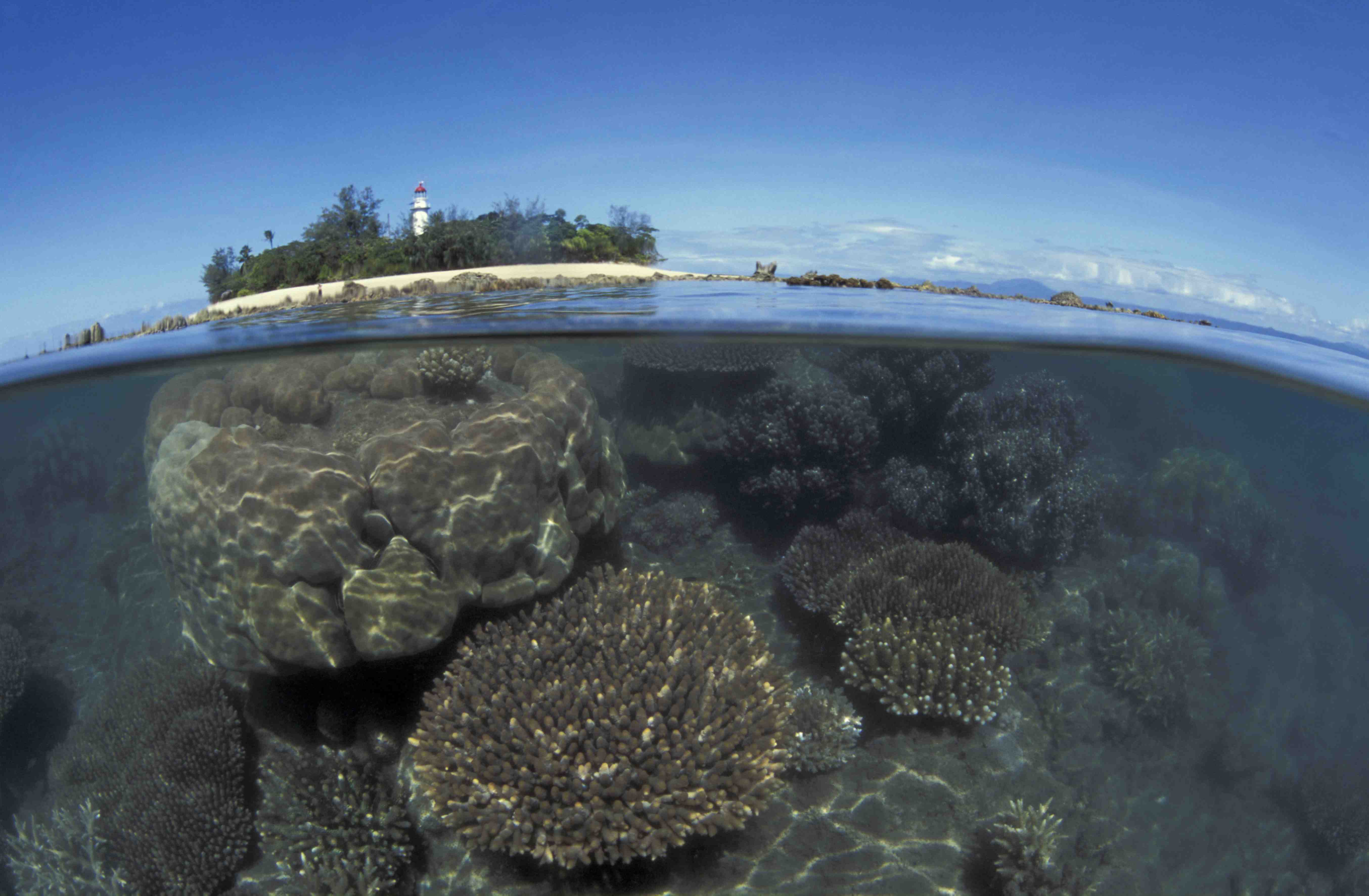
The rapid decline of coral reefs around the world offers a potent warning that entire ecosystems can collapse due to human activities, although there is hope for reefs if immediate action is taken, coral experts agreed at the conclusion of a five-day international meeting Friday.

“Reefs are in serious trouble, but don’t write them off,” Terry Hughes, a marine ecologist at Australia’s James Cook University told 3,000 scientists, conservationists and policy makers attending at the 11th International Coral Reef Symposium (ICRS) in Fort Lauderdale, Florida.

“We can save reefs if we take immediate action,” Hughes said.

More than 20 percent of the world’s reefs have died, and large areas are failing due to a combination of climate change, overfishing, pollution and sea level rise. Most of the fabulous corals that attract tourists to the Caribbean are gone and half of remaining reefs in the U.S. are in serious decline.

[Update 2010 – Here’s a list of Stephen Leahy’s latest articles on corals Coral Reefs and Acid Oceans Series]

We may be facing ocean deserts in the future,” said Guillermo Dias-Pulido of Australia’s University of Queensland.
Continue reading

Keystone Pipeline All About Exporting Oil Overseas – Report


 The United States is awash in oil with four times as many oil rigs pumping domestic oil today than eight years ago and declining  demand

Canada needs overseas markets for its dirty oil

[Excerpts from my September 2nd article on the proposed Keystone XL pipeline — Stephen]

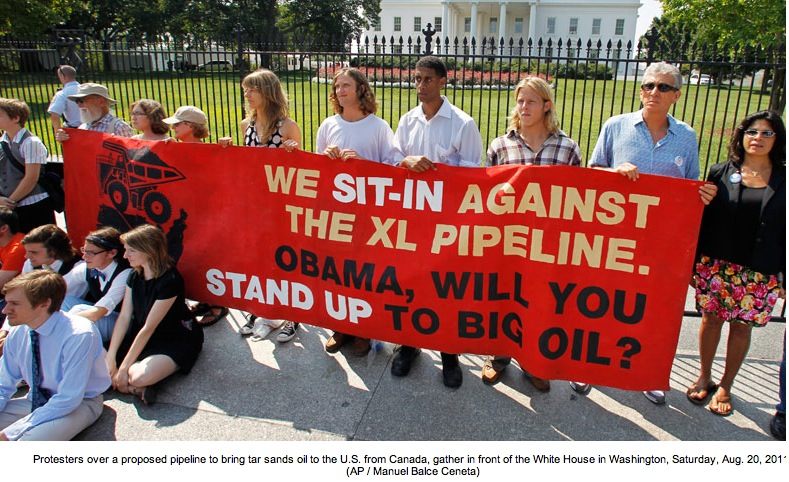
The only reason U.S. citizens may be forced to endure a risky, Canadian-owned oil pipeline called Keystone XL is so oil companies with billion-dollar profits can get the dirty oil from Canada’s tar sands down to the Gulf of Mexico to export to Europe, Latin America or Asia, according to a new report by Oil Change International released Wednesday.

“Keystone XL will not lessen U.S. dependence on foreign oil, but rather transport Canadian oil to American refineries for export to overseas markets,” concludes the report, titled “Exporting Energy Security“.

….

“The oil industry would have done the Northern Gateway [pipeline] first but gambled that resistance to the [Keystone XL] pipeline would be far weaker in the mid-west,” he told IPS.

They were wrong.

Read full article:

U.S. Awash in Oil and Lies, Report Charges | More Oil Development Risks Catastrophe – Scientists Say

Jail Before Climate-Wrecking Tar Sands, Canadians Say

By Stephen Leahy

OTTAWA, Sep 27, 2011 (IPS)

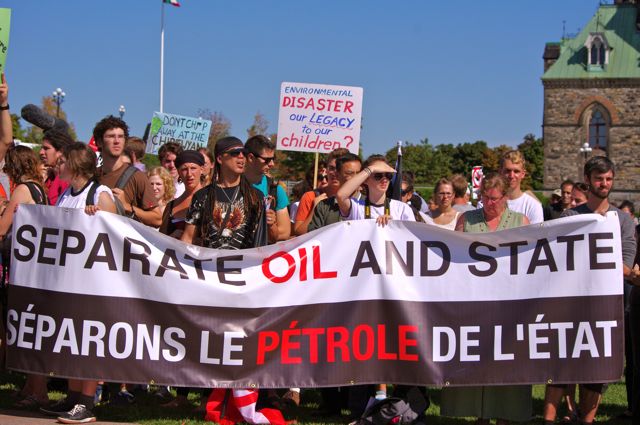
More than 200 Canadians engaged in civil disobedience, with 117 arrested in Canada’s quiet capital city on Monday. The reason? To protest the Stephen Harper right-wing government’s open support for the oil industry and expanding production in the climate-disrupting tar sands.

Maude Barlow, chairperson of the Council of Canadians, is arrested at the Sep. 26 tar sands protest. Credit:Renée Leahy/IPS

The normally placid and polite Canadians shouted, waved banners and demanded the closure of the multi-billion-dollar tar sands oil extraction projects in northern Alberta to protect the global climate and the health of local people and environment.

“People are here because they know that if we don’t turn away from the tar sands and fossil fuels soon it will be too late,” Peter McHugh, a spokesperson for Greenpeace Canada, told IPS.

“The tar sands are unsustainable. Canadians are willing to shift away from fossil fuels but our government isn’t,” Gabby Ackett a university student and protester, told IPS as she stood in front of a long line of police.

In what was proudly touted as “civil” civil disobedience, protesters aged 19 to 84 were arrested for using a step-stool to climb a low barrier separating them from the House of Commons, the seat of Canadian government. The police were friendly and accommodating because the organisers had promised there would be no violence.

“We live downstream and see the affects of tar sands pollution on the fish and the birds,” said George Poitras, a former chief of the Mikisew Cree First Nation in northern Alberta.

“Some our young people have rare forms of cancer,” Poitras told more than 500 protesters.

“Expanding the tar sands is not the way to go in a world struggling with climate change,” he said.

Carbon emissions from the tar sands production have increased 300 percent since 1990 and, at 45 to 50 million tonnes annually, are greater than most countries. And that does not include the carbon contained in the oil itself.

When burned, the 1.6 million barrels of oil that are extracted every day will add 346 million tonnes of carbon to the atmosphere this year alone. That’s almost the entire emissions of the country of Australia. The oil industry is making billion-dollar investments in the tar sands to more than double production by 2025. Continue reading

Fight Against Marine Garbage Runs Into Plastics Lobby – Cousteau “shocked” by state of oceans

This is my final article in the Trashing the Ocean series. It looks at the results of the first major international effort to deal with the issue in 11 years. It’s less than satisfying effort largely due to the plastics lobby.  One of the unofficial solutions:  buy local and create local, sustainable communities says the guy who ‘discovered’ the pacific garbage patch. — Stephen

There are three to six kilogrammes of marine trash for every kilogramme of plankton…. California nearly became the first U.S. state to ban plastic bags, but a multi-million-dollar lobby effort by industry killed the proposed legislation

By Stephen Leahy

HONOLULU, Hawaii, U.S., Mar 28, 2011 (IPS)

Every day, billions of plastic bags and bottles are discarded, and every day, millions of these become plastic pollution, fouling the oceans and endangering marine life.

No one wants this, but there is wide disagreement about how to stop it.

“Every time I stick my nose in the water, I am shocked. I see less and less fish and more and more garbage,” said Jean-Michel Cousteau, son of the legendary marine ecologist Jacques Cousteau, who has spent four decades making documentaries and educating people about the oceans.

On trips to the remote and uninhabited northwestern Hawaiian Islands, Cousteau found miles and miles of plastic bottles, cigarette lighters, television tubes, spray cans, broken toys, and thousands of other pieces of plastic on the beaches and thousands of tonnes of derelict fishing nets in the reefs.

“We are using the oceans as a universal sewer,” he told some 440 participants from the plastics manufacturing, food and beverage sectors, environmental organisations, scientists and policy-makers from over 35 countries at the Fifth International Marine Debris Conference in Honolulu, Hawaii, which ended Mar. 25.

Jean-Michel Cousteau

This independent environmental journalism depends on public support. Click here learn more.

Humanity is risking its own health and survival in treating the oceans this way, Cousteau said. The oceans are the source of life on our planet. Through evaporation, oceans are the most important source of fresh water while phytoplankton generates at least half the oxygen we breathe.

“No one is away from the ocean. We are all intimately connected by every breath we take,” he said.

Continue reading

Bike vs Car on a Hot Planet

Hanoi bike parade for climate action

E-cycles, bike highways and cutting government addiction to gas taxes

By Stephen Leahy

BERLIN, Jun 6, 2011 (IPS)

As global carbon emissions hit record-high levels last year, officials from leading Asian nations told the 2011 International Transport Forum in nearby Leipzig that their citizens want more cars.

At the same meeting, some Europeans urged a 21st century renaissance in bicycle transport, with electric and electric-assist bikes for personal health and the health of the climate.

“We in India need to provide more roads and rail,” said B.K. Chaturvedi, a member of India’s Planning Commission.

“Cycling is a miniscule thing. That’s not the future,” Chaturvedi told the nearly 800 attendees.

This independent environmental journalism depends on public support. Click here learn more.

“The bike is better to get around in Beijing, but bicycle use is dropping fast due to poor air quality and the danger from car traffic,” said Pan Haixiao, a professor at Tongji University in China.

Dar es Salaam, Tanzania's Moving Planet Cycle Caravan.

The number of cars and light trucks globally is projected to triple from the current 850 million to 2.5 billion by 2050, according to the International Transport Forum’s (ITF) Transport Outlook 2011. That growth is projected to be almost entirely in the developing world.

Richer countries are actually reducing the personal vehicle use in the last few years.

The Organisation for Economic Cooperation and Development’s ITF is an intergovernmental organisation for the transport sector involving 52 different nations.

Transport is the second leading source of carbon dioxide emissions, contributing about 7.5 gigatonnes to the 30.6 gigatonnes (Gt) emitted in total in 2010. The International Energy Agency (IEA) reported last week that humanity cannot exceed annual emissions of 32.0 Gt or it will be impossible to achieve the internationally-agreed target of below two degrees C of global warming to avoid very dangerous levels of global warming.  Continue reading

U.S. Awash in Oil and Lies, Report Charges | More Oil Development Risks Catastrophe

Canada’s Alberta Tar Sands Mining Pits

By Stephen Leahy

UXBRIDGE, Canada, Sep 2, 2011 (IPS)

With four times as many oil rigs pumping domestic oil today than eight years ago and declining domestic demand, the United States is awash in oil.

The country’s oil industry is primarily interested in who will pay the most on the global marketplace. They call that “energy security” when it suits, but in reality it is “oil company security” through maximising profits, say energy experts like Steve Kretzman of Oil Change International, an NGO that researches the links between oil, gas and coal companies and governments.

The only reason U.S. citizens may be forced to endure a risky, Canadian-owned oil pipeline called Keystone XL is so oil companies with billion-dollar profits can get the dirty oil from Canada’s tar sands down to the Gulf of Mexico to export to Europe, Latin America or Asia, according to a new report by Oil Change International released Wednesday.

“Keystone XL will not lessen U.S. dependence on foreign oil, but rather transport Canadian oil to American refineries for export to overseas markets,” concludes the report, titled “Exporting Energy Security“.

Little of the 700,000 to 800,000 barrels of tar sands oil pumped through the 2,400-kilometre, seven-billion-dollar Keystone XL will end up in U.S. gas tanks because the refineries on the Gulf Coast are all about expanding export markets. One huge refinery operator called Valero has been touting the potential export revenues of tar sands oil to investors, the report found.

Because Keystone XL crosses national borders, President Barack Obama has to issue a permit declaring the pipeline serves the “national interest” in order to be approved.

“The only way Keystone XL could be considered in the national interest is if you equate that with profits for the oil industry,” said Kretzman, who wrote the report. Continue reading

Keystone XL: A Pipeline to Europe?

By Stephen Leahy *

UXBRIDGE, Canada, Aug 23, 2011 (Tierramérica)

The promoters of Keystone XL, a huge new oil pipeline from northern Canada to the U.S. Gulf Coast, claim that it will reduce U.S. reliance on oil imports from unfriendly countries.

But based on falling U.S. oil demand, the controversial Keystone XL pipeline may simply allow tar sands oil currently landlocked in Alberta, Canada to be exported to Europe, say U.S. and Canadian environmental activists.

The proposed pipeline could also be used to pump water from the Ogallala aquifer in the U.S. Midwest, one of the world’s largest, to the badly parched states in the arid southwest such as Texas, currently suffering its worst drought in history.

Pipeline industry officials often say pipelines like Keystone can be easily used to transport water, said Maude Barlow, chairperson of the Council of Canadians, a large environmental NGO.

Therefore, “Keystone XL poses a double threat to the Ogallala through contamination from a pipeline leak or by pumping water that is already being overdrawn,” Barlow said in an interview with Tierramérica. Continue reading

Welcome to Bizarro World: Canada and US Spending $billions to Create Climate Chaos

President Obama and Prime Minister Stephen Harper (left) say they’re worried about climate change, but neither the U.S. nor Canada has cut emissions.

Analysis by Stephen Leahy

UXBRIDGE, Canada, Aug 10, 2011 (IPS)

Canada and the United States are now the centre of Bizarro World. This is where leaders promise to reduce carbon emissions but ensure a new, supersized oil pipeline called Keystone XL is built, guaranteeing further expansion of the Alberta tar sands that produce the world’s most carbon-laden oil.

“It’s imperative that we move quickly to alternate forms of energy – and that we leave the tar sands in the ground,” the U.S.’s leading climate scientists urged President Barack Obama in an open letter Aug. 3.

“As scientists… we can say categorically that it’s [the Keystone XL pipeline] not only not in the national interest, it’s also not in the planet’s best interest.”

The letter was signed by 20 world-renowned scientists, including NASA’s James Hansen, Ken Caldeira of the Carnegie Institution, Ralph Keeling of the Scripps Institution of Oceanography, and George Woodwell, founder of the Woods Hole Research Center.  Continue reading

Who Controls the Nuclear Control Agencies?

April 1986 disaster at the Chernobyla nuclear power plant in Ukraine

“There are few independent nuclear experts in the world. Everyone either works in the industry or used to and are now regulators.”

Canadian Government fired chief regulator for trying to improve safety standards — Greenpeace

By Stephen Leahy*

UXBRIDGE, Canada, Mar 23, 2011 (Tierramérica)

As Japan struggles to confront a nuclear disaster that could be the worst in history, it seems clear that any discussion about the safety of nuclear energy should address the independence of regulatory agencies.

On Apr. 26, 1986 a series of explosions and fires at the Chernobyl nuclear power plant in Ukraine released radioactive fallout that spread over eastern and western Europe, particularly affecting Ukraine itself, Byelorussia (now Belarus) and Russia, all Soviet republics at the time.

Twenty-five years later, Chernobyl’s reactor number 4 continues to emit high levels of radioactivity even though it is buried under a thick but decaying layer of concrete.

Europe and the United States are trying to raise more than two billion dollars to build a permanent sarcophagus to contain the radiation.

The Chernobyl disaster is usually attributed to obsolete technology and the secrecy characteristic of the Soviet regime.

The accident at the Tokyo Electric Power Co. (TEPCO) Fukushima I Nuclear Power Plant was triggered by the damage resulting from the 9.0-magnitude earthquake and subsequent tsunami on Mar. 11.

But “TEPCO doesn’t have the best record for safety or disclosure of information,” said Mycle Schneider, a Paris-based energy and nuclear policy analyst who also works in Japan.
Continue reading

A Fatal Addiction to Plastic – Trashing the Oceans and Our own Health

Ocean trash art - plastic soda bottle tops, lighters, misc bits of plastic

By Stephen Leahy

KAUAI, Hawaii, U.S., Apr 1, 2011 (IPS)

“Be fantastic, don’t use plastic!” chanted a troop of 10-year- olds from President Thomas Jefferson Elementary School in Honolulu at the conclusion of an international conference on the millions of tonnes of trash that enter the oceans every year, with serious consequences for marine life and habitats as well as to human health and the global economy.

Most participants were in a celebratory mood at the Fifth International Marine Debris Conference, which concluded Mar. 25 with the Honolulu Commitment to address the growing problem of marine debris.

But Captain Charles Moore, the man who brought the world’s attention to the scope and scale of the problem, was not celebrating.

“I’ve been doing this for 30 years and every year it has only become worse,” Moore told IPS.

Moore is famous for revealing the immense amount of plastic in the north Pacific gyre, formed by ocean currents in a massive slow-moving whirlpool thousands of square kilometres in size.

Moore’s Algalita Marine Research Foundation documented that this vast expanse of oceans has about six kilogrammes of plastic for every kilogramme of plankton. He is careful to point out that there is no plastic island as reported in some media, it’s much more dispersed. Continue reading