Hurricane Felix Category Five — Pix

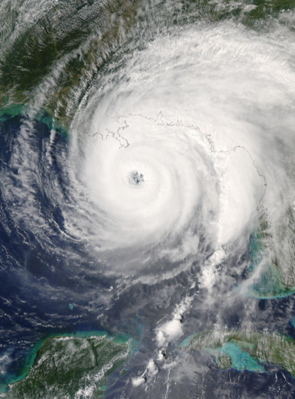
picture-4.pngHurricane Felix, the second Cat 5 storm in two weeks is set to hit Central America Monday. Here’s a satellite image from NOAA:

Tues AM Update: Felix hits Nicaragua as Cat 5 — first time two Cat 5 storms have made landfall in one season.

To learn more about modern hurricanes and the potential link to climate change check out

Steve’s Hurricane Handbook 2007

This is a short ebook  contains a collection of the most interesting quotes and facts about hurricanes from scientists and other experts.


Steve’s Hurricane Handbook 2007

hurri-handbk.png One year before Katrina devastated New Orleans and the Gulf Coast, scientists feared global warming was going to make hurricanes more powerful.

Five Little-Known Facts:

  1. “These are not natural disasters, they are environmental disasters.”
  2. NOAA study found that Katrina was only a Category 1 or perhaps 2 on landfall
  3. Storms in the NorthWest Pacific Ocean are 75 percent more powerful than they were 30 years ago
  4. Climate change has the potential to raise oceans temperatures high enough create future hypercanes — 600 kilometre per hour superstorms
  5. “The U.S. has a very big societal problem when it comes to coping with hurricanes” (ok, maybe you knew that)

This is a sampling of the little known information about hurricanes from respected scientists collected in the modestly titled “Steve’s Hurricane Handbook 2007 – Lessons Learned 2004-2006? “ (1.2 mb pdf). It’s a compendium of the most interesting quotes and facts about hurricanes from hurricane experts since 2004. Continue reading

Flying Blind Into a Monster Hurricane Season

ivan.jpgFlying Blind Into Monster Storm Season

By Stephen Leahy

“…New Orleans is at the same risk as it was before Katrina.”
— Stephen Leatherman, director of the International Hurricane Research Center

Aug 24 (IPS) – Category Five Hurricane Dean is just the first of several monster storms coming this hurricane season, meteorologists predict.

The United States and other countries remain highly vulnerable, even as budget cuts to the National Aeronautics and Space Administration (NASA) imperil hurricane prediction and research.

“The U.S. will experience landfalls of between two and four major hurricanes this year,” said Gerry Bell, lead seasonal hurricane forecaster at the National Oceanic and Atmospheric Administration (NOAA) Climate Prediction Centre in Maryland.

“In addition to Dean, the Caribbean region can expect two or three more major storms,” Bell told IPS. Continue reading

Greenland on Verge of Meltdown

Copyright Alfred Wegener Institute for Polar and Marine Research Deniers Jump on NASA Gaff, While Greenland on Verge of Meltdown
By Stephen Leahy

Aug 16, 2007 (IPS) – Scientists warn that climate change tipping points are imminent, and will lead to potentially catastrophic events like a seven-metre sea level rise. Meanwhile, conservatives in the North American media are focusing on a NASA admission of a climate calculation error.

First the error.

Continue reading

Roads Lead to Deforestation in Untouched Peruvian Amazon

Recently-contacted Murunahua man, River Yurua, Peru. He was shot in the eye by loggers during first contact. © David Hill / Survival

Satellites Show Logging Decline in Peruvian Amazon
By Stephen Leahy

Deforestation in the Peruvian Amazon, intense in zones near roads and mining operations, has had little impact in protected forests, say researchers.

Aug 13 (Tierramérica).- Rainforest conservation policies are reducing the rate of deforestation in the Peruvian Amazon, but roads are unquestionably the drivers of change, new satellite data reveal.

Although Brazil’s Amazon forests draw the most international attention, Peru’s 661,000 square kilometers of rainforests are recognized as a unique and important ecosystem.

However, the impacts of human activities throughout the region have been poorly understood, until a study published Aug. 10 in the journal Science.

“Peru’s forest reserves and conservation areas appear to be working well,” said Greg Asner, director of the Carnegie Airborne Observatory, at Stanford University in California.

Continue reading

Atlantic Bluefin Tuna Going Way of Northern Cod

tuna-hall-sml.jpgAtlantic Bluefin Tuna Going Way of Northern Cod
By Stephen Leahy

Aug 6 (IPS) – Fishing wiped out Atlantic Bluefin tuna stocks in Northern Europe 50 years ago, according to a new study, while ongoing pressure on the remaining stocks is pushing the entire species to the edge of extinction.

Every summer in the early 1900s, Northern European waters from Holland to northern Norway teemed with Atlantic Bluefin tuna, some three metres long and weighing 700 kilogrammes, according to historical fishing records. Few could catch the powerful, fast-swimming fish until the 1930s and 1940s when bigger, faster boats with better catch gear were designed.

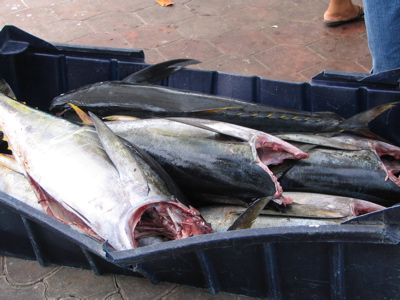
“The Bluefin population crashed in the 1960s and more than 40 years later it still hasn’t recovered,” said Brian MacKenzie of the Technical University of Denmark, who led the study to be published in the journal Fisheries Research.yellow-fin-tua-galapagos.jpg

“You simply don’t see bluefins in these waters any more,” MacKenzie told IPS.

There is a clear parallel to the more recent collapse of once abundant Northern Cod stocks. Also fished into near extinction on the other side of the Atlantic, the Cod have not recovered despite a no-fishing ban for the past 15 years.

“I’m afraid what happened to the Bluefin is similar to what happened to the Northern Cod,” he said.

Continue reading