Global Economy Going Green?

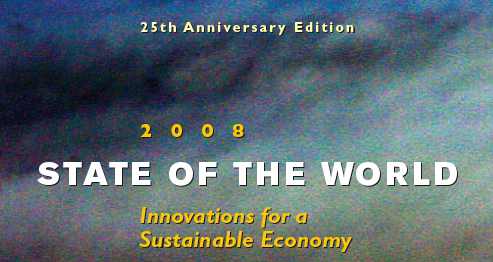
sow-08-cover.jpg

By Stephen Leahy

Jan 9 (IPS) – There appears to be hope for the planet yet.

After much urging and dire threats, the global economy, much like a stubborn and temperamental toddler, is starting to reluctantly turn towards sustainability, according to the “State of the World 2008” report released by the Worldwatch Institute Wednesday.

“Innovative green efforts by governments and business are becoming commonplace,” said Gary Gardner of Worldwatch, a U.S.-based environmental think tank.

Continue reading

Catch less fish, Make More $

yellow-fin-tuna-catch-galapagos.jpg

By Stephen Leahy

Dec 11 (IPS) – Catch less fish. Make more money.

Could this be the solution to the global overfishing crisis?

Australian economists writing in the current issue of Science magazine think so.

Reducing fish catches in the short term will bring fishers big profits later. And that profit potential may finally persuade an intransigent fishing industry to agree to lower catch limits, they say.

“Bigger stocks mean bigger bucks,” says co-author Quentin Grafton, research director at the Crawford School of Economics and Government at the Australian National University (ANU).

“Our results prove that the highest profits are made when fish numbers are allowed to rise beyond levels traditionally considered optimal,” Grafton said. Continue reading

Amazon Forest Could Cook the Planet

2_4amazon_forest.jpg


By Stephen Leahy

Dec 7 (IPS) – A two-degree Celsius rise in global temperatures could flip the Amazon forest from being the Earth’s vital air conditioner to a flamethrower that cooks the planet, warns a new report released at the climate talks in Bali, Indonesia Friday.

And we’re already past 0.6 degrees C., climate experts say.

Paradoxically, a two-degree C. rise in global temperatures cannot be prevented without a largely intact Amazon rainforest, says Dan Nepstad, a senior scientist at the Woods Hole Research Centre in the U.S. state of Massachusetts and author of the report “The Amazon’s Vicious Cycles: Drought and Fire in the Greenhouse”, issued by WWF, the global conservation organisation.

“The importance of the Amazon forest for the globe’s climate cannot be underplayed,” said Nepstad at a press conference from Nusa Dua on the island of Bali, the site of the United Nations Framework Convention on Climate Change (UNFCCC) conference running until Dec. 14. Continue reading

Junk Food and Smoking to Kill 100s of Millions in Poor Countries

By Stephen Leahy


Credit:Hendrike

Man lighting a cigaret

Nov 26 (IPS) – Chronic, non-infectious diseases like heart disease, stroke, cancer and diabetes kill more than twice as many people than HIV/AIDS, malaria or tuberculosis, experts warn.

In the next 10 years, some 388 million people will die of these largely preventable diseases, which are caused mainly by smoking, poor diet and lack of exercise. Often thought to be diseases of the rich, most of these deaths will be in the developing world, conclude the authors of a study published in the journal Nature this month.

“We have a huge health crisis here that few policymakers and other officials are aware of,” said lead author Dr. Abdallah S. Daar of the McLaughlin-Rotman Centre in Toronto, Canada.

Developing countries, and medical and donor groups have focused almost entirely on infectious diseases, Daar told IPS. “But that’s like putting out one fire in a house burning from both ends,” he said.

Continue reading

30 Million Lead-laden TVs Dumped on Poor Countries

“The US has an appalling system that makes it easy to dump e-waste on the developing world.”Barbara Kyle, Electronics TakeBack Coalition.

By Stephen LeahyCopyright EMPA, Switzerland

Nov 21 (IPS) – U.S. citizens will buy 30 million new digital televisions this year alone, sending their old lead-laden TVs to the dump, or more likely, overseas to China or India.

“It’s an astonishing number that will send millions of pounds of lead to landfills or overseas,” said Barbara Kyle, national coordinator of the Electronics TakeBack Coalition.

Non-digital TVs contain up to eight pounds of lead, which is a potent neurotoxin. While new digital flat screen TVs don’t have lead, they do contain mercury, another neurotoxin.

“It’s no longer illegal in the U.S. to export e-waste (electronic waste) to developing countries,” Kyle said.

Changes in rules and regulations in recent years to the Resource Conservation and Recovery Act, administered by the U.S. Environmental Protection Agency, have created an “appalling system that makes it easy to dump e-waste on the developing world”, she said. Continue reading

Energy Use On Suicidal Path

niger-delta-air-pollution-george-osodi.jpg

“If we get that kind of increase it will be societal suicide”

By Stephen Leahy

Nov 9 (IPS) – Today’s skyrocketing fossil fuel use will accelerate far faster in the coming decades, driving oil prices higher and virtually guaranteeing catastrophic climate change in the decades to come, energy experts say.

Emissions of greenhouse gases could increase a staggering 57 percent by 2030 if current trends continue, and with the strong growth of coal and oil energy use in India and China, the International Energy Agency (IEA) reported this week.

“If we get that kind of increase it will be societal suicide,” says Gavin Schmidt, a climate researcher at NASA Goddard Institute for Space Studies at Columbia University.

“It really is a huge increase,” Schmidt told IPS. Continue reading

Canada’s Shocking Environmental Decline


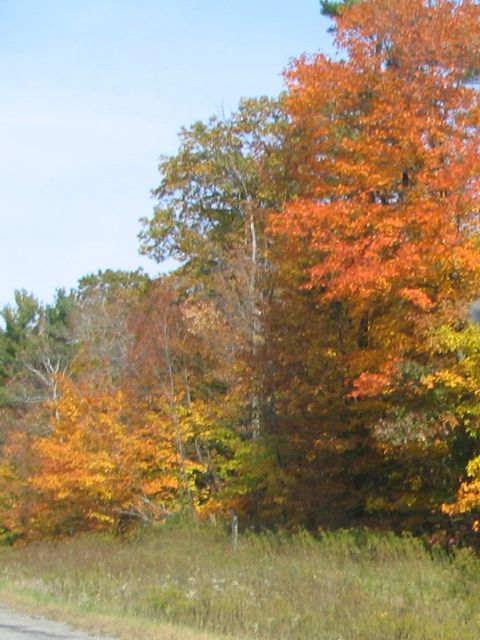
fall-colours-lakeridge-06.jpg

By Stephen Leahy* – IPS/IFEJ

In the past 15 years, all of Canada’s environmental indicators have suffered, say experts who distribute the blame among local and national governments, businesses and the public.

TORONTO, Nov 5 2007 (Tierramérica).

In the 1980s, Canada was a bright green engine of change, pushing the global community forward on sustainable development and global warming. But now it is falling behind in almost every environmental aspect.

The lead author of the landmark 1987 Bruntland Report, “Our Common Future“, was Canadian Jim MacNeill. The very first international climate change meeting involving scientists and political leaders was held in Toronto in 1988.

Canadian Maurice Strong organized the first World Conference on the Environment in Stockholm in 1972, was the first executive director of the United Nations Environment Program (UNEP), and was secretary-general of the 1992 Earth Summit in Rio de Janeiro.

But after this flourish on the world stage, Canada sat back and did virtually nothing domestically. The country ranks 28th out of 30 high-income countries in terms of environmental sustainability, according to an independent Canadian study. The Organization for Economic Cooperation and Development ranked Canada 27th in terms of environmental performance. Continue reading

The Coming Oxygen Crisis?

“I have no idea how this will affect oxygen levels but it is something we should be thinking about.”Bradley Cardinale, biologist, University of California,

By Stephen Leahy


Credit:NASA

The Amazon River and rainforest viewed from space.

Nov 6 (IPS) – Plants are the only source of oxygen on Earth — the only source. Studies around the world show that as plant species become extinct, natural habitats can lose up to half of their living plant biomass.

Half of the oxygen they produced is lost. Half of the water, food and other ecological services they provide are lost.

If a forest loses too many unique species, it can reduce the total number of plants in that forest by half, says Bradley Cardinale, lead author of the meta-analysis published this week in the Proceedings of the National Academy of Sciences (PNAS).

“Those unique species are not replaceable. Nothing takes their place. It was a really shocking finding for me,” Cardinale, a biologist at the University of California, Santa Barbara, told IPS. “That’s how much biodiversity matters.”

Continue reading

Ethanol: The Great Big Green Fraud

gsi-biofuel.jpg

Subsidising biofuels is just about the dumbest way to go.” – Todd Litman, director of the Victoria Transport Policy Institute — Subsidies for 2007 est $13-$15 billion

…increasing biofuel production is a “total disaster” for starving people Jean Ziegler, the United Nations Special Rapporteur on the Right to Food

By Stephen Leahy

Oct 20 2007 (IPS)

A raft of new studies reveal European and American multibillion dollar support for biofuels is unsustainable, environmentally destructive and much more about subsidising agri-business corporations than combating global warming.

Not only do most forms of biofuel production do little to reduce greenhouse gas emissions, growing biofuel crops uses up precious water resources, increasing the size and extent of dead zones in the oceans, boosting use of toxic pesticides and deforestation in tropical countries, such studies say.

And biofuel, powered by billions of dollars in government subsidies, will drive food prices 20-40 percent higher between now and 2020, predicts the Washington-based International Food Policy Research Institute.

“Fuel made from food is a dumb idea to put it succinctly,” says Ronald Steenblik, research director at the International Institute for Sustainable Development’s Global Subsidies Initiative (GSI) in Geneva, Switzerland.

Biofuel production in the U.S. and Europe is just another way of subsidising big agri-business corporations, Steenblik told IPS.

“It’s (biofuel) also a distraction from dealing with the real problem of reducing greenhouse gas emissions,” he asserts. Continue reading

3 Reasons Why Gore Should Not Have Won Nobel Prize

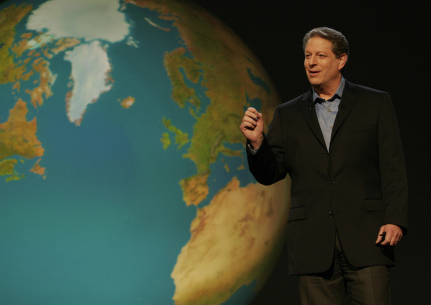
al-gore.pngThis year’s Nobel Prize for Peace went to Al Gore and the UN’s Intergovernmental Panel on Climate Change (IPCC) for their efforts to awaken the world about the risks of climate change. That’s great news but I’d have preferred to see the other candidate for the prize, Canadian Inuit Sheila Watt-Cloutier share the award with the IPCC not Gore.

Three Reasons Why Gore Should Not Have Won:

1. Watt-Cloutier has been a passionate and eloquent communicator about the fact that indigenous people of the Arctic, and indigenous peoples elsewhere, have taken the first and hardest climate change hits so far. It would be been fairer and more representative of the reality to award the prize to an indigenous person.watt-cloutier.png

2. For eight long years Al Gore was second in command of the largest greenhouse gas emitting country in the world. And yet emissions climbed and climbed even though Gore knew climate change was a real and pressing emergency. When running for President Gore barely mentioned GW and then the world had to suffer thru the other GW — George W Bush and his blind and selfish intransigence.

3. Al Gore’s GW solutions are mostly wrong. Biofuels are a bad idea and only make rich agri-corporations richer. Carbon trading markets are an equally bad idea — enshrines the rich countries’ right to pollute our common atmosphere. A moratorium on coal and a carbon tax are some of his better ideas. However, Gore fails to address the root of the problem which is an economic system based on endless growth on a tiny planet with an awful lot of people.

“People do want to do the right thing, but they just don’t realise that the Arctic is melting and they are responsible,” Watt-Cloutier told me in 2004. From Global Warming Will Decimate Arctic Peoples and also see Inuit Sue America Over Climate Change