Shopping Our Way To Disaster – Connecting the Dots

amazon-desert-chainsawBy Stephen Leahy

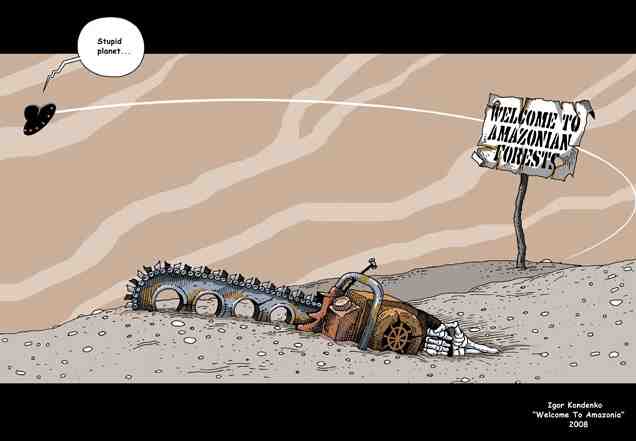
It’s well past time that people began to connect the dots between what they buy and the resulting environmental impacts such as global warming. In other words, consumption has consequences: big, nasty environmental consequences that inflict suffering mainly on the world’s poor experts say.

(IPS) (Originally published Jan 15 2007)

A Chinese-made $50 computer desk is likely the result of illegal clear-cutting in Indonesian rainforests. Buying such items fuels crime syndicates and emits huge amounts of global warming gases.

That North Americans, and to a lesser extent Europeans, are profligate consumers is well known. If everyone consumed like North Americans we’d need five planets to support us — only three planets are necessary if we all lived like Europeans, according to the World Wildlife Fund’s Living Planet Report.

The world collectively overshot the Earth’s capacity to support us in 1984, the report notes. In the 22 years since reaching that crucial tipping point, rates of consumption of resources have accelerated. Not just in North America and Europe but China and India, not to mention other parts of Asia and Latin America.

While this ever-accelerating consumption of resources the sign of a healthy global economy according to economists, it has also resulted in climate change, amongst many other environmental and social ills.

People don’t appreciate that their purchases have real environmental impacts,” said Monique Tilford, acting executive director of the Centre for a New American Dream (CNAD), a Maryland group promoting environmentally and socially responsible consumption. Continue reading

Rapidly Warming Polar Regions Creates Urgency for 50,000 Scientists

“One day in the future there might be an oil rig sitting on top of the North Pole” said David Hik, chairman of International Polar Year Canada.

arctic-oil-rig-on-ice.png

The International Polar Year begins in March, and will involve 50,000 scientists studying the impact of climate change at the poles. Canada is the main contributor, donating 160 million dollars.

By Stephen Leahy

TORONTO, Canada, Jan 13 (Tierramérica) – The recent collapse of a Canadian Arctic ice shelf illustrates why Canada is the biggest contributor to the International Polar Year, the world’s largest scientific research program, focused on climate change. More than 60 nations,¬ from Chile to China, and 50,000 scientists and researchers will be involved in the International Polar Year (IPY) 2007-2008, actually a two-year period that will last from Mar. 1, 2007 to the same date in 2009.

Continue reading

How Museums and Art Galleries Can Create a Sustainable Culture

Greening Stewardship: How Museums Can Help Create a Sustainable Culturegreening-stewardship-e-bk-cover.png

The challenge of creating a sustainable culture is a major opportunity for museums, art galleries and other cultural institutions. This six-page article examines how some of North America’s leading museums and galleries including Chicago’s Shedd Aquarium, Ottawa’s Canadian War Museum, New Jersey’s Liberty Science Center and many others are meeting this challenge.

“All cultural institutions ought to be leaders and intelligent commentators on social and environmental issues.” — Former CEO of the Glenbow Museum.

— includes examples from large and small institutions about programming, community outreach, green buildings and LEED standards .

— Written by Stephen Leahy and originally published in 2003 by muse magazine. Reprints are available as an E-Book: Greening Stewardship: How Museums Can Help Create a Sustainable Culture

Questions, story ideas, potential assignments, speaking engagements contact: writersteve AT gmail . com (no spaces)

Top 10 Hottest Stories of 2006

Selected as one of IPS News Hot Stories of 2006:

From Mosques to Mollusks, No Haven From Rising CO2

By Stephen Leahy
drought-manaquiri-amazon-brazil-2005-greenpeacealberto-cesar-araujo.png
Three hundred and eighty parts per million.

That’s the current concentration of carbon dioxide going into your lungs with each breath. Our parents or grandparents’ first breaths at birth contained about 290 parts per million (ppm), as it was for everyone born before them.

What does it really mean when in the not so distant future our children or grandchildren will inhale 450, perhaps 500 ppm or more of carbon dioxide?

Evidently, breathing in a bit more carbon dioxide (CO2) isn’t bad for human health — oxygen at sea level is 200,000 ppm, after all — but the changing atmosphere is having profound impacts on the climate of the planet.

The changing climate has many consequences, among them the potential loss of ancient ruins in Thailand, coral reefs in Belize, 13th century mosques in the Sahara, the Cape Floral Kingdom in South Africa and other irreplaceable natural and historic sites around the world, experts reported this week.

— More at Mosques to Mollusks story published Nov 10 2006.

— See also IPS News Top Stories of 2006

Questions, story ideas, potential assignments, speaking engagements contact: writersteve AT gmail . com (no spaces)

GM Crops Creating Pest Problems Around World

GE Crops Slow to Gain Global Acceptance


By Stephen Leahy


BROOKLIN, Canada, Jan 9 (IPS) – Widespread use of genetically engineered (GE) crops remains limited worldwide, even as growing weed and pest issues are forcing farmers to use ever greater amounts of pesticides.

More than 70 percent of large-scale GE planting is still limited to the U.S. and Argentina, according to a new report released Tuesday by Friends of the Earth International (FOEI).

“No GM (GE) crop on the market today offers benefits to the consumer in terms of quality or price, and to date these crops have done nothing to alleviate hunger or poverty in Africa or elsewhere,” said Nnimmo Bassey of Friends of the Earth Africa in Nigeria.

“The great majority of GM (GE) crops cultivated today are used as high-priced animal feed to supply rich nations with meat,” Bassey said in a statement.

— See full story on how GM/GMO Crops are causing weed and insect problems.

Questions, story ideas, potential assignments, speaking engagements contact: writersteve AT gmail . com (no spaces)


Greener Cell Phones Thanks to European Laws

By Stephen Leahy


Mobile telephones in Latin America and across the developing world will contain less toxic materials, thanks to strict European standards, analysts say.

Art not Oil

TORONTO, Jan 6  2007 (Tierramérica)

Cellular telephones that contain toxic chemicals are still being sold in Latin America and other developing regions. But thanks to strict European regulations, there are progressively fewer phones being made with cadmium, lead and other dangerous materials.

The new, stricter standards adopted by the European Union in 2006, forced the world’s five leading cell phone manufacturers to eliminate toxic metals and other materials from their products.

In a year or two, the majority of the more than one billion new mobiles sold annually will meet the EU standards even if most countries don’t have those restrictions, says Zeina Alhajj, a toxics expert with the environmental watchdog Greenpeace International.

“The mobile phone is a global product with screws made in China, silicon chips made in Malaysia, and cables made in the Philippines,” Alhajj told Tierramérica from Amsterdam.

It would be too complicated to manufacture phones to meet different standards, so the big companies are making all their phones meet European regulations, which are the toughest in the world, she added. Continue reading

Blood Diamonds and Prosecuting Child Soldiers for War Crimes

The first person they have to kill is someone in their own family — or be killed themselves,” says Susan McKay of the University of Wyoming who has interviewed boy and girl child soliders throughout central Africa.

blooddiamond-movie-poster-sml.jpgMost girls are forcibly abducted and given roles as cooks, porters, spies, “wives” and in combat, McKay said.

[FYI: I’m an independent journalist who supports his family and the public interest writing articles about important social/environmental issues. ]

In spite of this fact legal experts believe child soldiers should be held accountable for war crimes otherwise they may be more likely to be chosen by warlords to perform the worst atrocities.

See story Prosecuting Child Soldiers For Their Own Safety

Do you like this article? It is funded by contributions from readers like you. Please click here to make a donation.

See also my other articles:

Venezuelan Smuggling Opens Door to Blood Diamond Trade
Sierra Leone’s Blood Diamonds and the Kimberley Process,

For a good introduction to the issue  watch the excellent movie Blood Diamond.

**UPDATE JAN 2010**

Blood diamond problem has largely been solved but now there may be “Blood Coltan” in your phone, ipod, and other electronic devices…read the shocking story here World’s “Grotesque Indifference” to Congo “Rape Mines”

what you can do:

Electronic Gadgets Fuel Congo “Rape Mines”

Canada’s Transformation to Conservation Agriculture

Catching the Green Wave

greenwave-title.png

By Stephen Leahy

“Conservation is getting nowhere,” Aldo Leopold lamented in his foreword to A Sand County Almanac in 1948. It’s taken too long but conservation is getting somewhere in Canada and will take a major leap forward as agriculture undergoes a major transformation from low-price commodity agriculture toward conservation agriculture.

Tens of thousands of Canadian farmers and ranchers are taking action right now to improve the environmental health of their lands in spite of the enormous pressures of the global marketplace and often poor crop prices.

— First published in Conservator magazine, Jan 2006. See Catching the Green Wave for full story.

Contact: writersteve AT gmail . com (no spaces)

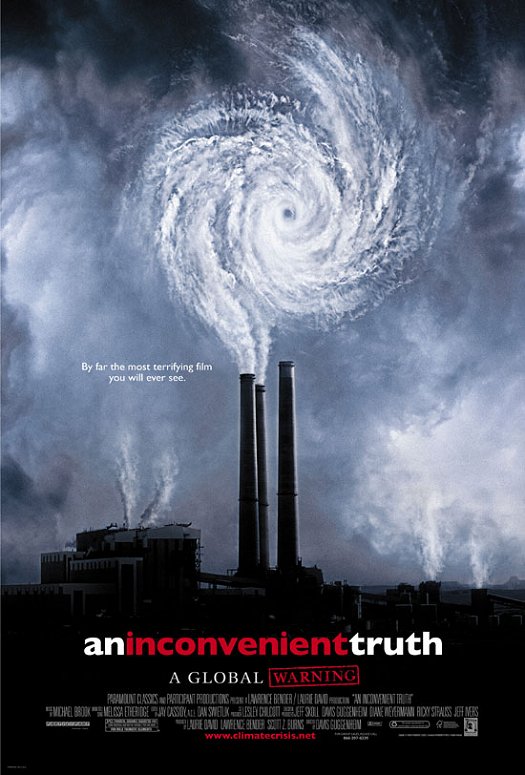
An Inconvenient Truth: Gore Gets It Right on Global Warming

By Stephen Leahy

BROOKLIN, Canada, Jun 20 (IPS)

Former U.S. Vice President Al Gore’s documentary on global warming, “An Inconvenient Truth”, is filling theatres across North America – and gets the science right, according to climate experts.

“I saw it last night and was impressed with the climate science presented in the film,” said David Archer, a climatologist at the University of Chicago.

“I left the theatre profoundly depressed because of the political insanity in this country that denies global warming is a concern,” Archer told IPS.

Gore’s personal passion about global warming can be traced to the early 1980s. After losing the election to George W. Bush in 2000, Gore dedicated himself to warning the public about the devastating impacts climate change will have on hundreds of millions of people.

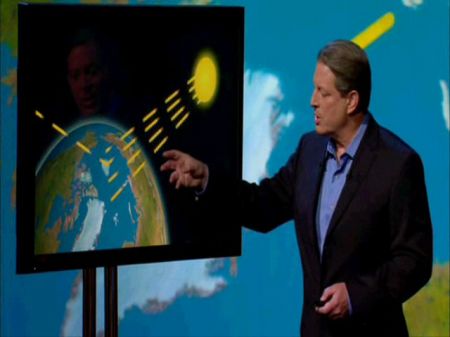
“An Inconvenient Truth” is a 98-minute documentary comprised mainly of highlights from Gore’s high-tech slide show explaining the science documenting global climate change.

Some truths are hard to hear, because if you really hear them – and understand that they are in fact true – then you have to change. And change can be quite inconvenient,” Gore says in the film.

Using an impressive set of graphics, he carefully illustrates changes underway such as receding glaciers, collapsing ice sheets, devastating floods and droughts. One memorable scene shows a graph of carbon-dioxide levels in the atmosphere going back 650,000 years that varies only a little until fifty years ago when it skyrockets. Gore mounts a motorised platform to lift him up high up the chart so he can place his finger on the current level of CO2. Continue reading

Sushi or Tourism: What Are Whales For?

Blue whale, courtesy IFAW

By Stephen Leahy

[Update Jan 15 2008. Japanese whalers are on the hunt right now with activists in hot pursuit just like last year. Little has changed from the situation documented in this 2006 story. SL]

TORONTO, Dec 28 (Tierramérica) – Japan’s controversial whaling fleet has arrived in the Southern Ocean, around Antarctica, and anti-whaling activists are promising to ram and sink any vessels attempting to kill whales.

“What the Japanese whalers are doing is illegal under the United Nations World Charter for Nature,” said Paul Watson founder of the Sea Shepherd Conservation Society.

“It’s also murder in my personal opinion,” Watson told Tierramérica from Melbourne, Australia, where his ship, the Farley Mowat, was docked. Continue reading