Thought Bubbles: Who Will Stand Up For Our Future on 5th of May?

Here’s a thoughtful article written by my son who is working on a farm in Tasmania. Normally he is a historical tour guide in Europe. He’s not part of any organization but just decided to take action for sake of his generation’s future.  It is amazing what he and his friends are up to. — Stephen 

By Derek Leahy

FRANKLIN, TASMANIA

I sat down in a café in Franklin, Tasmania the other day trying to sort out all that has transpired these past few weeks. You see, May 5thcould very well become a massive day of action. A lot of people from all over the world want to make their voices heard the week of May 5thInternational Stop the Tar Sands Day’s circle of friends just got bigger.

Anyway, I sat down in an practically empty café (Franklin is a pretty small town), opened up my journal to a blank page and took out a pencil. With the pencil I drew four separate thought bubbles on the page for four different campaigns or movements or whatever you want to call them.

The first was for 350.org’s Climate Impacts Day, which will take place the exact same day as ISTSDay; May 5th. The second thought bubble was for the Occupy Movement because members of Occupy in Canada and the UK have stepped up recently to help us out.

The last two bubbles were for International Stop the Tar Sands Day and for Ecocide. I threw in Ecocide because of an email I had received earlier in the day (thank you Kirstie for the inspiration!).  We have not talked to these guys about working together on May 5th. Yet.
Continue reading

Inheriting the Whirlwind of Extreme Events

This article looks at the huge upswing in extreme events around the world. Imagine this: the worst-ever tornado season, the worst flooding, and worst heatwave  have hit the US this year. And they may yet experience one the worst hurricane seasons. “24 Hours of Reality” online broadcast documented this Sept 15 to help people clear their heads of the fossil fuel propaganda and open their eyes to the crisis we are facing.  — Stephen

There are four anti-climate change lobbyists in Washington for every member of Congress.”

By Stephen Leahy

UXBRIDGE, Canada, Sep 15, 2011 (IPS)

The dramatic increase in extreme weather that has affected hundreds of millions across the planet is one of the clearest signs that burning billions of tonnes fossil fuels has seriously and permanently disrupted the global climate, experts say.

That is the reality former U.S. vice president Al Gore is focusing on Thursday through an unprecedented live online event called “24 Hours of Reality” broadcast from 24 time zones and reaching millions of viewers in multiple languages.

“In 30 years of weather forecasting I have never seen extreme weather events like those in the last two years globally,” said Jeff Masters, co-founder and Director of Meteorology for Weather Underground, the web’s first commercial weather service.

“I never thought we could have the greatest outbreak of tornados, the worst-ever flooding, record heatwaves and droughts all in one year,” Masters told IPS at a press conference last week in reference to the multi-billion-dollar extreme weather the U.S. has endured this year.

“The hurricane season is only half over and is on pace to be a record year as well,” he said.

Masters and other climate experts say is the “new normal” for the coming decades is the reason why. Burning of oil, gas, coal puts billions of tonnes of carbon dioxide into the atmosphere, where it traps more of the sun’s heat in what is known as the greenhouse effect.

This independent environmental journalism depends on public support. Click here learn more.

That additional heat warms the oceans and air and allows more moisture to be retained in the atmosphere, scientists have long since proven. The enormous amounts of additional heat and moisture now trapped in the atmosphere are the potent fuel for extreme events.

“More than 1,400 high temperature records were broken in July in the eastern U.S.,” said Jerry Meehl, a senior scientist at the National Center for Atmospheric Research. Continue reading

Talking green is cheap

Postponing emissions cuts carries steep price-tag.

Dateline: Tuesday, June 28, 2011

by Stephen Leahy for InterPress Service

BONN, Jun 20, 2011 (IPS) — If we’re lucky, by the time a tough but fair international treaty to meet the climate change challenge is finalised, it will be largely unnecessary. The snail’s pace of negotiations certainly gives countries plenty of time to understand the financial, social and environmental advantages of kicking their dangerous addiction to fossil fuels.

That may be a cynical optimist’s hope, but the European Union is already moving in that direction.


No developed country is close to the 40-percent cut that the science says is needed by 2020 to stay below a two degrees C increase.

via Straight Goods – Talking green is cheap.

April Heat Wave and Drought Breaks European Records

From the coldest December ever recorded to the warmest, driest April  Britain is just one of the countries being whipsawed by extreme weather. Normally wet Scotland is experiencing rare wildfires outbreaks this week. Europe’s wheat crop is at high risk due to very hot and dry temps.

My recent science articles explaining why weather extremes are becoming more common:

Why Our Weather is Weird ‘n Wild and Why It Is Getting Worse

The Yin and Yang of Climate Extremes We Will See More of

Will Year of Climate Extremes End Without Progress on Tackling Climate Change?

Why Our Weather is Weird ‘n Wild and Why It Is Getting Worse

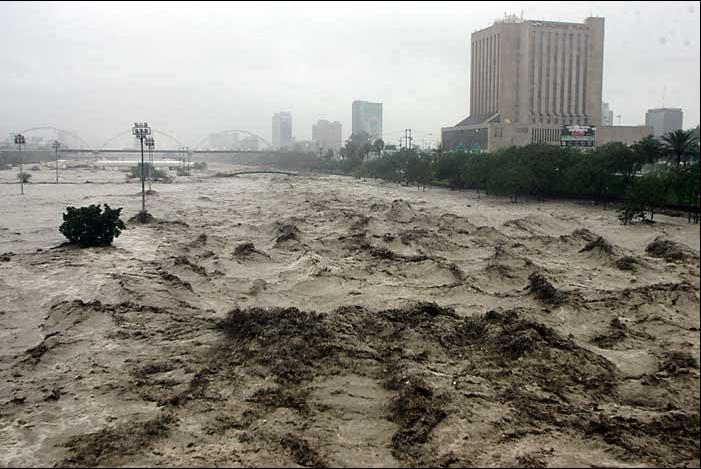
Burning Fossil Fuels Bringing Heavy Rains and Flooding

(Bonus: How we can kick the fossil fuel addiction)


By Stephen Leahy

UXBRIDGE, Canada, Feb 16, 2011 (IPS)

Human-induced heating of the planet has already made rainfall more intense, leading to more severe floods, researchers announced Wednesday.

Two new studies document significant impacts with just a fraction of the heating yet to come from the burning of fossil fuels. Fortunately, another new report shows the world can end its addiction to climate-wrecking fossil-fuel energy by 2050.

“Warmer air contains more moisture and leads to more extreme precipitation,” said Francis Zwiers of the University of Victoria.

Extreme precipitation and flooding over the entire northern hemisphere increased by seven percent between 1951 and 1999 as a result of anthropogenic global warming. That represents a “substantial change”, Zwiers told IPS, and more than twice the increase projected by climate modeling.

Zwiers and Xuebin Zhang of Environment Canada used observations from over 6,000 weather stations to measure the impact of climate warming on the intensity of extreme precipitation for the first time. The study was published Wednesday in the journal Nature.

This independent environmental journalism depends on public support. Click here learn more.

The planet is currently 0.8 degrees C hotter from the burning of fossil fuels. However, global temperatures had not yet started to increase in 1951, the first year of rainfall data Zwiers and Xuebin examined. By 1999, global temperatures had climbed by about 0.6 degrees C. The average temperature increase over that 50-year period is relatively small compared to the present but major impacts have been documented in terms of storm and flood damage even with this small increase in temperatures.

This suggests that the Earth’s climatic system may be more sensitive to small temperature increases than previously believed.

Continue reading

‘Snow Bomb’ Collapses 100s of Homes in S. Korea – Satellite Pix

More than 1 metre (three feet) last weekend – 50 cm more coming

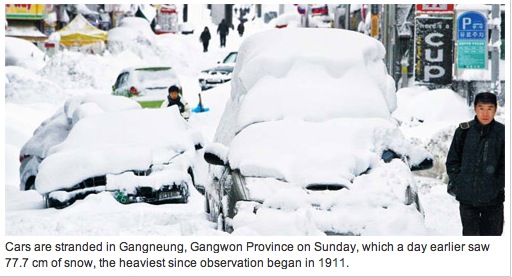
The heaviest snowfall in more than a century on South Korea’s east coast is causing widespread chaos. Hundreds of houses have collapsed under the weight of the snow. One newspaper described it as a snow bomb. The South Korean government has deployed 12,000 soldiers to rescue stranded residents.

Warmer than normal ocean temperatures are being blamed. This is similar to the warmer Arctic ocean temps in late Dec that contributed to the big snows and cold in North America, UK and parts of Europe.

[Update: Great sat pix from NASA showing the entire eastern half of Korea covered in snow. See also pix of Southern USA blanketed in more record-breaking snow last week]

NASA reports: “The heavy snowfall arrived on the heels of South Korea’s coolest January since the 1960s. The unusual cold might have been driven at least partly by the Arctic Oscillation (AO). A negative phase of the AO lowered temperatures in other parts of the Northern Hemisphere in January 2011.”

See also:

Arctic Defrost Dumping Snow on U.S. and Europe

The Great Groundhog’s Day Blizzard – Worst Winter Storm in 60 Years

Arctic Sea Ice Record – New Satellite Image

Reefs and Forests Burn as Climate Disruption Takes Hold NOW


A lot of coral reefs have died this year due to unprecedented ocean heating largely due to climate change. I broke that story last summer. Few coral reefs will survive the next 50 years most experts say without immediate action to reduce greenhouse gas emissions.


Forests are next in line according a new study in PNAS. Huge uncontrollable wildfires will dominate forest landscapes of the near future without dramatic reductions in the burning of fossil fuels the study found.

I would have done a full article explaining all this but simply can’t find a publication willing to pay me to do the work. That’s why I am trying community supported journalism where readers donate small amounts so these articles get done and made available for millions to read.

— Stephen (November 10 2010)

Post Climatic Stress Disorder – Climate Psychology on Radio Ecoshock

Vancouver, Canada’s Alex Smith has an excellent podcast program on the psychology of why we are not dealing with climate change. Perhaps it is a crisis in slow motion — too slow for us to get excited about some think. Let’s hope not.  – Stephen

From his Sept 29 show Alex begins:

“Friends did a month of rain that fall last night? Did rivers flood in the Fall? Did you know 214 all-time heat records were set in the U.S. September 24th? It was 30 degrees in Toronto, feeling like 37 with the humidity – the heat of the human body. And just lately, Los Angeles hit an all-time high of 113 degrees – in late September!

Worried about your kids? You might have Post Climatic Stress Disorder. PCSD is a serious condition. But don’t worry, professional help is on the way….

Post Climatic Stress Disorder on Radio Ecoshock

‘Legacy of Katrina’ report details impact of stalled recovery on mental health status of children

FEMA trailer and Katrina damaged house in St. ...
Image via Wikipedia

60 percent of children — as many as 20,000 — displaced by Hurricane Katrina 5 years ago either have serious emotional disorders, behavioral issues or are experiencing significant housing instability according to new report.

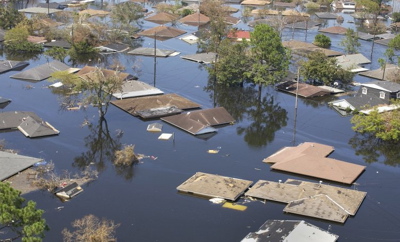
Five years ago Hurricane Katrina and the flooding of New Orleans caused the evacuation of 1.5 million Gulf Coast residents. After a year, 500,000 people remained displaced, many residing in highly transitional shelters, including the notorious FEMA trailer parks. Now at the five-year mark, substantial consequences from this prolonged displacement have resulted in widespread mental health issues in children living in the region, according to a new study by the National Center for Disaster Preparedness (NCDP).

And this is in the world’s richest country. How will Pakistan recover from its floods ? It may take a whole generation.

Economic experts consistently underestimate the real and long term impacts of weather disasters that are worsening and become more frequent due to climate change. We have yet to really comprehend those impacts and dangerously underestimate the real costs of climatic change. — Stephen

“We Are a Harbinger of What Is to Come” – Global Warming is Already Affecting Millions – Video

Honduras Hit Hardest by Extreme Weather From Global Warming – experts s

Honduras Hit Hardest by Extreme Weather From Global Warming – experts say

[ Climate change has already resulted in trillions of dollars of losses due to extreme weather events over the past two decades. While no single hurricane, flood or drought can be directly attributed to global warming, one of the most solid findings of climate science is that extreme weather events will increase dramatically as a result of more heat being trapped in our atmosphere.

Countries like Honduras, Haiti and others are already struggling to recover from one extreme event after another in recent years. Without substantial global reductions in emissions the number of extreme weather events will continue to rise turning these countries into permanent disaster zones. This story only documents the easy-to-measure impacts not  no less devestating impacts like crop failures from droughts etc. — Steve]

By Stephen Leahy*

COPENHAGEN (IPS/TerraViva)

Honduras has been hit harder by extreme weather events than almost any other country over the last 18 years, says a study of weather-related losses, released here as the climate summit continues this week.

Around the world, storms, floods and heat waves have resulted in 1.7 trillion dollars in losses and 600,000 deaths, the Global Climate Risk Index 2010(pdf) reported.

On the same day, the World Meteorological Organisation announced in Copenhagen that the decade 2000-2009 is very likely to be the warmest since records began in 1850.

India, northern China and Australia saw extreme heat waves this year. Warm weather was also more frequent and intense in southern South America in 2009, according to the WMO report.

“Our analyses show that, in particular, poor countries are severely affected” by extreme weather events, said Sven Harmeling, author of the Index at Germanwatch, a non-governmental organisation based in Germany that has promoted global equity and the preservation of livelihoods since 1991. Continue reading