Greenland Ice Collapse Producing Earthquakes

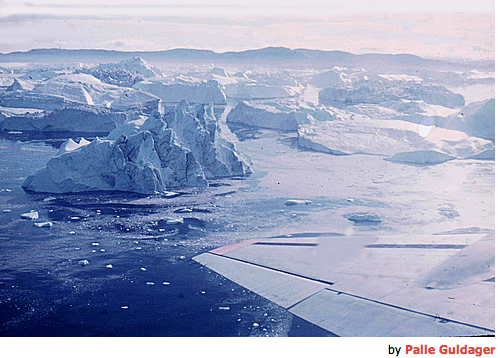
isfjorden-ved-jakobshavn-ilulissat.pngChilling from-the-scene update on my Greenland on Verge of Meltdown article in August: the Greenland ice cap is melting so quickly that it is triggering earthquakes as pieces of ice several cubic kilometres in size break off says Guardian reporter in Greenland.

UPDATE:
Here is a satellite view of Lulissat, Vestgronland Greenland just pan and zoom to the upper glacier to see the meltwater on the ice (not sure when this satellite pic was taken)
View Larger Map

Related stories:

The Earth is Going Dark Scientists Say
US Generals Say Warming Poses Major Security Threat

Climate Panel Report Called Too Conservative

Food Additives Make Kids Hyperactive – Organic Better?

My articles documenting studies on benefits of organic foods/agriculture i.e. Overweight? Hungry? Blame “Hollow Food” and Organic Agriculture Reduces Climate Change, Poverty and Hunger generate strong opinions for and against.

Here’s a Time magazine piece about a carefully designed study released Thursday in The Lancet, a leading British medical journal. A variety of common food dyes and the preservative sodium benzoate — an ingredient in many soft drinks, fruit juices, salad dressings and other foods — causes some children to become more hyperactive than usual it found.

First Ever: Two Hurricane Landfalls on Same Day – Pix

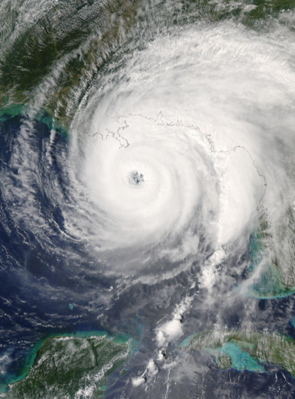
Yesterday was the first time Atlantic and Pacific hurricanes have made landfall on the same day. Here is an super picture of both Felix and Henriette by

NASA (high resolution pix here):

picture-5.png

Can only hope and pray that damage from these massive storms is minimal.

Check Reuters AlertNet for various emergency assistance agencies that are sending aid to these areas and for information updates.

To learn more about modern hurricanes and the potential link to climate change check out Steve’s Hurricane Handbook 2007. This is a compendium of the most interesting quotes and facts about hurricanes from scientists and other experts since 2004. You can download this collection free of charge but nothing is truly free. Donations appreciated

Future Belongs to the Shrub

picture-3.png 21st Century May Belong to the Shrub
By Stephen Leahy

Sep 1 (IPS) – As atmospheric carbon dioxide levels continue to climb shrubs and other woody plants will likely dominate grasslands, altering pastoral lifestyles around the world, a U.S. study has found.

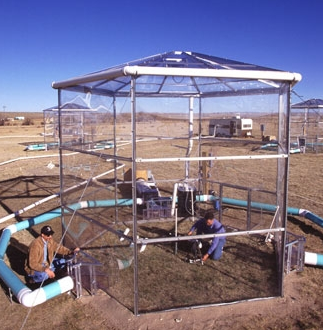
In the first experiment of its kind done on native grassland, U.S. scientists artificially doubled carbon dioxide (CO2) levels over enclosed sections of prairie in Colorado, a state in the western United States, for five years. To their surprise, one shrub species, Artemisia frigida — commonly known as fringed sage — thrived under those conditions. In fact, it grew 40 times faster than normal, dominating other plant species.

“This kind of response to higher CO2 levels is almost unprecedented,” said Jack Morgan, a plant physiologist at the U.S. Department of Agriculture, and lead author of the study, published Aug. 28 in the ‘Proceedings of the National Academy of Sciences‘ (PNAS), a science journal.

“Fringed sage is a minor species on the landscape normally. We were not expecting to see this,” Morgan told IPS.

Continue reading

Hurricane Felix Category Five — Pix

picture-4.pngHurricane Felix, the second Cat 5 storm in two weeks is set to hit Central America Monday. Here’s a satellite image from NOAA:

Tues AM Update: Felix hits Nicaragua as Cat 5 — first time two Cat 5 storms have made landfall in one season.

To learn more about modern hurricanes and the potential link to climate change check out

Steve’s Hurricane Handbook 2007

This is a short ebook  contains a collection of the most interesting quotes and facts about hurricanes from scientists and other experts.


Dirt: The Silent Global Crisis

Dirt Isn’t So Cheap After All


By Stephen Leahy

Aug 30 (IPS) – Soil erosion is the “silent global crisis” that is undermining food production and water availability, as well as being responsible for 30 percent of the greenhouse gases driving climate change.

“We are overlooking soil as the foundation of all life on Earth,” said Andres Arnalds, assistant director of the Icelandic Soil Conservation Service.

“Soil and vegetation is being lost at an alarming rate around the globe, which in turn has devastating effects on food production and accelerates climate change,” Arnalds told IPS from Selfoss, Iceland, host city of the International Forum on Soils, Society and Climate Change which starts Friday.

Along with many other international partner institutions, Iceland is marking the centenary of its Soil Conservation Service by convening this forum of experts.

Every year, some 100,000 square kilometres of land loses its vegetation and becomes degraded or turns into desert.

“Land degradation and desertification may be regarded as the silent crisis of the world, a genuine threat to the future of humankind,” Arnalds said.

Food production has kept pace with population growth by increasing 50 percent between 1980 and 2000. But it is an open question whether there will be enough food in 2050 with an estimated three billion more mouths to feed.

That means more food has to be produced within the next 50 years than during the last 10,000 years combined he noted.

“Global food production per hectare is already declining,” said Zafar Adeel, director of the United Nations University’s Canadian-based International Network on Water, Environment and Health.

There are a number of reasons for this decline, including the fact that soil degradation is producing growing shortages of water. Soil and vegetation act as a sponge that holds and gradually releases water, Adeel explained.

The newest challenge to food production and conserving land and water resources is the boom in vegetable-based biofuels, says Andrew Campbell, Australia’s first National Landcare Facilitator.

“Soils are under greater pressure than ever before,” Campbell said in an interview. “Governments around the world are subsidising crops to produce biofuels.”

For complete article see Dirt Isn’t So Cheap After All.

Satélites revelan caída de tala amazónica en Perú

Para los lectores españoles:

Satélites revelan caída de tala amazónica en PerúRecently-contacted Murunahua man, River Yurua, Peru. He was shot in the eye by loggers during first contact. © David Hill / Survival
Por Stephen Leahy

La deforestación peruana, intensa en las áreas cercanas a carreteras y explotaciones minerales, ha tenido escaso impacto en las selvas protegidas, afirman investigadores.

TORONTO, 13 ago (Tierramérica).- Las políticas de conservación de selvas redujeron el ritmo de la deforestación en la Amazonia peruana, afirma un nuevo estudio basado en detección satelital de alta precisión.

Aunque los bosques amazónicos de Brasil son los que concitan la mayor parte de la atención internacional, los 661 mil kilómetros cuadrados de selvas peruanas son reconocidos como un ecosistema único.

Pero los impactos de la actividad humana en toda la región han sido mal comprendidos hasta un estudio publicado el viernes 10 en la revista científica Science.

“Las reservas forestales y las áreas de conservación de Perú parecen estar funcionando bien”, dijo Greg Asner, director del estadounidense Observatorio Aéreo de la Carnegie Institution of Washington, con sede en California.

Continue reading

Steve’s Hurricane Handbook 2007

hurri-handbk.png One year before Katrina devastated New Orleans and the Gulf Coast, scientists feared global warming was going to make hurricanes more powerful.

Five Little-Known Facts:

  1. “These are not natural disasters, they are environmental disasters.”
  2. NOAA study found that Katrina was only a Category 1 or perhaps 2 on landfall
  3. Storms in the NorthWest Pacific Ocean are 75 percent more powerful than they were 30 years ago
  4. Climate change has the potential to raise oceans temperatures high enough create future hypercanes — 600 kilometre per hour superstorms
  5. “The U.S. has a very big societal problem when it comes to coping with hurricanes” (ok, maybe you knew that)

This is a sampling of the little known information about hurricanes from respected scientists collected in the modestly titled “Steve’s Hurricane Handbook 2007 – Lessons Learned 2004-2006? “ (1.2 mb pdf). It’s a compendium of the most interesting quotes and facts about hurricanes from hurricane experts since 2004. Continue reading

Hog Waste and Rise in Antibiotic Resistant Bacteria

Animals living in large numbers on factory farms are given large amounts of antibiotics to prevent spread of disease. This has been implicated in rise of antibiotic resistant bacteria that render common antibiotics ineffective when used in humans. I’ve written about this a number of times but not in recent years. It’s an important issue that has not gone away.

In a new study, researchers at the University of Illinois report that some genes found in hog waste lagoons are transferred — ‘like batons’ — from one bacterial species to another. And these bacteria with antibiotic genes were found in groundwater and wells.

See also: Factory Farms, Bird Flu and Global Warming

Flying Blind Into a Monster Hurricane Season

ivan.jpgFlying Blind Into Monster Storm Season

By Stephen Leahy

“…New Orleans is at the same risk as it was before Katrina.”
— Stephen Leatherman, director of the International Hurricane Research Center

Aug 24 (IPS) – Category Five Hurricane Dean is just the first of several monster storms coming this hurricane season, meteorologists predict.

The United States and other countries remain highly vulnerable, even as budget cuts to the National Aeronautics and Space Administration (NASA) imperil hurricane prediction and research.

“The U.S. will experience landfalls of between two and four major hurricanes this year,” said Gerry Bell, lead seasonal hurricane forecaster at the National Oceanic and Atmospheric Administration (NOAA) Climate Prediction Centre in Maryland.

“In addition to Dean, the Caribbean region can expect two or three more major storms,” Bell told IPS. Continue reading