Honduras Hit Hardest by Extreme Weather From Global Warming – experts say

[ Climate change has already resulted in trillions of dollars of losses due to extreme weather events over the past two decades. While no single hurricane, flood or drought can be directly attributed to global warming, one of the most solid findings of climate science is that extreme weather events will increase dramatically as a result of more heat being trapped in our atmosphere.

Countries like Honduras, Haiti and others are already struggling to recover from one extreme event after another in recent years. Without substantial global reductions in emissions the number of extreme weather events will continue to rise turning these countries into permanent disaster zones. This story only documents the easy-to-measure impacts not  no less devestating impacts like crop failures from droughts etc. — Steve]

By Stephen Leahy*

COPENHAGEN (IPS/TerraViva)

Honduras has been hit harder by extreme weather events than almost any other country over the last 18 years, says a study of weather-related losses, released here as the climate summit continues this week.

Around the world, storms, floods and heat waves have resulted in 1.7 trillion dollars in losses and 600,000 deaths, the Global Climate Risk Index 2010(pdf) reported.

On the same day, the World Meteorological Organisation announced in Copenhagen that the decade 2000-2009 is very likely to be the warmest since records began in 1850.

India, northern China and Australia saw extreme heat waves this year. Warm weather was also more frequent and intense in southern South America in 2009, according to the WMO report.

“Our analyses show that, in particular, poor countries are severely affected” by extreme weather events, said Sven Harmeling, author of the Index at Germanwatch, a non-governmental organisation based in Germany that has promoted global equity and the preservation of livelihoods since 1991. Continue reading

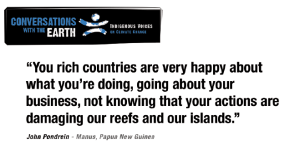
“We Are a Harbinger of What Is to Come” – Global Warming is Already Affecting Millions – Video

[Those living closest to the land – small farmers, pastoralists, indigenous peoples — are already suffering from impacts of climate change. They have made a series of short videos to show people like you and me who are insulated from these impacts how our emissions of carbon are changing the world.

This is both a plea for help and a warning of what’s coming for all of us.

I found it remarkable those I spoke with are not angry. They simply want us to understand what is happening to them because if we understand, if we know what we are doing to them, then we will act. I hope they are right. — Steve]

By Stephen Leahy

COPENHAGEN, Dec 3 (IPS)

A small group of indigenous people have travelled here to the historic Copenhagen climate talks to show negotiators dramatic documentary videos they made about the immediate impacts of climate change on their homelands and way of life.

“We want to show policymakers what the three-year long drought in my country is doing to our communities,” said Stanley Selian Konini, a Maasai from Oltepesi in Kajiado district, Kenya.

“Our animals are all dead. The zebras and the monkeys are dying even in the forests,” Konini told IPS. “Leaders need to change policies to help us.”

The Kenyan video documents the impact of an intense drought hitting the Maasai community. During these extremely hard times, pastoralists have been losing their cattle – their main and sometimes only livelihood.

“It’s affecting our culture. There can be no dowry payments because we have no animals,” said Konini, one of the young Maasai who made the video.

“The elders say they have never seen anything like this drought. It is something beyond their understanding and experience of the Maasai people,” he said. Continue reading

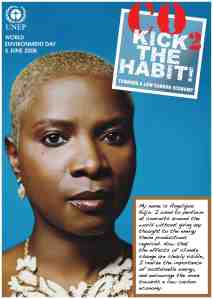
Green Energy for All by 2030?

WED kidjo smlBy Stephen Leahy

VIENNA, Jun 26 (IPS)

While industrialised countries struggle to switch from climate-damaging, carbon-based energy to greener energy sources, much of the world is desperately energy poor, with 1.6 billion people having no access to electricity and 2.4 billion relying on wood and dung for heat and cooking.

“Over 1.6 million deaths a year are attributed to indoor use of biomass for cooking and heating,” Kandeh Yumkella, director-general of the United Nations Industrial Development Organisation (UNIDO), told more than 600 participants from 80 countries at the Vienna Energy Conference this week in Austria’s capital city.

The conference concluded with a recommendation to create a 20-year plan to end energy poverty by 2030.

Women and children in many parts of the world have little choice but to spend hours each day in search of firewood, trapped in a vicious cycle of deforestation that increases erosion and reduces the fertility of their land. “Energy interacts with all of the development challenges we face,” said Yumkella.

The developing world – and especially those without access to electricity – must be part of the new green energy revolution, he said. “We can’t leave people out. We must have climate justice and energy justice,” he told IPS in an interview.

For complete story see  Green Energy for All by 2030?

China, Korea, Saudi Arabia Lead Global Land Rush To Buy Farmland In Other Countries

By Stephen Leahy*

conversion of US grasslandANCHORAGE, Alaska, USA, May 5 (Tierramérica)

More than 20 million hectares of farmland in Africa and Latin America are now in the hands of foreign governments and companies, a sign of a global “land grab” that got a boost from last year’s food crisis.

Rich countries that are short on land or water at home are looking to secure food-producing lands elsewhere as a way to ensure food security for their populations, said Joachim von Braun, director of the International Food Policy Research Institute (IFPRI).

“There is a major lack of transparency in these land deals,” von Braun said in a telephone press conference from Washington.

The IFPRI study, “‘Land Grabbing’ by Foreign Investors in Developing Countries,” by von Braun and Ruth Meinzen-Dick, which was presented last week, estimates that 15 to 20 million hectares have been acquired or are in the process of being sold.

Von Braun pointed out that this is equivalent to about 25 percent of all the farmland in Europe.

Because hard data is difficult to come by – the study was based primarily on information from press reports – IFPRI conservatively estimates that the deals represent 20 to 30 billion dollars being invested by China, South Korea, India and the Gulf States, mainly in Africa.

“About one-quarter of these investments are for biofuel plantations,” von Braun said. Continue reading

Ethanol and Biofuels: Almost Everything You Need to Know

“The U.S. has led the fight to stem global hunger, now we are creating hunger,” said Lester Brown, president of the Earth Policy Institute.

Series of the latest articles that provide almost everything you need to know about why ethanol and biofuels will not reduce global warming but simply drive up fuel and food costs.

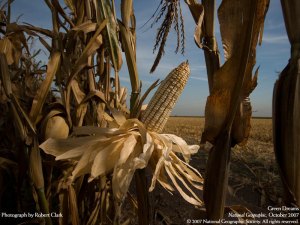
maize - mexicoEthanol Worse Than Gasoline

Only Green Part of Most Biofuels is the Wealth (Subsidies) They Generate

Ethanol: The Great Big Green Fraud

International Enviro Standards Needed for Biofuels

Six Experts On Why Ethanol is a Dumb Idea

Food & Fuel: Can Sorghum Be The New Magic Bullet Biofuel??

Biofuels: Another Good Reason to Hate American Policy

(Cellulosic) Greenest Ethanol Still Unproven

Global Warming Puts Food Supplies At Risk, New Green Revolution Needed

cattle-oz-rslBy Stephen Leahy

UXBRIDGE, Canada, Apr 2 (IPS) – Don’t forget about agriculture in the upcoming global negotiations to combat climate change, experts warn. Not only is farming most at risk in an increasingly variable and tempestuous climate, it is also a major emitter of greenhouse gases.

But with the right policies in place, agriculture could both continue to feed the world and play a crucial role in solving the climate problem.

“Agriculture has been missing in the run-up talks to Copenhagen,” says Mark Rosegrant of the International Food Policy Research Institute (IFPRI).

The nations of the world will meet in Copenhagen this December to hammer out a new climate treaty to reduce emissions of greenhouse gases (GHGs) and establish a fund to help poorer countries adapt. The complex process began in 2007 at the Bali talks, continued in Poznan, Poland in 2008 and is ongoing this week in Bonn.

Agriculture accounts for about 15 percent of human emissions of GHGs, IFPRI says, although the Intergovernmental Panel on Climate Change puts it higher at 25 percent. Much of those emissions come from developed countries that rely heavily on fossil fuels and fertilisers and raise far more methane-emitting livestock.

With climate change the world is facing reduced yields of up to 20 percent in maize and rice by the year 2050, Rosegrant told IPS. Much of that yield decline will be in the developing world, mainly because sub-tropical and tropical regions are expected to be hit hardest by significant changes in water availability and warmer temperatures.

Climate change could mean ever-rising food prices and therefore significant investments are needed in agricultural research to help countries cope with the coming changes, he says: “We’re trying to work out what the costs for adaptation in agriculture might be.” Continue reading

Electronic Gadgets Fuel Congo “Rape Mines”

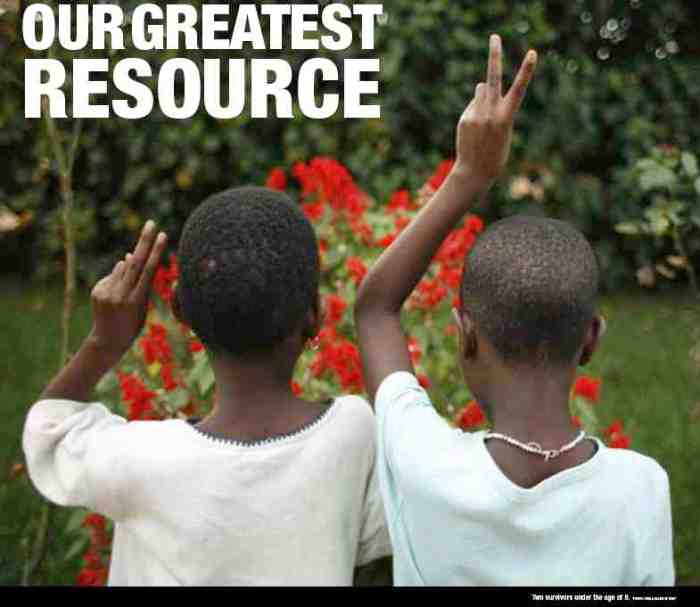
congo-survivors-age-9

[Update: Mar 4 2010. The United States senate moved to stem the flow of money from mineral mines fuelling the brutal conflict in the Democratic Republic of Congo (DRC), the watchdog group Global Witness (GW) is calling on Europe to follow suit. http://ipsnews.net/news.asp?idnews=50543

See also this shocking report in the journal PLoS Medicine  (22 Dec 2009) http://tiny.cc/60fjz ]

What can you do?

1. Lobby your government to be more involved in the DRC and stopping this. Encourage them to help train of local police and army and prosecute all those involved

2. Help out local and international organizations that are helping the women and children of the Congo

3. Don’t buy any electronic devices until manufacturers can guarantee those purchases are not funding this continuing atrocity

By Stephen Leahy

TORONTO, Canada, Dec 3 2008 (IPS)

International lust for the enormous mineral and resource riches of the Democratic Republic of the Congo (DRC) abetted by international indifference has turned much of country into a colossal “rape mine” where more than 300,000 women and girls have been brutalised, say activists.

Much of Congo’s misery due to “blood coltan” that powers our electronics

“Rape is being used as a deliberate tool to control people and territory,” said Eve Ensler, a celebrated U.S. playwright and founder of V-Day, a global movement in 120 countries to end violence against women and girls.

“The rapes are systematic, horrific and often involve bands of rebels infected with HIV/AIDS,” Ensler, who recently returned from the DRC, told IPS.

Ensler was in Toronto to help raise funds for the Panzi Hospital in the DRC’s South Kivu Province where many rape victims are brought. Once a maternity hospital, Panzi Hospital now provides free care and refuge to 3,500 victims of sexual violence each year. Denis Mukwege leads a team of six surgeons who routinely work 18-hour days to repair women’s extensive internal injuries.

Hundreds of women and children were raped yesterday, hundreds more today. This is an economic war that uses terror as its main weapon to ensure warlords and their bands control regions where international companies mine for valuable metals like tin, silver and coltan, or extract lumber and diamonds, Ensler said. Continue reading

New Diagnostic Tool Could Slash Malaria Deaths in Children

wed-child-tree-planting1By Stephen Leahy

UXBRIDGE, Canada, Dec 8 (IPS) – Malaria kills a child every 30 seconds, but a new diagnostic breakthrough may cut that devastating death toll, Canadian scientists announced Sunday.

The discovery of “biomarkers” — a telltale biological signature in children’s blood — that identify two of the most lethal forms of malaria was revealed at the annual meetings of the American Society of Tropical Medicine and Hygiene in New Orleans, Louisiana last week.

“A child with a fever may be treated in a clinic with anti-malarial drugs, but that won’t be enough to treat cerebral malaria,” said Conrad Liles, a tropical disease specialist affiliated with Toronto’s McLaughlin-Rotman Centre for Global Health (MRC). Continue reading

Cell Phone Service, But No Toilets or Drinking Water for the Poor

By Stephen Leahy

[Why are there mobile phone networks and not sanitation networks?]

UXBRIDGE, Canada, Oct 20 (IPS) – It is a fact of the 21st century that some of the poorest regions of the world have good mobile phone coverage but no toilets or safe drinking water.

Simply installing toilets where needed and ensuring safe water supplies would do more to end crippling poverty and improve world health than any other possible measure, according to an analysis released Monday by the United Nations University (UNU).

“Water problems, caused largely by an appalling absence of adequate toilets in many places, contribute tremendously to some of the world’s most punishing problems, foremost among them the inter-related afflictions of poor health and chronic poverty,” said Zafar Adeel, director of the U.N. University’s Canadian-based International Network on Water, Environment and Health. Continue reading

Peak Soil: The Silent Global Crisis

30% of farmland can no longer grow food

By Stephen Leahy

(First published in the Earth Island Journal Spring 2008)

A harsh winter wind blew last night, and this morning the thin snow cover has turned into a rich chocolate brown. The dirt covering the snow comes from cornfields near my home that were ploughed following the harvest, a common practice in southern Ontario and in the corn-growing regions of the US Midwest.

A handful of this dirty snow melts quickly, leaving a thin, fine-grained wet mess. It doesn’t look like much, but the mucky sludge in my hand is the prerequisite for life on the planet.

“We are overlooking soil as the foundation of all life on Earth,” says Andres Arnalds, assistant director of the Icelandic Soil Conservation Service. Arnalds is an eloquent spokesperson for the unheralded emergency of soil erosion, a problem that is reducing global food production and water availability, and is responsible for an estimated 30 percent of the greenhouse gases emissions.

“Land degradation and desertification may be regarded as the silent crisis of the world, a genuine threat to the future of humankind.”

This article  depends on public support. Click here learn more.

Continue reading