North American Trees Dying Twice as Fast

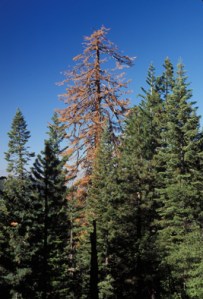
sugar-pine-dying-from-bark-beetle-attack-in-yosemite-national-parkimage-courtesy-of-jerry-franklinBy Stephen Leahy

UXBRIDGE, Canada, Jan 22 (IPS)

Our trees are dying. Throughout the western United States, cherished and protected forests are dying twice as fast as they did 20 years ago because of climate change, researchers reported Thursday in the journal Science.

Fire did not kill these trees, nor did some massive insect outbreak. The trees in this wide-ranging study were “undisturbed stands of old growth forests”, said Jerry Franklin, a professor of forest resources at the University of Washington and one of 11 co-authors of the report.

“The data in this study is from our most stable, resilient stands of trees,” Franklin told IPS.

What this means is that the United States’ best forests are getting thinner.

It is like a town where the birth rate is stable but the mortality rate for all ages doubled over the past two decades. “If that was happening in your hometown you’d become very concerned,” said Nate Stephenson, an ecologist with the U.S. Geological Survey (USGS).

This dramatic increase of in tree mortality applies to all kinds, sizes, ages and locations of trees. In the Pacific Northwest and southern British Columbia, the rate of tree death in older coniferous forests doubled in 17 years. In California, doubling mortality rates took a little longer at 25 years. For interior states it took 29 years. Continue reading

Science Articles on Acid Oceans and Coral Reefs

Series of my science articles documenting how global warming is transforming the Oceans and threatening Coral Reefs

No Safe Havens in Increasingly Acid Oceans

Oil, gas and coal are contaminating the world’s oceans from top to bottom, threatening the lives of more than 800 million people, a new study warns Tuesday.

“It took a year to analyse and synthesise all of the studies on the impacts of climate change on ocean species,” Camilo Mora, an ecologist at University of Hawai‘i in Honolulu and lead author, told IPS.

“We are seeing greater changes, happening faster, and the effects are more imminent than previously anticipated.” — Alex Rogers of the University of Oxford

Plankton Death To Come with Acid Oceans and Sunlight

Without major reductions in the use of fossil fuels, sunlight will kill an unknown number of ocean phytoplankton, the planet’s most important organism, a new study reports this week.

Not only are phytoplankton, also known as marine algae, a vital component in the ocean’s food chain, they generate at least half of the oxygen we breathe.

In the not so distant future, sunlight, the very source of life for phytoplankton, will likely begin to kill them because of the ocean’s increasing acidity, researchers from China and Germany have learned.

“There’s a synergistic effect between increased ocean acidity and natural light,” says Ulf Riebesell of the Helmholtz Centre for Ocean Research in Kiel, Germany.

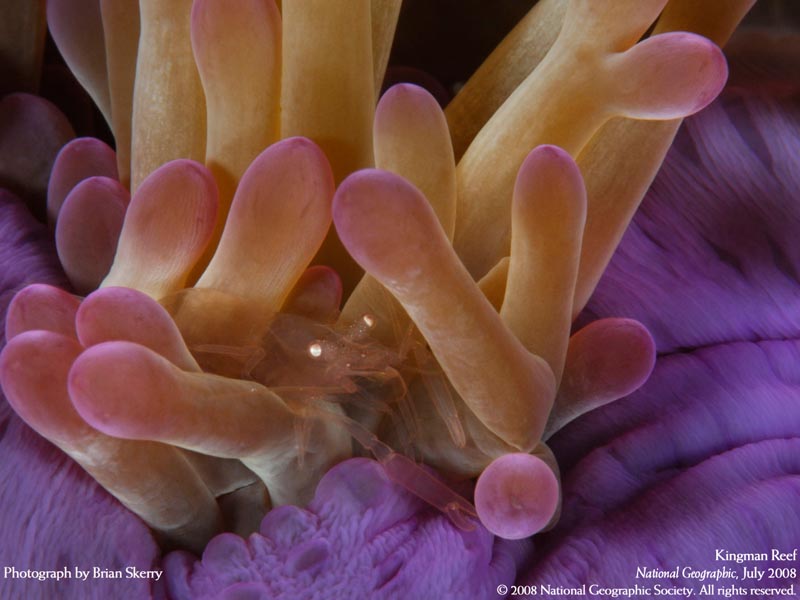
sea-anemone

Deep CO2 Cuts May Be Last Hope for Acid Oceans

(Report from the World Oceans Conference in Indonesia, May 2009)

Ocean acidification offers the clearest evidence of dangers of climate change.

And yet the indisputable fact that burning fossil fuels is slowly turning the oceans into an acid bath has been largely ignored by industrialised countries and their climate treaty negotiators, concluded delegates from 76 countries at the World Oceans Conference in Manado, Indonesia.

Oceans Passing Critical CO2 Threshold

An apparent rapid upswing in ocean acidity in recent years is wiping out coastal species like mussels, a new study has found.

“We’re seeing dramatic changes,” said Timothy Wootton of the Department of Ecology and Evolution at the University of Chicago, lead author of the study published Monday in the Proceedings of the National Academy of Sciences. The study shows increases in ocean acidity that are more than 10 times faster than any prediction.

Say Goodbye to Coral Reefs

GIJON, Spain, May 22 (IPS) – The one-two punch of climate change that is warming ocean temperatures and increasing acidification is making the oceans uninhabitable for corals and other marine species, researchers said at a scientific symposium in Spain.
noaa

Lose Corals and We Will be Fighting for Our Own Survival

“There would be no white sands on the beaches of Cancún without the Mesoamerican reef,” Professor Roberto Iglesias-Prieto, a marine ecophysiologist working at the Institute of Marine Sciences and Limnology of the National Autonomous University of Mexico, told Tierramérica.

Cutting CO2 Could Save Dying Corals

FORT LAUDERDALE, U.S., Jul 12 (IPS) – The rapid decline of coral reefs around the world offers a potent warning that entire ecosystems can collapse due to human activities, although there is hope for reefs if immediate action is taken, coral experts agreed at the conclusion of a five-day international meeting Friday.severely-degraded-reef-flat-at-kelso-reef-great-barrier-reef-australiaimage-c2a9-cathie-page-very-sml2

A Third of Corals Face Extinction

FORT LAUDERDALE, U.S., Jul 10 (IPS) – One third of reef-building corals already face extinction because of climate change, the first-ever global assessment has found.

Life Support Needed For Coral Reefs

FORT LAUDERDALE, U.S., Jul 8 (IPS) – Coral reefs need to be put on “life support” if they are to survive climate change, but their ultimate survival is dependant on major reductions in fossil fuel emissions, say experts.

“We’re Running the Risk of Unstoppable Climate Change” — Oceanographer

“I’m afraid it is going to take a major catastrophe in the developed world…” Chris Reid.

Oceans are the Heart and Blood of the Earth — But are They Healthy?

If continents are the Earth’s sturdy bones and the atmosphere its thin skin, then the oceans are its heart, circulatory system and blood. And despite the crucial role played by the oceans in the health of the planet, and to our own health and well-being, there is little monitoring of ocean health.

Acid Oceans to ‘Dissolve’ Coral Reefs in 30 years

Coral reefs face certain extinction in a few decades unless there are unprecedented reductions in carbon emissions, leading Australian scientists warn.

UN CONVENTION ON BIOLOGICAL DIVERSITY – EXCLUSIVE COVERAGE OF COP 10 FROM NAGOYA, JAPAN


I was the only North American journalist to go and cover this important conference in Nagoya. People donated enough to help with travel costs so I could write about 10 articles that reached more than 200 million people. Scroll down and look for the COP 10 logo to find those articles.

I’m an independent journalist based in Canada who supports his family and the public interest writing articles about important social & environmental issues. This is now only possible with your support: see How Community Supported Journalism Works. Contributions can be made safely via PayPal or check/cheque. Thank you/Merci. — Stephen

Support Independent Environmental Journalism

Climate Change: ‘Things Happen Much Faster in the Arctic’ – Summer Sea Ice Could be Gone Soon

polar-bear-leap-wwwfirstpeopleus-sml

By Stephen Leahy

We’re going to see huge changes in the Arctic ecosystem

QUEBEC CITY, Canada, Dec 13 2008 (IPS)

In just a few summers from now, the Arctic Ocean will lose its protective cover of ice for the first time in a million years, according to some experts attending the International Arctic Change conference here.

A summer ice-free Arctic wasn’t due for another 50 to 70 years under the worst-case climate change scenarios examined by the Intergovernmental Panel on Climate Change (IPCC).

“Things are happening much faster in the Arctic. I think it will be summer ice-free by 2015,” said David Barber, an Arctic climatologist at the University of Manitoba.

Such a “dramatic and serious loss of sea ice will affect everyone on the planet,” Barber told IPS. Continue reading

Carbon-Credit Gold: Who is going to get rich?

forest-fireBy Stephen Leahy

Paying the poor to conserve forests through a market scheme is the new star among initiatives in climate talks.

UXBRIDGE, Canada, Dec 15 (Tierramérica).- Climate experts meeting in Poznan, Poland, promised to create a new pot of carbon-credit gold for the rural poor as guardians of rural lands and forests.

But there are many who warn that the gold will flow only to corporate interests.

One of the most effective ways to combat climate change, caused by gases like carbon dioxide that trap heat in the atmosphere, is through biological sequestration of carbon in plants, trees and soils. That means reducing deforestation, increasing reforestation, and utilizing sustainable agriculture and grazing practices that conserve soil and water.

If these activities become part of a multi-billion-dollar global carbon finance regime, under a new 2009 climate treaty, there could be extraordinary benefits for the rural poor and the environment, according to Olav Kjørven, the former director of the United Nations Development Program’s (UNDP) Energy and Environment Group. Continue reading

Bush’s “Midnight Regs” Chains Obama to Anti-Environmental Course

wed-outdoor-disp-low-res_pa1By Stephen Leahy

UXBRIDGE, Canada, Dec 1 (IPS) – As the world community meets in Poland this week to find solutions to the climate crisis, the George W. Bush White House is chaining the United States’ tiller to prevent a change of course by President-elect Barack Obama by passing new anti-environmental rules and regulations at a furious pace.

Nearly a million hectares of public wildlands in Wyoming and Utah are being opened up to oil shale extraction, the Endangered Species Act is being gutted, as are regulations regarding factory farm operations, the Clean Air Act, and removing mountaintops to dig for coal and more, said a coalition of environmental groups.

“There are many last-minute changes and some are draconian,” said Josh Dorner of the Sierra Club, an environmental NGO. Continue reading

Arctic Is the Canary in the Coalmine

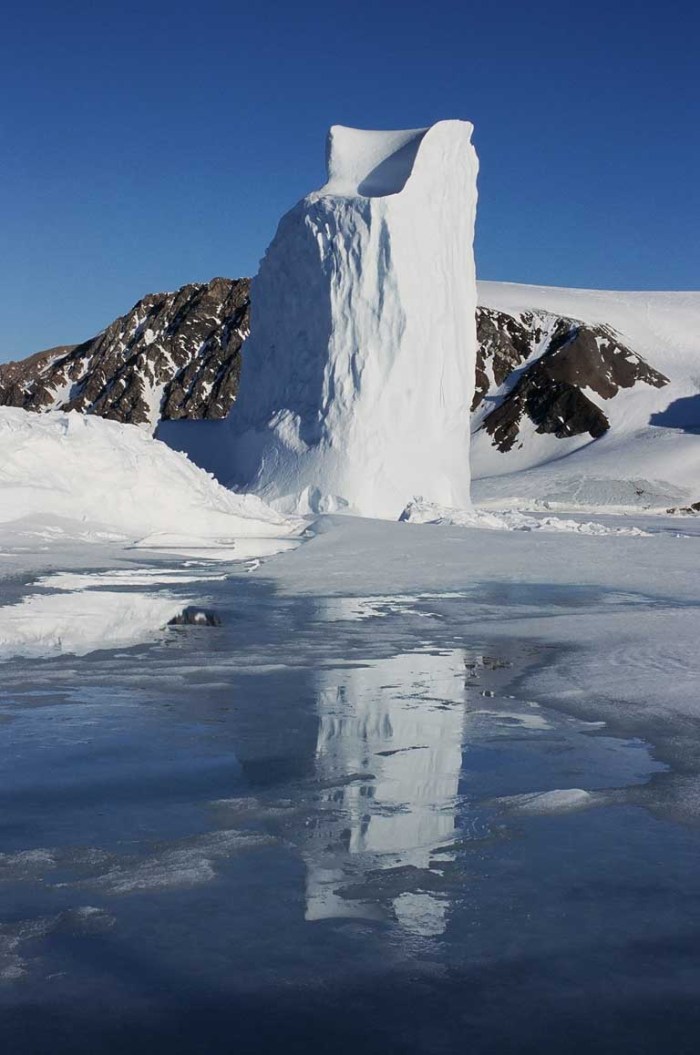
ceberg-in-glacier-strait-nunavut-canada-image-credit-sandy-briggsBy Stephen Leahy

QUEBEC CITY, Canada, Dec 12 (IPS) – Nearly 1,000 scientists and representatives of indigenous peoples from 16 countries have braved a major winter storm to share their findings and concerns about the rapidly warming Arctic region at the International Arctic Change conference in Quebec City.

The Arctic is “ground zero” for climate change, with temperatures rising far faster than anywhere else on the planet. Some predict an ice-free summer Arctic in less than five to 10 years — the first time the Arctic Ocean will be exposed to the sun in many hundreds of thousands of years.

The speed of change has scientists scrambling to understand the impacts on indigenous people, wildlife and ecology.

“The Arctic will be full of future surprises,” said David Carlson, an oceanographer and director of the International Polar Year programme office.

“Protected by its cover of sea ice, the Arctic Ocean is the last unblemished ocean on the planet,” Carlson told IPS.

Continue reading

Oceans Passing Critical CO2 Threshold

a-brittle-stare28094barely-as-big-as-a-nickele28094-crawls-across-the-arm-of-an-18-inch-wide-blue-sea-star-nat-geo

By Stephen Leahy

UXBRIDGE, Canada, Nov 24 (IPS)

An apparent rapid upswing in ocean acidity in recent years is wiping out coastal species like mussels, a new study has found.

“We’re seeing dramatic changes,” said Timothy Wootton of the Department of Ecology and Evolution at the University of Chicago, lead author of the study published Monday in the Proceedings of the National Academy of Sciences. The study shows increases in ocean acidity that are more than 10 times faster than any prediction.

“It appears that we’ve crossed a threshold where the ocean can no longer buffer the effects of CO2 in the atmosphere,” Wootton told IPS.

For millions of years, the levels of carbon dioxide in the atmosphere and the ocean were in balance, but the burning of fossil fuels and deforestation has put more CO2 into the atmosphere over the last 150 years. The oceans have absorbed one-third — about 130 billion tonnes — of those human emissions and have become 30 percent more acidic as the extra CO2 combines with carbonate ions in seawater, forming carbonic acid.

Each day, the oceans absorb 30 million tonnes of CO2, gradually and inevitably increasing their acidity. There is no controversy about this basic chemistry; however, there is disagreement about the rate at which the oceans are becoming acidic and the potential impact. Continue reading

Ten-Year Probe Reveals Oceans in Peril

sea-anemoneBy Stephen Leahy

UXBRIDGE, Canada, Nov 11 (IPS) – A thousand points of light are being shone into the dark ocean depths as scientists from 82 countries work to complete the decade-long global research effort called the Census of Marine Life.

“It’s been a remarkable time of exciting new discoveries and frightening revelations of how quickly the oceans are changing,” said Canadian deep-sea biologist Paul Snelgrove, a leader of a team integrating findings from all 17 census projects.

“We were startled to discover small crustaceans never seen by scientists before completely blanketing the seafloor at 500 metres in the Gulf of Mexico,” Snelgrove told IPS.

And during the eight years the census has run so far, scientists have documented that more than 90 percent of the oceans’ top predators — large sharks, tunas, swordfish, cod and others — are now gone and those remaining are in serious trouble. “We’re also seeing evidence of climate change with the shifting distribution of species,” he said. Continue reading

Haiti: “The Most Desperate Enviromental Crisis on the Planet”

Haiti hillside - Floresta Brad Lewis

By Stephen Leahy*

UXBRIDGE, Canada, Nov 13 2008 (Tierramérica)

The worst natural disaster Haiti has ever suffered requires far-reaching solutions in order to reduce this Caribbean country’s environmental fragility, say officials and humanitarian workers.

Four major storms pounded Haiti in August and September, leaving nearly 1,000 dead and a million people homeless. International relief efforts are keeping people alive and sheltered, but the already degraded landscape has been badly battered, washing away crops, soil and the few remaining trees in many areas.

I’m not sure if things could get worse here. Haiti must be the most desperate environmental crisis on the planet,” Joel Boutroue, resident humanitarian coordinator and head of the United Nations Development Programme (UNDP) in Port-au-Prince, told Tierramérica.

Boutroue was referring to the future of the poorest country in the Americas, where U.N. peace-keepers have been stationed since 2004. But he added that “the international response to the disaster is quite good.”

While pockets of severe malnutrition still exist, there is access to clean water and only about 3,000 families were without shelter as of the end of October, he said.

However, it is not possible to feed an entire country of 9.5 million people with international aid for long. Haiti cannot feed itself, and even growing 50 percent of its own food is years away, Boutroue fears. Continue reading