Protecting Canada’s Water from the US

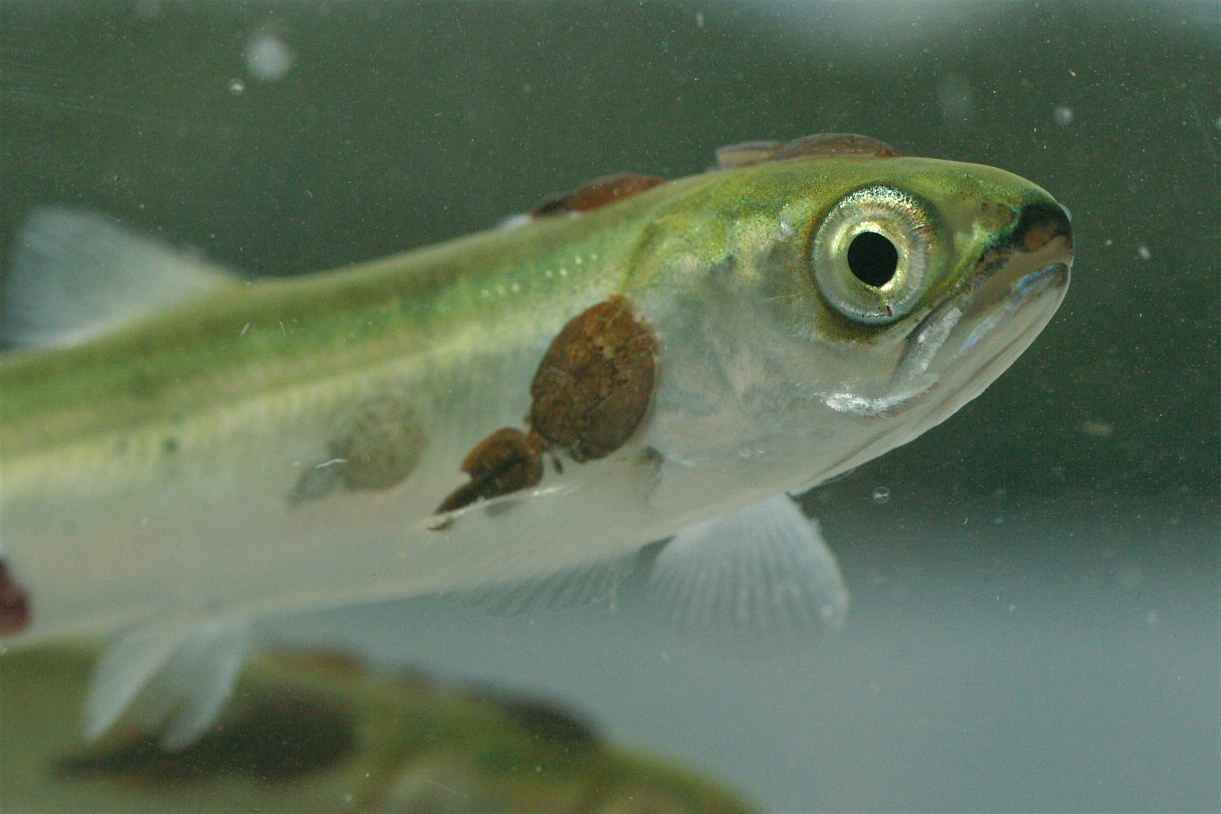
07102005-dry-mud-fish-manaquiri-amazonas-state-greenpeace.jpg

Under the North American Free Trade Agreement (NAFTA), Canada lost control over its energy resources. Now, with “NAFTA-plus”, Canada could also lose control over its freshwater resources, say experts in this Sept 2007 article CANADA: Losing Control of Water Through NAFTA and SPP

Now the Canadian Water Issues Council (CWIC) has written a model law to protect Canadian waters.

“There is a growing risk that North Americans may commit the ultimate ecological error by beginning to move large amounts of water over long distances, resulting in massive economic losses and ecosystem collapse in many donor regions,” says Ralph Pentland, CWIC’s Acting Chairman.

“The model legislation, drafted by the Council, addresses the need for a national approach to protecting this vital resource.”

See webcast of panel discussion on this and what it may take to turn this into real law.

Oil Sands Toxins Poison Food

syncrude-open-pit.jpg

Living downstream from Canada’s oil sands mega-project, the people in Fort Chipewyan, Alberta believe they are getting cancer at an alarming rate, and hired their own expert to find out if their food is toxic. Turns out they were right — the fish and water is loaded with “high levels of carcinogens and toxins” (New York Times).

Watch the CBC documentary: http://www.cbc.ca/sunday/2007/12/120907_4.html

For the complete story on the Oil Sands Project that supplies much of America’s oil see: Destroying Canada’s Boreal Forest for America’s Oil 

Fish Farms Pushing Wild Salmon to Extinction

courtesy Alexandra Morton

By Stephen Leahy

Dec 14 (IPS) – V
ast populations of pink salmon on Canada’s west coast will be extinct in four years due to infestations of parasites from open ocean salmon farms, scientists reported Friday in the prestigious journal Science.

Canadian officials seem likely to let the wild salmon go extinct, if past inaction is any indicator, Alexandra Morton, the study’s co-author and director of the Salmon Coast Field Station in Broughton, British Columbia, told IPS.

The Science study shows that infestations of sea lice have killed more than 80 percent of the annual pink salmon returns in British Columbia’s Broughton Archipelago, 300 kms north of the city of Vancouver, over the past four years. In another four years, there will be no more pinks if the infestations continue.

“If nothing changes, we are going to lose these fish,” said lead author Martin Krkosek, a fisheries ecologist from the University of Alberta. Continue reading

Petition to Stop Canada from Sabotaging Climate Talks

From Avaaz.org:

Canada is actually sabotaging the UN talks!

There’s still a few days left to save Canada’s reputation — and the climate — but we need a massive democratic roar to remind our Prime Minister what Canada is all about, and stop him from blocking the world at Bali. Click below to sign the petition and we’ll advertize the number of signatures we get in an ad campaign across Canada this week. Our goal is to get 25,000 people to sign in just 3 days before the ads run. Click below, then forward this email to all your friends and family right away:

http://www.avaaz.org/en/another_canadian_climate_crime/4.php

The vast majority of Canadians are hopping mad on this issue — we can win this. We just need to show Harper how serious we are that he change course. Sign up now and forward this email to everyone you know – we’ve got just 3 days to hit 25,000 signatures!

[“Avaaz.org is an independent, not-for-profit global campaigning organization that works to ensure that the views and values of the world’s people inform global decision-making]

Related stories:

Canada flounders on issue of climate change —CBC.ca

Greedy Canada Tries to Poison UN Climate Talks

Canada Tries to Wreck Crucial Climate Talks

Greedy Canada Tries to Poison UN Climate Talks

dry-mud-fish-sml-manaquiri-amazonas-state-greenpeace.jpg

By Stephen Leahy

Dec 10 (IPS) – The family has just finished up an expensive seven-course restaurant meal, and the late-arriving cousins can only snack on bread sticks. When the bill arrives, the truculent, rich uncles — Canada, Japan and the United States — insist that the cousins, although poor and still very hungry, ought to pay a full share.

And then Uncle Canada suggests that he pay less because he has a big appetite and can’t help himself.

With the fate of the planet in the balance, many critics say that is the current state of the negotiations ongoing in Bali at the international climate change talks. And that is despite an urgent appeal by more than 200 of the world’s leading climate scientists late last week.

“Drastic reductions are needed…we have no time to lose,” said Richard Somerville of the Scripps Institution of Oceanography at University of California at a press conference in Nusa Dua, on the island of Bali. Political leaders from virtually every nation will finalise the next steps to a new climate change treaty under the United Nations Framework Convention on Climate Change (UNFCCC) at the end of this week. Continue reading

Canada Tries to Wreck Crucial Climate Talks

picture-9.jpgCanada publicly declared a 2 degree C rise in the planet’s temperature “unacceptable” but it is putting all of its resources at the Bali climate change conference into wrecking the process said Hans Verolme, director of WWF’s Global Climate Change Programme.

“What they are doing here will will get us 4 degrees C” of global warming, said Verlome at a press conference today from Nusa Dua on the island of Bali, the site of the United Nations Framework Convention on Climate Change (UNFCCC) conference running until Dec. 14

Anything above two degrees scientists term “dangerous”. Indeed, even at 2 degrees the IPCC says we have just a 50-50 chance of avoiding dangerous climate change.

Canada and Japan seem to be playing the US card of doing nothing he said.

And yet on Monday Dec 3, Environment Minister John Baird made a speech in Canada’s House of Commons: “a rise of 2° in the Earth’s temperature as a result of human activity contributing to global warming, simply put, is unacceptable.”

“I don’t understand Canadian politics,” said Verolme.

Related stories:

Canada’s Shocking Environmental Decline

Destroying Canada’s Boreal Forest for America’s Oil

Kill Kyoto or Kyoto II Our Only Hope?

Climate Change Experts Warn World

Forests, the Great Green Hope?

By Stephen Leahy


Credit:Tomasz Kuran

Mixed forest near Radziejowice, Poland.

Dec 3 (IPS) – Expanding European forests absorbed 126 million tonnes of carbon dioxide from 1990 to 2005 — equivalent to 11 percent of European Union emissions from human activities — while a U.N. target to plant one billion trees mainly in Africa has been surpassed.

“Forests reduced carbon dioxide more than twice the amount of Europe’s renewable energy programmes,” said Pekka Kauppi, who led the University of Helsinki study, published in the British journal Energy Policy on Nov. 29.

Better conservation, migration to cities, and conversion of surplus farmland are the reasons behind the growing and expanding forests, which are mainly in Latvia, Lithuania, Sweden, Slovenia, Bulgaria and Finland Kauppi, told IPS. The study is based on forestry statistics provided by governments and that were not independently verified.

The resulting “surprisingly high carbon dioxide removal” may be the major factor in Europe achieving its ambitious target of 20 percent reductions in greenhouse targets by 2020, Kauppi said.

“On a global scale, there is hope for the future if we stop deforestation and expand forests,” he added. Continue reading

Canada’s Shocking Environmental Decline


fall-colours-lakeridge-06.jpg

By Stephen Leahy* – IPS/IFEJ

In the past 15 years, all of Canada’s environmental indicators have suffered, say experts who distribute the blame among local and national governments, businesses and the public.

TORONTO, Nov 5 2007 (Tierramérica).

In the 1980s, Canada was a bright green engine of change, pushing the global community forward on sustainable development and global warming. But now it is falling behind in almost every environmental aspect.

The lead author of the landmark 1987 Bruntland Report, “Our Common Future“, was Canadian Jim MacNeill. The very first international climate change meeting involving scientists and political leaders was held in Toronto in 1988.

Canadian Maurice Strong organized the first World Conference on the Environment in Stockholm in 1972, was the first executive director of the United Nations Environment Program (UNEP), and was secretary-general of the 1992 Earth Summit in Rio de Janeiro.

But after this flourish on the world stage, Canada sat back and did virtually nothing domestically. The country ranks 28th out of 30 high-income countries in terms of environmental sustainability, according to an independent Canadian study. The Organization for Economic Cooperation and Development ranked Canada 27th in terms of environmental performance. Continue reading

Three Names the World Should Know

picture-1.jpg

By Stephen Leahy

Nov 5 (IPS) – “I am staying in Afghanistan to prove that women are brave and strong,” says Afghan journalist Farida Nekzad.

Nekzad has been threatened with death even as she attended the funeral of Zakia Zaki, a female radio broadcaster murdered by gunmen as she slept with her eight-month-old son at her home near Kabul in June.

“I was given asylum by some countries but I am not going to hide,” declared Nekzad, the current editor in chief of the Pajhwok News Agency, the sole independent news agency in Afghanistan.

“If I leave, the next woman journalist will become a target,” she told IPS.

Nekzad was in Toronto last Thursday to receive one of this year’s three International Press Freedom Awards from the Canadian Journalists for Free Expression (CJFE). CJFE promotes and defends free expression and press freedom and grants thousands of dollars to aid persecuted journalists in Latin America, Africa, Asia and Eastern Europe.

Iraqi journalist Sahar Al-Haideri, shot and killed on Jun. 7 this year by four unidentified gunmen in Mosul, and Canadian journalist Ali Iman Sharmarke, who was killed by a remote-controlled landmine in Somalia Aug. 11, were the other award recipients. Continue reading

Venezuelan Smuggling Opens Door to Blood Diamond Trade

blooddiamond-movie-poster-sml.jpg“Crooks are taking Venezuelan diamonds out of the country and selling them to other crooks.

In November, the Venezuelan government will report to an intergovernmental entity about the controls used to regulate diamond mining.

By Stephen Leahy

Oct 22 (Tierramérica).- Venezuela will have to explain its policies on mining and exporting diamonds at the next annual session of the Kimberley Process, an intergovernmental initiative to halt the use of the diamond industry to finance conflicts and civil wars.

The Venezuelan government has recognized that it is not easy to monitor its vast border, but assures that it intends to comply with the Kimberley Process, of which it is one of the three South American members, along with Brazil and Guyana.

Venezuela is not involved in the smuggling of the so-called conflict diamonds, or “blood diamonds”, uncut stones that in the past two decades were mined and trafficked to finance civil wars and illegal armed groups in countries like Angola, Cote d’Ivoire, Democratic Republic of Congo and Sierra Leone. Continue reading