Earth Hour, Mar 28. The world’s first global election.

earhhour-sht

The WWF is using the annual Earth Hour as a way to get folks thinking about climate change and to send a message to policy makers that the people of the planet are deeply worried. Damn right we are — Stephen

From Earth Hour: Vote Earth – The world’s first global election:

THIS IS THE WORLD’S FIRST GLOBAL ELECTION, BETWEEN EARTH AND GLOBAL WARMING.

On March 28 you can VOTE EARTH by switching off your lights for one hour.

IN 2009, EARTH HOUR IS BEING TAKEN TO THE NEXT LEVEL, with the goal of 1 billion people switching off their lights as part of a global vote. Unlike any election in history, it is not about what country you’re from, but instead, what planet you’re from. VOTE EARTH is a global call to action for every individual, every business, and every community. A call to stand up and take control over the future of our planet.

Over 74 countries and territories have pledged their support to VOTE EARTH during Earth Hour 2009, and this number is growing everyday.

“Earth Hour is a way for the citizens of the world to send a clear message. They want action on climate change.”

— UN Secretary-General Ban.

“Earth Hour 2009 will be even bigger because the threats posed by unchecked climate change are escalating, along with people’s concern. We need every individual, government and business to play a part. Earth Hour provides a constructive platform for engaging these stakeholders and demonstrates the impact we can have when we act together. 
— Julia Marton-Lefèvre Director General, IUCN

The results of the election are being presented at the Global Climate Change Conference in Copenhagen 2009. We want one billion votes for Earth, to tell world leaders that we have to take action against global warming.

earthhour-long1

Interview With One of the Last Environmental Journalists Left Standing

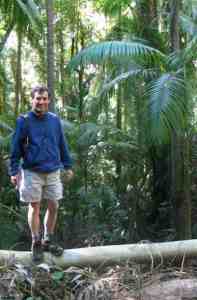
steve-on-log-in-oz-rslpixApparently as one of the few independent international environmental journalists I’m a rare beast worthy of public curiosity. In the past year I’ve been asked to do a number of talks at various conferences, colleges and universities in a number of countries and a growing number of media interviews.

Here’s my  15 min radio interview on the well-informed Radio EcoShock— talk about hard questions on big issues of our time. (@ 19:00 min)

Vancouver’s wonderful RADIO ECOSHOCK is the best environmental radio/podcast programs on the planet. One hour each week of new, innovative and intelligent information with a wry sense of humor by host Alex Smith. Check out his blog for even more.

Get links to my latest articles once a week.

This week’s EcoShock program: PROGRESS AND DENIAL

Climate change is not about politics or negotiations, but inevitable physics and science. Latest speeches by Bill McKibben and Van Jones. A look at twisted climate deniers John Coleman and Michael Savage. Interview with indy enviro journalist Stephan Leahy. Humour from Craig Mayhemradio-eco-header

Smart, Realistic Action on Climate Will Bring Long Term Prosperity

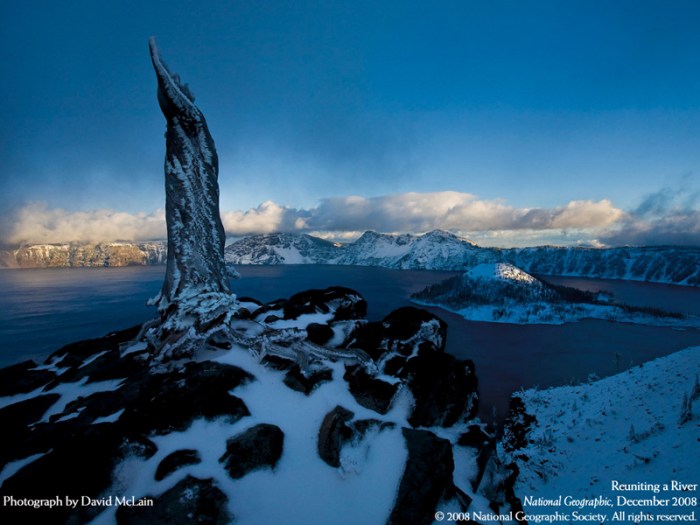
crater-lake-cascade-mtns-nat-geo

By Stephen Leahy

UXBRIDGE, Canada, Mar 16 (IPS) – The high-level scientific climate conference that concluded last week in Copenhagen warned that humanity is rapidly approaching an irreversible, 1,000-year-long climate catastrophe.

The good news is that this dark future has an escape hatch: make major and immediate reductions in carbon emissions.

However, climate change activists worry that instead, trillions of dollars, endless hours of media coverage and all of policy-makers’ attention are being devoted to the economic crisis. That’s a bit like trying to get a clearer channel on the radio as your car is about to slam full speed into a bridge abutment, they say.

And while the current economic crisis affects tens of millions of people, the economic system has long been nothing but a “global Ponzi scheme,” as Paul Reitan, a geologist and climate expert at the University of Buffalo, commented recently.

This system, rooted in the concept of never-ending growth, was always guaranteed to collapse because humanity is living off Earth’s limited capital – natural resources and services provided by healthy ecosystems.

“Let’s be practical, we live on ‘Lifeboat Earth'” and need to base our values, norms and institutions on this reality, asserts Reitan. Continue reading

Aquaculture To Double Production But Will It Destroy the Oceans?

salmon_farmsBy Stephen Leahy

SAN DIEGO, U.S., Feb 16 (Tierramérica) – With wild fish catches in sharp decline, aquaculture, which now accounts for nearly half of all seafood consumed, is expected to double production over the next two decades.

“Aquaculture is the future… [It] will be a major industry in the (developing) South and will be a major source of employment and income, replacing wild catch in terms of importance,” according to Jason Clay, a scientist with the U.S. branch of the Worldwide Fund for Nature (WWF).

The United Nations Food and Agriculture Organisation (FAO) predicts that per capita seafood consumption will increase 1.5 kilogrammes in the coming two decades, Clay told the nearly 500 participants in the recent Seafood Summit, held in the U.S. Pacific coast city of San Diego.

The international meet earlier this month, organised by Seafood Choices Alliance, gave fishers, fish farmers, multinational seafood corporations and seafood buyers a chance to mix with conservationists and scientists to debate – and attempt to find common ground about – the question: Can aquaculture be environmentally and socially responsible? Continue reading

So Long, Salamanders

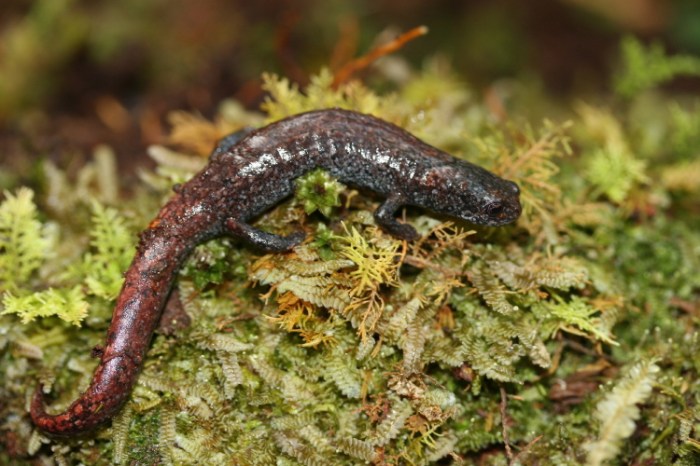
Bradytriton silus, a salamander of the Guatemalan cloud forest long thought to be extinct but rediscovered this January 2009.

By Stephen Leahy*

SAN DIEGO, U.S., Feb 21 (Tierramérica) – Mesoamerica’s salamanders appear to be joining the global decline in amphibian species, like frogs, adding to the evidence of ecological change around the planet.

“What’s happening to salamanders and other amphibians may be a strong lesson for humans,” says lead researcher David Wake, of the University of California at Berkeley.

There are global changes that are altering ecosystems and disease patterns, thus creating new elements of biological pressure, he said.

Wake and his colleagues have discovered that several salamander species have vanished or have become very rare since the 1970s in closely studied areas in western Guatemala and the southern Mexican state of Chiapas. These findings were published last week in the Proceedings of the National Academy of Sciences.

Climate change and disease are likely causing the declines but scientists do not know why, Wake, one of the world’s salamander experts, told Tierramérica.

“We don’t know what the impacts are on local ecosystems, but they could be significant,” he said. Continue reading

Canada Refuses to Support Wind Energy

windmill-winter-ponies

First World Wind Energy Conference held in Canada but Federal Government Refuses to Participate

Canada’s federal government refused to participate or support the wind energy conference. It was up to other countries and institutions, including Germany and the United Nations, to provide funding for delegates from the global South to attend.

“I’m embarrassed and ashamed,” Volker Thomsen, one of the chief conference organisers, told delegates at the opening of the meeting.

Governments fail to vigourously switch over to renewables because the way things are works for them, said Scheer. The extremely powerful fossil fuel lobby also wants no changes so they can continue to profit from their investments in the current energy infrastructure. And that’s why letting the conventional power companies, utilities and experts take charge of renewables will lead to very little change, he warns.

Not only is 100 percent renewable energy possible, it can be done much faster and cheaper than building coal or nuclear power plants, said Scheer. Multi-megawatt wind turbine farms and solar arrays can be up in running in 18 months. But when energy is needed, the first thing most governments want to build are big, expensive power plants.

“The public and renewable energy sector must push governments and push them hard to change this,” Scheer stressed.

[Excerpt from my IPS June 25/08 article Failure on Global Warming “Un-American”]

Tropical Forests Fight for Survival

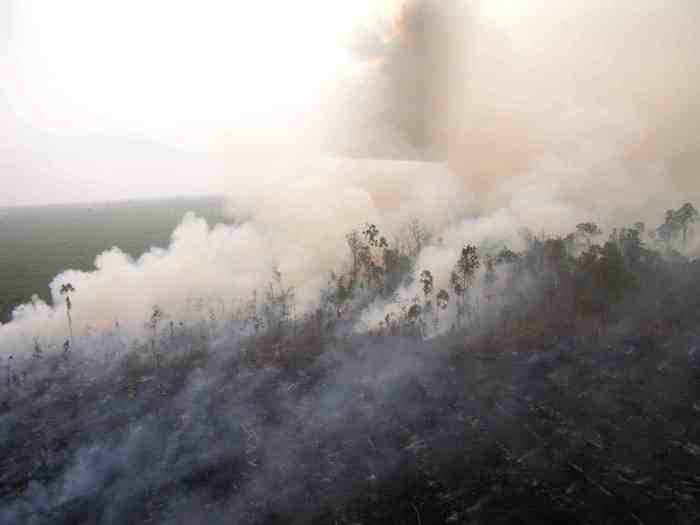
sumatra-burning-forest-courtesy-of-kim-worm-sorensen-sml

By Stephen Leahy*

UXBRIDGE, Canada, Jan 28 (Tierramérica) – Current rates of deforestation suggest there will hardly be any tropical forests left in 20 years. Sixty percent of the rainforests, which survived for 50 million consecutive years, are already gone.

However, some experts say widespread planting of previously logged forests offers hope for preserving some of the region’s rich and unique biodiversity.

Recent satellite data have shown that about 350,000 square kilometres of the original forested areas are growing back, Greg Asner of the Washington-based Carnegie Institution said at the Smithsonian symposium Jan. 12 at the Smithsonian National Museum of Natural History, also in the U.S. capital.

That is only 1.7 percent of the immense planetary belt of original forest that once covered 20 million square kilometres. Twelve million sq km have already been cleared while another five million have been selectively logged, Asner reported.

“There is going to be lots of tropical forest left in the future but it will be different forest,” says Joseph Wright of the Smithsonian Tropical Research Institute (STRI) in Panama. Continue reading

North American Trees Dying Twice as Fast

sugar-pine-dying-from-bark-beetle-attack-in-yosemite-national-parkimage-courtesy-of-jerry-franklinBy Stephen Leahy

UXBRIDGE, Canada, Jan 22 (IPS)

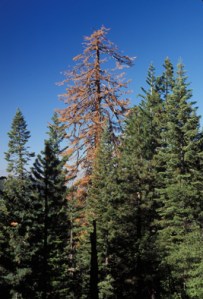
Our trees are dying. Throughout the western United States, cherished and protected forests are dying twice as fast as they did 20 years ago because of climate change, researchers reported Thursday in the journal Science.

Fire did not kill these trees, nor did some massive insect outbreak. The trees in this wide-ranging study were “undisturbed stands of old growth forests”, said Jerry Franklin, a professor of forest resources at the University of Washington and one of 11 co-authors of the report.

“The data in this study is from our most stable, resilient stands of trees,” Franklin told IPS.

What this means is that the United States’ best forests are getting thinner.

It is like a town where the birth rate is stable but the mortality rate for all ages doubled over the past two decades. “If that was happening in your hometown you’d become very concerned,” said Nate Stephenson, an ecologist with the U.S. Geological Survey (USGS).

This dramatic increase of in tree mortality applies to all kinds, sizes, ages and locations of trees. In the Pacific Northwest and southern British Columbia, the rate of tree death in older coniferous forests doubled in 17 years. In California, doubling mortality rates took a little longer at 25 years. For interior states it took 29 years. Continue reading

Science Articles on Acid Oceans and Coral Reefs

Series of my science articles documenting how global warming is transforming the Oceans and threatening Coral Reefs

No Safe Havens in Increasingly Acid Oceans

Oil, gas and coal are contaminating the world’s oceans from top to bottom, threatening the lives of more than 800 million people, a new study warns Tuesday.

“It took a year to analyse and synthesise all of the studies on the impacts of climate change on ocean species,” Camilo Mora, an ecologist at University of Hawai‘i in Honolulu and lead author, told IPS.

“We are seeing greater changes, happening faster, and the effects are more imminent than previously anticipated.” — Alex Rogers of the University of Oxford

Plankton Death To Come with Acid Oceans and Sunlight

Without major reductions in the use of fossil fuels, sunlight will kill an unknown number of ocean phytoplankton, the planet’s most important organism, a new study reports this week.

Not only are phytoplankton, also known as marine algae, a vital component in the ocean’s food chain, they generate at least half of the oxygen we breathe.

In the not so distant future, sunlight, the very source of life for phytoplankton, will likely begin to kill them because of the ocean’s increasing acidity, researchers from China and Germany have learned.

“There’s a synergistic effect between increased ocean acidity and natural light,” says Ulf Riebesell of the Helmholtz Centre for Ocean Research in Kiel, Germany.

sea-anemone

Deep CO2 Cuts May Be Last Hope for Acid Oceans

(Report from the World Oceans Conference in Indonesia, May 2009)

Ocean acidification offers the clearest evidence of dangers of climate change.

And yet the indisputable fact that burning fossil fuels is slowly turning the oceans into an acid bath has been largely ignored by industrialised countries and their climate treaty negotiators, concluded delegates from 76 countries at the World Oceans Conference in Manado, Indonesia.

Oceans Passing Critical CO2 Threshold

An apparent rapid upswing in ocean acidity in recent years is wiping out coastal species like mussels, a new study has found.

“We’re seeing dramatic changes,” said Timothy Wootton of the Department of Ecology and Evolution at the University of Chicago, lead author of the study published Monday in the Proceedings of the National Academy of Sciences. The study shows increases in ocean acidity that are more than 10 times faster than any prediction.

Say Goodbye to Coral Reefs

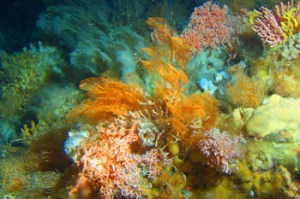
GIJON, Spain, May 22 (IPS) – The one-two punch of climate change that is warming ocean temperatures and increasing acidification is making the oceans uninhabitable for corals and other marine species, researchers said at a scientific symposium in Spain.
noaa

Lose Corals and We Will be Fighting for Our Own Survival

“There would be no white sands on the beaches of Cancún without the Mesoamerican reef,” Professor Roberto Iglesias-Prieto, a marine ecophysiologist working at the Institute of Marine Sciences and Limnology of the National Autonomous University of Mexico, told Tierramérica.

Cutting CO2 Could Save Dying Corals

FORT LAUDERDALE, U.S., Jul 12 (IPS) – The rapid decline of coral reefs around the world offers a potent warning that entire ecosystems can collapse due to human activities, although there is hope for reefs if immediate action is taken, coral experts agreed at the conclusion of a five-day international meeting Friday.severely-degraded-reef-flat-at-kelso-reef-great-barrier-reef-australiaimage-c2a9-cathie-page-very-sml2

A Third of Corals Face Extinction

FORT LAUDERDALE, U.S., Jul 10 (IPS) – One third of reef-building corals already face extinction because of climate change, the first-ever global assessment has found.

Life Support Needed For Coral Reefs

FORT LAUDERDALE, U.S., Jul 8 (IPS) – Coral reefs need to be put on “life support” if they are to survive climate change, but their ultimate survival is dependant on major reductions in fossil fuel emissions, say experts.

“We’re Running the Risk of Unstoppable Climate Change” — Oceanographer

“I’m afraid it is going to take a major catastrophe in the developed world…” Chris Reid.

Oceans are the Heart and Blood of the Earth — But are They Healthy?

If continents are the Earth’s sturdy bones and the atmosphere its thin skin, then the oceans are its heart, circulatory system and blood. And despite the crucial role played by the oceans in the health of the planet, and to our own health and well-being, there is little monitoring of ocean health.

Acid Oceans to ‘Dissolve’ Coral Reefs in 30 years

Coral reefs face certain extinction in a few decades unless there are unprecedented reductions in carbon emissions, leading Australian scientists warn.

Polar Bears and the Arctic Meltdown

polar-bear-snout-wwwfirstpeopleus-smlA warm Arctic six-pack of 2008 science articles on how global warming is transforming the Arctic:

1. Arctic Ice Gone in 5 Years – First Time in One Million Years — “We’re going to see huge changes in the Arctic ecosystem”

2. Burning Down Our HouseThe roof of our house is on fire while the leaders of our family sit comfortably in the living room below preoccupied with “political realities”.

3. Things Happen Much Faster in the Arctic — “Things are happening much faster in the Arctic. I think it will be summer ice-free by 2015,” said David Barber, an Arctic climatologist at the University of Manitoba.

4. Arctic Is the Canary in the Coalmine — The Arctic is “ground zero” for climate change, with temperatures rising far faster than anywhere else on the planet.

5. Arctic Meltdown Signals Long-Term Trend — Soaring temperatures have led to the collapse of several huge ice shelves in the Canadian Arctic over the past few weeks.

6. Arctic Oil and Gas Rush Alarms Scientists — As greenhouse gas pollution destroys Arctic ecosystems, countries like Canada are spending millions not to halt the destruction but to exploit it.ceberg-in-glacier-strait-nunavut-canada-image-credit-sandy-briggs

Oh yeah, and about those polar bears:

Polar Bears Go Hungry as Icy Habitat Melts Away — The iconic animal of the frozen north, the polar bear, is starving to death because climate change is melting the Arctic Ocean sea ice.

Oil vs Polar Bears in Alaska — A coalition of environmental groups sued the George W. Bush administration Monday for delaying a decision to protect polar bears threatened with extinction

Polar Bears’ Future Bleak in Melting Arctic — “Without taking serious and urgent action to stabilize the climate, there is no future for polar bears” says Andrew Derocher, Chair of the World Conservation Union (IUCN), Polar Bear Specialist Group.