Denial and Delay: Tips on Detecting Global Warming B.S.

truth-over-fear.jpg

100,000 repetitions of a lie is still a lie

Many of those who deny that burning fossil fuels is altering the climate work diligently to confuse and delay action that would in reality benefit nearly all of us. These professional deniers and their followers can be convincing, citing well-known experts and twisting their views and findings.

So here’s a couple of common sense tips to add to your BS detection system.

Denier Tip #1: Check out suspect claims/sources with a simple Google search

100,000 repetitions or variations of a lie is still a lie. A reader recently told me global warming is really caused by variations in the sun’s activity. His proof was a “science” article from Investor’s Business Daily that said this was the conclusion of the Max Planck Institute for Solar System Research, a well-known research centre in Germany. A quick check of the Institute’s website revealed their actual conclusion: “Solar activity affects the climate but plays only a minor role in the current global warming.” See for yourself: it’s in English and still posted on their website.

Denier Tip # 2: Follow the money. Who benefits from denying climate change?

Among many others, journalist Ross Gelbspan has documented the money trail from the automotive and fossil fuel industry to various right-wing organisations and institutes in his two books, “The Heat is On” and “Boiling Point”.

Ask yourself how climate scientists benefit by concluding that humans are inadvertently changing their climate? Deniers often allege they get grants to do research on climate change. Yes they do, but they could also get grants to research water pollution or the ozone layer.

When scientists conduct research, they are simply asking questions about something and then trying to find answers. They don’t really care what the answers are. They are what they are: Humans are changing the climate.

Scientists are smart people. If they really wanted to make tonnes of money, they’d work on Wall Street, wouldn’t they?

See Last March of the Global Warming Denialists for more on this.

My related articles:

Proof of Anti-Global Warming Cabal: Fossil fuel Interests, Christian Evangelicals and the Media

UN Climate Body (IPCC) Too Slow, Too Cautious

Reporter’s Notebook 1999: “CO2 levels in decline last five years”

CO2 levels have been in decline the last five years said Tim Ball, a retired Professor of Geography, on Nov 24, 1999, at the Riverview Center, Guelph, Ontario, Canada.

That statement was completely false then and laughable now, but Ball continues to spew similar lies and misinformation to this day. Just last week Ball was a leading speaker in New York City at last week’s climate change denial festival.

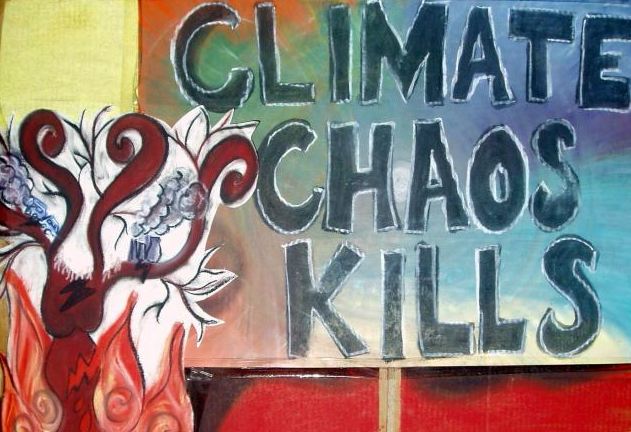
climate-chaos-kills-art-not-oil.jpg

I happened across my notes from the 1999 conference and was stunned at the outrageous comments Ball presented as “facts” to about 200 to 300 business types at a time when people knew little about carbon dioxide or global warming. No doubt many were convinced as Ball claimed (wrongly in every case) that: Continue reading

Last March of the Global Warming Denialists

Analysis by Stephen Leahy

Mar 4 (IPS) – Colder than usual January temperatures in the United States have brought the climate change deniers out of hibernation, flooding websites, and opinion and letters pages about the “great global warming hoax”. They even organised their own conference on denial in New York City this week.

king-penguins-on-beach-pnas-sml.jpg

“Global warming is not a global crisis” declared the Heartland Institute, organiser of the “International Conference on Climate Change”. Heartland is a well-known right-wing lobby group which accepted more than half a million dollars from oil giant ExxonMobil between 1999 and 2005, according to Exxon documents disclosed by Greenpeace, and thousands of dollars more from the tobacco industry.

Not surprisingly, in a statement issued Tuesday, they insisted that all efforts “intended to reduce emissions of CO2 be abandoned forthwith”.

“Manmade global warming is a total hoax. It has no basis in fact,” shouted Rush Limbaugh, a U.S. conservative radio host, on his Feb. 27 show, which draws as many as 13 million listeners. Continue reading

Business As Usual is Dead

dzerzhinsk-factories.jpg

Even if nations increased their energy and resource-use efficiency four-fold, there isn’t enough natural capital left intact to continue business as usual says says Eugene Rosa, a professor of natural resources and environmental policy at Washington State University.

(Natural capital are the resources — metals, oil — and services — air, water, etc — that nature provides.)

Improvements in technology and modernisation won’t rescue our planet from the depletion of the Earth’s natural capital, says Rosa.

For more on this topic please see this three-part series from 2007 on natural capital and how future global prosperity and equity CAN be achieved through the preservation of ecosystems:

See Part One: Like Enron, Earth Inc. Sliding Into Bankruptcy

Part Two: Global Warming is Real But I didn’t Do It

Part three: How to Kick-Start the 21st Century Eco-Economy

Ending The Oil Addiction: Galápagos Islands

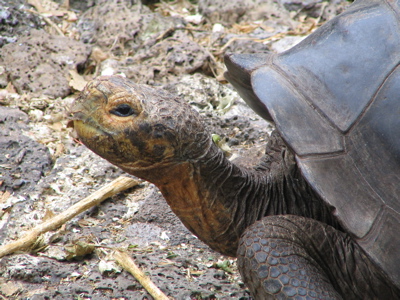
img_0501.jpg

By Stephen Leahy*

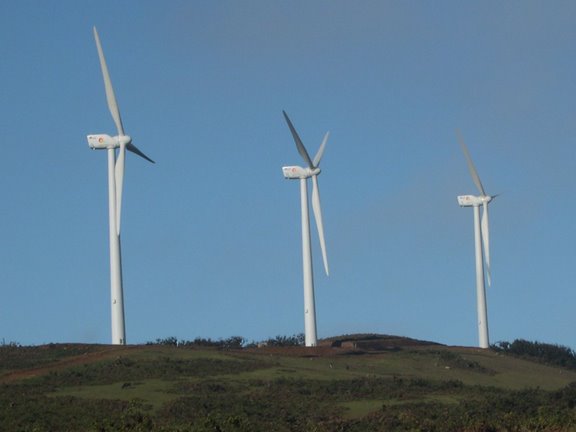
TORONTO, Feb 29 (Tierramérica) – Ecuador has taken the first step towards ending the oil dependence of its Galápagos Islands, in the eastern Pacific Ocean, with the official opening of a 10.8 million dollar wind energy facility on the island of San Cristóbal.

Ecuador’s President Rafael Correa toured the facility as part of a celebration of the 500th anniversary of the discovery of the Galápagos, and proposed to declare the islands fossil fuel free by 2015.

Located 1,000 kilometres off the coast of Ecuador, the archipelago comprises 17 small and 13 large islands that are home to 30,000 people and visited by more than 120,000 tourists each year.

Nearly everything is imported from the mainland, including vast quantities of diesel fuel for energy and transport. In 2001, a tanker ship struck a reef off the coast of San Cristóbal, one of the main islands, spilling 150,000 gallons of fuel into the ocean. Continue reading

Free, authoritative and online: 1.8 million species

carolina-anole-lizard-sml-john-sullivan-aol.jpgBy Stephen Leahy

Feb 27 (IPS) – Free, authoritative and online: 1.8 million species.

That is the ultimate goal of the Encyclopedia of Life project, which put its first 30,000 species on the Internet this week. This ambitious global project will provide the details of every known species — habitat, range, lifecycle, pictures and more — and archive everything online so anyone can access this important information about life on Earth.

From sharks to mushrooms to bacteria, the Encyclopedia of Life will provide scientifically verified information that will satisfy both a grade school child’s american-burying-beetle-doug-backlund-aol.jpegcuriosity or enable a university researcher — or amateur naturalist — to make a scientific breakthrough, says James Edward, new executive director of the Encyclopedia of Life (EOL) project headquartered in Washington at the Smithsonian Institution. Continue reading

Polar Bears’ Future Bleak in Melting Arctic

http://www.firstpeople.us

Lots of folks have been telling me that polar bears are doing ok and don’t need protection under the US Endangered Species Act. Some say polar bear populations are stable in Alaska and increasing in parts of Canada. And there might be 1500 more bears than previous estimates according to a three year study in Nunavut which makes $2 million a year from polar bear trophy hunters. But 1500 isn’t very many more bears and with the Arctic sea ice melting fast the future certainly doesn’t look bright.

As for Alaska consider this fact:

This week scientists announced new findings that the survival rate of polar bear cubs in Alaska’s Beaufort Sea has plummeted. In the late 1980s, 65 percent of polar bear cubs in the southern Beaufort Sea survived their first year. That has fallen to an average of 43 percent in the past five years. — Polar Bears Go Hungry as Icy Habitat Melts Away

“Without taking serious and urgent action to stabilize the climate, there is no future for polar bears” says Andrew Derocher, Chair of the World Conservation Union (IUCN), Polar Bear Specialist Group.

See also this controversy: Oil vs Polar Bears in Alaska

And these updates on the Arctic: Arctic Is the Canary in the Coalmine

Arctic Oil and Gas Rush Alarms Scientists

Arctic Meltdown Signals Long-Term Trend

Inuit Sue America over Climate Change

http://www.firstpeople.us

Galapagos Islands Spared Ocean Dumping Experiment

galap3.jpgLast summer while working in the Galapagos Islands I wrote about Planktos, a company that wanted to create plankton blooms near the islands by dumping tons of iron particles into the ocean: Carbon Project Endangers the Galápagos.

Planktos hoped these plankton blooms would ultimately become a lucrative way of removing carbon from the atmosphere. However in a January issue of the journal Science, a number of international scientists issued a warning that not enough was known to commercialize what is known as iron fertilization of the oceans.

Last summer’s dumping in the Galapagos never went forward, in part because of strong local objections, concern by marine scientists over unintended impacts and international environmental group protests. Feb 13 Planktos announced indefinite postponement of the experiment due to lack of investment funds because of “an effective disinformation campaign” by those opposing the effort.

Time To Panic Over Climate Change

protestor-bush-climate-mtg-jan-30.jpg

UK-based jurno Gwynne Dyer suggests it is time to panic over climate change and cites plenty of evidence (nearly all of which you can find on this site) including southern Africa losing 30 per cent of its corn crop as climate gets hotter and drier there.

Dyer goes on to say:

The two Democratic candidates for the presidency in the United States promise 80 per cent cuts in emissions by 2050, and John McCain for the Republicans promises 50 per cent cuts by then.

Nobody points out such a leisurely approach condemns the world to a global temperature regime at least three or four degrees Celsius (5.5 to 7 degrees Fahrenheit) warmer than today.

Nobody points out those are average global temperatures which take into account the relatively cool air over the oceans. Continue reading

Ethanol Worse Than Gasoline

oil-palm-seedling-in-burned-peat-forest-wetland-international.jpg

By Stephen Leahy
Feb 8 (IPS) – Biofuels are making climate change worse, not better, according to two new studies which found that total greenhouse gas emissions from biofuels are far higher than those from burning gasoline because biofuel production is pushing up food prices and resulting in deforestation and loss of grasslands.

Emissions from ethanol are 93 percent higher than gasoline,” said David Tilman, an ecologist at the University of Minnesota and co-author of one of the papers published Thursday in the journal Science.

“The bottom line is that using good farmland for biofuels increases greenhouse emissions,” he said.
Continue reading