 By Stephen Leahy
TORONTO, Sep 29, 2006 (Tierramérica)
Civil society activists want the Canadian government to impose mandatory human rights and environmental standards on Canadian mining and oil companies operating in Latin America and other developing regions.
In the past decade Canada has been the world’s biggest investor in the hunt for valuable metals and minerals in Latin America, Jamie Kneen of Mining Watch told Tierramérica. Canadian miners are responsible for environmental contamination and human rights violations all over Latin America, he says.
Canada has nearly 60 percent of the mining and exploration companies in the world; they generate more than 40 billion dollars annually, representing about four percent of Canada’s GDP.
“Canada must set some limits on its companies,” activist Lucio Cuenca Berger told a Canadian government panel holding an open forum on corporate social responsibility in the mining, oil and gas sectors in Toronto Sep. 12-14.
Cuenca Berger is a representative from the Latin America Observatory for Environmental Conflicts, a non-governmental organisation working with Chilean communities affected by mining, including the controversial Pascua-Lama gold mine project owned by Canada’s Barrick Gold Corporation, on the border between Chile and Argentina.
There are environmental concerns that mining operations and waste rock from the Pascua Lama will contaminate the rivers supplying the nearby Huasco Valley where there are some 70,000 small farmers, Berger said through a translator. The 1.5-billion-dollar project’s original design would have had a major impact on the glaciers, but was discarded.
Barrick, the world’s largest gold producer, recently received environmental approval from Chilean authorities to go ahead with Pascua Lama, despite ongoing local opposition.
“In Chile environmental approval is more political than technical,” said Berger.
The inability or unwillingness of local governments to enforce international human rights and environmental standards should not give Canadian companies license to ignore these standards, activists say.
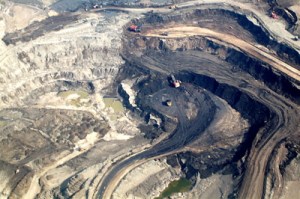
One such company, Manhattan Minerals, spent years trying to force people in the northern town of Tambogrande, Peru to accept an open pit gold mine in the middle of their village before conceding defeat in 2005.
Communities in the Imbabura province in northwestern Ecuador have been forced to file an injunction to stop Ascendant Copper Corporation of Toronto from building an open-pit copper mine on their land, Keen said.
In Mexico, Toronto-based Metallica Resources’ subsidiary, Minera San Xavier (MSX) has begun building a gold mine in San Luis Potosi despite bitter local opposition and court rulings against the mine.
Pierre Gratton of the Canadian Mining Association (CNA), which represents Canada’s largest 25 mining companies, says some Canadian were ill-prepared for conditions in developing countries with weaker governance, unresolved local conflicts and weak environmental laws.
“Clearly there are issues and problems and that’s why we are having these CSR (corporate social responsibility) roundtables,” Gratton told Tierramérica
The current series of public forums, such as the one in Toronto, is a response to both the rising criticism of Canadian mining companies operating abroad and the commitment of the Stephen Harper administration to promote corporate social responsibility internationally.
Two more forums will be held, one in October in Calgary and another in November in Montreal. Based on that input, recommendations will go before the Canadian parliament sometime in 2007.
There are a number of international standards, such as the Organisation for Economic Cooperation and Development (OECD) Guidelines for Multinational Enterprises, the United Nations Global Compact, and the International Council on Metals and Mining Sustainable Development Charter, among others.
The CNA has its own standards and most Canadian mining, oil and gas companies have internal standards.
However, a September 2006 research survey by the Canadian Centre for the Study of Resource Conflict shows that only five percent of 584 Canadian extractive-sector companies with international holdings adhere to recognised national or international standards.
“It is abundantly clear existing voluntary standards are not working,” said Omega Bula of the United Church of Canada, which partnered with Catholic organisations and others in the “Life before profit” campaign to improve practices of Canada’s huge international mining industry.
Bula, like most activists at the Toronto meeting, insists that it is Canada’s responsibility to set mandatory codes of conduct for Canadian companies operating in developing countries. Independent audits and a monitoring body would ensure compliance. Companies and company directors should be held accountable for non-compliance under stronger Canadian laws, Bula said.
Transparency is another requirement, activists say. Currently local people do not know how much money their government receives from foreign mining companies.
“The OECD guidelines are fine, as long as there is an independent third party to monitor,” said one activist.
However, an industry official said Canada ought not to presume to regulate how a company operates in another country.
“If it becomes too onerous for Canadian companies to operate in developing countries, they’ll leave,” said Erin Airton of Vancouver’s Platinum Group Metals, which has mines in South Africa and Mexico. “Then someone else will take the minerals.”
Instead of setting mandatory rules, the Canadian government should help countries build their capacity to enforce their own laws and regulations, she said.
Kerry Knoll, President and Chief Executive Officer of Glencairn Gold Corporation, spoke during the forum on the social contributions of his company, which employs 1,200 workers in mines in Costa Rica and Nicaragua. Glencairn provides breakfast for 500 children each morning and training programmes for adults not employed in the mines, Knoll said.
“We operate a gold mill for local artisan miners so they won’t use mercury and pollute the rivers.”
Knoll estimates his company has spent several million dollars on such programmes, but has been accused by NGOs of trying to bribe local people.
However he is in favour of a government report card or audit system.
“Financial investors are increasingly interested in the environmental and social record of companies,” he said. “Making that record public would be a good thing.”
…Tierramerica and Inter Press News Service
44.109380
-79.120461





 Stephen Leahy, International Environmental Journalist