Vitamin A and Zinc Supplements Cuts Malaria in Africa

Aedes aegypti copyright USDA

Feb 13 (IPS) – Malaria continues to cut a swathe through Africa, which accounts for most cases of the disease and the majority of malaria-related deaths. Globally, more than a million people die from malaria each year. In the case of children, this translates into a death every 30 seconds, according to the World Health Organisation.

A study by Burkina Faso’s Health Sciences Research Institute (Institut de recherche en sciences de la santé, IRSS) may point the way to reducing malaria’s toll on children, however.

IRSS research director Jean-Bosco Ouedraogo and his colleagues report in the current issue of ‘Nutrition Journal‘ that giving vitamin A and zinc supplements to children has been shown to reduce the incidence of malaria among them by a third. The journal is an online publication managed from London.

New ways of fighting malaria are critically needed. In recent years, the disease’s growing resistance to drugs and insecticides (malaria is transmitted by mosquitoes) has made malaria control much more challenging.

Ouedraogo spoke to IPS science correspondent Stephen Leahy.

Only Green Part of Most Biofuels is the Wealth (Subsidies) They Generate

sugar-cane-field-oz-rslpix1By Stephen Leahy

Feb 4 (IPS) – Biofuels have quickly turned from environmental saviour to just another mega-scale get-rich quick scheme. Countries and regions without their own oil reserves to tap now see their farms, peatlands and forests as potential “oil fields” — shallow but renewable lakes of green oil.

Renewable does not mean sustainable, and in most cases the only green part of biofuel is the wealth they generate.

Not surprisingly, given the record high oil prices, worldwide investment in bioenergy reached 21 billion dollars in 2007, according to the U.N. Environment Programme. The Inter-American Development Bank announced 3 billion dollars for investment in private sector biofuel projects — mainly in Brazil — while the World Bank said it had 10 billion dollars available in 2007.

Meanwhile development assistance for food-producing agriculture had fallen to 3.4 billion dollars in 2004 — with the World Bank’s share less than 1 billion dollars, according to the Bank’s own World Development Report on Agriculture released in October 2007. And most of this financial assistance was spent on subsidising use of chemical fertilisers. Continue reading

Africa, South Asia Face Mega-Famines

stanford-food-security-banner-sml.jpg

By Stephen Leahy

Feb 1 (IPS) – Climate change will cause major disruptions in the global food system, and adaptation to those changes needs to begin immediately, experts say.

Otherwise one-fifth of the world’s population could starve and millions of others become climate refugees, forced by heat and drought to abandon their lands and hunt for food elsewhere in the coming decades.

To prevent this nightmarish future, researcher David Lobell says the world community should focus its efforts where climate threats are likely to make the greatest impacts.

“We used historical data to determine what food-producing regions of the world were most sensitive to changes in temperature and rainfall,” said Lobell, author of the study published in the journal Science today.

“Impoverished regions of Southern Africa and South Asia will be hit first and hardest by climate change,” Lobell told IPS from his office at Stanford University’s Programme on Food Security and the Environment. Continue reading

Biofuels: Another Good Reason to Hate American Policy

biofuel-gsi-rpt-1.png

By Stephen Leahy

Jan 25 (IPS) – U.S. biofuels production is driving up food prices around the world, giving billions of poor people a very good reason to hate U.S. policy, say environmentalists.

“The U.S. has led the fight to stem global hunger, now we are creating hunger,” said Lester Brown, president of the Earth Policy Institute, an environmental think tank in Washington.

The booming U.S. ethanol industry is diverting enormous amounts food into fuel: 81 million tonnes of grain in 2007 and 114 million tonnes this year, equaling 28 percent of the entire U.S. grain harvest, Brown told IPS.

Previous eras of high grain prices were mainly the result of bad weather, but these price hikes are the result of government policy, he said.”Grain prices are at record or near-record highs and they will go higher,” he said. “We might be the first society in history to use public tax dollars to drive up its own food prices.” Continue reading

Philippines hit by 13 Major Storms – Two Arrive Today

picture-2.jpg

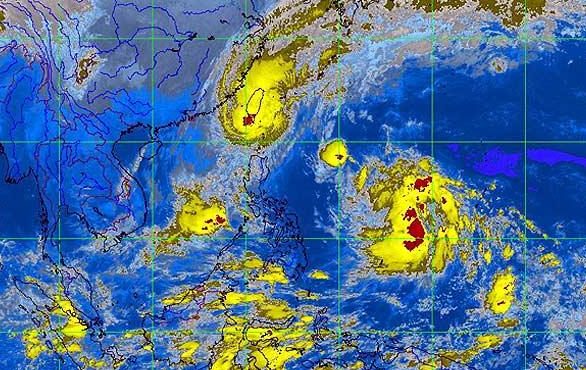
Although the Atlantic hurricane season has been relatively quiet, the Eastern Pacific has already seen 24 typhoons (hurricane). The Philippines have been hit by 13 this season and two arrived this week, including one that killed 13 people last week and and then completely reversed itself and returned. Over a half million people have been forced from their homes.

Related stories:
First Ever: Two Hurricane Landfalls on Same Day – Pix
Hurricane Felix Category Five — Pix
Steve’s Hurricane Handbook 2007
Hurricane Katrina Only Cat 1/2 When It Hit New Orleans – NOAA

Junk Food and Smoking to Kill 100s of Millions in Poor Countries

By Stephen Leahy


Credit:Hendrike

Man lighting a cigaret

Nov 26 (IPS) – Chronic, non-infectious diseases like heart disease, stroke, cancer and diabetes kill more than twice as many people than HIV/AIDS, malaria or tuberculosis, experts warn.

In the next 10 years, some 388 million people will die of these largely preventable diseases, which are caused mainly by smoking, poor diet and lack of exercise. Often thought to be diseases of the rich, most of these deaths will be in the developing world, conclude the authors of a study published in the journal Nature this month.

“We have a huge health crisis here that few policymakers and other officials are aware of,” said lead author Dr. Abdallah S. Daar of the McLaughlin-Rotman Centre in Toronto, Canada.

Developing countries, and medical and donor groups have focused almost entirely on infectious diseases, Daar told IPS. “But that’s like putting out one fire in a house burning from both ends,” he said.

Continue reading

30 Million Lead-laden TVs Dumped on Poor Countries

“The US has an appalling system that makes it easy to dump e-waste on the developing world.”Barbara Kyle, Electronics TakeBack Coalition.

By Stephen LeahyCopyright EMPA, Switzerland

Nov 21 (IPS) – U.S. citizens will buy 30 million new digital televisions this year alone, sending their old lead-laden TVs to the dump, or more likely, overseas to China or India.

“It’s an astonishing number that will send millions of pounds of lead to landfills or overseas,” said Barbara Kyle, national coordinator of the Electronics TakeBack Coalition.

Non-digital TVs contain up to eight pounds of lead, which is a potent neurotoxin. While new digital flat screen TVs don’t have lead, they do contain mercury, another neurotoxin.

“It’s no longer illegal in the U.S. to export e-waste (electronic waste) to developing countries,” Kyle said.

Changes in rules and regulations in recent years to the Resource Conservation and Recovery Act, administered by the U.S. Environmental Protection Agency, have created an “appalling system that makes it easy to dump e-waste on the developing world”, she said. Continue reading

Three Names the World Should Know

picture-1.jpg

By Stephen Leahy

Nov 5 (IPS) – “I am staying in Afghanistan to prove that women are brave and strong,” says Afghan journalist Farida Nekzad.

Nekzad has been threatened with death even as she attended the funeral of Zakia Zaki, a female radio broadcaster murdered by gunmen as she slept with her eight-month-old son at her home near Kabul in June.

“I was given asylum by some countries but I am not going to hide,” declared Nekzad, the current editor in chief of the Pajhwok News Agency, the sole independent news agency in Afghanistan.

“If I leave, the next woman journalist will become a target,” she told IPS.

Nekzad was in Toronto last Thursday to receive one of this year’s three International Press Freedom Awards from the Canadian Journalists for Free Expression (CJFE). CJFE promotes and defends free expression and press freedom and grants thousands of dollars to aid persecuted journalists in Latin America, Africa, Asia and Eastern Europe.

Iraqi journalist Sahar Al-Haideri, shot and killed on Jun. 7 this year by four unidentified gunmen in Mosul, and Canadian journalist Ali Iman Sharmarke, who was killed by a remote-controlled landmine in Somalia Aug. 11, were the other award recipients. Continue reading

Organic Provides 3X More Food Per Acre in Poor Countries – podcast

Organic farming can yield up to three times as much food on individual farms in developing countries, as low-intensive methods on the same land—according to new findings by researchers from the University of Michigan.

This refutes the long-standing claim that organic farming methods cannot produce enough food to feed the global population.

Listen to U of Michigan Podcast and Podcast En Español

Related articles/posts:
Food Additives Make Kids Hyperactive – Organic Better?
Overweight? Hungry? Blame “Hollow Food”
Organic Agriculture Reduces Climate Change, Poverty and Hunger
The Real Cost of US Strawberries

10 Worst Places on Earth – 2007

linfen-coalminer.jpgWorst Places on Earth Are Home to Millions
By Stephen Leahy

Sep 12 (IPS) – Rapidly industrialising India and China have claimed four of the top 10 most polluted places on the planet for the first time, according to a report by U.S. and European environmental groups.

In 2006, Russia topped the list with the three sites in the top 10, but this year, two very large toxic sites affecting hundreds of thousands of people in India and China were included that had been missed in the previous global survey, said Richard Fuller, director of the New York- based Blacksmith Institute, a independent environmental group that released the list Sep. 12 report in partnership with Green Cross Switzerland.

“We were surprised these sites had not been reported before,” Fuller told IPS.

One is Tianjin in the Anhui Province of China, which produces about 50 percent of the country’s lead, often from low-level and illegal production facilities. A lack of environmental enforcement has resulted in severe lead poisoning, with soil and homes contaminated at levels 10 to 24 times China’s national standards.

Up to 140,000 people may be affected, suffering from brain damage and mental retardation. Continue reading