Climate Refuge in Polar Cities?

polar-cities-living-area.jpg

By Stephen Leahy

Jan 2 (IPS) – Dan Bloom thinks it’s time to figure out how to build self-sustaining cities in the polar regions because climate change will eventually make most of Earth uninhabitable.

These polar cities may be “humankind’s only chance for survival if global warming really turns into a worldwide catastrophe in the far distant future,” Bloom told IPS.

Bloom isn’t a scientist or any other kind of expert. A U.S. citizen in his late fifties living in Taiwan teaching English, he’s lived all over the world as a reporter-editor, teacher-translator and author. And now Bloom wants to shake people out their everyday indifference to the great emergency of our age: climate change.

“Life goes on as usual here in Taiwan. No one is doing anything and they don’t want to talk about it,” he says. Continue reading

Measuring Bali With A Scientific Yardstick

By Stephen Leahyunfccc-bali-logo.jpg


Dec 17 (IPS) – A tiny step was taken Saturday in meeting the greatest challenge humanity has ever faced.

But it was nearly a step backward as the crucial climate talks in Bali almost collapsed when the United States refused to join the global consensus. However, after Kevin Conrad representing Papua New Guinea told the U.S. delegation if they weren’t going to be leaders, to please get out of the way, the U.S. reversed its position and accepted what is called the “Bali roadmap“.

But before considering this new political roadmap on climate change, what route did the scientific roadmap tell us to take? Continue reading

Fish Farms Pushing Wild Salmon to Extinction

courtesy Alexandra Morton

By Stephen Leahy

Dec 14 (IPS) – V
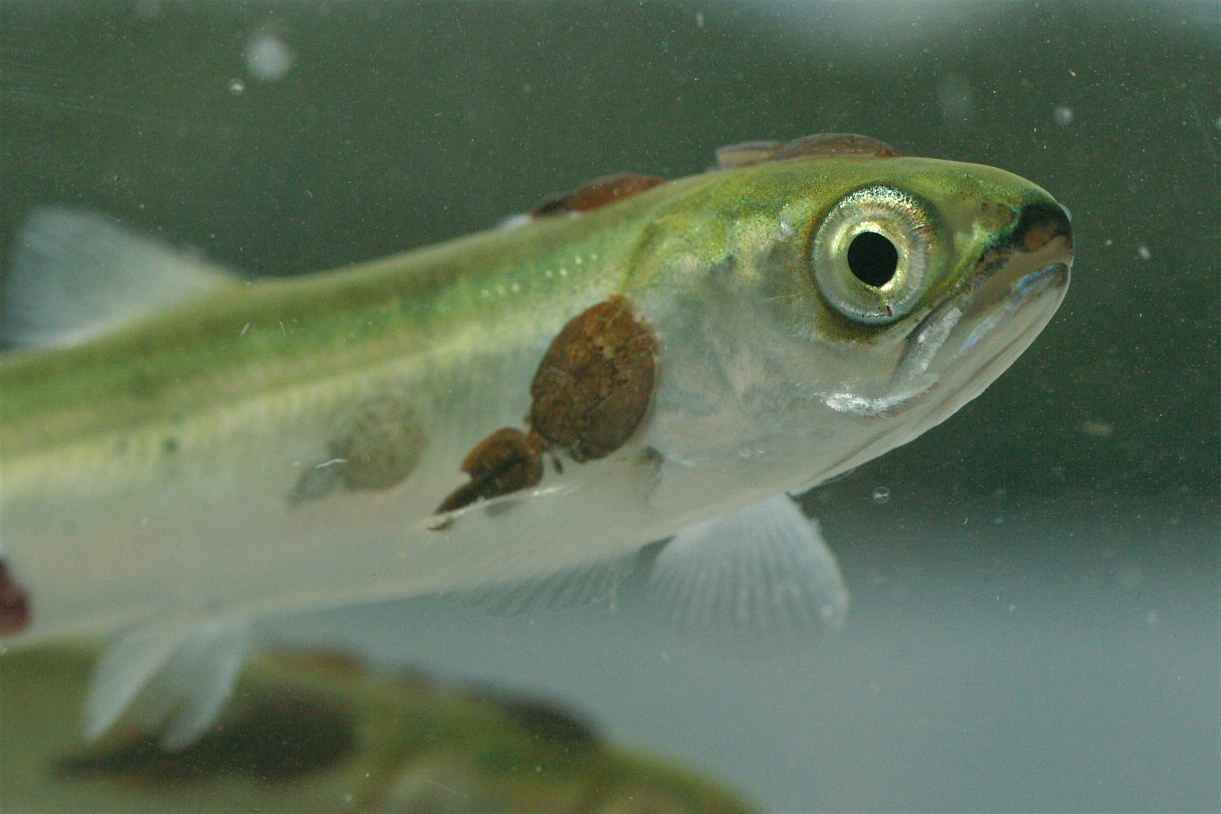
ast populations of pink salmon on Canada’s west coast will be extinct in four years due to infestations of parasites from open ocean salmon farms, scientists reported Friday in the prestigious journal Science.

Canadian officials seem likely to let the wild salmon go extinct, if past inaction is any indicator, Alexandra Morton, the study’s co-author and director of the Salmon Coast Field Station in Broughton, British Columbia, told IPS.

The Science study shows that infestations of sea lice have killed more than 80 percent of the annual pink salmon returns in British Columbia’s Broughton Archipelago, 300 kms north of the city of Vancouver, over the past four years. In another four years, there will be no more pinks if the infestations continue.

“If nothing changes, we are going to lose these fish,” said lead author Martin Krkosek, a fisheries ecologist from the University of Alberta. Continue reading

Catch less fish, Make More $

yellow-fin-tuna-catch-galapagos.jpg

By Stephen Leahy

Dec 11 (IPS) – Catch less fish. Make more money.

Could this be the solution to the global overfishing crisis?

Australian economists writing in the current issue of Science magazine think so.

Reducing fish catches in the short term will bring fishers big profits later. And that profit potential may finally persuade an intransigent fishing industry to agree to lower catch limits, they say.

“Bigger stocks mean bigger bucks,” says co-author Quentin Grafton, research director at the Crawford School of Economics and Government at the Australian National University (ANU).

“Our results prove that the highest profits are made when fish numbers are allowed to rise beyond levels traditionally considered optimal,” Grafton said. Continue reading

Greedy Canada Tries to Poison UN Climate Talks

dry-mud-fish-sml-manaquiri-amazonas-state-greenpeace.jpg

By Stephen Leahy

Dec 10 (IPS) – The family has just finished up an expensive seven-course restaurant meal, and the late-arriving cousins can only snack on bread sticks. When the bill arrives, the truculent, rich uncles — Canada, Japan and the United States — insist that the cousins, although poor and still very hungry, ought to pay a full share.

And then Uncle Canada suggests that he pay less because he has a big appetite and can’t help himself.

With the fate of the planet in the balance, many critics say that is the current state of the negotiations ongoing in Bali at the international climate change talks. And that is despite an urgent appeal by more than 200 of the world’s leading climate scientists late last week.

“Drastic reductions are needed…we have no time to lose,” said Richard Somerville of the Scripps Institution of Oceanography at University of California at a press conference in Nusa Dua, on the island of Bali. Political leaders from virtually every nation will finalise the next steps to a new climate change treaty under the United Nations Framework Convention on Climate Change (UNFCCC) at the end of this week. Continue reading

Canada Tries to Wreck Crucial Climate Talks

picture-9.jpgCanada publicly declared a 2 degree C rise in the planet’s temperature “unacceptable” but it is putting all of its resources at the Bali climate change conference into wrecking the process said Hans Verolme, director of WWF’s Global Climate Change Programme.

“What they are doing here will will get us 4 degrees C” of global warming, said Verlome at a press conference today from Nusa Dua on the island of Bali, the site of the United Nations Framework Convention on Climate Change (UNFCCC) conference running until Dec. 14

Anything above two degrees scientists term “dangerous”. Indeed, even at 2 degrees the IPCC says we have just a 50-50 chance of avoiding dangerous climate change.

Canada and Japan seem to be playing the US card of doing nothing he said.

And yet on Monday Dec 3, Environment Minister John Baird made a speech in Canada’s House of Commons: “a rise of 2° in the Earth’s temperature as a result of human activity contributing to global warming, simply put, is unacceptable.”

“I don’t understand Canadian politics,” said Verolme.

Related stories:

Canada’s Shocking Environmental Decline

Destroying Canada’s Boreal Forest for America’s Oil

Kill Kyoto or Kyoto II Our Only Hope?

Climate Change Experts Warn World

Amazon Forest Could Cook the Planet

2_4amazon_forest.jpg


By Stephen Leahy

Dec 7 (IPS) – A two-degree Celsius rise in global temperatures could flip the Amazon forest from being the Earth’s vital air conditioner to a flamethrower that cooks the planet, warns a new report released at the climate talks in Bali, Indonesia Friday.

And we’re already past 0.6 degrees C., climate experts say.

Paradoxically, a two-degree C. rise in global temperatures cannot be prevented without a largely intact Amazon rainforest, says Dan Nepstad, a senior scientist at the Woods Hole Research Centre in the U.S. state of Massachusetts and author of the report “The Amazon’s Vicious Cycles: Drought and Fire in the Greenhouse”, issued by WWF, the global conservation organisation.

“The importance of the Amazon forest for the globe’s climate cannot be underplayed,” said Nepstad at a press conference from Nusa Dua on the island of Bali, the site of the United Nations Framework Convention on Climate Change (UNFCCC) conference running until Dec. 14. Continue reading

Forests, the Great Green Hope?

By Stephen Leahy


Credit:Tomasz Kuran

Mixed forest near Radziejowice, Poland.

Dec 3 (IPS) – Expanding European forests absorbed 126 million tonnes of carbon dioxide from 1990 to 2005 — equivalent to 11 percent of European Union emissions from human activities — while a U.N. target to plant one billion trees mainly in Africa has been surpassed.

“Forests reduced carbon dioxide more than twice the amount of Europe’s renewable energy programmes,” said Pekka Kauppi, who led the University of Helsinki study, published in the British journal Energy Policy on Nov. 29.

Better conservation, migration to cities, and conversion of surplus farmland are the reasons behind the growing and expanding forests, which are mainly in Latvia, Lithuania, Sweden, Slovenia, Bulgaria and Finland Kauppi, told IPS. The study is based on forestry statistics provided by governments and that were not independently verified.

The resulting “surprisingly high carbon dioxide removal” may be the major factor in Europe achieving its ambitious target of 20 percent reductions in greenhouse targets by 2020, Kauppi said.

“On a global scale, there is hope for the future if we stop deforestation and expand forests,” he added. Continue reading

Oceans are the Heart and Blood of the Earth — But are They Healthy?

By Stephen Leahyapollo17_earth.jpg

Nov 27 (IPS) – If continents are the Earth’s sturdy bones and the atmosphere its thin skin, then the oceans are its heart, circulatory system and blood. And despite the crucial role played by the oceans in the health of the planet, and to our own health and well-being, there is little monitoring of ocean health.

Once the oceans were too big and too deep to probe, measure and observe, but between satellites, undersea robots, electronically tagged fish and deep sea sensors, scientists now have the tools.

On Tuesday, high-level officials began meeting in Cape Town, South Africa to see if governments have the will to create a Partnership for Observation of the Global Oceans (POGO) — a 10-year project to create a comprehensive monitoring system of what has been described as the last frontier.

“We have pathetically few measurements of the oceans relative to their importance to life on Earth and the extent to which we rely on them for energy, weather, food and recreation,” said D. James Baker, former administrator of the U.S. National Oceanic and Atmospheric Administration. Continue reading

Philippines hit by 13 Major Storms – Two Arrive Today

picture-2.jpg

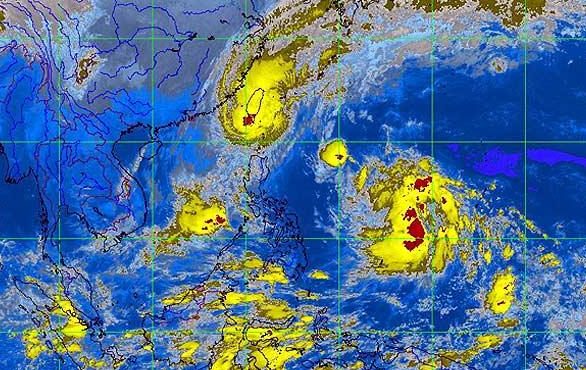
Although the Atlantic hurricane season has been relatively quiet, the Eastern Pacific has already seen 24 typhoons (hurricane). The Philippines have been hit by 13 this season and two arrived this week, including one that killed 13 people last week and and then completely reversed itself and returned. Over a half million people have been forced from their homes.

Related stories:
First Ever: Two Hurricane Landfalls on Same Day – Pix
Hurricane Felix Category Five — Pix
Steve’s Hurricane Handbook 2007
Hurricane Katrina Only Cat 1/2 When It Hit New Orleans – NOAA