US Generals Say Warming Poses Major Security Threat

US Military Panel Calls Warming a Major Threat
By Stephen Leahy


May 15 (IPS) – Senior retired military officers in the United States are urging immediate action on climate change to avoid a massive upsurge in regional and global instability that could threaten their country’s security.

Climate change is a “threat multiplier”, said 11 retired three- and four-star U.S. generals and admirals who make up a military advisory board put together by the non-profit CNA Corporation. They warned Monday that many Asian, African and Middle Eastern nations could fail, opening the door for terrorists and drawing the U.S. into a variety of new conflicts.
Continue reading

Can Capitalism Be Green?

Copyright 2006 Renate LeahyCan Capitalism Be Green?

By Stephen Leahy

Experts say continuous economic growth, intrinsic to capitalism, is not viable on a planet with increasingly scarce natural resources.

May 7 (IPS/IFEJ) – Capitalism has proven to be environmentally and socially unsustainable, so future prosperity will have to come from a new economic model, say some experts. Just what this new model will look like is the subject of intense debate.

One current states that continuous growth can be environmentally compatible if clean and efficient technologies are adopted, and if economies stop producing material goods and move towards services. This is known as sustainable prosperity.

International agreements to fight global problems, like the thinning of the atmosphere’s ozone layer and climate change, used market principles to achieve compliance by the private sector.

But the problem is, “We are consuming 25 percent more than the Earth can give us each year,” says William Rees, of the School of Community and Regional Planning at the University of British Columbia.

Continue reading

Feeding the World Without Destroying It

Farming Will Make or Break the Food Chain
By Stephen Leahy

May 2 (IPS) – As the world population swells to nine billion by 2050, global biodiversity will be under extreme pressure unless new ways to grow food are developed, experts say.

An additional one billion hectares of wild lands — mainly forests and savanna — will be converted to food production fields by 2050. While this may provide enough food, it is likely to result in a massive decline in biodiversity, undermining ecosystems that provide vital services such as clean water and air, and capture carbon to slow the build-up of climate-altering gases in the atmosphere.

Sixty percent of the Earth’s ecosystems are in trouble right now, warned the Millennium Ecosystem Assessment report last year.

What state will they be in by 2050? Continue reading

How to Lay the Foundations for a New World

EARTH DAY: Happiness Is a Smaller Eco-Footprint

blue marble

… more children knew the characters of the video game Pokemon than could recognise an oak tree or an otter…”

By Stephen Leahy

Apr 21 (IPS) – Today’s children will live in a new world of climate change and greatly diminished natural resources, which may give way to a nightmarish reality, or it could give birth to a happier and lighter way of living on the Earth, say environmentalists.

The scientific evidence for environmental troubles — from rising sea levels to species extinction to desertification — sends a clear signal that we are running into the limits of spaceship Earth to support us as it has for millennia.

“This world is ending; we need to lay the foundations for a new world,” says Alice Klein, a magazine editor and documentary filmmaker in Toronto. “We have a great opportunity to make a better world,” she told IPS.

Klein’s film “Call of the Hummingbird“, to premiere on Earth Day — Apr. 22 — at Toronto’s Hot Docs film festival, tracks the 13 days when some 1,000 teachers, eco-activists, farmers, Mayans, Rastafarians, holistic health-workers, non-governmental organisation executives, student leaders from all over Latin America and a few from Europe and North America camped out together in central Brazil in 2005.

Continue reading

Overfishing Sharks Leading to Ecological Collapse

As Sharks Vanish, Chaotic New Order EmergesWhite Shark courtesy of TOPP
By Stephen Leahy

Mar 29 (IPS) – Major declines in large sharks along the U.S. coast have in turn triggered declines in shellfish and reduced water quality, proof that the ocean’s food web is collapsing, a groundbreaking new study reveals.

With the virtual elimination of large sharks along the U.S. east coast, such as black tip and tiger sharks, the species they used to eat — small sharks, rays and skates – have boomed in numbers. Cownose ray populations increased 20-fold since 1970 and as a direct consequence, shellfish like scallops that the cownose ray eats have been nearly wiped out despite major conservation efforts.

The cascade of impacts resulting from overfishing large sharks goes further still, marine scientist Ransom Myers and coauthors document in a paper published Thursday in Science. The loss of scallops has reduced water quality because scallops and other shellfish filtre sea water. And the cownose ray is now feeding voraciously on other shellfish, like oysters and clams.
Continue reading

Biofuels and Carbon Credits Behind Global Deforestation

Biofuels Boom Spurring Deforestation
By Stephen Leahy

Mar 21 (IPS/IFEJ) – Nearly 40,000 hectares of forest vanish every day, driven by the world’s growing hunger for timber, pulp and paper, and ironically, new biofuels and carbon credits designed to protect the environment.

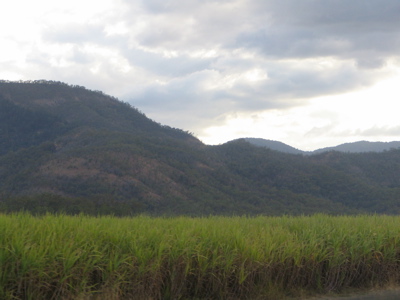
Sugarcane field Queensland Australia Copyright Renate Leahy 2004The irony here is that the growing eagerness to slow climate change by using biofuels and planting millions of trees for carbon credits has resulted in new major causes of deforestation, say activists. And that is making climate change worse because deforestation puts far more greenhouse gases into the atmosphere than the entire world’s fleet of cars, trucks, planes, trains and ships combined.

“Biofuels are rapidly becoming the main cause of deforestation in countries like Indonesia, Malaysia and Brazil,” said Simone Lovera, managing coordinator of the Global Forest Coalition, an environmental NGO based in Asunción, Paraguay. Continue reading

Pacific Islanders Preyed on by Bio-Pirates

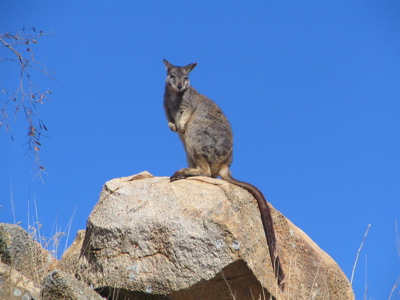
By Stephen LeahyCopyright 2004 Renate Leahy

Mar 20 (IPS) – The Pacific region has long been a favourite target of gene hunters, unethical bio-researchers and “patent bottom trawlers” looking to profit from its unique flora, fauna — and human beings.

Pacific Islanders have had their genes patented against their will. T-cells from the Hagahai tribe in Papua New Guinea can be purchased today on the internet for 216 dollars.
Continue reading

Abrupt Environmental Change Sparks Violent Conflicts

Thirstier World Likely to See More Violence
By Stephen Leahy

Mar 16 (IPS) – A strong link between droughts and violent civil conflicts in the developing world bodes ill for an increasingly thirsty world, say scientists, who warn that drought-related conflicts are expected to multiply with advancing climate change.

“Severe, prolonged droughts are the strongest indicator of high-intensity conflicts,” said Marc Levy of the Centre for International Earth Science Information Network at Columbia University’s Earth Institute in New York.

Continue reading

40 Million Tonnes of Electronic Waste Each Year

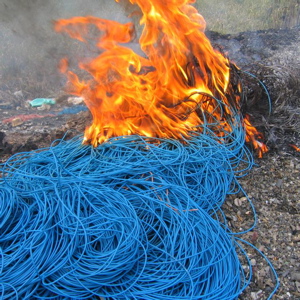
Copyright EMPA, Switzerland E-Waste Dumping Needs International Solution

By Stephen Leahy

Mar 9 (IPS) – A global public-private partnership was launched this week to reduce the toxic mountains of electronic waste and recycle increasingly valuable metals and components.

Much of the nearly 40 million tonnes of “e-waste” — discarded electronics and electrical appliances — produced globally each year ends up in China, India and other developing countries.
Continue reading