Oceans on the Brink: Dying Plankton, Dead Zones, Acidification

A number of marine diatom cells

By Stephen Leahy

VIENNA, Jul 31, 2010 IPS

The oceans are the lifeblood of our planet and plankton its red blood cells. Those vital “red blood cells” have declined more than 40 percent since 1950 and the rate of decline is increasing due to climate change, scientists reported this week.

Phytoplankton are a critical part of our planetary life support system. They produce half of the oxygen we breathe, draw down surface CO2, and ultimately support all of our fisheries,” said

Boris Worm of Canadas Dalhousie University and one of the worlds leading experts on the global oceans.

“An ocean with less phytoplankton will function differently,” said Worm, the co-author of a new study on plankton published this week in Nature. Plankton are the equivalent of grass, trees and other plants that make land green, says study co-author Marlon Lewis, an oceanographer at Dalhousie.

“It is frightening to realise we have lost nearly half of the oceans’ green plants,” Lewis told IPS.

“It looks like the rate of decline is increasing,” he said.
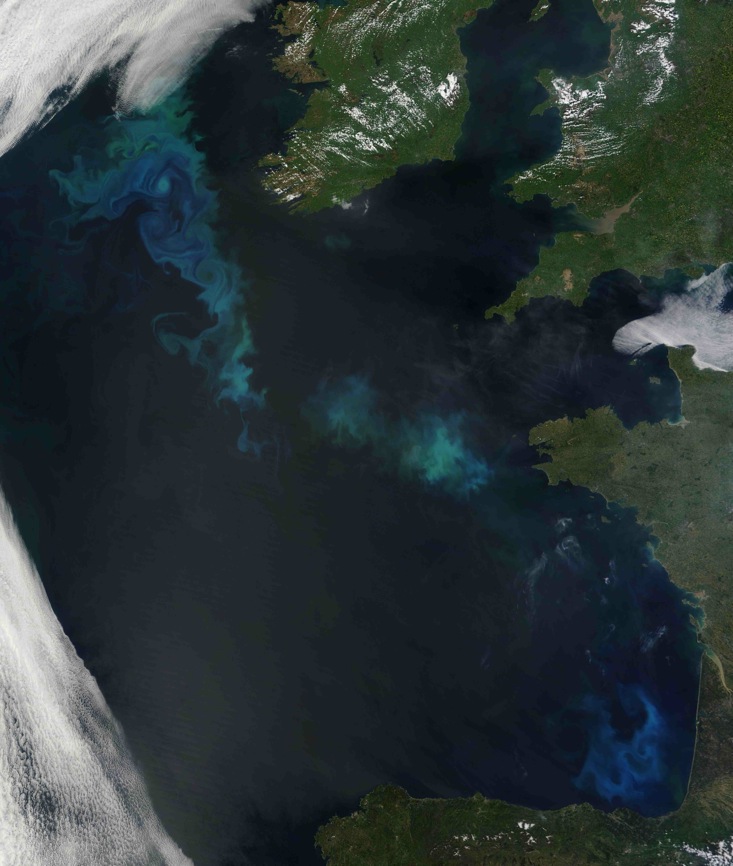
A large phytoplankton bloom in the Northeast Atlantic -NASA Earth Observatory Collection.

[See also my series of articles on ocean acidification]

Independent environmental journalism now depends on public support, learn more about how this works and how you can help, click here.

Climate change is warming the oceans about 0.2C per decade on average. This warmer water tends to stay on top because it is lighter and essentially sits on top of a layer of colder water. This layering, or stratification, is a problem for light-loving plankton because they can only live in the top 100 to 200 meters.

Eventually they run out of nutrients to feed on unless the cold, deeper waters mix with those near the surface. Ocean stratification has been widely observed in the past decade and is occurring in more and larger areas of the world’s oceans. Continue reading

Food Prices Soar (again) – Governments Starved Ag Research of Funding for Last 20 Years

By Stephen Leahy

[New Article]

MONTPELLIER, France, Apr 14, 2010 (IPS)

How’s this for short-sighted:

A billion people go hungry every day, food prices have climbed 30 to 40 percent, climate change is reducing agricultural production – and for the past two decades, the world has slashed investments in publicly-funded agriculture until it is a pittance in most countries.

“Moral outrage is needed. We must abolish this… It can be done. It must be done,”Ismail Serageldin Website, Egypt and a former World Bank economist, told nearly 700 World Food Prize laureates, ministers, scientists and a few representatives from development and farmer organisations at the first Global Conference on Agricultural Research for Development (GCARD) last month here in southern France.

“This is the launching pad to transform hunger in our time,” Serageldin concluded.

The “rocket” on the launching pad is a major transformation of the 500 million dollars of public funds for international agricultural research carried out by the Consultative Group on International Agricultural Research (CGIAR), an alliance comprising some 8,000 researchers in 100 countries.

For the past year, a global consultation process involving over 2,000 stakeholders from 200 countries has produced a draft plan for reform that promises to meet the needs of the world’s 500 million poor small farmers who feed the two billion poorest people.

Called ambitious and far-reaching by proponents, the “Montpellier Road Map” sets the priorities for “linking science and innovation to the needs of farmers and the rural poor”.

Critics say it resembles little more than a passionate shuffling of the status quo. As the French say like to say: “Plus ça change; plus c’est la même chose” (the more things change, the more they stay the same).
Continue reading

Urban Air Pollution from Burning Fossil Fuels Reduces Children’s Intelligence

Yet another study that confirms the urgent need to switch to cleaner energy sources for health reasons. Here we have unborn children affected by the air pollution their mothers breathe. Burning fossil fuels releases polycyclic aromatic hydrocarbons (PAHs) which we all breathe in but these chemicals affect the mental development of unborn children. Other new studies show smog causes increases in heart attacks, and reduces blood’s ability to transport oxygen.

So why the high-profile fight over climate change and urgent need to reduce fossil fuel use? Might it happen that fossil energy companies desperate to protect hundreds of billions of dollars of profits, actively encourage (if not directly fund) confusion regarding the inconvenient scientific results on climate and public health? — Stephen

[UPDATE: “Urban air pollutants may damage IQs before baby’s first breath, scientists say” – Environmental Health News
July 26, 2010]

April 2010 — A study by the Columbia Center for Children’s Environmental Health (CCCEH) carried out in Krakow, Poland has found that prenatal exposure to pollutants can adversely affect children’s cognitive development at age 5, confirming previous findings in a New York City (NYC) study.

Researchers report that children exposed to high levels of polycyclic aromatic hydrocarbons (PAHs) in Krakow had a significant reduction in scores on a standardized test of reasoning ability and intelligence at age 5. The study findings are published today online in Environmental Health Perspectives. Continue reading

Nuclear Energy Steals Billions from Other Technologies

By Stephen Leahy*

Costs of nuclear skyrocket while costs of renewables falling quickly say energy experts

BERLIN, Jul 31, 2009 (IPS)

Why is nuclear energy back on the table?

One reason is a powerful U.S. lobby where 14 energy companies spent 48 million dollars in 2007 alone to convince American politicians to give the industry huge loan guarantees because they cannot get financing anywhere else, says Ellen Vancko, a nuclear energy analyst at the Union of Concerned Scientists, a U.S.-based non governmental organisation (NGO).

This lavish lobbying effort by the energy and nuclear power sector has been ongoing since the mid-1990s, according to the Center for Responsive Politics, a U.S. NGO and now totals at least 953 million dollars.

Even more has been spent to convince the public that nuclear is one of the keys to energy security so that there is significant public support for new reactors, a Gallup Environment Poll reported this year.

“There are lots of senators and members of congress talking about nuclear as a clean, renewable energy resource,” Vancko says.

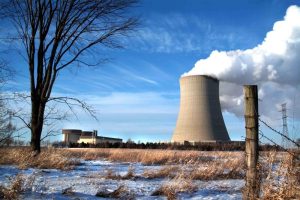
The other reason is the French. Continue reading

Europeans stopped Canada’s Slaughter of Baby Seals – Can They Stop Canada’s Tar Sands?

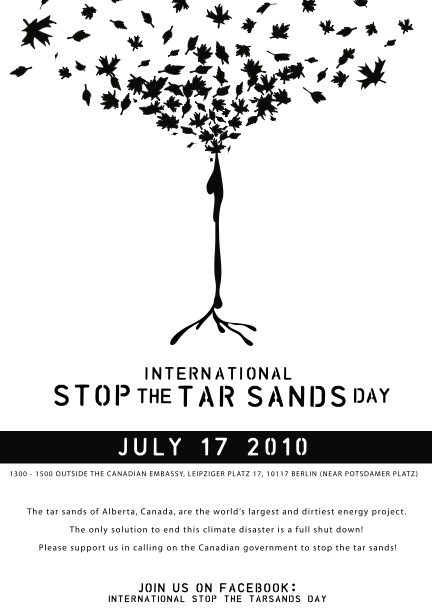
On July 17th Berliners and other Europeans will take to the streets to stop the worst environmental disaster on the planet:

Canada’s “Dirty Oil” Tar Sands

[UPDATE: See pix and story on the Stop Tar Sands “demo-fest”]

“The tar sands of Canada constitute one of our planet’s greatest threats” — James Hansen, Director of NASA’s Goddard Institute for Space Studies

“Extracting oil from Alberta’s tar sands jeopardizes the survival of our species” — Al Gore

Warning of the global environmental disaster represented by Canada’s production of oil from its western tar sands, protesters will gather in front of the Canadian Embassies in Berlin, London and Copenhagen on Saturday, July 17 to mark International Stop the Tar Sands Day.

[Download poster international tar sands day A3]

The goal of International Stop the Tar Sands Day is to raise awareness in Europe that oil made from Canada’s tar sands has “two-to-three times the global warming pollution of conventional oil,” according to eminent scientist James Hansen, Director of NASA’s Goddard Institute for Space Studies. “But the process also diminishes one of the best carbon-reduction tools on the planet: Canada’s Boreal Forest.”

Similar protests are planned at Canadian embassies in London, Paris and Vienna.

“Ultimately only Canadian people can stop the expansion of the tar sands. Through our demonstrations we want to show Canadians there is international support for a moratorium,” says first-time organizer Derek Leahy, a Canadian living in Berlin.

“We believe Canadians will make the right decision,” Leahy said

“Although European companies and banks are profiting from Canada’s tar sands few Europeans have heard about the tar sands. We intend to change that ,” he said

[Full disclosure: this is copied from a press release and Derek is my son — Steve] Continue reading

Proof of Anti-Global Warming Cabal: Fossil fuel Interests, Christian Evangelicals and the Media

Stephen Leahy interviews science historian NAOMI ORESKES

PARIS, Mar 24, 2010 (IPS)

Even though 2009 was the fifth warmest year since 1850, and 2000-09 the warmest decade ever, according to the World Meterological Organisation, surveys show that public concern about global warming in the United States and Canada has dropped sharply in the past 18 months.

Why? Because of a relentless disinformation effort from an unlikely cabal of fossil fuel interests, Christian evangelicals and the media, says Naomi Oreskes, a professor of history and science studies at the University of California, San Diego.

“They have managed to reopen the debate over global warming in people’s minds,” she told IPS.

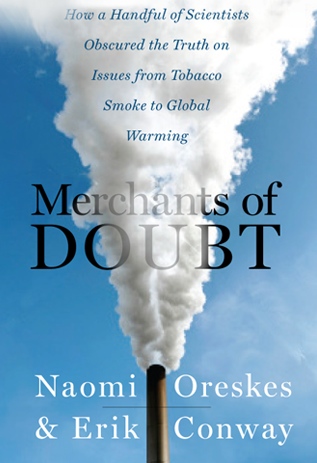
Oreskes and co-author Erik Conway, a science historian at the Jet Propulsion Laboratory, document similar efforts to manufacture doubt around the science on acid rain, the ozone hole, secondhand cigarette smoke, and the pesticide DDT in their just published book, “Merchants of Doubt: How a Handful of Scientists Obscured the Truth on Issues from Tobacco Smoke to Global Warming”. [Tons of excellent reviews —  the “eye-opener of the year” says one reviewer.]

In 2004, Oreskes was vilified on TV, radio and in print by commentators for providing clear evidence there was in fact a scientific consensus on global climate change. Her essay in the journal Science examined all of the peer-reviewed scientific papers on climate over the previous 10 years and found none dissented with the theories that climate change was occurring and it was caused by humans. Her survey has never been successfully challenged, despite many attempts.

IPS environmental correspondent Stephen Leahy spoke to Oreskes over the phone. Excerpts of the interview follow.

Q: Where is the vehement opposition to the very idea that we need to do something about climate change?

A: Some of it is ideological, part of a long history in the United States that equates environmental regulation as going down the slippery slope to socialism. And some is religious. Christian evangelicals don’t like science in general and have found common cause with the coal industry as a way to be able to teach creationism. Obviously, the motivation of the coal industry is rather different but now these people have come together to undermine science in general.

Are you enjoying this article? It is funded by contributions from readers. Please click here to learn more about Community Supported Journalism.

Continue reading

Turning Forests Into Carbon Profits To Protect The Global Climate?

By Stephen Leahy*

MONTPELLIER, France, Apr 7, 2010 (Tierramérica)

Billions of dollars are being mobilised to protect and increase the world’s forests under a climate protection mechanism known as REDD (Reduced Emissions from Deforestation and Degradation). But many experts are unsure that it will work, and some fear it could end in disaster.

According to Anne Larson, who works in Nicaragua as an associate at the Indonesia-based Centre for International Forestry Research (CIFOR), “REDD presents lots of risks.”

“Most countries are simply not ready. They do not have policies to protect the rights of local and indigenous peoples, to determine land tenure or even work out who owns the ‘carbon rights’ to a forest,” Larson told participants at an international conference on smallholder and community forestry in Montpellier, France, in late March.

Under the REDD initiative, richer countries would pay to maintain forests in tropical regions to offset their own carbon emissions. Carbon dioxide from human activities is one of the main gases that produce the greenhouse effect.

The wealthy countries would be granted “carbon credits” towards achieving their carbon reduction commitments to combat climate change. Continue reading

Europe’s Green Energy Portfolio Up in Smoke?

…the truth about the “big lie” that burning wood for energy is carbon- neutral

By Stephen Leahy

BERLIN, Jun 7, 2010 (IPS)

Europe seems hell-bent on burning the world’s forests for bioenergy, even as it offers billions of euros to save them, critics say.

The dirty secret of Europe’s vaunted green energy revolution is the fact that 68.5 percent of its renewable energy portfolio comes from biofuels and burning wood for energy, according to a report released in Brussels last week. Modern technologies like wind and solar get all the press, but burning wood is well, prehistoric.

“We estimate at least 27 million tonnes of wood biomass will be needed annually to supply planned power stations in the UK (United Kingdom) alone,” said Almuth Ernsting from Biofuelwatch, a British NGO focused on bioenergy issues.

In a story broken by IPS last fall, at least one million hectares of forest annually will be needed to feed the dozens of planned wood-fired power plants in Britain alone. The Netherlands is already burning one million tonnes of wood. Germany is up 23 million cubic meters (16.5 million tonnes) – mostly imported – and plans to double this figure by 2020, said the report co-published with the Global Justice Ecology Project, “Wood Based Bioenergy: The Green Lie”.

“It’s getting pretty scary,” Ernsting, a report co-author, told IPS. Continue reading

Burning Oil, Gasoline, Coal Causes Heart Attacks – American Heart Association

Researchers have long proven emissions from cars, trucks, coal plants reduce air quality and affect our health. Yet another study documents the serious health impacts on all of us, specifically our heart and arteries.

Reuters take:

The evidence is stronger than ever that pollution from industry, traffic and power generation causes strokes and heart attacks, and people should avoid breathing in smog, the American Heart Association said on Monday. Continue reading

Why the BP Oil Spill Really Happened

We Can Live Without Oil

“It was a disaster that was going to happen, but business and government simply pretended it was not going to happen.”

[Update: Why the BP spill cannot be cleaned up]

By Stephen Leahy*

UXBRIDGE, Canada, May 10, 2010 (Tierramérica)

The policies and deals that contributed to the massive oil spill under way in the Gulf of Mexico are also jeopardising the Earth’s vital biological infrastructure, according to the Global Biodiversity Outlook 3, published Monday.

The British Petroleum oil spill of 5,000 barrels a day in the Gulf of Mexico, which began Apr. 20 when an explosion caused a rupture at the Deepwater Horizon oil rig, will have devastating consequences for marine life and coastal ecosystems for decades, experts say.

Similar business and policy decisions, multiplied thousands times over the last hundred years, have put the biological infrastructure that supports life in jeopardy, according to the Global Biodiversity Outlook 3 (GBO3) report, issued May 10 by the Convention on Biological Diversity.

The report is the most current assessment of the state of the planet’s biodiversity, the living organisms that provide us with health, wealth, food, fuel and other vital services.

In this study, “you can clearly see the outlines of what could be the sixth great extinction event of all life on Earth,” said Thomas Lovejoy, biodiversity chair at the Washington DC-based Heinz Centre for Science, Economics and the Environment, and chief biodiversity adviser to the president of the World Bank. Continue reading