“We’re Running the Risk of Unstoppable Climate Change” — Oceanographer

Interview with leading marine scientist Chris Reid

“I’m afraid it is going to take a major catastrophe in the developed world…”

GIJON, Spain, Jun 4 (IPS) – Warming seawater, melting sea ice and glaciers, sea level rise, storm intensification, changes in ocean currents, growing “dead zones”, and ocean acidification are just some of the signs that the oceans that cover 71 percent of our watery planet are changing.

Changes in the oceans also means major impacts on the land and the atmosphere. “Policy makers and the public do not realize that the oceans are the drivers of the climate system,” says Chris Reid, recently retired professor of oceanography at the Sir Alister Hardy Foundation for Ocean Science in Plymouth, England.

Reid will be producing a report this summer on the impacts the altered oceans are having and will have on the global climate.

IPS environment correspondent Stephen Leahy spoke to Reid at an international scientific symposium held late last month in Gijon, Spain on the effects of climate change on the world’s oceans.

IPS: What is happening in the oceans that will affect the global climate?

CR: The oceans have absorbed 30 percent of all human emissions of carbon dioxide (CO2) since the start of the industrial age. There is now good evidence that the oceans are absorbing less carbon as a result of climate change. The warming of surface waters, glacial and sea ice meltwater, acidification and so on are inhibiting or slowing a number of the oceans’ mechanisms for absorbing carbon from the atmosphere and safely storing them in the deep ocean.

IPS: How will that affect us?

CR: It means the atmospheric concentrations of CO2 will rise much faster than has been previously projected by climate scientists. Human carbon emissions are already on pace for the worst case scenario as envisioned by the IPCC (Intergovernmental Panel on Climate Change). These changes in the oceans means the rate of warming will increase, bringing even more severe hurricanes and cyclones, flooding events and so on.

IPS: Cyclones like the one that recently devastated Burma?

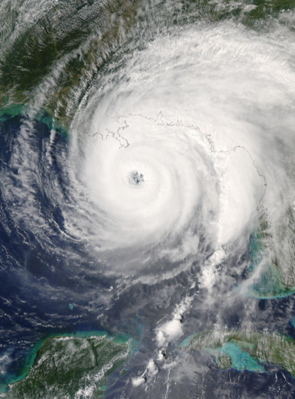
CR: Yes. Research presented at this meeting shows that South Korea and Japan are experiencing more powerful cyclones. While a single event can’t be precisely connected to climate change, the Burma cyclone fits what is expected with climate change. Continue reading
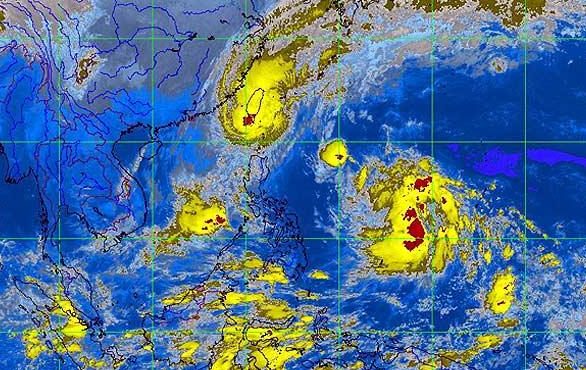
Philippines hit by 13 Major Storms – Two Arrive Today

picture-2.jpg

Although the Atlantic hurricane season has been relatively quiet, the Eastern Pacific has already seen 24 typhoons (hurricane). The Philippines have been hit by 13 this season and two arrived this week, including one that killed 13 people last week and and then completely reversed itself and returned. Over a half million people have been forced from their homes.

Related stories:
First Ever: Two Hurricane Landfalls on Same Day – Pix
Hurricane Felix Category Five — Pix
Steve’s Hurricane Handbook 2007
Hurricane Katrina Only Cat 1/2 When It Hit New Orleans – NOAA

First Ever: Two Hurricane Landfalls on Same Day – Pix

Yesterday was the first time Atlantic and Pacific hurricanes have made landfall on the same day. Here is an super picture of both Felix and Henriette by

NASA (high resolution pix here):

picture-5.png

Can only hope and pray that damage from these massive storms is minimal.

Check Reuters AlertNet for various emergency assistance agencies that are sending aid to these areas and for information updates.

To learn more about modern hurricanes and the potential link to climate change check out Steve’s Hurricane Handbook 2007. This is a compendium of the most interesting quotes and facts about hurricanes from scientists and other experts since 2004. You can download this collection free of charge but nothing is truly free. Donations appreciated

Hurricane Felix Category Five — Pix

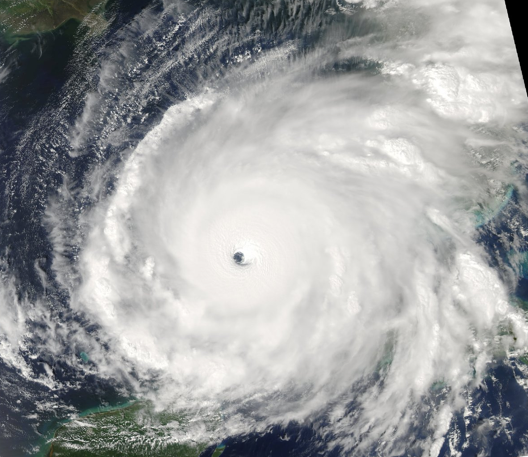
picture-4.pngHurricane Felix, the second Cat 5 storm in two weeks is set to hit Central America Monday. Here’s a satellite image from NOAA:

Tues AM Update: Felix hits Nicaragua as Cat 5 — first time two Cat 5 storms have made landfall in one season.

To learn more about modern hurricanes and the potential link to climate change check out

Steve’s Hurricane Handbook 2007

This is a short ebook  contains a collection of the most interesting quotes and facts about hurricanes from scientists and other experts.


Steve’s Hurricane Handbook 2007

hurri-handbk.png One year before Katrina devastated New Orleans and the Gulf Coast, scientists feared global warming was going to make hurricanes more powerful.

Five Little-Known Facts:

  1. “These are not natural disasters, they are environmental disasters.”
  2. NOAA study found that Katrina was only a Category 1 or perhaps 2 on landfall
  3. Storms in the NorthWest Pacific Ocean are 75 percent more powerful than they were 30 years ago
  4. Climate change has the potential to raise oceans temperatures high enough create future hypercanes — 600 kilometre per hour superstorms
  5. “The U.S. has a very big societal problem when it comes to coping with hurricanes” (ok, maybe you knew that)

This is a sampling of the little known information about hurricanes from respected scientists collected in the modestly titled “Steve’s Hurricane Handbook 2007 – Lessons Learned 2004-2006? “ (1.2 mb pdf). It’s a compendium of the most interesting quotes and facts about hurricanes from hurricane experts since 2004. Continue reading

Flying Blind Into a Monster Hurricane Season

ivan.jpgFlying Blind Into Monster Storm Season

By Stephen Leahy

“…New Orleans is at the same risk as it was before Katrina.”
— Stephen Leatherman, director of the International Hurricane Research Center

Aug 24 (IPS) – Category Five Hurricane Dean is just the first of several monster storms coming this hurricane season, meteorologists predict.

The United States and other countries remain highly vulnerable, even as budget cuts to the National Aeronautics and Space Administration (NASA) imperil hurricane prediction and research.

“The U.S. will experience landfalls of between two and four major hurricanes this year,” said Gerry Bell, lead seasonal hurricane forecaster at the National Oceanic and Atmospheric Administration (NOAA) Climate Prediction Centre in Maryland.

“In addition to Dean, the Caribbean region can expect two or three more major storms,” Bell told IPS. Continue reading

Hurricane Katrina Only Cat 1/2 When It Hit New Orleans – NOAA

hurricane-rita-noaanasa.pngAfter a recent trip to New Orleans an environmental expert was astonished to learn that Hurricane Katrina was not a powerful hurricane when it struck New Orleans in 2005

While not widely covered by the mainstream media the National Oceanic and Atmospheric Administration (NOAA) released its final data analysis in late Dec 2005 that Katrina was only a Cat 1 or 2 on landfall.

In an overview written for IPS on Jan 11/06 I wrote:

Hurricane Katrina was the worst U.S. natural or environmental disaster ever, and a new analysis of the storm by NOAA’s National Hurricane Centre released in late December reveals some chilling, overlooked details. Perhaps most stunning of those is that more than 4,000 people are still missing nearly four months after Katrina’s landfall in late August. The official death toll is 1,336 people.

But the most worrisome is that Katrina was not a particularly powerful storm on landfall. While it was of Category 5 strength briefly while out in the Gulf of Mexico, new data reveals that its winds were in the Category 1 or 2 class when it struck New Orleans. What Katrina did generate was an enormous storm surge topping 27 feet, sweeping inland some six miles in places. Katrina’s “tsunami” is what resulted in the flooding of 80 percent of New Orleans, and massive destruction along the Gulf Coast.
Such storm surges are bound to worsen with rising sea levels.

See More Unnatural Disasters on the Horizon for rest of story.

Steve’s Hurricane Handbook 2008
25-page eBook a collection of the best bits from 4 years of articles on science of hurricanes and global warming. Arranged chronologically, the scientific story about hurricanes and climate change becomes increasingly evident. Colour pix of hurricane devastation.

Get links to my latest articles once a week.

See other hurricane stories:

First Ever: Two Hurricane Landfalls on Same Day – Pix

Hurricane Felix Category Five — Pix

Flying Blind Into a Monster Hurricane Season

New Data Erases Doubt on Storms and Warming

New Data Erases Doubt on Storms and Warming

Stephen Leahy

BROOKLIN, Canada, Sep 11 (IPS) – There is little doubt now that climate change is making hurricanes and cyclones much more powerful and more frequent, top scientists announced Monday.

Sea surface temperatures are rising due to global warming and more than a dozen studies since Hurricane Katrina hit the United States last August show this has resulted in the dramatic increase in the strength of hurricanes in recent years.

“There is no doubt at all that hurricane intensity has increased,” said Kerry Emanuel, a climatologist at the Massachusetts Institute of Technology.

“I was startled to see the power of hurricanes and cyclones increase by 50 to 100 percent since the 1970s,” said Emanuel, one of 19 climate scientists who published a major study Monday in the Proceedings of the National Academy of Sciences (PNAS).

–full story