+15,000 temperature records already broken in the US this year
By Stephen Leahy
UXBRIDGE, Canada, May 4, 2012 (IPS)
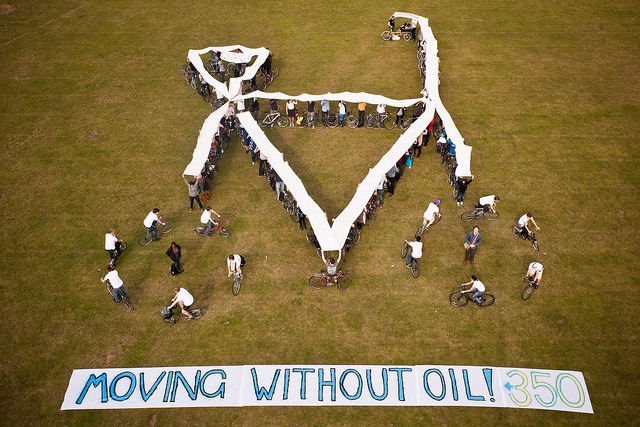
What are you doing on Saturday? Peter Nix, a retiree, will be standing on a railway track on Canada’s west coast blocking a coal train destined to ship U.S. and Canadian coal to Asia.
Nix will be joined by dozens of people near White Rock, British Columbia on May 5. They will be in good company as tens of thousands of people around the world participate in global day of action to “connect the dots” between climate change and extreme weather.
“There will be at least 1,200 actions in more than 100 countries,” says Jamie Henn, communications director for 350.org, a U.S.-based environmental group.
Please throw something in the tip jar before reading on. This is how I make my living.
There’s been a general perception that climate change is a future problem but with all the extreme weather disasters and weather records the public is being to realise that climate change is here, says Henn.
“Recent opinion surveys show the more than 60 percent of the U.S. public are connecting extreme weather to climate change,” Henn told IPS.
The U.S. public is not wrong, say scientists.
“All weather events are affected by climate change because the environment in which they occur is warmer and moister than it used to be,” Kevin Trenberth, senior scientist at the U.S. National Center for Atmospheric Research, told IPS previously. Continue reading →
[Updated May 11 2012: At last a serious plan to phase out these subsidies will be on the table at the Rio+20 meet in June. I will be following this closely – with your help – Stephen ]
Experts say the subsidy madness must stop. With unemployment high can governments facing recession summon the will to end the fossil fuel industries’ FREE RIDE?
By Stephen Leahy
BERLIN, Jun 29, 2010 (IPS)
Every day, governments give away an estimated two billion dollars of taxpayer money to the fossil fuel industry. This unmatched largesse to a highly profitable sector by countries verging on bankruptcy or unable to feed large numbers of their own people is “complete madness”, according to many experts.
In Toronto Sunday, at the conclusion of G20 summit, countries agreed the madness must be constrained if not stopped.
“I was impressed. I think the commitment to phase out…
This is a repost from last year. Sad to see little progress on this issue. — Stephen
“There is no reason for delay. Governments and industry need to take action and people have to stop pointing fingers at each other and get on with it.”
California nearly became the first U.S. state to ban plastic bags, but a multi-million-dollar lobby effort by industry killed the proposed legislation
By Stephen Leahy
HONOLULU, Hawaii, U.S., Mar 28, 2011 (IPS)
Every day, billions of plastic bags and bottles are discarded, and every day, millions of these become plastic pollution, fouling the oceans and endangering marine life.
No one wants this, but there is wide disagreement about how to stop it.
“Every time I stick my nose in the water, I am shocked. I see less and less fish and more and more garbage,” said Jean-Michel Cousteau, son of the legendary marine ecologist Jacques Cousteau, who has spent four decades making documentaries and educating people about the oceans.
Please throw something in the tip jar before reading on. This is how I make my living.
On trips to the remote and uninhabited northwestern Hawaiian Islands, Cousteau found miles and miles of plastic bottles, cigarette lighters, television tubes, spray cans, broken toys, and thousands of other pieces of plastic on the beaches and thousands of tonnes of derelict fishing nets in the reefs.
“We are using the oceans as a universal sewer,” he told some 440 participants from the plastics manufacturing, food and beverage sectors, environmental organisations, scientists and policy-makers from over 35 countries at the Fifth International Marine Debris Conference in Honolulu, Hawaii, which ended Mar. 25. Continue reading →
In North America the cost of owning and operating a private automobile amounts to 8,000 to 12,000 dollars a year of after-tax income, according to automobile clubs. Many families have two vehicles that their biggest expense by far. There better ways to be mobile.
Car Ownership Declines in Europe as Cities’ Focus on Walking, Bikes & Public Transit
Cost of Personal Car Ownership Tops $10,000 a year
By Stephen Leahy
CHANGWON, South Korea, Nov 1, 2011 (Tierramérica)
Berlin is a big capital city of a country famed for making excellent automobiles, but it can no longer afford roads and is now moving people by transit, bike and especially through walking.
Berlin is not alone. Paris, Tokyo, Seoul, Bogotá, New York City and other major cities simply cannot afford the cost, the pollution, the noise and the congestion of more cars. They are embracing a new concept called EcoMobility – mobility without private cars.
“EcoMobility is not only walking, cycling and public transportation. It is about these three systems clicking together: connectivity is the key,” Gil Peñalosa, former director of parks and recreation in Bogotá, Colombia, told those attending the EcoMobility Changwon 2011 congress.
Wind-solar electricity generation built by indigenous Telengits community in Russia’s Altai Mountains. Photo: Foundation for Sustainable Development of Altai
The planet is in peril, 3,000 scientists and other experts concluded at the recent Planet Under Pressure conference in London. Climate change, overuse of nitrogen and loss of biodiversity are just three of the perils threatening to make much of our home uninhabitable.
World leaders will meet in Rio de Janeiro June 20-22 to address this at the Rio+20 Conference, 20 years after the very first Earth Summit.
Rio+20 needs to be the moment in human history when the nations of the world come together to find ways to ensure ‘the very survival of humanity,’ environmentalists and scientists have said.
A “Green Economy” will be one of the main ideas under discussion in Rio. The idea is to make a transition to an economic system that maximizes human well-being while operating within the planet’s environmental limits. Exactly how this could be accomplished has yet to be defined.
The current economic system rewards those who exploit and destroy nature, said Vicky Tauli-Corpuz, Executive Director, Tebtebba (Indigenous Peoples’ International Centre for Policy Research and Education).
The current system hinders and even blocks Indigenous peoples from practicing their traditional ways of living that actually represent “a real green economy” that can be sustainable, achieve well being and are climate-friendly, said Tauli-Corpuz, a member of the indigenous Kankana-ey Igorot community in the Philippines.
Please throw something in the tip jar before reading on. This is how I make my living.
Here’s a thoughtful article written by my son who is working on a farm in Tasmania. Normally he is a historical tour guide in Europe. He’s not part of any organization but just decided to take action for sake of his generation’s future. It is amazing what he and his friends are up to. — Stephen
By Derek Leahy
FRANKLIN, TASMANIA
I sat down in a café in Franklin, Tasmania the other day trying to sort out all that has transpired these past few weeks. You see, May 5thcould very well become a massive day of action. A lot of people from all over the world want to make their voices heard the week of May 5th. International Stop the Tar Sands Day’s circle of friends just got bigger.
Anyway, I sat down in an practically empty café (Franklin is a pretty small town), opened…
Canada spending $60 billion on war planes and ships. Canada’s GDP has tripled in 10 years but now extremist Harper govt budget slashes public service and health protection programs. It’s ideology at work here not ‘proper fiscal management’.
Environment budget slashed while PM Harper’s office places a gag order on government scientists. (And a $60 billion order for military equipment)
By Stephen Leahy
UXBRIDGE, Canada, Nov 9, 2011 (IPS)
Canada’s Stephen Harper government is spending more than 60 billion dollars on new military jets and warships while slashing more than 200 million dollars in funding for research and monitoring of the environment.
Amongst the programmes now crippled is Canada’s internationally renowned ozone monitoring network, which was instrumental in the discovery of the first-ever ozone hole over Canada last spring. Loss of ozone has been previously linked to increases in skin cancer.
“The proposed cuts go so far the network won’t be able to do serious science,” said Thomas Duck, an atmospheric scientist at Halifax’s Dalhousie University.
Canada was the pioneer in ozone monitoring, developing the first accurate ozone measuring tool that led to the discovery that the world’s…
Frances Moore Lappé, author of "EcoMind: Changing the Way We Think to Create the World We Want"
“Our economy creates scarcity by being extraordinarily wasteful and destructive.”
Stephen Leahy interviews writer and environmentalist FRANCES MOORE LAPPÉ
UXBRIDGE, Canada (IPS)
To meet the challenges of the 21st century, including climate change, feeding the world and eliminating poverty, we need to free ourselves from the “thought traps” that prevent us from seeing the world as it truly is and narrow our vision of how to respond.
At same time, we need to eliminate “privately-held government”, says Frances Moore Lappé, author of “EcoMind: Changing the Way We Think to Create the World We Want” published by Nation Books. Lappé has written 18 books, including the very influential “Diet for a Small Planet”.
“There is no way to deal with climate change or poverty without real democracy,” she says.
IPS climate and environment correspondent Stephen Leahy spoke with Lappé about her new book.
Q: What do you mean by the term “thought traps”?
A: We don’t see the world as it really is but through a filter or mental map. Research in neuroscience shows that we interpret the world based on our previous experiences and understanding of the world. In other words we see what we expect to see.
One of the dominant ideas in our society is about scarcity or lack. There isn’t enough resources or food or whatever for all of us. We then “see” or interpret everything from that filter or frame of reference.
Q: How does this widely-held idea of “scarcity” affect us?
A: Believing there isn’t enough makes us defensive and competitive with each other. We think we’d better get ours before someone else does. The majority of people I talk to insist with seven billion people on the planet scarcity is our reality now and into the future. They are blinkered by this scarcity mentality.
Q: But isn’t it true that we are running out of resources like water, energy, food and so on?
A: I discovered as a young student that the U.S. food production was extraordinarily wasteful and inefficient. Sixteen pounds of corn and soy fed to cattle to get one pound of meat. That pound of meat also requires as much as 12,000 gallons of water. Nearly half of all food harvested is never consumed.
This staggering waste is the rule, not the exception, and not just in food production. The U.S. energy sector wastes 55-87 percent of the energy generated – most of it in the form of waste heat at power plants. It’s not just the U.S. U.N. studies showed that 3,000 of the world’s biggest corporations caused two trillion dollars in damage to the global environment in 2008 alone.
Powerful and inspiring, EcoMind will open your eyes and change your thinking. I want everyone to read it — Jane Goodall
Q: Why are we so destructive and wasteful?
A: It’s a result of the current market economy with its single focus on generating the quickest and highest return to a small minority of wealth-holders. Our economy creates scarcity by being extraordinarily wasteful and destructive. The term “free market economy” is completely wrong. What we have is a corporate-monopoly market economy of waste and destruction. We need to be more careful and more precise in our language.
Q: There is a growing call by environmentalists and some economists of the need to shift from a growth economy to a no-growth economy, but you say this is a thought trap?
A: Yes, it leads to a distracting debate about merits of growth versus no-growth. Growth sounds like a good thing so most people will resist the idea of no growth. Better to focus on creating a system that enhances health, happiness, ecological vitality and social power.
Q: In your book you also say everyone needs to focus on “living democracy”.
A: America has become what’s called a “plutonomy”, where the top one percent control more wealth than the bottom 90 percent. Inequality is now greater in the U.S. than in Pakistan or Egypt, according to the World Bank. The result is corporations and the very wealthy sway public decision making via political contributions and lobbying. There are now two dozen lobbyists for every member of Congress.
To counter this privately-held government we need to re-create a culture of mutual responsibility, transparency, citizen participation and public financing of elections. Democracy is not just voting once a year, it is a culture, a way of living.
The “mother of all issues” in most countries is removing the power of concentrated wealth from public-decision making and infusing citizens’ voices instead. The environmental crisis is in fact a crisis in democracy.
Q: There is a feeling amongst many environmentally-aware people that it is already too late and there is too much to be overcome.
A: Thinking it’s too late is another thought trap. It may be too late to avoid significant impacts that could have been avoided if action had been taken two decades ago. It is not too late for life. My book is filled with examples of people taking charge and turning things around.
What makes people think it’s too late is that they feel alone and powerless. People feel that way because of the thought traps, the false beliefs about scarcity and of human nature as greedy and selfish. Those beliefs and a privately-held government have led to feelings of powerlessness.
Q: This year is the 20th anniversary of the historic Earth Summit and major conference called Rio+20 will be held in June. What are your thoughts?
A: I participated in the Rio+10 conference and we’ve gone backwards in those 10 years. Rio+20 could be the opportunity to reverse course and align ourselves with nature to create the world we really want.
“It is unacceptable that the Canadian public sits back and allows access to the science they’re funding to be denied them,” said Andrew Weaver, a climate scientist.
Canadian media coverage of climate change has fallen by 80 percent
By Stephen Leahy
VANCOUVER, Canada, Feb 21, 2012 (IPS)
Amid revelations of a well-funded U.S. organisation’s plans to deliberately distort climate science, scientists and journalists at a major scientific conference called on the Canadian government to stop its muzzling of scientists.
For the past four years, the Canadian government has been denying timely access to government scientists even when their findings are published in leading scientific journals, said scientists and journalists in a special session of the American Academy for the Advancement of Science meeting here in Vancouver, British Columbia.
“The Canadian public doesn’t know as much as they could about science and climate change,” said Margaret Munro, who is a science writer for Postmedia News, based in Vancouver.
“The more controversial the story, the less likely you are to talk to the scientists,” Munro told IPS.
Continuing studies show plastics are found everywhere in the oceans even at great depths. The only solutions that works are bans on single use plastic material like bottled water.
“Degradable or compostable plastic should be banned….bio-plastics simply break down into microplastic particles”– scientist
By Stephen Leahy
HONOLULU, Hawaii, U.S., Mar 24, 2011 (IPS)
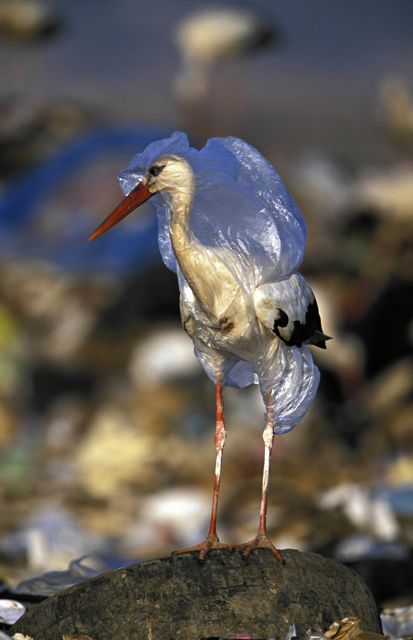
That plastic bottle or plastic take-away coffee lid that has 20 minutes of use can spend decades killing countless seabirds, marine animals and fish, experts reported here this week.
On remote Pacific island atolls, diligent albatross parents unknowingly fill their chicks’ bellies with bits of plastic that resemble food. The chicks die of malnutrition, and when their bodies decay all those plastic bottle tops, disposable lighters, and the ubiquitous bits of plastic detritus get back into the environment in a cruel perversion of ‘recycling’.
There is now so much plastic in the oceans it is likely that virtually every seabird has plastic in its belly if its feeding habits mean it mistakes plastic bits for food. The same is true for sea turtles, marine animals or…





 FRANKLIN, TASMANIA

 Stephen Leahy, International Environmental Journalist