Six Experts On Why Ethanol is a Dumb Idea

In response to the many questions and concerns about ethanol/biofuels and impacts on food prices and climate change here are the six or seven articles I’ve done on the subject in the past year.

Emissions from ethanol are 93 percent higher than gasoline,” said David Tilman, an ecologist at the University of Minnesota and co-author of one of the papers published Thursday in the journal Science.

See: Ethanol Worse Than Gasoline

“The U.S. has led the fight to stem global hunger, now we are creating hunger,” said Lester Brown, president of the Earth Policy Institute, an environmental think tank in Washington.

See: Biofuels: Another Good Reason to Hate American Policy

Subsidising biofuels is just about the dumbest way to go.” – Todd Litman, director of the Victoria Transport Policy Institute — Subsidies for 2007 est $13-$15 billion

Ethanol: The Great Big Green Fraud

We consider sweet sorghum an ideal ’smart crop’ because it produces food as well as fuel,” said William Dar, director general of the International Crops Research Institute for the Semi-Arid Tropics.

See: Food & Fuel: The New Magic Bullet Biofuel?

“It’s not just the World Bank, regional development agencies, progressive development groups in Europe and many countries are all investing in agrofuels,” says Anuradha Mittal of the Oakland Institute,

See: Record $Financing For Biofuels, Not Food

“Cellulosic ethanol is just the next big money-maker for the agro-chemical and biotech corporations,” says Andrew Boswell of Biofuelwatch, a British environmental NGO.

See: (Cellulosic) Greenest Ethanol Still Unproven

GE Trees: Poor Countries Can’t Control

Courtsey of Museo d\'Arte Contemporanea, Turin, Italy

by Stephen Leahy

BONN, May 29 (IPS) – An intense North-South debate over genetically engineered trees has sidetracked delegates at a U.N. conference on biodiversity here: African nations want a global moratorium, while a few rich countries led by Canada say it should be up to individual countries to regulate.

While 168 nations that are part of the U.N. Convention on Biological Diversity (CBD) debate the issue, a new two-year U.N.-funded study warns that developing countries simply don’t have the capacity to manage or monitor biotechnology.

“Africa doesn’t have the technical and scientific capacity to fully debate let alone enforce rules around biosafety of biotechnology,” said the study’s co-author, Sam Johnston of the United Nations University Institute of Advanced Studies (UN-IAS) in Tokyo.

“Genetic contamination by GE plants is a huge issue and it’s increasing,” Johnston told IPS in Bonn.

Continue reading

Ocean Trouble and the End of Hurricane Seasons

By Stephen Leahy*

New, disconcerting science from the oceans

GIJÓN, Spain, May 26 (Tierramérica).- Climate change is altering the world’s oceans in so many ways scientists cannot keep pace, and as a result there is no comprehensive vision of its present and future impacts, say experts.

Rising sea levels, changes in hurricane intensity and seasonality, declines in fisheries and corals are among the many effects attributed to climate change.

In an attempt to put some order to their disconcerting findings, more than 450 scientists from some 60 countries gathered in the northern Spanish city of Gijón for the symposium “Effects of Climate Change on the World’s Oceans” May 19-23.

Change is evident where ever marine scientists look. Sea level rise and warmer ocean temperatures are the most obvious, but other changes include a decline in the oceans’ productivity, which means many areas are unable to support as many fish as they once did, according to Luis Valdés, a world expert on plankton and one of the symposium organizers. Continue reading

Food Crisis is “Manufactured” – UK Expert

By Stephen Leahy

Rising fuel and transportation costs could force governments to return to local production of food, scientist Michel Pimbert says in a Tierramérica interview.

LONDON, May 19 (Tierramérica).- The current food crisis has revived the myth that the world doesn’t produce enough food for its six billion people, according to Michel Pimbert, author of a new study that highlights local production as a potential solution.

It is a “manufactured crisis” that is the outcome of a market-driven, global food system, says Pimbert, director of the agriculture and biodiversity program at the London-based International Institute for Environment and Development (IIED).

That system needs to evolve towards localized food production that allows people to improve nutrition, income and economies, starting at the household level and through the regional level, he says. Continue reading

Food & Fuel: Can Sorghum Be The New Magic Bullet Biofuel??

By Stephen Leahy

Korcula, CROATIA, May 13 (IPS) –

A new crop that provides food, animal feed and fuel at the same time promises to help developing countries redirect money spent on oil imports to benefit their own farmers. Is sweet sorghum biofuel’s “holy grail”?

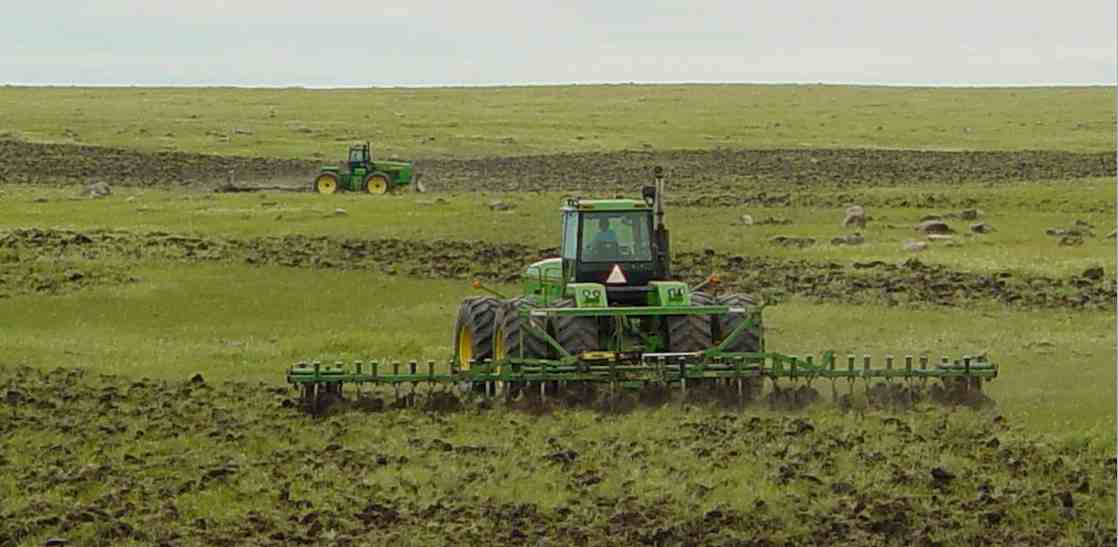
Biofuels are widely blamed for driving food prices higher, sparking food riots in many countries. At least 25 percent of the U.S. maize crop is diverted to biofuel, and extensive areas in Indonesia, Malaysia, China and Brazil are also devoted to growing fuel rather than food.

With sweet sorghum, however, only the stalks are used for biofuel production, while the grain is saved for food or livestock feed. It is not in high demand in the global food market, and thus has little impact on food prices and food security.

“We consider sweet sorghum an ideal ‘smart crop’ because it produces food as well as fuel,” said William Dar, director general of the International Crops Research Institute for the Semi-Arid Tropics (ICRISAT). Continue reading

Energy From Dirt Wins $200K Prize

“Literally, This Is Energy From Dirt”

ACCRA, Ghana May 10 (IPS) – You’ve heard of solar power, and also wind power. Now, you might start hearing about soil power as well.

Microbial fuel cells (MFCs) that make use of the energy given off by soil microbes are amongst the technologies that hold promise for bringing power to developing states, where electricity is often scarce.

The cells also form part of a project that has just won a grant of almost 200,000 dollars in the ‘Development Marketplace’ competition, for which results were announced at ‘Lighting Africa 2008‘; this May 5-8 conference took place in the Ghanaian capital of Accra. The project, developed by six students at Harvard University in the United States, was one of 16 winners selected from 52 finalists competing to bring innovative lighting products to the 74 percent of Africans without access to electricity.

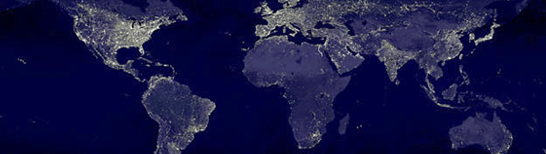
The Development Marketplace competition was held under the ‘Lighting Africa’ campaign, launched towards the end of last year by the World Bank Group. Lighting Africa aims to provide 250 million people on the continent with safe, reliable and economical lighting products and energy services that do not make use of fossil fuels, by 2030. Continue reading

Keeping Darkness At Bay In Africa – Kerosene to the LED

By Stephen Leahy

ACCRA, May 8 (IPS) – In many of Africa’s towns and villages, only smoky kerosene lamps keep the darkness at bay after sunset. However, kerosene is a dangerous and increasingly expensive source of light for Africans who do not have access to electricity — about three-quarters of those living on the continent, according to the World Bank.

Lighting industry entrepreneurs are hoping alternative devices such as solar-powered LED lights will replace the kerosene lamps.

“Africans spend more than 18 billion dollars a year purchasing kerosene,” said Russell Sturm, who heads up the sustainable energy team at the International Finance Corporation (IFC), a member of the World Bank Group.

“And that estimate was done when oil was 35 dollars a barrel, so there is an enormous market for lighting,” he told IPS, adding that the prices of LED devices and solar panels had dropped dramatically over the past three years, and were now competitive with kerosene costs. The price of oil passed the 120 dollar per barrel mark for the first time earlier this week. Continue reading

New Way to Feed the World

Q&A
“A Collective Ignorance About How Agriculture Interacts With Natural Systems”

Interview with Achim Steiner executive director of the United Nations Environment Programme (UNEP

JOHANNESBURG, Apr 9 (IPS) – Representatives from countries, civil society and the private sector are meeting this week in Johannesburg, South Africa, to review the findings of the three-year International Assessment of Agricultural Science and Technology for Development (IAASTD). This global initiative has examined agriculture from all angles, to determine how farming might be done more sustainably in the futur

Acknowledging that certain changes might be difficult to embark on, Steiner nonetheless called on delegates to “Draw inspiration from South Africa to do something that no one thought was possible…(take on) the difficult challenge of walking forward together.”

IPS environment correspondent Stephen Leahy sat down with Steiner to find out more about the difficulties facing agriculture around the world.

IPS: Why is this the time for agriculture to move in a new direction?

Achim Steiner (AS): Agriculture is increasingly reaching limits in terms of arable land and water availability, reduction in soil fertility and increasing environmental impacts. Modern industrial agriculture considers these impacts as extraneous even though the loss of ecosystem services undermines the very basis of what sustains agriculture. If our modern agricultural systems continue to focus only on maximising production at the lowest cost, agriculture will face a major crisis in 20 to 30 years time. There is a collective ignorance about how agriculture interacts with natural systems and this must change. Continue reading

“Doctor” Nature in Danger

By Stephen Leahy*

CAPE TOWN, South Africa, May 3 (Tierramérica)

“When we harm nature, we are harming ourselves,” says Aaron Bernstein, a doctor at Harvard Medical School and one of the authors of the upcoming book “Sustaining Life: How Human Health Depends on Biodiversity“.

Few people realise that our health is directly tied to the health of the natural world,” Bernstein told Tierramérica

Bernstein and Harvard colleague Eric Chivian wrote and edited contributions from more than 100 leading scientists in their new book, published by Oxford University Press and available last May.

Written for a general audience, “Sustaining Life” draws on the latest scientific evidence to make a persuasive case that the current extinction crisis, with species vanishing every day, is a serious threat to humanity equal to, if not greater than, climate change.

Pharmaceuticals, biomedical research, the emergence and spread of infectious diseases, and the production of food, both on land and in the oceans, depend on biodiversity — the rich variety of life on our planet. Continue reading

Boost Food Production by Reducing Enviro Impacts


JOHANNESBURG, Apr 15 (IPS) – Over the past few years, Robert Watson has had what must qualify as one of the world’s tougher assignments: heading an initiative to help agriculture cope with the substantial challenges it faces presently, and the even bigger hurdles ahead.

The three-year International Assessment of Agricultural Science and Technology for Development (IAASTD) has sought to evaluate agricultural knowledge across the spectrum, with the help of governments, civil society, the private sector, and hundreds of experts.

Watson initiated the project while chief scientist at the World Bank; he currently serves as director of the IAASTD — also as chief scientist at the British environment and agriculture department.

The findings of the assessment are being formally presented Tuesday, this after they were reviewed at an intergovernmental plenary held in Johannesburg, South Africa, from Apr. 7-12. IPS environment correspondent Stephen Leahy chatted to Watson at this meeting about the landmark IAASTD. Continue reading