Fishers Learn to Share Shrinking Catch

albacore-tuna-fishing-vessel-san-diego1

By Stephen Leahy

SAN DIEGO, California, Feb 10 (IPS) – With the oceans in crisis, where will our fish – an important source of protein for billions of people – come from?

Innovative new fisheries management tools called “catch share” have begun in recent years and promise to keep fish on the menu for future generations, according to experts at the recent Seafood Summit in San Diego.

“Adaptation is the key – adaptation and innovation,” Kristjan Davidsson, former CEO of Iceland Seafood International, told over 450 conference attendees last week.

“It is not hard to see that sustainability is the way to go but that requires collaboration with all sectors,” Davidsson said.

The summit brought together fishers, fish farmers, multinational seafood corporations and seafood buyers, along with conservationists and scientists, to debate and find common ground on how to create a sustainable seafood industry and protect the oceans.

Fish account for 28 percent of the animal protein consumed in Asia and 16 percent globally. North America is at the low end of the scale, with fish accounting for just 6.6 percent of animal protein, according to data from the U.N. Food and Agriculture Organisation. Continue reading

Today’s Trophy Fish Are Tiddlers Compared to 50 Years Ago

trophy-fish-19501 Fresh evidence of fishing’s impact on marine ecosystems.

These are trophy fish caught on Key West charter boats in (a) 1957, (b) early 1980s and (c) 2007.

Scripps Oceanography graduate student researcher Loren McClenachan accessed archival photographs spanning more than five decades to analyze and calculate a drastic decline of so-called “trophy fish” caught around coral reefs surrounding Key West, Florida.

The study shows a stark 88 percent decline in the estimated weight of large predatory fish shown in black-and-white 1950s sport fishing photos compared to the relatively diminutive catches photographed in modern pictures.

“These results provide evidence of major changes over the last half century and a window into an earlier, less disturbed fish community…” writes McClenachan.

“The ongoing debate about the status of fisheries in the Florida Keys is a classic problem of the Shifting Baselines syndrome,” says Scripps Professor Jeremy Jackson. “Managers mistakenly assume that what they saw in the 1980s was pristine, but most prized fish species had been reduced to a small fraction of their pristine abundance long before. Historical ecology provides the critical missing data to evaluate what we lost before modern scientific surveys began.”

“I think the photos in this very original paper will make lots of people change their mind,” said Daniel Pauly, a professor at the University of British Columbia Fisheries Centre and Zoology Department.

Research paper published online in January and printed in an upcoming issue of the journal Conservation Biology,

[Source: Scripps news release Feb 18 2009]

Related articles: Coral Reefs and Acid Oceans Series

Get the latest Leahy articles once a week: Subscribe

Plenty of Blame for Collapsing Fish Stocks

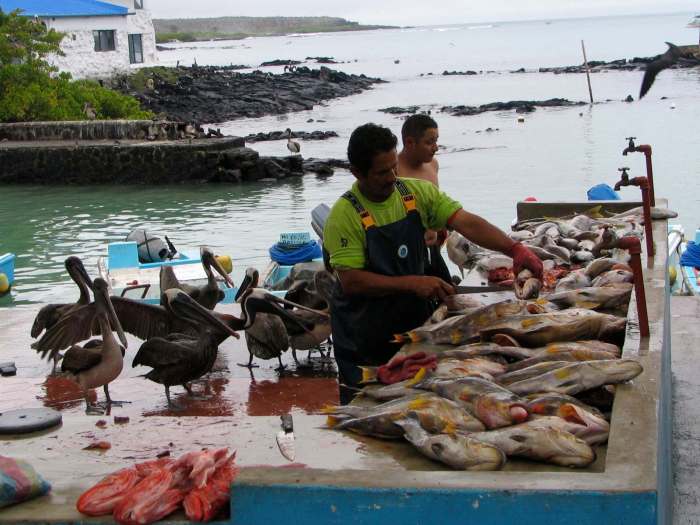
yellow-fin-tuna-catch-galapagosBy Stephen Leahy

SAN DIEGO, California, Feb 4 (IPS) – Climate change, pollution and overfishing have left the oceans in crisis, experts agree. Now a new study reveals that every national government with a fishing fleet has dramatically failed to manage fisheries in a responsible manner.

A detailed survey of the 53 countries that land 96 percent of the world’s marine catch shows that all have failed to comply with the U.N. Food and Agriculture Organisation’s Code of Conduct for Responsible Fisheries. Developed in 1995, the 53 fishing nations all agreed to comply with the code as a potential rescue measure for the world’s fisheries.

And while countries claimed to comply, in fact not one is in full compliance, according the detailed analysis reported in the science journal Nature Wednesday.

I’m confident we would have turned the corner on the collapsing fish stocks had countries complied with the code,” said Tony Pitcher of the University of British Columbia in Vancouver, Canada, one of the study co-authors. Continue reading

Science Articles on Acid Oceans and Coral Reefs

Series of my science articles documenting how global warming is transforming the Oceans and threatening Coral Reefs

No Safe Havens in Increasingly Acid Oceans

Oil, gas and coal are contaminating the world’s oceans from top to bottom, threatening the lives of more than 800 million people, a new study warns Tuesday.

“It took a year to analyse and synthesise all of the studies on the impacts of climate change on ocean species,” Camilo Mora, an ecologist at University of Hawai‘i in Honolulu and lead author, told IPS.

“We are seeing greater changes, happening faster, and the effects are more imminent than previously anticipated.” — Alex Rogers of the University of Oxford

Plankton Death To Come with Acid Oceans and Sunlight

Without major reductions in the use of fossil fuels, sunlight will kill an unknown number of ocean phytoplankton, the planet’s most important organism, a new study reports this week.

Not only are phytoplankton, also known as marine algae, a vital component in the ocean’s food chain, they generate at least half of the oxygen we breathe.

In the not so distant future, sunlight, the very source of life for phytoplankton, will likely begin to kill them because of the ocean’s increasing acidity, researchers from China and Germany have learned.

“There’s a synergistic effect between increased ocean acidity and natural light,” says Ulf Riebesell of the Helmholtz Centre for Ocean Research in Kiel, Germany.

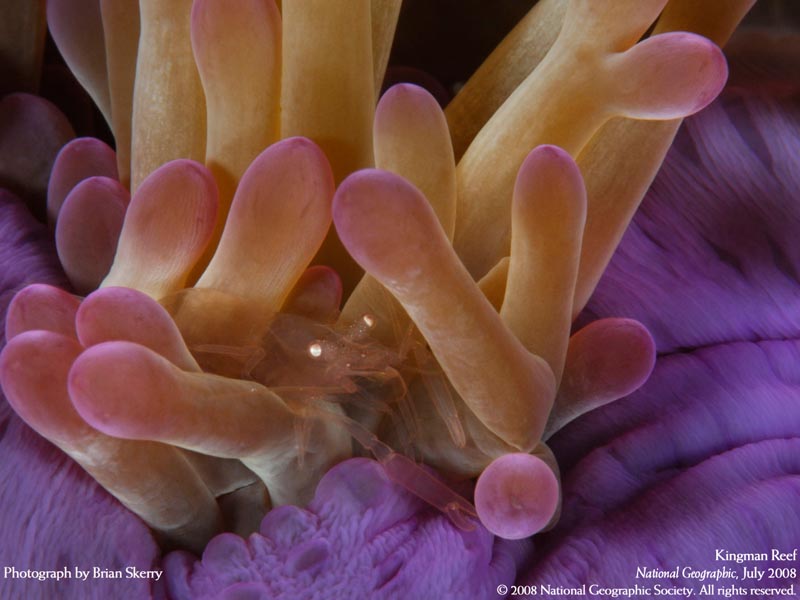
sea-anemone

Deep CO2 Cuts May Be Last Hope for Acid Oceans

(Report from the World Oceans Conference in Indonesia, May 2009)

Ocean acidification offers the clearest evidence of dangers of climate change.

And yet the indisputable fact that burning fossil fuels is slowly turning the oceans into an acid bath has been largely ignored by industrialised countries and their climate treaty negotiators, concluded delegates from 76 countries at the World Oceans Conference in Manado, Indonesia.

Oceans Passing Critical CO2 Threshold

An apparent rapid upswing in ocean acidity in recent years is wiping out coastal species like mussels, a new study has found.

“We’re seeing dramatic changes,” said Timothy Wootton of the Department of Ecology and Evolution at the University of Chicago, lead author of the study published Monday in the Proceedings of the National Academy of Sciences. The study shows increases in ocean acidity that are more than 10 times faster than any prediction.

Say Goodbye to Coral Reefs

GIJON, Spain, May 22 (IPS) – The one-two punch of climate change that is warming ocean temperatures and increasing acidification is making the oceans uninhabitable for corals and other marine species, researchers said at a scientific symposium in Spain.
noaa

Lose Corals and We Will be Fighting for Our Own Survival

“There would be no white sands on the beaches of Cancún without the Mesoamerican reef,” Professor Roberto Iglesias-Prieto, a marine ecophysiologist working at the Institute of Marine Sciences and Limnology of the National Autonomous University of Mexico, told Tierramérica.

Cutting CO2 Could Save Dying Corals

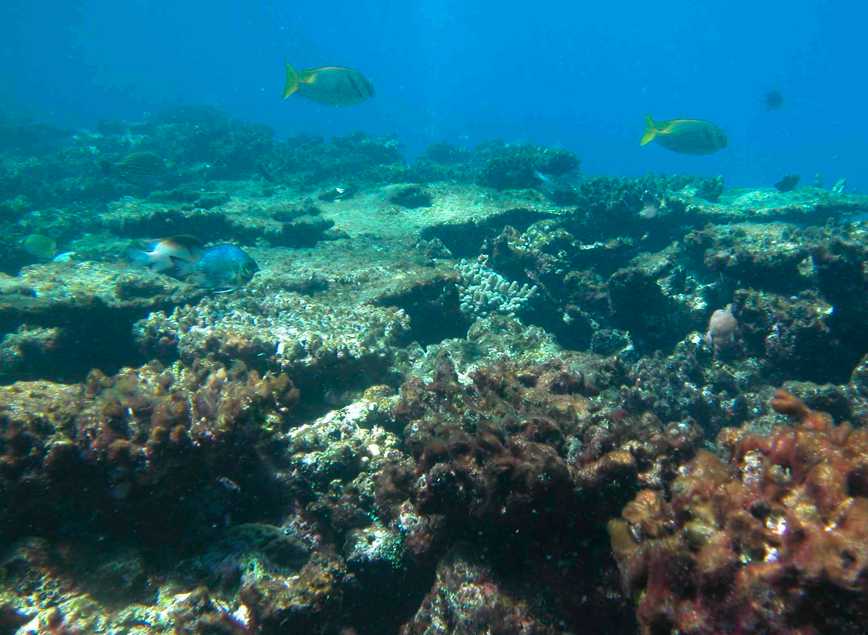
FORT LAUDERDALE, U.S., Jul 12 (IPS) – The rapid decline of coral reefs around the world offers a potent warning that entire ecosystems can collapse due to human activities, although there is hope for reefs if immediate action is taken, coral experts agreed at the conclusion of a five-day international meeting Friday.severely-degraded-reef-flat-at-kelso-reef-great-barrier-reef-australiaimage-c2a9-cathie-page-very-sml2

A Third of Corals Face Extinction

FORT LAUDERDALE, U.S., Jul 10 (IPS) – One third of reef-building corals already face extinction because of climate change, the first-ever global assessment has found.

Life Support Needed For Coral Reefs

FORT LAUDERDALE, U.S., Jul 8 (IPS) – Coral reefs need to be put on “life support” if they are to survive climate change, but their ultimate survival is dependant on major reductions in fossil fuel emissions, say experts.

“We’re Running the Risk of Unstoppable Climate Change” — Oceanographer

“I’m afraid it is going to take a major catastrophe in the developed world…” Chris Reid.

Oceans are the Heart and Blood of the Earth — But are They Healthy?

If continents are the Earth’s sturdy bones and the atmosphere its thin skin, then the oceans are its heart, circulatory system and blood. And despite the crucial role played by the oceans in the health of the planet, and to our own health and well-being, there is little monitoring of ocean health.

Acid Oceans to ‘Dissolve’ Coral Reefs in 30 years

Coral reefs face certain extinction in a few decades unless there are unprecedented reductions in carbon emissions, leading Australian scientists warn.

Arctic Is the Canary in the Coalmine

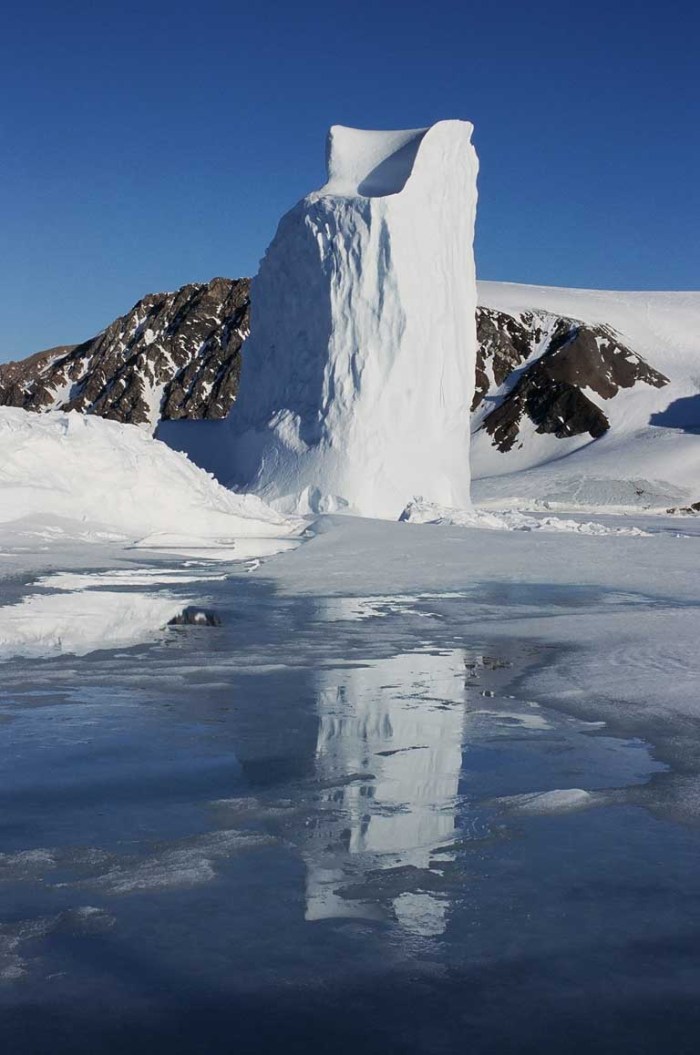
ceberg-in-glacier-strait-nunavut-canada-image-credit-sandy-briggsBy Stephen Leahy

QUEBEC CITY, Canada, Dec 12 (IPS) – Nearly 1,000 scientists and representatives of indigenous peoples from 16 countries have braved a major winter storm to share their findings and concerns about the rapidly warming Arctic region at the International Arctic Change conference in Quebec City.

The Arctic is “ground zero” for climate change, with temperatures rising far faster than anywhere else on the planet. Some predict an ice-free summer Arctic in less than five to 10 years — the first time the Arctic Ocean will be exposed to the sun in many hundreds of thousands of years.

The speed of change has scientists scrambling to understand the impacts on indigenous people, wildlife and ecology.

“The Arctic will be full of future surprises,” said David Carlson, an oceanographer and director of the International Polar Year programme office.

“Protected by its cover of sea ice, the Arctic Ocean is the last unblemished ocean on the planet,” Carlson told IPS.

Continue reading

Oceans Passing Critical CO2 Threshold

a-brittle-stare28094barely-as-big-as-a-nickele28094-crawls-across-the-arm-of-an-18-inch-wide-blue-sea-star-nat-geo

By Stephen Leahy

UXBRIDGE, Canada, Nov 24 (IPS)

An apparent rapid upswing in ocean acidity in recent years is wiping out coastal species like mussels, a new study has found.

“We’re seeing dramatic changes,” said Timothy Wootton of the Department of Ecology and Evolution at the University of Chicago, lead author of the study published Monday in the Proceedings of the National Academy of Sciences. The study shows increases in ocean acidity that are more than 10 times faster than any prediction.

“It appears that we’ve crossed a threshold where the ocean can no longer buffer the effects of CO2 in the atmosphere,” Wootton told IPS.

For millions of years, the levels of carbon dioxide in the atmosphere and the ocean were in balance, but the burning of fossil fuels and deforestation has put more CO2 into the atmosphere over the last 150 years. The oceans have absorbed one-third — about 130 billion tonnes — of those human emissions and have become 30 percent more acidic as the extra CO2 combines with carbonate ions in seawater, forming carbonic acid.

Each day, the oceans absorb 30 million tonnes of CO2, gradually and inevitably increasing their acidity. There is no controversy about this basic chemistry; however, there is disagreement about the rate at which the oceans are becoming acidic and the potential impact. Continue reading

Ten-Year Probe Reveals Oceans in Peril

sea-anemoneBy Stephen Leahy

UXBRIDGE, Canada, Nov 11 (IPS) – A thousand points of light are being shone into the dark ocean depths as scientists from 82 countries work to complete the decade-long global research effort called the Census of Marine Life.

“It’s been a remarkable time of exciting new discoveries and frightening revelations of how quickly the oceans are changing,” said Canadian deep-sea biologist Paul Snelgrove, a leader of a team integrating findings from all 17 census projects.

“We were startled to discover small crustaceans never seen by scientists before completely blanketing the seafloor at 500 metres in the Gulf of Mexico,” Snelgrove told IPS.

And during the eight years the census has run so far, scientists have documented that more than 90 percent of the oceans’ top predators — large sharks, tunas, swordfish, cod and others — are now gone and those remaining are in serious trouble. “We’re also seeing evidence of climate change with the shifting distribution of species,” he said. Continue reading

The Real Price of Farmed Salmon

bear-catching-salmon-low-alex-morton

Stephen Leahy

UXBRIDGE, Canada, 10 Nov (IPS)

Salmon aquaculture is devastating the world’s oceans and an international coalition of scientists, Canadian First Nations and tourism operators have called for a global moratorium.

‘We’ve seen a regional collapse of all sea life in the 20 years since the salmon farms moved in,’ said Chief Bob Chamberlin of the Kwicksutaineuk Ah-kwa-mish Canadian First Nation in the province of British Columbia on Canada’s west coast.

‘I can only shake my head in bewilderment that this is allowed to continue,’ Chamberlin told IPS from Gilford Island in the Broughton Archipelago, where 20 salmon farms are in operation. Continue reading

Say Goodbye to Coral Reefs

severely-degraded-reef-flat-at-kelso-reef-great-barrier-reef-australiaimage-c2a9-cathie-page-very-sml

Coral reefs will be the first global ecosystem to collapse in our lifetimes.

By Stephen Leahy

GIJON, Spain, May 22 (IPS) – The one-two punch of climate change that is warming ocean temperatures and increasing acidification is making the oceans uninhabitable for corals and other marine species, researchers said at a scientific symposium in Spain.

And now other regions are being affected. Acidic or corrosive waters have been detected for the first time on the continental shelf of the west coast of North America, posing a serious threat to fisheries, Richard Feely, an oceanographer with the U.S. National Oceanic and Atmospheric Administration (NOAA), told attendees in Gijon, Spain Wednesday.

More than 450 scientists from over 60 countries are participating in the “Effects of Climate Change on the World’s Oceans” symposium.

“Surface waters off the coast of San Francisco had concentrations of carbon dioxide that we didn’t expect to see for at least another 100 years,” Feely told IPS. Continue reading

Top Ten Worst Pollution Problems That Kill Millions – Including Ones You’ve Never Heard Of

By Stephen Leahychromium-a-carcinogenic-commonly-used-in-the-tanning-industry-noraiakheda-kanpur-india-photo-by-blacksmith-institute-sml

UXBRIDGE, Canada, Oct 23 (IPS)

Gold mining and recycling car batteries are two of the world’s Top 10 most dangerous pollution problems, and the least known, according a new report.

The health of hundreds of millions of people is affected and millions die because of preventable pollution problems like toxic waste, air pollution, ground and surface water contamination, metal smelting and processing, used car battery recycling and artisanal gold mining, the “Top Ten” report found.

“The global health burden from pollution is astonishing, and mainly affects women and children,” said Richard Fuller, director of the New York- based Blacksmith Institute, a independent environmental group that released the list Tuesday in partnership with Green Cross Switzerland.

“The world community needs to wake up to this fact,” Fuller told IPS.

Continue reading