Scientists Build a Macroscope of Life on Earth

clown fish anomenes iucnBy Stephen Leahy

UXBRIDGE, Canada, Jun 2 (IPS) – Imagine looking at a Google Maps-like satellite image of the Amazon forest and with a mouse click find out what lives in that bit of forest – what tree and plant species are there, what animals, birds and insects.

You could even look at the DNA of the microbes that live on those insects in this amazing, futuristic online “macroscope of life” on planet Earth.

The information about these Amazonian species, their habitats and even their DNA already exists in most cases. But it is scattered like dry leaves all over the world in dusty museum basements, science labs, libraries and hundreds of electronic databases.

This week, scientists are launching a 10-year global effort to gather and compile the world’s vast storehouse of knowledge about biodiversity into a single online, interactive information system for life on Earth that will take its place alongside the world meteorology data network that pools information to predict the weather. Continue reading
Ethanol and Biofuels: Almost Everything You Need to Know

“The U.S. has led the fight to stem global hunger, now we are creating hunger,” said Lester Brown, president of the Earth Policy Institute.

Series of the latest articles that provide almost everything you need to know about why ethanol and biofuels will not reduce global warming but simply drive up fuel and food costs.

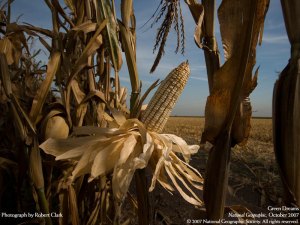
maize - mexicoEthanol Worse Than Gasoline

Only Green Part of Most Biofuels is the Wealth (Subsidies) They Generate

Ethanol: The Great Big Green Fraud

International Enviro Standards Needed for Biofuels

Six Experts On Why Ethanol is a Dumb Idea

Food & Fuel: Can Sorghum Be The New Magic Bullet Biofuel??

Biofuels: Another Good Reason to Hate American Policy

(Cellulosic) Greenest Ethanol Still Unproven

So Long, Salamanders

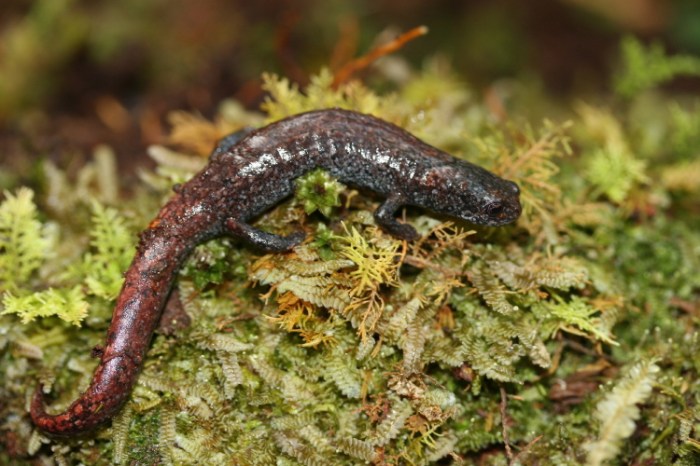
Bradytriton silus, a salamander of the Guatemalan cloud forest long thought to be extinct but rediscovered this January 2009.

By Stephen Leahy*

SAN DIEGO, U.S., Feb 21 (Tierramérica) – Mesoamerica’s salamanders appear to be joining the global decline in amphibian species, like frogs, adding to the evidence of ecological change around the planet.

“What’s happening to salamanders and other amphibians may be a strong lesson for humans,” says lead researcher David Wake, of the University of California at Berkeley.

There are global changes that are altering ecosystems and disease patterns, thus creating new elements of biological pressure, he said.

Wake and his colleagues have discovered that several salamander species have vanished or have become very rare since the 1970s in closely studied areas in western Guatemala and the southern Mexican state of Chiapas. These findings were published last week in the Proceedings of the National Academy of Sciences.

Climate change and disease are likely causing the declines but scientists do not know why, Wake, one of the world’s salamander experts, told Tierramérica.

“We don’t know what the impacts are on local ecosystems, but they could be significant,” he said. Continue reading

North American Trees Dying Twice as Fast

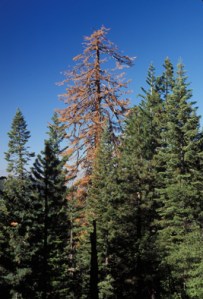
sugar-pine-dying-from-bark-beetle-attack-in-yosemite-national-parkimage-courtesy-of-jerry-franklinBy Stephen Leahy

UXBRIDGE, Canada, Jan 22 (IPS)

Our trees are dying. Throughout the western United States, cherished and protected forests are dying twice as fast as they did 20 years ago because of climate change, researchers reported Thursday in the journal Science.

Fire did not kill these trees, nor did some massive insect outbreak. The trees in this wide-ranging study were “undisturbed stands of old growth forests”, said Jerry Franklin, a professor of forest resources at the University of Washington and one of 11 co-authors of the report.

“The data in this study is from our most stable, resilient stands of trees,” Franklin told IPS.

What this means is that the United States’ best forests are getting thinner.

It is like a town where the birth rate is stable but the mortality rate for all ages doubled over the past two decades. “If that was happening in your hometown you’d become very concerned,” said Nate Stephenson, an ecologist with the U.S. Geological Survey (USGS).

This dramatic increase of in tree mortality applies to all kinds, sizes, ages and locations of trees. In the Pacific Northwest and southern British Columbia, the rate of tree death in older coniferous forests doubled in 17 years. In California, doubling mortality rates took a little longer at 25 years. For interior states it took 29 years. Continue reading

Polar Bears and the Arctic Meltdown

polar-bear-snout-wwwfirstpeopleus-smlA warm Arctic six-pack of 2008 science articles on how global warming is transforming the Arctic:

1. Arctic Ice Gone in 5 Years – First Time in One Million Years — “We’re going to see huge changes in the Arctic ecosystem”

2. Burning Down Our HouseThe roof of our house is on fire while the leaders of our family sit comfortably in the living room below preoccupied with “political realities”.

3. Things Happen Much Faster in the Arctic — “Things are happening much faster in the Arctic. I think it will be summer ice-free by 2015,” said David Barber, an Arctic climatologist at the University of Manitoba.

4. Arctic Is the Canary in the Coalmine — The Arctic is “ground zero” for climate change, with temperatures rising far faster than anywhere else on the planet.

5. Arctic Meltdown Signals Long-Term Trend — Soaring temperatures have led to the collapse of several huge ice shelves in the Canadian Arctic over the past few weeks.

6. Arctic Oil and Gas Rush Alarms Scientists — As greenhouse gas pollution destroys Arctic ecosystems, countries like Canada are spending millions not to halt the destruction but to exploit it.ceberg-in-glacier-strait-nunavut-canada-image-credit-sandy-briggs

Oh yeah, and about those polar bears:

Polar Bears Go Hungry as Icy Habitat Melts Away — The iconic animal of the frozen north, the polar bear, is starving to death because climate change is melting the Arctic Ocean sea ice.

Oil vs Polar Bears in Alaska — A coalition of environmental groups sued the George W. Bush administration Monday for delaying a decision to protect polar bears threatened with extinction

Polar Bears’ Future Bleak in Melting Arctic — “Without taking serious and urgent action to stabilize the climate, there is no future for polar bears” says Andrew Derocher, Chair of the World Conservation Union (IUCN), Polar Bear Specialist Group.

Extinction Crisis Serious Threat to Our Health – says Harvard Doc

“Few people realize our health is directly tied to the health of the natural world,” — Dr. Aaron Bernstein, Harvard Medical School

Bernstein and colleagues reveal the latest scientific evidence to make a persuasive case that the current extinction crisis, with species vanishing every day, is a serious threat to humanity equal to, if not greater than, climate change.

Their findings are documented in a new book “Sustaining Life“, see here for complete article.

“When we harm nature, we are harming ourselves,” says Bernstein.

Canada “acting like USA” Torpedoes International Enviro Agreement

Analysis by Stephen Leahy

“Do Canadians know what their government is doing here? You must tell them.” — Mamadou Mana Diakite of Mali

BONN, Jun 3 (IPS) – Self-interest and petty politicking largely paralysed efforts to solve the urgent problem of the widespread extinction of species, with few concrete achievements after nearly two weeks of 14-hour meetings at the Convention on Biodiversity (CBD) in Bonn that concluded last Friday.

Why? Mainly because a few rich and powerful countries like Japan, Canada, Australia, Brazil and China fought tooth and nail to boost their own self-interest regardless of the environmental and human costs.

Six years ago, more than 160 countries at the April 2002 World Summit on Sustainable Development in Johannesburg agreed on a target of achieving a significant reduction of the current rate of biodiversity loss by 2010. In May 2008, virtually everyone here acknowledged the target will not be met.

Some countries, like Germany and most of the developing world, do understand that species extinction is undermining the vital ecosystem services that nature provides, such as food, fibre, clean water and air. Others, such as Canada, express altruistic sentiments that are belied by their actions. Since decisions at U.N. meetings are by consensus, any country can block decisions on a whim. Or, as is more often the case, countries will block agreement on something they have no connection to simply so they can force concessions on other issues.

“You listen to them debate over every comma and realise they could be arguing over anything,” said Helena Paul of EcoNexus, a British-based environmental group that participated in the CBD meetings. NGOs can observe but are not participants except for the occasional opportunity to express their views. Continue reading

About Canada’s Seal Hunt

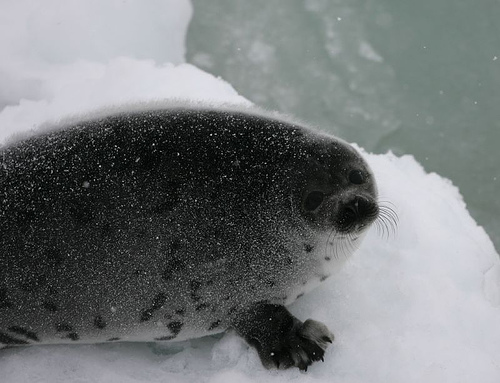
molting-harp-seal-ifaw.jpg

On Monday Canada announced this year’s seal hunt quota to allow the killing of 275,000 young harp seals near Newfoundland. The announcement sets off the annual round of protests mainly focused on sustainability of the seal population and animal cruelty issues. This feature article was written two years ago but would be little different if done today.

[Originally published by Mexico’s Tierramerica, Mar 29 2006 ]

By Stephen Leahy

The Canadian government increased the annual quota of harp seals (Phoca groenlandica) from 319,000 in 2005 to 325,000 this year. That’s too many seals, says Chris Cutter, an activist with the International Fund for Animal Welfare (IFAW).

An unusually warm winter has left little ice in the Gulf, Cutter told Tierramérica after a helicopter overflight last week, before the hunting season began on Mar. 25. “We hardly saw any seals,” he said.

Named for the harp-shaped pattern on the backs of the adults, the seals mainly give birth to their pups on floating ice, where they are safe from land-based predators.

Young seal pups are able to float, but are poor swimmers and often drown in rough weather. The harp seal herd is about 5.8 million, with an estimated one million pups born each year, says Phil Jenkins, spokesman for Canada’s Federal Department of Fisheries and Oceans (DFO), which regulates the hunt.

The lack of ice was taken into account when setting this year’s quota, Jenkins told Tierramérica. “McCartney and the animal rights groups have got the wrong information about the hunt.”

Continue reading

Free, authoritative and online: 1.8 million species

carolina-anole-lizard-sml-john-sullivan-aol.jpgBy Stephen Leahy

Feb 27 (IPS) – Free, authoritative and online: 1.8 million species.

That is the ultimate goal of the Encyclopedia of Life project, which put its first 30,000 species on the Internet this week. This ambitious global project will provide the details of every known species — habitat, range, lifecycle, pictures and more — and archive everything online so anyone can access this important information about life on Earth.

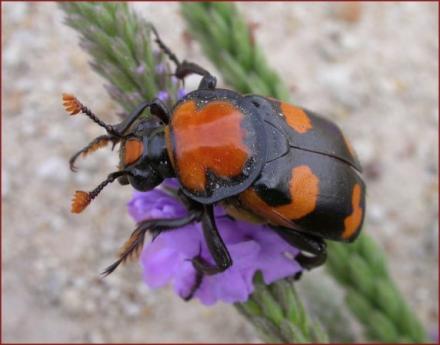
From sharks to mushrooms to bacteria, the Encyclopedia of Life will provide scientifically verified information that will satisfy both a grade school child’s american-burying-beetle-doug-backlund-aol.jpegcuriosity or enable a university researcher — or amateur naturalist — to make a scientific breakthrough, says James Edward, new executive director of the Encyclopedia of Life (EOL) project headquartered in Washington at the Smithsonian Institution. Continue reading

Polar Bears’ Future Bleak in Melting Arctic

http://www.firstpeople.us

Lots of folks have been telling me that polar bears are doing ok and don’t need protection under the US Endangered Species Act. Some say polar bear populations are stable in Alaska and increasing in parts of Canada. And there might be 1500 more bears than previous estimates according to a three year study in Nunavut which makes $2 million a year from polar bear trophy hunters. But 1500 isn’t very many more bears and with the Arctic sea ice melting fast the future certainly doesn’t look bright.

As for Alaska consider this fact:

This week scientists announced new findings that the survival rate of polar bear cubs in Alaska’s Beaufort Sea has plummeted. In the late 1980s, 65 percent of polar bear cubs in the southern Beaufort Sea survived their first year. That has fallen to an average of 43 percent in the past five years. — Polar Bears Go Hungry as Icy Habitat Melts Away

“Without taking serious and urgent action to stabilize the climate, there is no future for polar bears” says Andrew Derocher, Chair of the World Conservation Union (IUCN), Polar Bear Specialist Group.

See also this controversy: Oil vs Polar Bears in Alaska

And these updates on the Arctic: Arctic Is the Canary in the Coalmine

Arctic Oil and Gas Rush Alarms Scientists

Arctic Meltdown Signals Long-Term Trend

Inuit Sue America over Climate Change

http://www.firstpeople.us